



Contents
The Life and Historical Legacy of Lady Zhen, Zhenshi
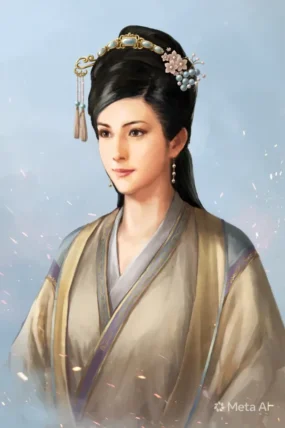
Lady Zhen, Zhenshi was an influential aristocratic noblewoman during the late Han Dynasty and the foundational era of Cao Wei during the Three Kingdoms period. Renowned across northern China for her extraordinary elegance, intelligence, and filial devotion, she originally wed Yuan Xi, the second son of warlord Yuan Shao. Following the strategic capture of Yecheng in 204 AD, she married Cao Pi, the future Emperor Wen of Wei. She bore him Cao Rui, who later ascended the imperial throne and posthumously honored his mother as Empress Wenzhao.
Literary Portrayal and Cultural Influence
Beyond authentic historical records compiled in the Records of the Three Kingdoms, the poignant memory of Lady Zhen, Zhenshi inspired centuries of Chinese literature and drama. In Luo Guanzhong’s classic novel, her breathtaking elegance is celebrated as powerful enough to sway dynasties. Folklore and traditional literary critique famously attribute Cao Zhi’s immortal lyrical masterpiece, Ode to the Goddess of the Luo River, to his lingering grief and reverence for her following her untimely demise.
Historical & Literary Timeline
Birth in Zhongshan
Born into the prominent Zhen clan of Wuji, exhibiting precocious scholarly intellect and benevolence.
Marriage to Cao Pi
Taken as a wife by Cao Pi following the decisive fall of the Yuan family stronghold at Yecheng.
Tragic Execution
Tragically forced to commit suicide in Ye due to venomous court slanders and imperial jealousy.
Key Historical Relationships
- Cao Pi (Emperor Wen): Husband whose early passionate affection gradually deteriorated, culminating in the tragic order for her death in 221 AD.
- Cao Rui (Emperor Ming): Devoted son who continuously mourned her loss and vindicated her imperial status through posthumous honors.
- Cao Zhi (Prince of Chensi): Renowned poet and brother-in-law who immortalized Lady Zhen, Zhenshi in romantic myth.
- Guo Nüwang (Empress Wende): Imperial rival whose palace machinations and witchcraft allegations precipitated her downfall.
- Empress Dowager Bian: Mother-in-law who held great respect for her modest demeanor and exemplary filial piety.
In Novel
Chapter 33
- Lady Zhen, Zhenshi (甄氏, Chân thị): Lady Zhen is the wife of Yuan Xi and is left in Ye while Yuan Xi is away in Youzhou. When Cao Cao captures the city, Cao Pi enters the Yuan residence and finds Lady Zhen with Liu Shi, Yuan Shao’s widow. He is immediately struck by her beauty. Liu Shi explains that she is Yuan Xi’s wife. Cao Pi chooses to protect her and asks Cao Cao to allow him to marry her. Cao Cao agrees, making Lady Zhen Cao Pi’s wife. Her capture and marriage mark the transfer of the Yuan family’s household into Cao Pi’s sphere.
Chapter 80
- Lady Zhen, Zhenshi (甄氏, Chân thị): After Cao Pi becomes emperor, Lady Zhen’s position becomes politically dangerous. Cao Pi is influenced by Guo Nüwang and eventually orders Lady Zhen to die. Her death is portrayed as the result of palace jealousy and political manipulation rather than battlefield conflict.
In History
Early Life
- Lady Zhen, Zhenshi (甄氏, Chân thị) was born into the Zhen family of Wuji County and later became connected first to the Yuan family and then to Cao Pi (曹丕, Tào Phi).
204 AD
- After Cao Cao (曹操, Tào Tháo) captured Ye, Lady Zhen became Cao Pi’s wife. She bore him a son, the future Cao Rui (曹睿, Tào Duệ), and a daughter.
220 AD
- After Cao Pi became King of Wei and then emperor, Lady Zhen remained at Ye while Guo Nüwang (郭女王, Quách Nữ Vương) gained increasing favor.
221 AD
- Lady Zhen was ordered to die by Cao Pi and was buried at Ye. The official record does not establish the later romantic legends connecting her with Cao Zhi (曹植, Tào Thực).
226 AD
- After Cao Rui became emperor, his mother was posthumously honored as Empress Wenzhao.