


Contents
Biography & Historical Record
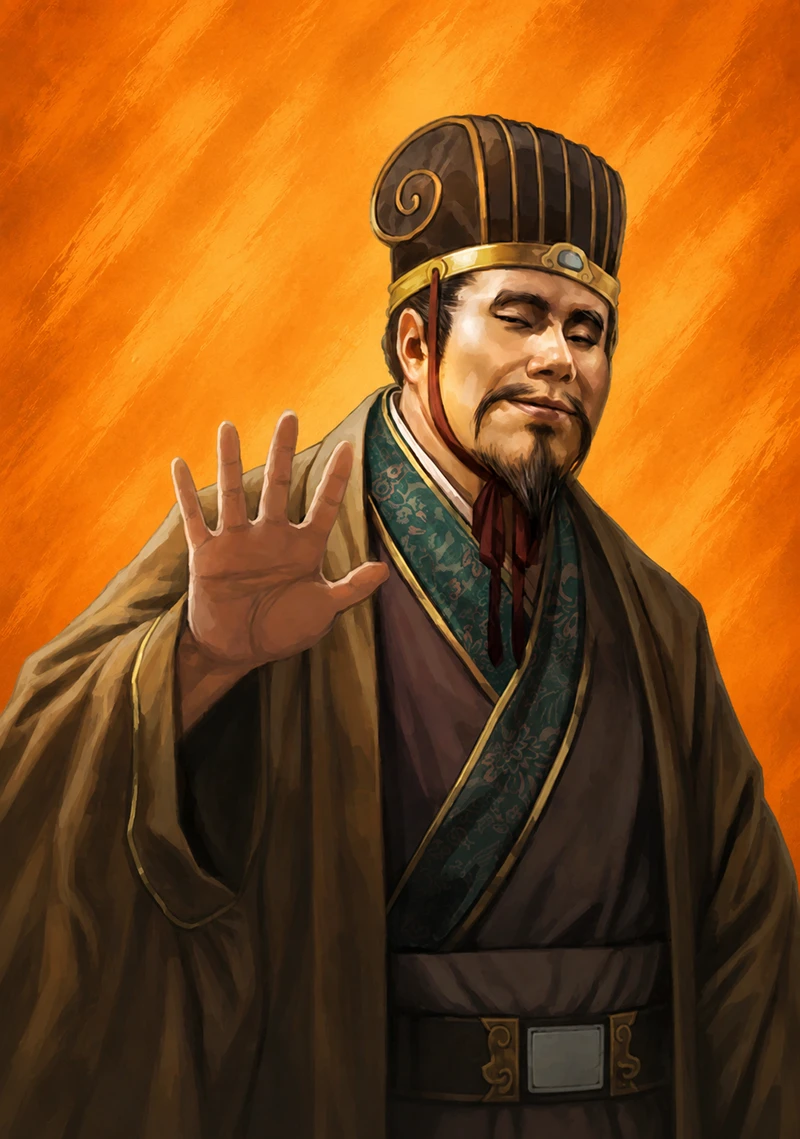
Li Hui, courtesy name De’ang, was an illustrious senior statesman, master military strategist, skilled diplomat, and paramount regional commander of the Shu Han state during the Three Kingdoms period. Hailing from Yu Yuan in Jianning Commandery within the southern reaches of Yi Province, Li Hui was celebrated for his keen political insight, strategic versatility, unshakeable courage, and exceptional capability in ethnic diplomacy and frontier governance. Documented in Chen Shou’s official dynastic history Records of the Three Kingdoms (Sanguozhi – Book of Shu, Biography of Li Hui) and Sima Guang’s Zizhi Tongjian, Li Hui served as General Who Pacifies the Han (Anhan Jiangjun), Area Commander of Nanzhong (Nanzhong Dudu), and nominal Inspector of Jiao Province (Jiaozhou Cishi), establishing the permanent administrative and economic foundation for Shu Han’s pacification of the southwestern frontier.
Li Hui began his early career as an administrative official serving under Liu Zhang, the Governor of Yi Province. When Liu Bei entered the province in 214 AD to take control of Chengdu, Li Hui recognized Liu Bei’s extraordinary charisma and destiny, choosing to submit to his banner. Impressed by Li Hui’s deep understanding of regional geography and tribal politics, Liu Bei appointed him as an Army Protector and dispatched him to northern Yi Province. There, Li Hui played a decisive historical role in traveling secretly to Hanzhong to persuade the fierce warrior Ma Chao to abandon Zhang Lu and join Liu Bei. Li Hui’s eloquent diplomacy succeeded, and Ma Chao’s sudden arrival before the walls of Chengdu prompted Liu Zhang to surrender unconditionally, securing Yi Province for Liu Bei with minimal bloodshed.
Following Liu Bei’s death in 223 AD and the catastrophic loss at the Battle of Yiling, the southern border commander Yong Kai launched a grand rebellion across Nanzhong, forging alliances with Gao Ding, Zhu Pao, and the Nanman chieftain Meng Huo. In 225 AD, Chancellor Zhuge Liang launched the famous Southern Campaign to pacify the rebellion. Li Hui was appointed to command the central/eastern column, marching south from Pingwei into the heart of Jianning. Advancing deep into hostile mountainous territory, Li Hui’s column found itself completely encircled and outnumbered by rebel forces at Bingshan. Facing imminent annihilation, Li Hui displayed extraordinary tactical deception: he deliberately informed the rebel leaders that his supplies were exhausted, claiming he wished to surrender and return south together. Believing his words, the rebel host relaxed their guard and delayed their assault. Exploiting their complacency, Li Hui launched a ferocious, coordinated counter-attack, smashing the encirclement, killing rebel chieftains, and pursuing the routing forces all the way to Panjiang to rendezvous with Zhuge Liang’s main army.
Following the total pacification of Nanzhong and the submission of Meng Huo, Zhuge Liang entrusted Li Hui with supreme military and administrative control over the entire southern region, appointing him Area Commander of Nanzhong and Inspector of Jiao Province, while enfeoffing him as the Marquis of Hanxing. In Nanzhong, Li Hui implemented enlightened policies that combined firm military readiness with benevolent cultural integration. He extracted substantial tribute in warhorses, gold, silver, iron, and salt, which directly financed Shu Han’s imperial treasury and sustained Zhuge Liang’s subsequent Northern Expeditions against Cao Wei. When local Qiang and Di tribes rebelled again in 229 AD, Li Hui personally mobilized troops, crushed the insurrection, and relocated rebellious tribal leaders to Chengdu, permanently solidifying peace. He served the state faithfully until his death in office in 231 AD, leaving a legacy as one of Shu Han’s most indispensable founding pillars.
Role in Romance of the Three Kingdoms
In Chapters 65, 87, 88, 89, and 90 of Luo Guanzhong’s classic 14th-century historical novel Romance of the Three Kingdoms, Li Hui is portrayed as a brilliant diplomat and indispensable strategist whose eloquence and battlefield cunning solve Shu Han’s most daunting military crises.
In Chapter 65, Li Hui makes his dramatic entrance during Liu Bei’s siege of Chengdu. Learning that Ma Chao has arrived at Jiameng Pass on behalf of Zhang Lu, Li Hui volunteers to enter Ma Chao’s camp alone, declaring: ‘I have a tongue three inches long; I will go to Ma Chao and persuade him to surrender.’ Entering Ma Chao’s tent, Li Hui uses piercing rhetoric to expose Zhang Lu’s petty jealousy and contrasts it with Liu Bei’s imperial virtue. Convinced by Li Hui’s moral arguments, Ma Chao drops his weapon, bows, and pledges allegiance to Liu Bei, causing Chengdu to capitulate immediately.
During the legendary Southern Campaign in Chapters 87 through 90, Li Hui serves as Zhuge Liang’s foremost operational commander and intelligence operative. In Chapter 87, Li Hui is dispatched alongside Guan Suo to lead a separate army, where he employs brilliant stratagems to surround and capture tribal leaders. Later, in Chapter 89 and Chapter 90, Li Hui coordinates psychological traps during the iconic ‘Seven Captures and Seven Releases’ of Meng Huo. He disguises his troops as supply carriers to lure Nanman forces into ambushes, coordinates river crossings, and negotiates terms of peace with tribal leaders. Luo Guanzhong highlights Li Hui as a rare polymath—equally adept at battlefield command and diplomatic persuasion—whose contributions were vital to securing the southern realm of Shu Han.
Li Hui (李恢) — Historical & Literary Timeline
Persuading Ma Chao to Submit to Liu Bei
Volunteers to enter Ma Chao’s camp alone; uses brilliant political rhetoric to convince Ma Chao to abandon Zhang Lu and join Liu Bei, leading directly to the surrender of Chengdu.
Smashing Encirclement in Nanzhong with Strategic Deception
Commands the central column in the Southern Campaign; feigns surrender when surrounded at Bingshan, catches the rebels off guard, destroys their army, and links up with Zhuge Liang at Panjiang.
Aiding the Seven Captures of Meng Huo & Governing the South
Assists Zhuge Liang in capturing Meng Huo through tactical ambushes; appointed Area Commander of Nanzhong and Inspector of Jiao Province, extracting vital revenues for the northern wars.
Passing Away in Office with High Honors
Suppresses subsequent tribal rebellions and secures lasting peace along the southern borders; passes away peacefully in office while serving as Marquis of Hanxing.
For detailed historical records, archives, and official chronicles, explore Li Hui on Wikipedia.
Key Relationships
Family
- No information
Friends
- Liu Bei (刘备, Lưu Bị) – Founder of Shu Han; recognized Li Hui’s talent and assigned him diplomatic and military duties after Li Hui pledged allegiance in 214 AD.
- Zhuge Liang (诸葛亮, Chu Cát Lương) – Chancellor who appointed Li Hui as commander of the central column in the 225 AD Southern Campaign and later as Area Commander of Nanzhong.
- Ma Chao (马超, Mã Siêu) – Fierce general whom Li Hui persuaded to abandon Zhang Lu and join Liu Bei, facilitating the surrender of Chengdu.
- Guan Suo (关索, Quan Tác) – Shu general who co‑led a vanguard column with Li Hui during the Southern Campaign.
- Zhao Yun (赵云, Triệu Vân) – Senior Shu general who coordinated frontline operations alongside Li Hui in the Southern Campaign.
- Wei Yan (魏延, Ngụy Diên) – Senior Shu general who worked with Li Hui during the Southern Campaign’s operations.
Enemies
- Meng Huo (孟获, Mạnh Hoạt) – Nanman chieftain who led the rebellion in Nanzhong; Li Hui defeated his forces and captured him repeatedly in 225 AD.
- Yong Kai (雍闿, Dũng Khải) – Grand Administrator of Jianning who instigated the southern uprising; Li Hui’s forces suppressed his revolt.
- Gao Ding (高定, Cao Định) – Tribal leader of Yuexi who allied with Yong Kai; defeated by Li Hui during the Southern Campaign.
- Zhu Pao (朱皓, Chu Bảo) – Grand Administrator of Zangke who joined the southern rebellion; subdued by Li Hui’s army.
- Liu Zhang (刘璋, Lưu Trướng) – Former Governor of Yi Province; Li Hui abandoned him for Liu Bei, contributing to Liu Zhang’s surrender.
- Zhang Lu (张鲁, Trương Lỗ) – Warlord controlling Hanzhong; Li Hui’s diplomatic success caused his ally Ma Chao to defect, weakening Zhang Lu’s position.
Other
- Liu Shan (刘禅, Lưu Diêm) – Successor of Liu Bei and emperor of Shu Han during Li Hui’s later service; under his reign Li Hui held the titles Marquis of Hanxing and Inspector of Jiao Province.
In Novel
Chapter 63
- Li Hui (李恢, Lý Hôi): Li Hui is a Shu official from Yizhou who becomes an important adviser during Liu Bei’s expansion into the southwest. He helps persuade local forces to submit to Liu Bei and later assists Zhuge Liang in the campaign against the southern tribes.
Chapter 87
- Li Hui (李恢, Lý Hôi): During the Nanzhong campaign, Li Hui is sent to negotiate with the southern tribes and successfully uses persuasion and political pressure to bring local leaders under Shu control. His knowledge of the region makes him particularly valuable to Zhuge Liang.
History
Summary
- Li Hui (李恢, Lý Hôi), courtesy name De’ang, was a Shu Han official and administrator who played an important role in the pacification of Nanzhong.
Service to Liu Bei
- Li Hui joined Liu Bei’s administration and became an important official in the southwest.
- He was trusted for his knowledge of local conditions and his ability to negotiate with regional leaders.
Nanzhong Campaign
- During Zhuge Liang’s 225 campaign against the Nanzhong rebellions, Li Hui served as one of the principal commanders.
- He helped defeat rebel forces and stabilize the region after the campaign.
Governance
- Li Hui later administered Nanzhong and helped maintain Shu control through a combination of military authority and local accommodation.
- Classification: Historical.