

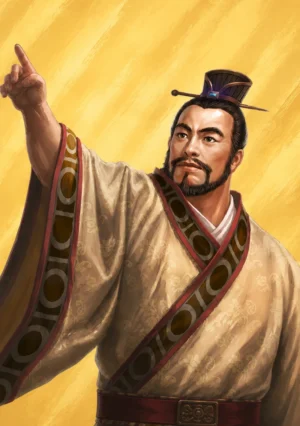
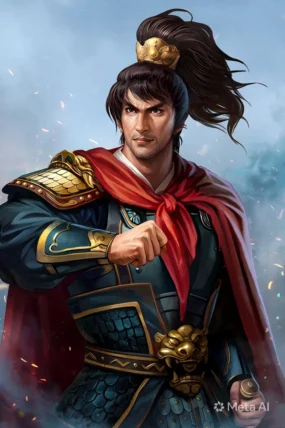

Contents
Life and Career of Liu Jing
Liu Jing (died 254 AD), courtesy name Wengong, was a prominent minister and military general of the Cao Wei state during the turbulent Three Kingdoms period. He was the son of Liu Fu, the renowned Governor of Yangzhou who fortified Hefei. Inheriting his father’s noble rank, he displayed exceptional talent for civil administration, hydraulic engineering, and strategic governance.
During his early career, he served as Prefect of Huangbai, Chancellor of Lu State, and Administrator of Hedong Commandery. In these roles, he earned great praise for promoting education, moral virtue, and agricultural expansion. Later elevated to the imperial court as Minister of Justice (Tingwei), he maintained an upright and impartial legal standard across the capital.
Engineering Feats and Frontier Defense
In his later years, he was appointed General Who Guards the North (Zhenbei Jiangjun) and Inspector of Jizhou. Tasked with safeguarding northern borders against Xianbei and Wuhuan nomadic incursions, Liu Jing initiated monumental infrastructure projects. He spearheaded the construction of the Liling Dam and Chexiang Canal near modern Beijing, turning arid borderlands into fertile farmland capable of sustaining frontier garrisons without long supply lines.
Promoted to Minister of Finance (Dasi Nong) in 254 AD, he passed away shortly after taking office and was posthumously honored as Marquis Gong. Ultimately, Liu Jing secured a legacy as one of the most capable administrators of his era.
Role in Romance of the Three Kingdoms
In Luo Guanzhong’s historical novel Romance of the Three Kingdoms, he does not appear directly. However, his lineage is celebrated through his father Liu Fu, who famously meets a tragic end at the hands of Cao Cao before the Battle of Red Cliffs.
Key Relationships
- Liu Fu: Father and legendary governor who pacified the Huai River region.
- Liu Xi & Liu Xun: Sons who inherited his noble peerage and served the imperial court.
- Cao Rui & Cao Fang: Wei emperors who entrusted him with high judicial, military, and financial offices.
- Nomadic Tribes: Northern Xianbei and Wuhuan raiders neutralized by his defensive garrisons.
In Novel
Chapter 111
- Liu Jing (刘靖, Lưu Tĩnh): Liu Jing serves Wei in the later period and is associated with the frontier administration and military affairs of the northern commanderies. His role is part of the gradual consolidation of Wei during the Sima family’s rise.
In History
Identity
- Liu Jing (刘靖, Lưu Tĩnh) was a Wei official active during the later Three Kingdoms period.
Frontier Administration
- He is associated with the administration and defense of northern territories. His career reflects the importance of capable local officials in maintaining Wei’s frontier settlements and communications.
Historical Record
- The surviving accounts preserve his role as a civil and military administrator but do not provide a complete chronology of his career.