
Contents
Biography & Historical Record
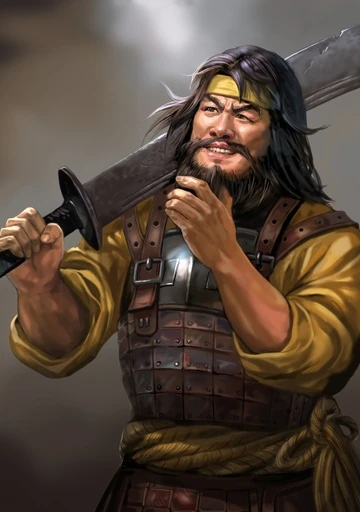
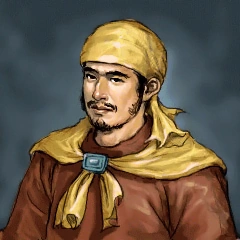
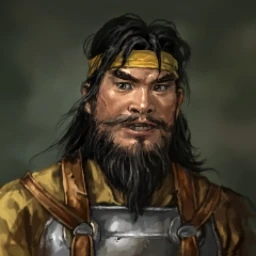
Liu Pi (刘辟, Lưu Tịch) was a Yellow Turban remnant commander active in Runan (汝南, Nhữ Nam) in the late 190s–early 200s. With Gong Du (龚都, Cung Đô) he kept tens of thousands of followers in the Yu Province farmlands after the main 184 rising under Zhang Jiao (张角, Trương Giác) collapsed. During Cao Cao (曹操, Tào Tháo)‘s 196 pacification of Runan–Yingchuan he preserved a core by melting into marshes and hills while peers such as Huang Shao (黄邵, Hoàng Thiệu) fell and He Yi (何仪, Hà Nghi) surrendered. In 200, while Cao Cao faced Yuan Shao (袁绍, Viên Thiệu) at Guandu, Liu Pi rose in Cao Cao’s rear; Yuan Shao sent Liu Bei (刘备, Lưu Bị) south; Liu Pi yielded his base and men to Liu Bei out of respect for a Han imperial kinsman. Historically Cao Ren (曹仁, Tào Nhân) then defeated the Runan rising. He is not Liu Pi (Yuan Shu) (刘辟, Lưu Tịch) of the Shanyang Hill / Yuan Shu arc (id 10159).
Novel climax (Ch.31): After welcoming Liu Bei, Liu Pi dies heroically shielding him from Gao Lan (高览, Cao Lãm) during the Runan rout — a Romance death; the historical record stops at Cao Ren’s pacification without that single-combat martyrdom.
Role in Romance of the Three Kingdoms
Chapters 28–31 (Runan / Guandu rear arc): Liu Pi and Gong Du hold Runan remnant power. When Liu Bei, newly allied with Yuan Shao’s southern diversion, arrives, Liu Pi yields command and territory. Cao Cao later strikes Runan in force. In the disaster of Chapter 31, as Liu Bei flees, Gao Lan closes in; Liu Pi charges with drawn blade to buy time, fights briefly, and is slain. Zhao Yun (赵云, Triệu Vân) arrives moments later and kills Gao Lan, too late to save Liu Pi — the remnant chief’s last act is framed as loyalty repaid to the imperial kinsman he had chosen.
Liu Pi (刘辟) — Historical & Literary Timeline
Runan Yellow Turban remnant with Gong Du
Maintains autonomous bands in Runan after Zhang Jiao’s main revolt fails; opportunistic ties to larger warlords noted in late-Han notices.
Survives Cao Cao’s Runan–Yingchuan sweep
Evades annihilation in marshes/hills while Huang Shao and others are destroyed and He Yi surrenders — preserves an elite core for later revolt.
Guandu rear rising; yields to Liu Bei
Attacks Cao Cao’s rear during Guandu; cooperates with Yuan Shao’s dispatch of Liu Bei; voluntarily places Runan base under Liu Bei. History: Cao Ren pacifies Runan.
Slain by Gao Lan protecting Liu Bei
Novel only: Dies in single combat buying Liu Bei’s escape; Zhao Yun then kills Gao Lan. History: No Gao Lan duel death recorded for this Runan Liu Pi.
Homonym caution: not /liu-pi-yuan-shu/ (Yuan Shu / Shanyang capture by Dian Wei).
Key Relationships
Family
- No kin recorded in Romance scenes or standard Sanguozhi notices for this Runan remnant commander — no named father, spouse, or children in novel or history. (Do not invent family to fill the section.)
Friends
- Gong Du (龚都, Cung Đô): Fellow Runan Yellow Turban remnant leader; co-commander of the southern bands that later open to Liu Bei.
- Liu Bei (刘备, Lưu Bị): Han imperial kinsman to whom Liu Pi yields Runan command; in the novel Liu Pi dies shielding him from Gao Lan.
- Zhao Yun (赵云, Triệu Vân): Arrives immediately after Liu Pi’s novel death and slays Gao Lan — battlefield avenger, not a long prior comrade.
- Yuan Shao (袁绍, Viên Thiệu): Northern patron of the Guandu-era rear diversion that legitimizes Liu Pi’s rising and sends Liu Bei south.
- Guan Yu (关羽, Quan Vũ) / Zhang Fei (张飞, Trương Phi): Liu Bei’s sworn brothers present in the broader Runan operations when Liu Pi serves the Liu camp.
Enemies
- Gao Lan (高览, Cao Lãm): Novel: slays Liu Pi in the Runan rout while pursuing Liu Bei. (Historically Gao Lan is a Yuan Shao officer who later defects — Romance reassigns him here as Cao Cao’s pursuer.)
- Cao Ren (曹仁, Tào Nhân): Historical pacifier who defeats the Runan rising after Liu Pi joins Liu Bei.
- Cao Cao (曹操, Tào Tháo): Primary strategic enemy — 196 pacification and Guandu-era rear war.
- Cao Hong (曹洪, Tào Hồng): Local Cao garrison commander struck during Liu Pi’s 200 rear insurgency (campaign colour).
Other
- He Yi (何仪, Hà Nghi) / Huang Shao (黄邵, Hoàng Thiệu) / He Man (何曼, Hà Mạn): Peer Yellow Turban remnant chiefs of Runan–Yingchuan; their 196 fates (surrender / death) contrast Liu Pi’s escape into the marshes.
- Homonym — Liu Pi (Yuan Shu): Separate post at /liu-pi-yuan-shu/ (id 10159) — Ou Xing / Yuan Shu / Shanyang Hill capture by Dian Wei (Ch.12). Same 汉字 刘辟, different arc and death; never merge.
- Novel vs history on death: Romance martyrdom under Gao Lan vs historical silence beyond Cao Ren’s victory — always label both.
In Novel
Chapters 28–30 (Runan alliance)
- Liu Pi (刘辟, Lưu Tịch): Runan Yellow Turban remnant with Gong Du (龚都, Cung Đô). During the Guandu crisis he rises in Cao Cao (曹操, Tào Tháo)‘s rear; when Yuan Shao (袁绍, Viên Thiệu) sends Liu Bei (刘备, Lưu Bị) south, Liu Pi yields his base and army to Liu Bei as a Han imperial kinsman.
Chapter 31
- Liu Pi (刘辟, Lưu Tịch): In the Runan disaster, as Liu Bei flees, Gao Lan (高览, Cao Lãm) closes in. Liu Pi charges to shield his lord, fights briefly, and is slain. Zhao Yun (赵云, Triệu Vân) arrives and kills Gao Lan too late to save him — Liu Pi’s loyalty paid in blood.
In History
Summary
- Liu Pi (刘辟, Lưu Tịch) led Runan Yellow Turban remnants with Gong Du, survived Cao Cao’s 196 sweep, rose in the Guandu rear (200), and yielded to Liu Bei; Cao Ren then pacified Runan. The Gao Lan duel death is Romance only.
Year: 196 AD
- Cao Cao clears Runan–Yingchuan; Liu Pi preserves forces in difficult terrain while other remnant chiefs fall or surrender.
Year: 200 AD
- Rear revolt during Guandu; cooperation with Yuan Shao / Liu Bei; Cao Ren defeats the Runan rising.
Historical Record
- Sanguozhi Wei campaign notices for Guandu / Runan; Pei annotations on remnant leaders. Distinguish from Liu Pi of the Yuan Shu / Shanyang narrative (/liu-pi-yuan-shu/).
Gallery