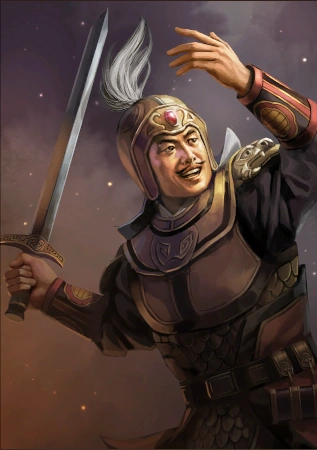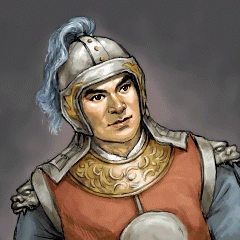



Here is the exhaustive biography of Lu Kuang (吕旷, Lữ Quảng) (? – novel 207/208), elder brother of Lu Xiang (吕翔, Lữ Tường), a Yuan-clan cavalry officer who defected through Yuan Shang (袁尚, Viên Thượng) and Yuan Tan (袁谭, Viên Đàm) to Cao Cao (曹操, Tào Tháo), incorporating historical notices and Romance of the Three Kingdoms.
Contents
Biography & Historical Record
Lu Kuang and his younger brother Lu Xiang served the Yuan house of Jizhou after Yuan Shao (袁绍, Viên Thiệu)’s death. In the succession war they first backed Yuan Shang, fought as vanguard or rearguard in the fraternal clashes, then—when Cao Cao pressed the Hebei theatre—submitted to Yuan Tan and, soon after, permanently to Cao Cao. Cao Cao enfeoffed both brothers as marquises. After that double defection the official histories fall silent: no office list, no later campaign, and no death date survive for Lu Kuang. The novel alone invents his Xinye charge and death under Zhao Yun (赵云, Triệu Vân)’s spear.
Historically the brothers illustrate opportunistic mid-tier officers who abandoned a collapsing Yuan polity for Cao Cao’s rising northern order. Their marquisates mark reward for timely surrender; their blank later record is itself the historical verdict—useful once, then absorbed without further notice.
Role in Romance of the Three Kingdoms
Ch. 32–33 (Yuan succession): As Yuan Shang’s vanguard, Lu Kuang rides out and cuts down Yuan Tan’s champion Cen Bi (岑璧, Sầm Bích) in a few exchanges, winning seals of office. When Yuan Shang must fall back before Cao Cao, the brothers linger in ambush, then switch allegiance to Yuan Tan. Guo Tu (郭图, Quách Đồ) tries to bind them with seals under Yuan Tan, but they promptly present themselves to Cao Cao, who promotes them and thereby thwarts Guo Tu’s plan.
Ch. 35–36 (Xinye): Seeking further glory, the brothers ask Cao Ren (曹仁, Tào Nhân) for the van against Liu Bei (刘备, Lưu Bị) at Xinye. Each leads five thousand; they enter a trap devised by Xu Shu (徐庶, Từ Thứ). Lu Kuang duels briefly and falls to Zhao Yun’s spear; Lu Xiang is slain by Zhang Fei (张飞, Trương Phi) in the same engagement. History: no Xinye death—fate after the marquisate is unrecorded.
Lu Kuang (吕旷, Lữ Quảng) — Historical & Literary Timeline
c. 202 AD — Yuan succession war
Service under Yuan Shang
With Lu Xiang serves Yuan Shang’s horse. Novel: slays Cen Bi as vanguard. History: named among Shang’s officers who later defect.
c. 203–205 AD — Double defection
Yuan Tan then Cao Cao
Submits first to Yuan Tan, then permanently to Cao Cao; receives marquisate. Guo Tu’s seal-binding scheme fails in the novel.
After defection — Historical silence
Marquisate, then blank record
Official histories record enfeoffment but no later office or death. History ends here; novel continues to Xinye.
Novel Ch. 35–36 — Death at Xinye
Xu Shu’s trap; slain by Zhao Yun
Leads 5,000 under Cao Ren against Liu Bei; trapped by Xu Shu; killed by Zhao Yun. Brother Lu Xiang dies to Zhang Fei. Novel-only death.
Historical Note
Lu Kuang was a real Yuan officer rewarded by Cao Cao for timely surrender. The duel with Cen Bi, the Guo Tu seal episode, and the Xinye death under Zhao Yun are novel colour. Readers should keep the historical marquisate and the literary spear-death as two separate endings.
For detailed historical records, archives, and official chronicles, explore Lu Kuang on Wikipedia.
Key Relationships
Family
- Lu Xiang (吕翔, Lữ Tường): Younger brother. Fellow cavalry officer under Yuan Shao → Yuan Shang → Yuan Tan → Cao Cao. Novel: dies with him at Xinye (Zhang Fei). History: co-defector and co-marquis; later fate likewise unrecorded.
Friends
- Yuan Shao (袁绍, Viên Thiệu): Original sovereign of the Hebei army the brothers first served.
- Yuan Shang (袁尚, Viên Thượng): Early post-succession lord; Lu Kuang fights as his vanguard before defecting.
- Cao Cao (曹操, Tào Tháo): Final master who welcomes the brothers and grants marquisates.
- Cao Ren (曹仁, Tào Nhân): Novel: commander who authorises their Xinye van attack.
Enemies
- Yuan Tan (袁谭, Viên Đàm): Temporary lord after they leave Shang; then abandoned for Cao Cao. Earlier novel foe when Lu Kuang served Shang against Tan’s camp (Cen Bi).
- Liu Bei (刘备, Lưu Bị): Novel: target of the Xinye assault that kills Lu Kuang.
- Zhao Yun (赵云, Triệu Vân): Novel: slays Lu Kuang in single combat at Xinye.
- Zhang Fei (张飞, Trương Phi): Novel: slays brother Lu Xiang in the same battle.
Other
- Cen Bi (岑璧, Sầm Bích): Novel only: Yuan Tan’s champion cut down by Lu Kuang’s first charge (Ch. 32–33). No dedicated site post—plain tri-lingual text.
- Xu Shu (徐庶, Từ Thứ): Novel: designs the Xinye ambush that dooms the brothers’ glory-seeking van.
- Guo Tu (郭图, Quách Đồ): Novel: tries to bind Lu Kuang and Lu Xiang with seals under Yuan Tan; Cao Cao’s promotion undercuts the scheme.
In Novel
Chapter 32–33
- Lu Kuang (吕旷, Lữ Quảng): Yuan Shang (袁尚, Viên Thượng) vanguard; cuts down Cen Bi (岑璧, Sầm Bích) of Yuan Tan (袁谭, Viên Đàm)’s camp in a few exchanges and wins seals. With brother Lu Xiang (吕翔, Lữ Tường) later switches to Yuan Tan, then to Cao Cao (曹操, Tào Tháo); Guo Tu (郭图, Quách Đồ)’s attempt to bind them with seals fails.
Chapter 35–36
- Lu Kuang (吕旷, Lữ Quảng): Asks Cao Ren (曹仁, Tào Nhân) for glory against Liu Bei (刘备, Lưu Bị) at Xinye; leads 5,000 into Xu Shu (徐庶, Từ Thứ)’s trap; slain by Zhao Yun (赵云, Triệu Vân). Brother dies to Zhang Fei (张飞, Trương Phi). History: no Xinye death—unrecorded after marquisate.
In History
Summary
- Lu Kuang (吕旷, Lữ Quảng) and brother Lu Xiang were Yuan officers who defected through the Shang–Tan war to Cao Cao (曹操, Tào Tháo) and received marquisates; later careers and deaths are not preserved.
Year: c. 202–205 AD
- Serve Yuan Shang, then submit to Yuan Tan and Cao Cao during Cao Cao’s Hebei campaigns after Yuan Shao (袁绍, Viên Thiệu)’s death.
Year: after defection
- Enfeoffed as marquises under Cao Cao. No further SGZ campaign entries; novel Xinye death is literary only.
Historical Record
- Notices in Sanguozhi / Pei materials on Yuan remnant officers who joined Cao Cao; Cen Bi duel, Guo Tu seals, and Zhao Yun kill are novel dramatizations without matching historical death notices.
Gallery