
Contents
Biography & Historical Record
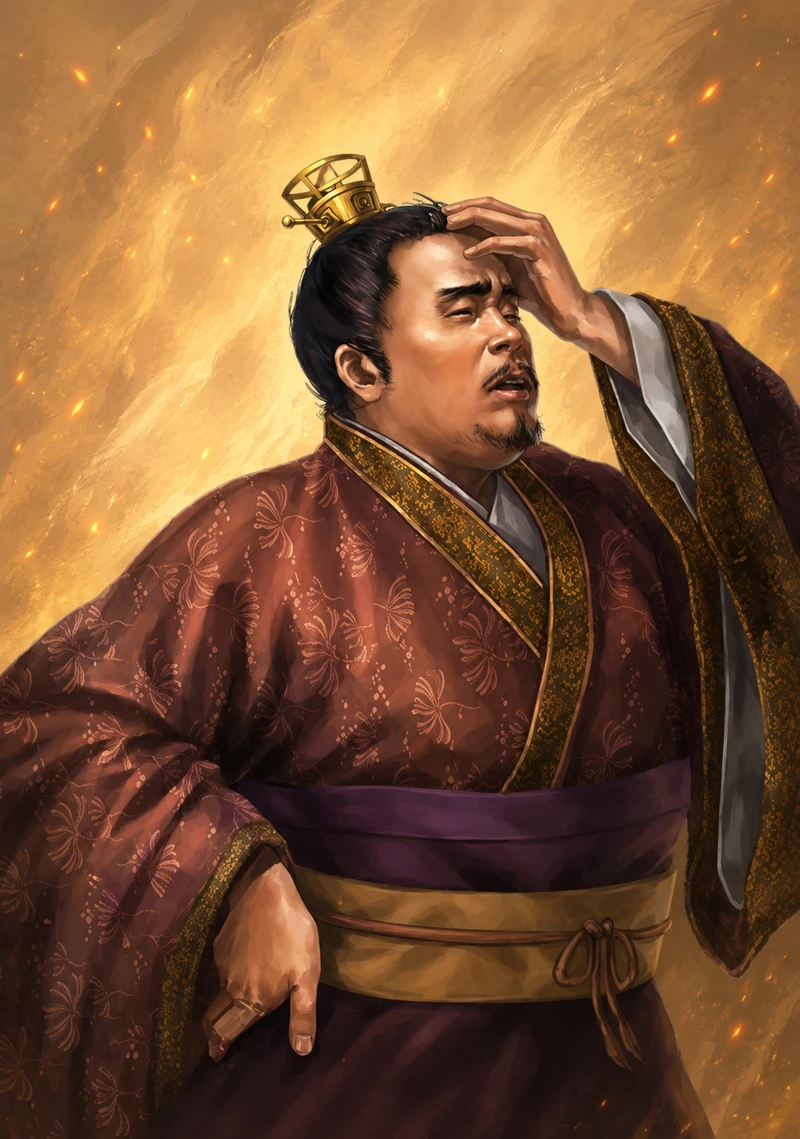
Puyang Xing, courtesy name Ziyuan, was a prominent high-ranking civil statesman, grand chancellor, and pivotal political kingmaker of the Eastern Wu state during the late Three Kingdoms period. Hailing from Chenliu Commandery, Puyang Xing was the son of Puyang Yi, who served as Grand Administrator of Danyang in Eastern Wu. Endowed with notable administrative diligence and practical engineering capability, Puyang Xing steadily rose through the civil bureaucracy, holding high positions including Grand Administrator of Kuaiji, Minister of Works, and eventually Chancellor of the Imperial Court (Chengxiang) and Marquis of Wailang. Documented extensively in Chen Shou’s official dynastic history Records of the Three Kingdoms (Sanguozhi – Book of Wu, Biography of Sun Hao, Biography of Puyang Xing) and Sima Guang’s Zizhi Tongjian, Puyang Xing played a decisive role in the succession politics following the death of Emperor Sun Xiu, elevating Sun Hao to the imperial throne—a choice that culminated in his own tragic execution.
During the reign of Sun Quan, Puyang Xing entered public service as an administrative attendant and diplomat, once being sent on an official diplomatic embassy to the allied state of Shu Han. Following his return, he was appointed Chief of Shangyu and later elevated to Grand Administrator of Kuaiji. It was during his tenure in Kuaiji that Puyang Xing formed an intimate friendship and political alliance with Sun Xiu, who was then residing in the commandery as the Prince of Langye. When the despotic regent Sun Chen purged Sun Liang in 258 and placed Sun Xiu on the imperial throne, the newly crowned emperor immediately summoned his trusted confidant Puyang Xing to the capital at Jianye. Sun Xiu showered him with high offices, appointing him Grand Minister of Agriculture, Minister of Works, and confirming him as his foremost personal advisor.
In 260, Puyang Xing undertook a colossal civil engineering and hydraulic reclamation project by mobilizing tens of thousands of soldiers and civilian laborers to construct an extensive dike and reservoir system at Lake Shanyin in Kuaiji, aiming to open fertile farmlands. However, the engineering endeavor proved exceedingly difficult and costly: floodwaters repeatedly broke the barriers, exhaustion swept through the labor force, and widespread civilian resentment erupted across Jiangnan. Despite public criticism, Sun Xiu maintained unshakeable trust in Puyang Xing, elevating him to the paramount post of Chancellor of the Imperial Court in 262 and conferring upon him supreme control over central administration alongside General of the Left Zhang Bu.
In the seventh month of 264, Emperor Sun Xiu fell gravely ill and passed away. With the allied state of Shu Han having collapsed to Cao Wei the previous year and the southern borders plagued by rebellions in Jiaozhi, the Wu leadership faced intense geopolitical panic. Rather than crowning Sun Xiu’s young son Sun Wan, Puyang Xing and Zhang Bu heeded the counsel of Palace Attendant Wan Yu, who passionately recommended Sun Hao (the eldest son of the late Crown Prince Sun He) as an intelligent, energetic, and mature imperial candidate capable of navigating the national crisis. Puyang Xing presented the proposal to Empress Dowager Zhu, secured her consent, and formally crowned Sun Hao as the fourth emperor of Eastern Wu. However, upon ascending the throne, Sun Hao immediately revealed a cruel, extravagant, and despotic temperament, indulging in debauchery and terrorizing the scholar-official class. Deeply dismayed and full of regret, Puyang Xing and Zhang Bu privately voiced their profound remorse. Informants betrayed their private conversations to the emperor. Enraged by their disapproval, Sun Hao stripped Puyang Xing and Zhang Bu of their titles, banished them to the southern wilderness of Guangzhou in the intercalary tenth month of 264, and secretly dispatched imperial assassins who intercepted and executed both ministers along the road, exterminating their households.
Role in Romance of the Three Kingdoms
In Chapters 120 and 121 of Luo Guanzhong’s classic 14th-century historical novel Romance of the Three Kingdoms, Puyang Xing is portrayed as a key chancellor and court kingmaker whose fateful decision to enthrone Sun Hao inadvertently unleashes a reign of terror, leading directly to his own gruesome destruction and accelerating the doom of Eastern Wu.
In Chapter 120, following the death of Emperor Sun Xiu shortly after the conquest of Shu Han by Wei, the court of Eastern Wu is engulfed in existential dread. Chancellor Puyang Xing and General of the Left Zhang Bu convene an urgent council to deliberate the imperial succession. Fearing that a child emperor on the throne cannot withstand the imminent threat of northern invasion, Wan Yu urges them to install Sun Ce’s grand-nephew Sun Hao, praising him as a wise and resolute ruler. Puyang Xing and Zhang Bu petition Empress Dowager Zhu, who yields to the judgment of the ministers, and Sun Hao is solemnly enthroned at Jianye.
However, the novel depicts how Sun Hao’s ascension brings immediate tragedy to the empire. Sun Hao quickly abandons statecraft, demotes the empress dowager, indulges in drunken banquets, and elevates corrupt sycophants such as Cen Hun. Horrified by the sudden degeneration of the court and realizing the catastrophic error of their succession choice, Puyang Xing and Zhang Bu meet privately in their pavilions, weeping bitter tears and expressing deep remorse for having crowned Sun Hao.
Their private laments are overheard and reported to Sun Hao by imperial spies. Infuriated that the very ministers who placed him on the throne dare to criticize his conduct, Sun Hao flies into a violent rage. Sun Hao orders Puyang Xing and Zhang Bu arrested on fabricated charges of treason and conspiracy, condemning both statesmen to exile in Guangzhou before sending imperial executioners to sever their heads on the road. Luo Guanzhong highlights the tragic downfall of Puyang Xing as a poignant historical moral on the perils of monarchical succession, illustrating how misplaced trust in a tyrant authored the destruction of Eastern Wu’s founding ministers.
Puyang Xing (濮陽興) — Historical & Literary Timeline
Close Alliance with Sun Xiu & Ministerial Ascent
Forms a close friendship with Sun Xiu during his exile in Kuaiji; summoned to the central court upon Sun Xiu’s ascension and appointed Minister of Works and Grand Minister of Agriculture.
Lake Shanyin Project & Elevated to Grand Chancellor
Oversees the massive hydraulic dike construction at Lake Shanyin despite severe labor hardships; elevated to Chancellor of the Imperial Court (Chengxiang) and ennobled as Marquis of Wailang.
Enthroning Sun Hao Following Sun Xiu’s Demise
Leagues with Zhang Bu and Wan Yu to crown Sun Hao as Emperor of Eastern Wu following Sun Xiu’s death, seeking a mature ruler to confront the northern crisis.
Voicing Remorse, Banishment & Assassination
Voices deep regret over Sun Hao’s tyrannical misrule; betrayed by court informants, stripped of all ranks, and assassinated by Sun Hao’s guards en route to Guangzhou.
Key Relationships
Family
- Puyang Yi (濮阳逸, Bộc Dương Dật): Father. Han dynasty scholar-official who took refuge in Jiangdong during the civil wars and served Eastern Wu as Grand Administrator of Danyang.
Friends
- Sun Xiu (孙休, Tôn Hưu): Third Emperor of Eastern Wu (Emperor Jing). Maintained a deeply intimate personal friendship with Puyang Xing during his princehood in Kuaiji, elevating Puyang Xing to Chancellor of the Imperial Court (Chengxiang) upon ascending the throne (258 AD).
- Zhang Bu (张布, Trương Bố): General of the Left and close political partner. Collaborated with Puyang Xing to co-run the central administration of Eastern Wu, enthroned Sun Hao in 264 AD, and was executed alongside him during the purges.
- Wan Yu (万彧, Vạn Vực): Palace Attendant and official under Sun Hao. Formed a close bond with Sun Hao during Sun Hao’s time at Wucheng and strongly recommended his coronation to Puyang Xing following Emperor Jing’s death (264 AD).
- Empress Dowager Zhu (朱太后, Chu Thái Hậu): Empress of Sun Xiu (Emperor Jing). Consented to Puyang Xing and Zhang Bu’s proposal to enthrone the adult prince Sun Hao instead of Sun Xiu’s young heir amidst the national crisis in 264 AD.
- Lu Kai (陆凯, Lục Khải): Senior statesman and Chancellor of the Left of Eastern Wu. Served alongside Puyang Xing in the high court administration.
- Ding Feng (丁奉, Đinh Phụng): Veteran Grand General of Eastern Wu. Maintained frontier defense and coordinated high military policy alongside Puyang Xing’s central cabinet.
Enemies
- Sun Hao (孙皓, Tôn Hạo): Fourth and final Emperor of Eastern Wu. Enthroned through the backing of Puyang Xing and Zhang Bu in 264 AD, but quickly devolved into cruelty, tyranny, and extravagance; upon learning that Puyang Xing privately expressed regret over his coronation, Sun Hao had Puyang Xing arrested, exiled to Guangzhou, and executed along the road (264 AD).
- Cen Hun (岑昏, Sầm Hôn): Corrupt and sycophantic palace favorite under Sun Hao. His growing influence accelerated the terror purges that eliminated founding ministers like Puyang Xing.
- Sima Zhao (司马昭, Tư Mã Chiêu): Regent of Cao Wei. His conquest of Shu Han in 263 AD created severe geopolitical panic across Eastern Wu, directly forcing Puyang Xing to seek an adult emperor to preserve the dynasty.
Others
- No information
In Novel
Chapter 120
- Puyang Xing (濮阳兴, Bộc Dương Hưng): Puyang Xing is a senior Wu official involved in the succession after Sun Quan’s death. He supports Sun Liang and later becomes involved in the decision to depose him. When Sun Liang is removed, Puyang Xing helps establish Sun Xiu as emperor. His political influence eventually makes him a target of suspicion, and he is killed during Sun Chen’s purge of the opposition.
History
Summary
- Puyang Xing (濮阳兴, Bộc Dương Hưng) was a senior official and military figure of Eastern Wu.
Political Career
- He served under Sun Quan and later became one of the influential officials during the succession struggles of the late Wu court.
- After the death of Sun Xiu, Puyang Xing participated in the decision to place Sun Hao on the throne.
Fall from Power
- Puyang Xing soon fell victim to the unstable politics of Sun Hao’s reign.
- He was executed together with his family after the emperor turned against him.
Classification
- Historical.
