





Contents
The Reign and Fall of Sun Hao
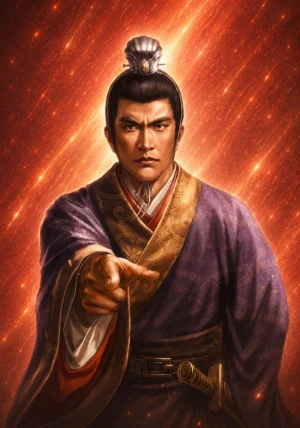
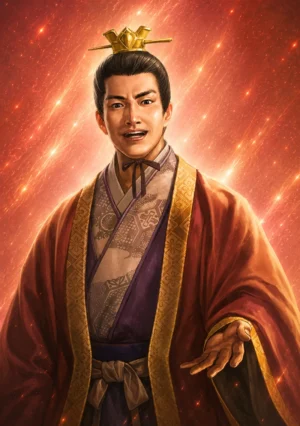
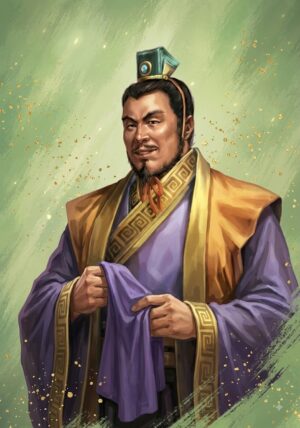
Sun Hao (242–284 AD), courtesy name Yuanzong, was the fourth and final ruler of Eastern Wu during the Three Kingdoms period. Born as the eldest son of deposed Crown Prince Sun He and Lady He, he was the grandson of Eastern Wu’s founding sovereign, Sun Quan. Following the sudden death of Emperor Jing (Sun Xiu) in 264 AD, imperial commanders Puyang Xing and Zhang Bu enthroned him to guide the southern realm through dangerous geopolitical instability following the fall of Shu Han.
Initially, the newly enthroned monarch governed with vigor and benevolence, opening imperial granaries to relieve famine and granting broad tax relief. However, this enlightened phase was short-lived. He soon descended into autocracy and deep paranoia, executing Puyang Xing and Zhang Bu for questioning his policies, squandering state treasuries on opulent palaces, and inflicting horrific physical punishments on critical officials. Despite tenacious frontier defense by Grand Marshal Lu Kang, Eastern Wu steadily weakened. In 279 AD, Emperor Wu of Jin launched a multi-pronged assault of over 200,000 troops. When the capital defenses collapsed at Banqiao in 280 AD, the sovereign surrendered Jianye, concluding the imperial lineage as detailed in the Records of the Three Kingdoms.
Role in Romance of the Three Kingdoms
In Luo Guanzhong’s 14th-century historical novel Romance of the Three Kingdoms, Sun Hao is depicted as a tyrannical, debauched, and superstitious ruler whose cruelty hastened dynastic collapse. In Chapters 119 and 120, he ignores the strategic warnings of Grand Marshal Lu Kang, relies heavily on corrupt sycophants like Cen Hun, and places futile iron chains across the Yangtze River. When the Western Jin armada led by Wang Jun burns through the river barricades, the Wu emperor binds his hands in surrender, bringing the century of tripartite division to an end.
Historical & Literary Timeline
Coronation & Purge of Kingmakers
Ascends the throne following Sun Xiu’s demise; shortly after, executes senior officials Puyang Xing and Zhang Bu for dissenting against court policies.
Pacification of Bu Chan’s Rebellion
Grand Marshal Lu Kang crushes the rebel forces at Xiling and repels the Jin relief army commanded by Yang Hu, securing the middle Yangtze boundary.
Internal Neglect and Decadence
Ignores defense memorials following Lu Kang’s death, indulges in lavish building projects, and enforces harsh mutilations against outspoken ministers.
Fall of Jianye and Enfeoffment
Surrenders unconditionally as Jin forces breach the capital; relocated to Luoyang, enfeoffed as the Marquis of Guiming, and dies of illness in 284 AD.
Key Relationships
Family
- Sun He (孙和): Father; deposed Crown Prince posthumously honored as Emperor Wen.
- Consort He (何姬): Mother; elevated to Empress Dowager Wen upon her son’s coronation.
- Sun Quan (孙权): Grandfather; founding Emperor Da of Eastern Wu.
- Empress Teng (滕皇后): Imperial consort who accompanied her husband into exile in Luoyang.
- Sun Jin (孙瑾): Eldest son; appointed Crown Prince of Eastern Wu in 269 AD.
Allies & Ministers
- Lu Kang (陆抗): Grand Marshal and key military pillar who defended the western borders and suppressed the Xiling uprising.
- Zhang Ti (张悌): Final Grand Chancellor who perished heroically leading the imperial army at Banqiao.
- Lu Kai (陆凯): Chancellor of the Left who repeatedly submitted critical remonstrances against court abuses.
- Cen Hun (岑昏): Influential palace favorite whose corrupt influence was blamed for the regime’s defensive failures.
Adversaries
- Sima Yan (司马炎): Emperor Wu of Jin; organized the comprehensive six-pronged conquest of Eastern Wu in 279–280 AD.
- Wang Jun (王濬): Jin Grand Admiral who navigated the upper Yangtze and received the formal surrender at Jianye.
- Wang Hun (王浑): Senior Jin general who defeated the southern field armies north of the Yangtze.
- Jia Chong (贾充): Jin Grand Commandant who was famously silenced by the captive ruler’s sharp retorts in Luoyang.
In Novel
Chapter 118
- Sun Hao (孙皓, Tôn Hạo): Sun Hao is the ruler of Eastern Wu during its final years. He is portrayed as harsh and increasingly detached from the welfare of his subjects. His government is weakened by executions, heavy demands and political repression while Jin prepares the final invasion.
Chapter 119
- Sun Hao (孙皓, Tôn Hạo): Sun Hao faces the advancing Jin armies and attempts to organize Wu’s defense. Despite mobilizing forces, Wu’s internal weakness and the effectiveness of the Jin commanders make resistance increasingly difficult.
Chapter 120
- Sun Hao (孙皓, Tôn Hạo): Jin armies invade Wu from multiple directions. Sun Hao’s government collapses as the capital is surrounded. He finally surrenders to Sima Yan, ending the Eastern Wu state and bringing the Three Kingdoms period to its conclusion. He is taken to Luoyang rather than executed.
History
Summary
- Sun Hao (孙皓, Tôn Hạo) was the fourth and final emperor of Eastern Wu.
Accession
- Sun Hao came to the throne after the death of Sun Xiu in 264.
- His reign began with some expectations of reform but soon became associated with harsh rule, extravagance and political repression.
Fall of Wu
- In 280, Jin launched a coordinated invasion of Wu.
- Sun Hao surrendered, ending Eastern Wu and bringing the Three Kingdoms period to an end.
Classification
- Historical.