
Contents
Biography & Historical Record
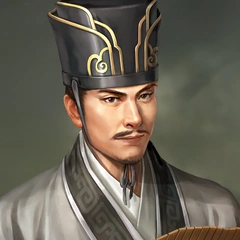
Sima Fu (180–272 AD), courtesy name Shuda, was a prominent statesman, scholar, and imperial official of Cao Wei during the Three Kingdoms period, who later lived into the early Jin dynasty. Born in Wen County, Henei Commandery (present-day Wen County, Henan), he was the third son of Sima Fang and the younger brother of the renowned strategist Sima Yi. Known for his mild temperament, literary talent, and unwavering personal integrity, Sima Fu served successive rulers of Cao Wei with utmost loyalty, holding numerous high-ranking civil and military posts including Minister of Works and Grand Tutor.
Despite his family holding absolute de facto control over the state of Cao Wei, Sima Fu maintained a deeply conservative loyalty to the imperial Cao clan throughout his long life. When his nephew Sima Zhao and great-nephew Sima Yan ultimately forced the abdication of the Wei emperors, Sima Fu wept openly at the palace gates and famously declared that until his dying breath, he would remain a loyal subject of Cao Wei. Out of profound respect for his virtue and seniority, the Sima rulers never persecuted him. He passed away in 272 AD at the advanced age of ninety-three, universally respected across the realm for his moral steadfastness.
Role in Romance of the Three Kingdoms
In Luo Guanzhong’s epic novel Romance of the Three Kingdoms, Sima Fu is portrayed as an intelligent, prudent, and deeply principled statesman who acts as the moral conscience within the powerful Sima family. Introduced during the political maneuvers of Cao Wei, Sima Fu assists his brother Sima Yi in managing domestic affairs and executing state security. In Chapter 106, during the Gaoping Tombs Incident, Sima Fu acts alongside Sima Yi to secure the capital of Luoyang against Cao Shuang’s faction.
However, Sima Fu’s defining literary moments highlight his loyalty to the declining imperial house. In Chapter 114, following the tragic assassination of the young Wei emperor Cao Mao by Cheng Ji, Sima Fu rushes to the scene, cradles the emperor’s body in his lap, and weeps bitterly, openly rebuking the brutal violence committed by his family’s associates. Even after the founding of the Jin dynasty, Sima Fu refuses to accept high imperial honors as a Jin prince, maintaining his identity as a loyal official of Wei until his death.
Notable Quotes & Famous Sayings
- “Though my body may belong to the new house, my heart shall forever remain bound to the soil of Wei!” — Sima Fu’s declaration reflecting his lifelong loyalty to Cao Wei.
- “To slay the Son of Heaven is a crime that shakes the heavens and the earth!” — Sima Fu condemning the assassination of Emperor Cao Mao.
Sima Fu (司馬孚) — Historical & Literary Timeline
Securing Luoyang During the Coup
Sima Fu assists Sima Yi during the Gaoping Tombs Incident, helping lock down the capital of Luoyang and maintaining order while the Sima clan neutralizes Cao Shuang.
Supporting the Deposition of Cao Fang
Following imperial plots against his family, Sima Fu participates in court deliberations that lead to the lawful deposition of Cao Fang and the selection of Cao Mao as the new emperor.
Mourning the Slain Emperor Cao Mao
When Emperor Cao Mao is assassinated in the streets by Cheng Ji, Sima Fu rushes forward, cradles the emperor’s bleeding body in his arms, and weeps uncontrollably in open grief.
Refusing to Abandon the Wei Name
When the Jin dynasty is formally established, Sima Fu declines grand imperial titles, declaring that he will die a loyal subject of Cao Wei.
Key Relationships
Family
- Sima Fang (司马防, Tư Mã Phòng) — Father and esteemed Han dynasty official who raised the Sima brothers.
- Sima Yi (司马懿, Tư Mã Ý) — Eldest brother and legendary strategist who led the Sima clan to dominance in Cao Wei.
- Sima Shi (司马师, Tư Mã Sư) — Nephew and regent of Cao Wei who continued the family’s consolidation of power.
- Sima Zhao (司马昭, Tư Mã Chiêu) — Nephew and regent of Cao Wei who oversaw the final decline of the Cao imperial house.
- Sima Yan (司马炎, Tư Mã Viêm) — Great-nephew and the founding emperor of the Jin dynasty.
Friends
- Cao Wei Imperial Court (曹魏朝廷, Tào Ngụy triều đình) — A broad circle of civil officials and scholars who maintained mutual respect for Sima Fu’s scholarly virtues and moderate political stance.
Enemies
- Cao Shuang (曹爽, Tào Sảng) — A rival regent whose political corruption and challenge to the Sima family’s authority prompted the Gaoping Tombs Incident in 249 AD.
- Cheng Ji (成济, Thành Tế) — The officer who assassinated Emperor Cao Mao in 260 AD, an act that Sima Fu openly condemned with deep grief.
Other
- Cao Mao (曹髦, Tào Mao) — The fourth emperor of Cao Wei, whom Sima Fu served loyally and whose tragic assassination in 260 AD caused Sima Fu to mourn openly at the palace gates.
- Cao Fang (曹芳, Tào Phương) — The third emperor of Cao Wei, whose deposition in 254 AD involved Sima Fu in court deliberations.
In Novel
Chapter 79
- Sima Fu (司马孚, Tư Mã Phù): Younger brother of Sima Yi (司马懿, Tư Mã Ý), courtesy name Shuda (Thúc Đạt); served as a high-ranking minister under Cao Cao (曹操, Tào Tháo) and Cao Pi (曹丕, Tào Phi).
Chapter 107
- Sima Fu (司马孚, Tư Mã Phù): Assisted during the Gaoping Tombs transition, maintaining civil stability in Luoyang.
Chapter 114
- Sima Fu (司马孚, Tư Mã Phù): Rushed to the palace following the assassination of Emperor Cao Mao, cradling the slain emperor’s head on his lap and weeping bitterly before the court, demonstrating lifelong personal loyalty as an upright Han and Wei statesman.
In History
Summary
- Sima Fu (司马孚, Tư Mã Phù), courtesy name Shuda, was a younger brother of Sima Yi and a senior statesman who served Wei and later Jin.
Year: 249 AD
- Sima Fu (司马孚, Tư Mã Phù) supported the Sima family’s takeover of political power during the Gaoping Tombs coup.
Year: 265 AD
- Sima Fu (司马孚, Tư Mã Phù) served the new Jin dynasty after Sima Yan’s accession.
Historical Record
- Sima Fu (司马孚, Tư Mã Phù) was a real historical statesman who lived through the transition from Wei to Jin.
Gallery