

Contents
Biography & Historical Record
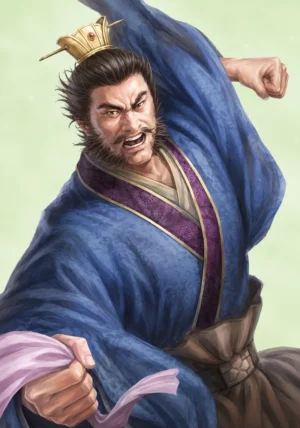
Cao Mao, courtesy name Yanshi, was the fourth emperor of the Cao Wei state during the Three Kingdoms period. A grandson of Cao Pi and great-grandson of Cao Cao, Cao Mao was installed on the throne at the age of fourteen in 254 AD by the powerful regent Sima Shi following the deposition of Cao Fang. Unlike the passive puppet emperors who preceded and succeeded him, Cao Mao possessed exceptional literary talent, profound intelligence, and a fierce, unyielding martial spirit reminiscent of his illustrious ancestor Cao Cao. Documented in Chen Shou’s official dynastic history Records of the Three Kingdoms (Sanguozhi – Book of Wei, Volume 4, Biography of Emperor Gao Guixiang), Cao Mao’s brief reign culminated in one of the most dramatic, heroic, and tragic acts of imperial defiance in Chinese history—a desperate, solitary armed uprising to reclaim sovereign power from the tyrannical Sima clan.
Upon ascending the throne, Cao Mao quickly demonstrated a sharp intellect, actively participating in scholarly debates and expressing deep frustration over the total usurpation of state power by the Sima family. Following Sima Shi’s death, Sima Zhao inherited supreme military control, acting with increasing arrogance, executing loyalist ministers, and openly grooming himself to usurp the throne. By 260 AD, at the age of nineteen, Cao Mao could no longer endure the humiliation of serving as a powerless prisoner in his own palace. He summoned three trusted confidants—the General of the Household Wang Shen, the Administrative Officer Wang Jing, and the Senior General Wang Su—into his inner chambers. Drawing his sword in bitter fury, Cao Mao declared his immortal intention: ‘Sima Zhao’s rebellious heart is known to every man on the streets! I cannot sit passively and allow myself to be deposed like a captured beast. I will lead you forth personally to confront him!’ Though his ministers frantically warned him of the insurmountable danger and begged him to reconsider, Cao Mao refused to yield, proclaiming that he would rather die fighting like an emperor than live in disgrace as a slave.
On the morning of June 2, 260 AD, Cao Mao executed his desperate coup. Donning his imperial robes, wielding his sword, and leading a meager force of several hundred palace attendants, eunuchs, and royal guards, he burst out of the palace gates beating drums and shouting war cries, charging directly toward Sima Zhao’s ministerial mansion. The bold spectacle of a reigning emperor personally leading a cavalry charge stunned the capital’s population and threw Sima Zhao’s elite guards into complete disarray. As Cao Mao’s loyalist band reached the Southern Gate, they collided with a massive force of Sima Zhao’s veteran cued-in troops commanded by the general Jia Chong. Outnumbered and outmatched, the imperial guards wavered. Seeing his men hesitating to strike a reigning sovereign, Jia Chong shouted furiously to his subordinate officer Cheng Ji: ‘The Sima clan feeds you for precisely this crisis! What are you hesitating for?’ Urged on by his commander, Cheng Ji spurred his horse forward and thrust a lethal spear directly through Cao Mao’s chest, killing the nineteen-year-old emperor instantly on the battlefield.
Cao Mao’s brutal assassination shocked the entire realm, dealing an irreparable moral blow to the legitimacy of the Sima family. Sima Zhao, feigning utter horror and grief, wailed loudly over the emperor’s body, posthumously demoted Cao Mao to the rank of commoner, and executed Cheng Ji alongside his entire clan to serve as scapegoats and appease public outrage. Cao Mao’s tragic defiance immortalized him as a romanticized archetype of imperial martyrdom, proving that even in the twilight of the Han and Three Kingdoms era, the concept of royal dignity could still inspire a sovereign to die sword in hand.
Role in Romance of the Three Kingdoms
In Chapter 114 of Luo Guanzhong’s classic 14th-century historical novel Romance of the Three Kingdoms, Cao Mao’s heroic rebellion is vividly dramatized as one of the most emotional climaxes of the late novel. The narrative captures his profound anguish over Sima Zhao’s unchecked tyranny, his famous declaration that ‘Sima Zhao’s heart is known to every passerby’, and his breathtaking decision to lead a palace charge against Sima Zhao’s garrison. His tragic death under Cheng Ji’s spear is depicted with high dramatic tension, serving as the definitive proof of the Sima family’s treasonous brutality and earning universal grief throughout the realm.
Cao Mao (曹髦) — Historical & Literary Timeline
Ascension to the Throne
Installed as the fourth Emperor of Cao Wei at age fourteen by Sima Shi following the deposition of the puppet emperor Cao Fang.
Leading Loyalists Against Sima Zhao & Slain by Cheng Ji
Summons loyal ministers, utters the famous declaration regarding Sima Zhao’s treason, and leads a palace guard charge out of the palace gates; intercepted at the Southern Gate and speared to death by Cheng Ji.
For detailed historical records, archives, and official chronicles, explore Cao Mao on Wikipedia.
Key Relationships
Family
- Cao Cao (曹操, Tào Tháo): Great-grandfather and foundational architect of Cao Wei, whose unyielding spirit and literary brilliance Cao Mao sought to emulate.
- Cao Pi (曹丕, Tào Phi): Grandfather and the founding Emperor of the Cao Wei dynasty.
- Cao Lin (曹霖, Tào Lâm): Biological father and Prince Ding of Donghai.
Friends
- Wang Jing (王经, Vương Kinh): Trusted administrative minister who pleaded with Cao Mao against launching the reckless palace coup in 260 AD, but remained steadfastly loyal to the emperor and was executed alongside his mother following the coup’s failure.
- Wang Shen (王沈, Vương Thẩm): Official summoned into the imperial inner circle to organize the 260 AD uprising, who immediately betrayed Cao Mao by rushing to alert Sima Zhao.
- Wang Ye (王业, Vương Nghiệp): Court official who joined Wang Shen in exposing Cao Mao’s planned rebellion to Sima Zhao.
Enemies
- Sima Zhao (司马昭, Tư Mã Chiêu): Paramount regent of Cao Wei whose tyrannical dominance and transparent usurpation plots drove Cao Mao to mount his desperate armed charge on June 2, 260 AD.
- Jia Chong (贾充, Giả Sung): Sima Zhao’s ruthless commander who blocked Cao Mao’s imperial guards at the Southern Gate and explicitly incited Cheng Ji to strike down the sovereign.
- Cheng Ji (成济, Thành Tế): Military officer who impaled Cao Mao through the chest with a spear during the 260 AD coup, and was later executed with his entire family by Sima Zhao as a scapegoat.
- Sima Shi (司马师, Tư Mã Sư): Authoritarian regent who deposed Emperor Cao Fang and installed the fourteen-year-old Cao Mao as a supposed puppet ruler in 254 AD.
Other
- Cao Fang (曹芳, Tào Phương): Predecessor and cousin whose deposition by Sima Shi in 254 AD directly led to Cao Mao being elevated to the imperial throne.
- Empress Dowager Guo (郭太后, Quách thái hậu): Empress Dowager Mingyuan who issued the imperial edicts authorizing Cao Mao’s ascension in 254 AD and was later coerced by Sima Zhao into signing the decree that demoted the slain emperor to a commoner in 260 AD.
In Novel
Chapter 109
- Cao Mao (曹髦, Tào Mao): Cao Mao becomes emperor after Cao Fang is deposed. He recognizes that Sima Zhao has effectively taken control of Wei and openly resents the loss of imperial authority. Cao Mao decides to confront Sima Zhao’s power directly, leaving the palace with a small group of attendants and declaring that he would rather die than remain a powerless emperor.
Chapter 114
- Cao Mao (曹髦, Tào Mao): Cao Mao’s confrontation ends in tragedy. As he attempts to move against Sima Zhao, Sima Zhao’s officers intercept him. Cheng Ji attacks the imperial carriage and kills Cao Mao. The death is the central event of the chapter’s title, “Cao Mao drives out and dies at the Southern Gate,” and demonstrates that Sima Zhao can now kill the Wei emperor openly. citeturn2search0turn2search33
In History
Summary
- Cao Mao (曹髦, Tào Mao), courtesy name Yanshi, was the fourth emperor of Cao Wei.
Political Situation
- He ascended the throne in 254 while the Sima family increasingly controlled the Wei government.
- Cao Mao was intelligent and personally ambitious, but lacked the military and political power needed to dislodge Sima Shi and later Sima Zhao.
Attempt to Reassert Imperial Authority
- In 260, Cao Mao decided to confront Sima Zhao directly.
- He left the palace with a small group of attendants and attempted to assert imperial authority against Sima Zhao’s supporters.
Death
- Cao Mao was killed by soldiers led by Cheng Ji during the confrontation.
- His death became one of the clearest examples of the collapse of effective Cao imperial authority before the rise of Jin.
- Classification: Historical.
1 comment
[…] Cao Mao (曹髦, Tào Mao): Fourth Emperor of Cao Wei during whose turbulent reign Ruan Ji held court posts while navigating the dangerous factional struggles between the emperor and the Sima clan. […]