
Contents
The Regal Counterpart to the Qinggang Sword and its Cultural Legacy
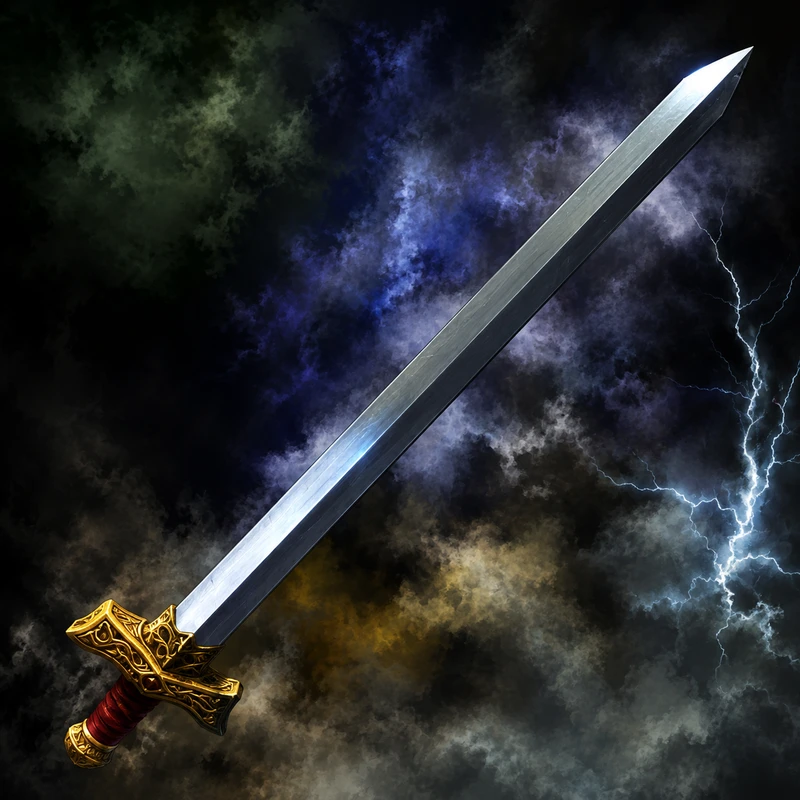
In Luo Guanzhong’s (罗贯中, La Quán Trung) epic novel Romance of the Three Kingdoms (三国演义, Sān Guó Yǎn Yì, Tam Quốc Diễn Nghĩa), the warlord Cao Cao (曹操, Tào Tháo) possessed two divine, custom-forged twin swords: the Qinggang Sword (青釭剑, Qīnggāng Jiàn, Thanh Cang Kiếm) and the Yitian Sword (倚天剑, Yǐtiān Jiàn, Ỷ Thiên Kiếm).
While the Qinggang Sword became legendary for its battlefield lethality when captured by Zhao Yun (赵云, Triệu Vân) at Changban (长坂坡, Trường Bản Pha), the Yitian Sword held a far higher symbolic status. Kept at Cao Cao’s side, it represented imperial command, absolute political power, and the terrifying authority of a ruler who answered to no one.
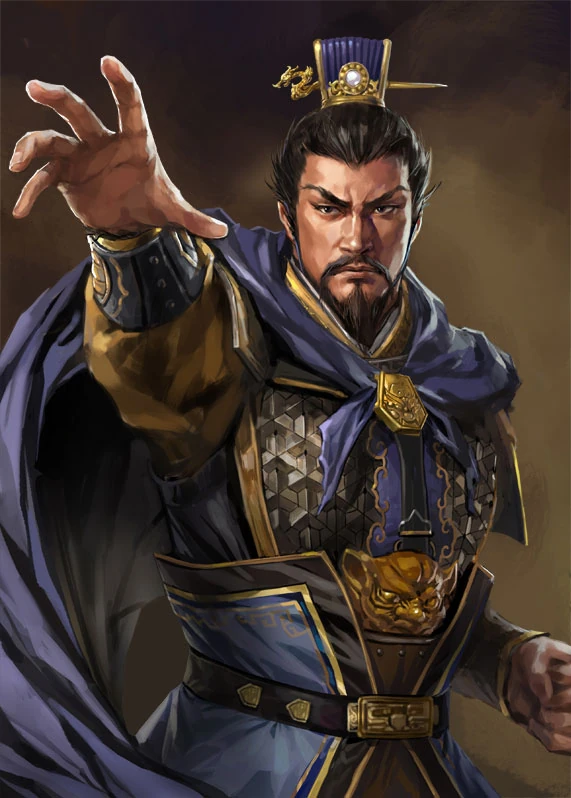
Cao Cao – 曹操 – Tào Tháo
Origin and Meaning of the Name
According to Chapter 41 of Romance of the Three Kingdoms, Cao Cao commissioned the forging of two twin swords crafted from meteoritic iron and refined steel.
The name Yǐtiān (倚天) literally translates to “Leaning against the Heavens” or “Heaven-Slicing.” The name originates from a famous poem by Song Yu (宋玉) in the Warring States period, referencing a blade so massive and powerful that its tip leans against the sky.
By naming his sword Yitian, Cao Cao signaled his grand political ambition: to stand between Heaven and Earth as the ultimate master of the realm.
The Division of the Twin Blades
The two swords served distinct, complementary functions in Cao Cao’s regime:
-
The Yitian Sword (倚天剑, Ỷ Thiên Kiếm):
-
Role: The Sword of Supreme Command (Personal Sidearm).
-
Status: Worn directly on Cao Cao’s waist at all times during court sessions, troop inspections, and military campaigns. It was used to issue imperial commands and execute officers who violated military law.
-
-
The Qinggang Sword (青釭剑, Thanh Cang Kiếm):
-
Role: The Sword of Vanguard Combat (Battlefield Blade).
-
Status: Entrusted to Cao Cao’s personal sword-bearer, Xiahou En (夏侯恩, Hạ Hầu Ân), to cut down high-ranking enemies on the frontlines before it was seized by Zhao Yun in 208 AD.
-

Symbolic Role in the Three Kingdoms Era
Unlike other weapons in the novel that are defined primarily by combat prowess, the Yitian Sword is defined by its political and psychological weight.
1. Symbol of Absolute Imperial Authority
As Prime Minister and later King of Wei (魏王, Ngụy Vương), Cao Cao effectively held Emperor Xian of Han (汉献帝, Hán Hiến Đế) under house arrest, using the Emperor as a political pawn (“Holding the Emperor to command the nobles” / 挟天子以令诸侯). The Yitian Sword resting at Cao Cao’s side in court was a subtle yet terrifying reminder to all officials that power resided with Cao Cao, not the Han Emperor.
2. Execution of Military Law
Throughout his campaigns against Yuan Shao (袁绍, Viên Thiệu), Liu Bei (刘备, Lưu Bị), and Sun Quan (孙权, Tôn Quyền), Cao Cao drew the Yitian Sword to enforce strict discipline. When generals panicked or contemplated retreat, Cao Cao would draw the Yitian Sword, plant it in front of his command tent, and declare that anyone who stepped back would be executed by the blade.
Summary of Profile Details
| Aspect | Historical & Literary Details |
| Chinese Name | 倚天剑 (Yǐtiān Jiàn) |
| Vietnamese Name | Ỷ Thiên Kiếm |
| Name Translation | “Heaven-Leaning Sword” / “Heaven-Slicing Blade” |
| Weapon Type | Double-edged Straight Sword (Jiàn / 剑) |
| Owner | Cao Cao (曹操, Tào Tháo) |
| Twin Companion | The Qinggang Sword (青釭剑, Thanh Cang Kiếm) |
| Primary Function | Symbol of Supreme Command and Execution of Imperial Authority |
| Key Symbolism | Political Dominance, Regal Majesty, Unyielding Ambition |
Literary Legacy: From Three Kingdoms to Jin Yong
The concept of the Yitian Sword transcended Romance of the Three Kingdoms to become one of the most famous weapon names in entire Asian wuxia fiction:
-
The Heavenly Sword and Dragon Sabre (倚天屠龙记):
In the 20th century, the legendary wuxia novelist Jin Yong (Louis Cha) drew direct inspiration from Cao Cao’s sword to create the central weapon in his masterpiece, The Heavenly Sword and Dragon Sabre (倚天屠龙记, Ỷ Thiên Đồ Long Ký). In Jin Yong’s universe, the Heavenly Sword (Yitian Jian) represents supreme martial dominance, echoing the original regal authority of Cao Cao’s blade.
-
Historical Reality vs. Fiction:
In Chen Shou’s historical Records of the Three Kingdoms (三国志), there is no specific mention of a sword named “Yitian” owned by Cao Cao. However, historical records confirm that Cao Cao was an avid collector of fine blades and a master of swordplay himself. Luo Guanzhong used the Yitian Sword as a brilliant literary motif to contrast Cao Cao’s political sovereignty with the frontline heroism of warriors like Zhao Yun and Guan Yu.
For detailed historical records, archives, and official chronicles, explore The Yitian Sword on Wikipedia.