
Contents
Biography & Historical Record
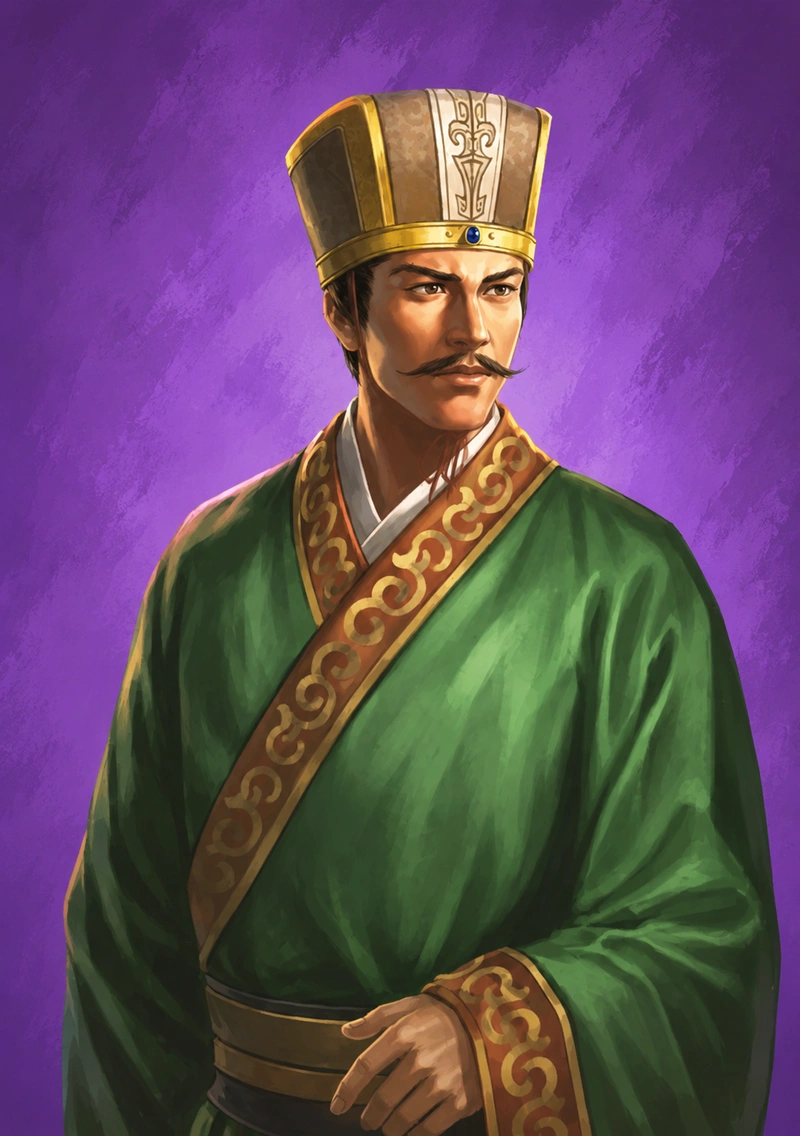
Wang Mou, courtesy name Yuantai, was a distinguished Shu Han senior statesman, scholar, and imperial ritualist who served as Minister of Ceremonies (Taichang) and Director of the Imperial Treasury (Shaofu). Hailing from Chengdu in Shu Commandery (modern-day Chengdu, Sichuan Province), Wang Mou was a respected representative of the local Ba-Shu gentry. Documented in Chen Shou’s official dynastic history Records of the Three Kingdoms (Sanguozhi – Book of Shu, Biography of Qin Mi and others), Wang Mou was historically celebrated for his solemn dignity, uncompromising legal integrity, and deep expertise in dynastic ritual and court protocol. He played a pivotal role in establishing the formal legitimacy of the Shu Han regime during the transition from the chaotic late Eastern Han era to the founding of Liu Bei’s empire.
Initially serving under the regional governor Liu Zhang as a Commandery Attendant (Zhuzhong Congshi), Wang Mou gained wide renown for his fairness and administrative honesty. When Liu Bei successfully seized Yizhou in 214 AD, he recognized Wang Mou’s high moral prestige among the local scholar-gentry and immediately recruited him, eventually appointing him as the Administrator of Ba Commandery. In 219 AD, following Liu Bei’s climactic victory over Cao Cao at the Battle of Hanzhong, the state required a formal, legally grounded declaration to assert its authority. Wang Mou, alongside the Prime Minister Zhuge Liang, Fa Zheng, and other senior ministers, co-signed the historic grand memorial submitted to the Han court in Luoyang, formally petitioning for Liu Bei’s enthronement as the King of Hanzhong (Hanzhong Wang), providing the political cornerstone for the eventual founding of the Shu Han dynasty.
After the enthronement of Emperor Liu Shan in 223 AD and the appointment of Zhuge Liang as Prime Minister, the court underwent a major reorganization. Because of his profound erudition and impeccable conduct, Wang Mou was summoned to the capital, Chengdu, and served as Director of the Imperial Treasury (Shaofu), overseeing palace finances and imperial seals. He was later elevated to the position of Minister of Ceremonies (Taichang), the highest-ranking official of the Nine Ministers responsible for imperial worship, sacrificial rites, and state education. He succeeded the brilliant but eccentric scholar Lai Min in this office. As Minister of Ceremonies, Wang Mou maintained absolute order and solemnity within the court, ensuring that all rituals were performed with traditional rigor. His administrative discipline helped stabilize the court bureaucracy during the difficult years following Liu Bei’s death. For his meritorious service to the state, he was granted the noble rank of Marquis of Guannei. He passed away peacefully while in office during the Jianxing era (223–237 AD), leaving behind a legacy of upright civil service and deep respect among the intellectual circles of Chengdu.
Famous Quotes & Historical Sayings
In the historical records of the Records of the Three Kingdoms (Sanguozhi – Book of Shu), historian Chen Shou praised Wang Mou’s character and administrative impact: ‘Wang Mou Yuantai possessed a temperament of quiet gravity and enforced the law with unerring consistency. As a local official, he won the hearts of the people through benevolence; as the head of the Ministry of Ceremonies, he upheld the sanctity of the imperial court with profound solemnity. His moral weight and steadfast nature provided a stabilizing force for the administration of the Shu Han court, serving as a bright mirror for all civil officials to emulate.’
Wang Mou (王謀) — Historical & Literary Timeline
Service Under Liu Bei & Appointment as Administrator
Recruited by Liu Bei following the pacification of Yizhou; valued for his high standing among local Shu scholars and appointed as Administrator of Ba Commandery.
Co-signing Petition for King of Hanzhong
Joins the grand ministerial coalition led by Zhuge Liang and Fa Zheng to formally petition for Liu Bei’s ascension as King of Hanzhong, legitimizing the Shu Han state.
Serving as Minister of Ceremonies & Court Administrator
Promoted to Director of the Imperial Treasury and then Minister of Ceremonies (Taichang) by Zhuge Liang; enforces strict ritual and bureaucratic standards in the Chengdu capital.
Passing Away in Office
Passes away peacefully in Chengdu due to illness at the height of his career; honored posthumously for his lifelong service to the Shu Han throne.
For detailed historical records, archives, and official chronicles, explore Wang Mou on Wikipedia.
Key Relationships
Family
- No information
Friends
- Zhuge Liang (诸葛亮, Gia Cát Lượng): Prime Minister of Shu Han who deeply valued Wang Mou’s integrity and erudition, promoting him to Director of the Imperial Treasury (Shaofu) and Minister of Ceremonies (Taichang) to maintain court discipline and ritual protocol.
- Fa Zheng (法正, Pháp Chính): Senior advisor and strategist who, along with Wang Mou and Zhuge Liang, co-signed the historic 219 AD memorial petitioning for Liu Bei’s enthronement as the King of Hanzhong.
Enemies
- No information
Other
- Liu Bei (刘备, Lưu Bị): Founding Emperor of Shu Han who recognized Wang Mou’s moral prestige among the local Ba-Shu gentry upon entering Yi Province in 214 AD, appointing him as Administrator of Ba Commandery.
- Liu Shan (刘禅, Lưu Thiền): Second Emperor of Shu Han under whose reign Wang Mou served with distinction as Minister of Ceremonies and was enfeoffed as a Marquis of Guannei.
- Liu Zhang (刘璋, Lưu Chương): Governor of Yi Province whom Wang Mou served as a Commandery Attendant (Zhuzhong Congshi) before the province came under Liu Bei’s control.
- Lai Min (来敏, Lai Mẫn): Eccentric senior scholar and official whose lack of decorum led to his dismissal as Minister of Ceremonies, after which Wang Mou was appointed as his disciplined successor.
In Novel
Wang Mou (王谋, Wáng Móu) does not have a securely verified named appearance in the supplied edition under the exact Chinese name 王谋. No chapter is assigned without an exact textual match.
In History
Summary
- Wang Mou (王谋, Vương Mưu) was an official who served in the government of Liu Bei and Shu Han.
Service under Liu Bei
- Wang Mou was incorporated into Liu Bei’s administration after the establishment of Shu’s control over Yi Province.
- He participated in civil administration and helped maintain the institutions inherited from the late Han government.
Historical Record
- His importance lies primarily in administration rather than major military exploits.
- Classification: Historical.