
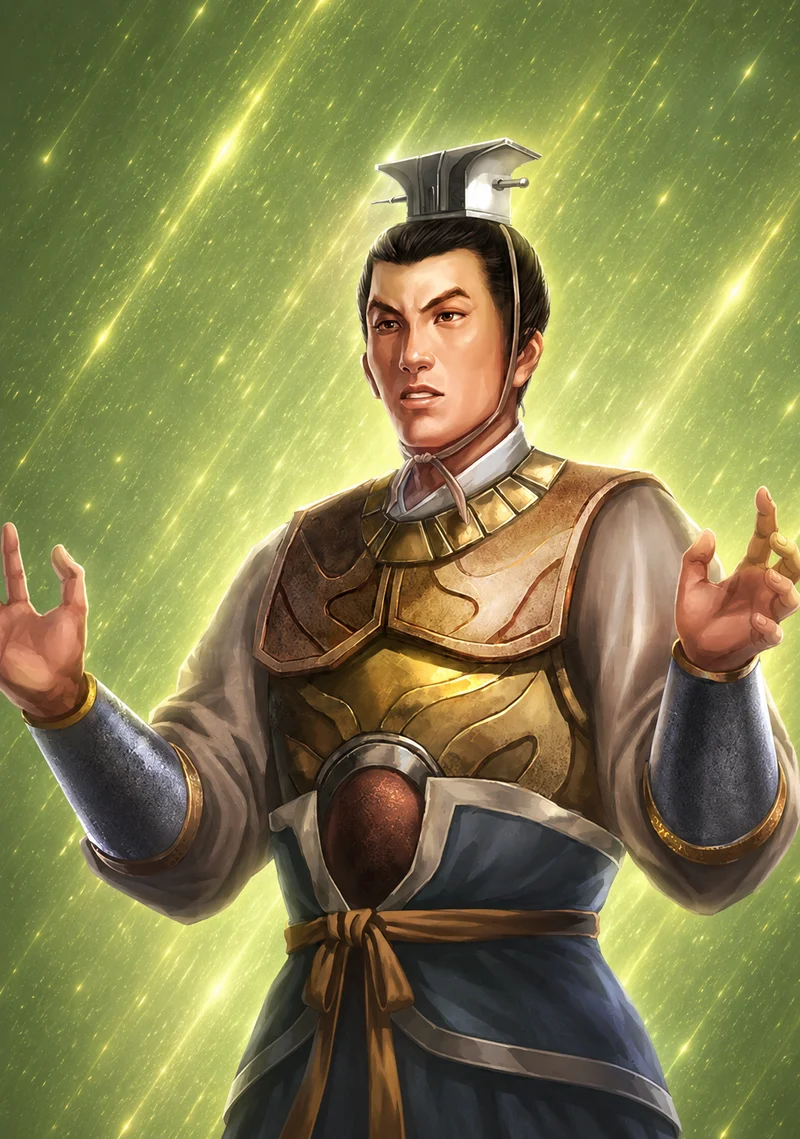
Wang Tao (王韬) was a civil official and military advisor serving the state of Cao Wei during the turbulent late Three Kingdoms period. He served as a Registrar (Zhubu) on the central staff of General-in-Chief Sima Zhao, assisting during the crucial military campaigns that consolidated the Sima clan’s control over the imperial court.
Contents
The Strategic Legacy of Wang Tao at Shouchun
During the Third Rebellion of Shouchun (257–258 AD), Grand General Zhuge Dan rebelled in alliance with Eastern Wu. Assigned to Sima Zhao’s core headquarters, the advisor analyzed logistical dynamics and correctly predicted that the massive concentration of rebel troops and Wu auxiliary reinforcements under Wen Qin would swiftly deplete Shouchun’s grain reserves. He recommended maintaining an unyielding perimeter rather than launching costly assaults, a siege tactic that triggered starvation, internal mutiny, and ultimate victory for Wei.
Role in Romance of the Three Kingdoms
In Luo Guanzhong’s historical epic Romance of the Three Kingdoms, Wang Tao is depicted as a perceptive strategist during the Shouchun encirclement:
“The registrar stepped forward and warned: ‘Shouchun is overcrowded with rebel soldiers and tens of thousands of Wu reinforcements. Their grain cannot sustain them long. If we maintain deep trenches and high fortifications without reckless assaults, their food will run out and they will collapse from within.’ Sima Zhao adopted this counsel immediately.”
Historical Timeline
Expedition to Huainan
Joins Sima Zhao’s grand campaign to suppress the uprising instigated by Zhuge Dan.
Siege of Shouchun
Formulates the successful blockade strategy that exhausts enemy supplies and ends the rebellion.
Key Relationships
- Sima Zhao (司马昭): Regent of Cao Wei whom this trusted registrar served as chief strategic counselor during the Huainan campaigns.
- Zhong Hui (钟会): Renowned strategist on Sima Zhao’s staff who collaborated on siege operations.
- Jia Chong (贾充): Influential confidant of Sima Zhao who helped orchestrate the campaign.
- Zhuge Dan (诸葛诞): Commander of the Huainan rebellion who was defeated and killed after the encirclement.
- Wen Qin (文钦): Allied Wu general trapped in Shouchun who was executed amidst the internal strife.
In Novel
Chapter 109
- Wang Tao (王韬, Vương Thao): Wang Tao serves as Sima Zhao’s chief secretary during the campaign against Jiang Wei. When Sima Zhao’s army is troubled by a severe shortage of water at Iron Cage Mountain, Wang Tao suggests that the army pray for water. The novel presents the episode as a striking example of the desperation of the Wei army during the campaign.
History
Identification
- Wang Tao (王韬, Vương Thao) is a minor figure for whom the available exact-name evidence is limited.
Historical Evidence
- The surviving record does not provide enough securely attributable information for a detailed biography.
- Care should be taken not to merge this entry with other historical figures named Wang Tao.
Classification
- Needs Audit / Briefly Attested.