
Contents
Biography & Historical Record
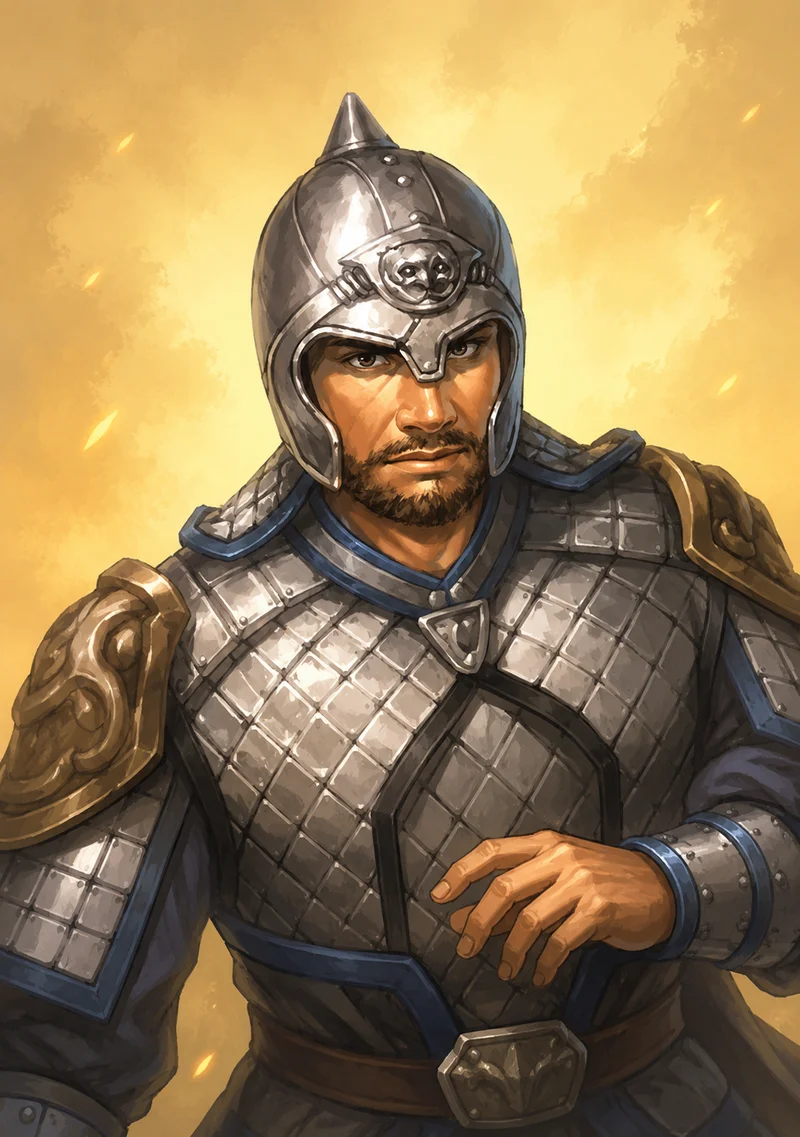
Wei Kai was a Cao Wei military officer who served as vice-commander of the garrison at Wancheng in Nanyang Commandery during the late Eastern Han dynasty. Documented in Chen Shou’s Records of the Three Kingdoms (Sanguozhi – Book of Wei, Biography of Cao Ren and Biography of Pang De) and Luo Guanzhong’s classic historical novel Romance of the Three Kingdoms, Wei Kai is historically celebrated as a courageous, unyielding commander who co-led the major Nanyang armed insurrection of 218–219 AD alongside garrison commander Hou Yin, revolting against Cao Cao’s oppressive winter taxation and forced labor levies, establishing a vital strategic alliance with Shu Han general Guan Yu, and ultimately choosing public execution over surrendering to Cao Ren.
During the winter of 218 AD, as Chancellor Cao Cao conducted his grueling campaign against Liu Bei in Hanzhong, the civilian populace and military garrisons of Nanyang Commandery were subjected to unbearable war taxes, excessive grain requisitions, and forced winter labor constructing frontier fortifications. Moved by popular suffering and widespread military discontent, Wei Kai joined forces with garrison commander Hou Yin to organize a righteous uprising. Wei Kai personally commanded a shock unit that assaulted the Nanyang administrative headquarters at Wancheng, capturing the Administrator of Nanyang, securing the city armory, and liberating thousands of conscripted laborers. Recognizing Wancheng’s vital position as the northern gateway to Jing Province, Wei Kai and Hou Yin dispatched secret envoys across enemy lines to Jing Province, forming a formal military alliance with Guan Yu to stage a two-pronged campaign against Luoyang and Xuchang to liberate Emperor Xian.
Alarmed by the threat of a joint force between Wei Kai and Guan Yu breaking his southern defense line, Cao Cao ordered Grand General Cao Ren at Fancheng to immediately march north and crush the rebellion. In early 219 AD, Cao Ren encircled Wancheng with elite veteran siege forces. Wei Kai was assigned the crucial task of supervising the defense of the western and southern city ramparts. Utilizing heavy boulders, boiling oil, and dense archery, Wei Kai repeatedly shattered Cao Ren’s assault waves, successfully defending the fortress for over two months in anticipation of Guan Yu’s relief army. However, because Guan Yu was finalizing preparations for his Northern Expedition, Wancheng remained isolated. In January 219 AD, Cao Ren breached the city gates and launched a total assault. After Hou Yin fell in street fighting, Wei Kai attempted to fight his way out through the encirclement but was captured due to physical exhaustion. Respecting his martial valor, Cao Ren attempted to persuade Wei Kai to surrender, but Wei Kai loudly berated Cao Ren and steadfastly refused to submit. Outraged, Cao Ren ordered Wei Kai publicly executed in the marketplace. Despite the fall of Wancheng, Wei Kai’s brave resistance diverted Cao Ren’s main army away from Fancheng for months, directly enabling Guan Yu’s famous Northern Expedition and victory at Fancheng later that summer.
Role in Romance of the Three Kingdoms
In Luo Guanzhong’s novel Romance of the Three Kingdoms, Wei Kai appears in Chapter 73 as the fierce, loyal vice-commander who co-leads the Wancheng uprising against Cao Cao’s tyranny. Appalled by the harsh winter conscription imposed on Nanyang, Wei Kai and Hou Yin seize Wancheng, arrest the local magistrate, and send secret envoys to ally with Guan Yu. When Cao Cao dispatches Cao Ren from Fancheng to crush the revolt, Wei Kai personally commands the city ramparts, holding off Cao Ren’s siege forces for over two months. Following Hou Yin’s death in street combat after the city falls in January 219 AD, Wei Kai is captured and brought before Cao Ren. When offered his life in exchange for submission, Wei Kai fearlessly curses Cao Cao and Cao Ren, choosing death over dishonor. Cao Ren orders him executed in the marketplace. Wei Kai’s heroic martyrdom in Chapter 73 serves as the critical strategic precursor to Chapter 73 and Chapter 74, setting the stage for Guan Yu’s Northern Expedition and legendary campaign that shook Central China.
Wei Kai (衛開) — Historical & Literary Timeline
Co-Leading the Rebellion & Alliance with Guan Yu
Rebels against Cao Cao alongside Hou Yin due to oppressive winter levies; leads a shock unit to seize Wancheng, arrests the Administrator, and dispatches secret envoys to ally with Guan Yu.
Supervising Western & Southern Defense Lines
Supervises the western and southern ramparts of Wancheng, repelling Cao Ren’s assault waves for over two months while holding down Cao Wei’s main southern army away from Fancheng.
Refusing Surrender & Execution at the Marketplace
Captured after Hou Yin falls in street combat; refuses Cao Ren’s demand to surrender, berates the enemy, and is executed in the marketplace, paving the way for Guan Yu’s Northern Expedition.
For detailed historical records, archives, and official chronicles, explore Wei Kai on Wikipedia.
Key Relationships
Family
- No information
Friends
- Hou Yin (侯音, Hầu Âm): Garrison commander at Wancheng and co-leader of the Nanyang rebellion in 218–219 AD; joined forces with Wei Kai to seize the commandery headquarters, organize local defenses, and coordinate an alliance with Guan Yu until he was killed during the city’s fall.
- Guan Yu (关羽, Quan Vũ): Senior Shu Han general commanding Jing Province; formed a strategic anti-Wei alliance with Wei Kai and Hou Yin during the winter of 218 AD to coordinate a two-pronged offensive toward Luoyang and Xuchang.
Enemies
- Cao Ren (曹仁, Tào Nhân): Senior Cao Wei grand general who led the siege against Wancheng in 218–219 AD; after breaching the city defenses, he captured Wei Kai and ordered his public execution when Wei Kai fiercely refused to surrender.
- Cao Cao (曹操, Tào Tháo): King of Wei and Chancellor whose harsh winter levies, heavy wartime taxation, and forced conscription for the Hanzhong campaign incited Wei Kai and Hou Yin to stage their armed uprising in Nanyang.
- Pang De (庞德, Bàng Đức): Cao Wei general serving under Cao Ren who took part in the siege and military suppression of Wancheng in early 219 AD.
Other
- No information
In Novel
Wei Kai (卫开, Wèi Kāi) does not have a securely verified named appearance in the supplied edition under the exact Chinese name 卫开. Do not merge him with Wei Kai (卫凯), the Wei court official who appears in the novel. No chapter is assigned for 卫开.
In History
Summary
- Wei Kai (卫开, Vệ Khai) is a minor figure associated with the military and political events of the late Han and Three Kingdoms period.
Historical Record
- The surviving sources provide insufficient detail for a substantial independent biography.
- Classification: Historical / Briefly Attested.