
Contents
Biography & Historical Record
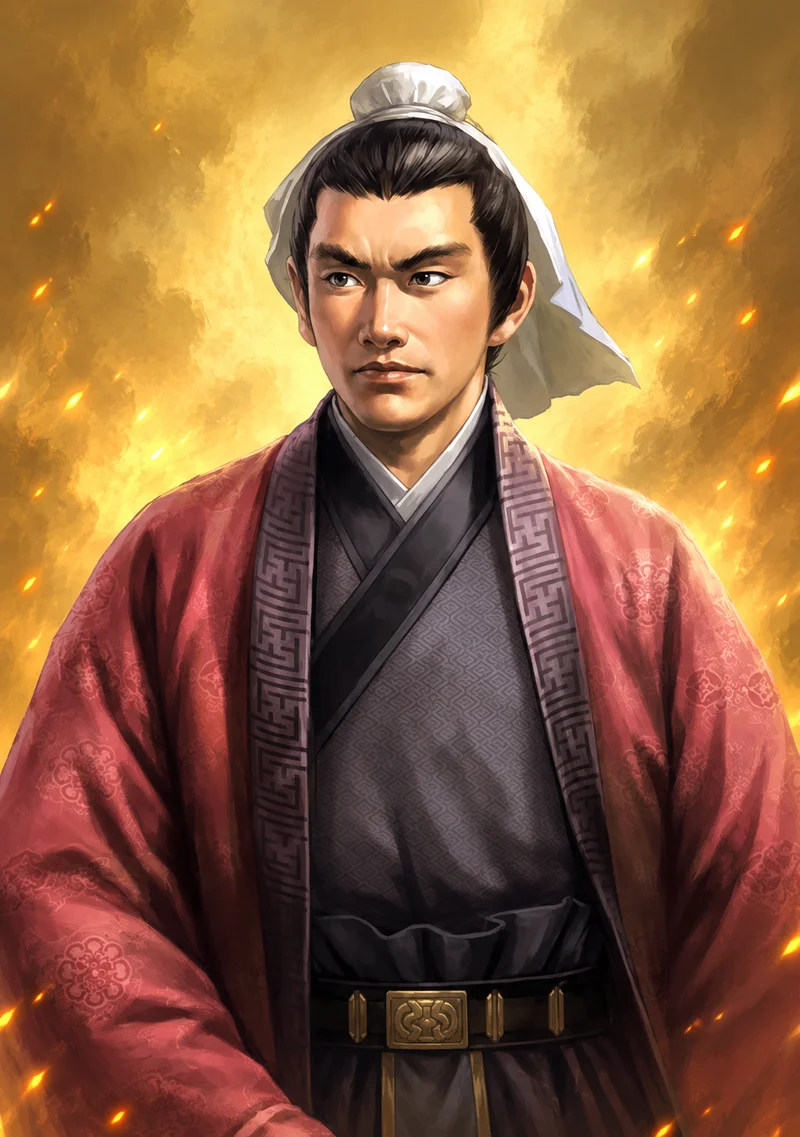
Wu Can (died 245), courtesy name Konggao, was a prominent military general and civil minister of the state of Eastern Wu during the Three Kingdoms period. Born into a humble family in Wucheng, Wu Commandery (present-day Huzhou, Zhejiang), Wu Can was renowned from a young age for his integrity, brilliant intellect, and close friendship with the future Wu Grand Chancellor, Lu Xun. He was highly regarded for his capability to handle both civil administration and military strategy.
Wu Can began his career as a minor local official but quickly rose through the ranks due to his outstanding talent. He was appointed as the Prefect of Shan County, where he successfully pacified local rebellions and stabilized the region. His administrative success led to his promotion to the Administrator of Huiji, where his governance won the hearts of the people. In 241, Wu Can participated in the military campaigns against Cao Wei, joining the veteran general Zhu Ran in besieging Hefei Xincheng. Although the siege was eventually lifted due to the arrival of Wei reinforcements led by Sima Yi, Wu Can’s military leadership was highly praised.
In 243, Wu Can was appointed as the Crown Prince’s Tutor (太子太傅) to guide and educate Sun He, the designated heir of Sun Quan. This appointment placed him at the center of the political storm known as the “Two Palaces Incident” (二宮之爭)—a bitter succession struggle between Crown Prince Sun He and the Prince of Lu, Sun Ba. Strongly adhering to Confucian principles of proper succession and hierarchy, Wu Can resolutely supported Sun He. He repeatedly petitioned Emperor Sun Quan to curb Sun Ba’s influence and even wrote to Lu Xun, who was stationed in Wuchang, urging him to intervene to protect the state’s stability.
Wu Can’s firm stance made him a primary target for Sun Ba’s faction. Slandered by Yang Zhu and other supporters of the Prince of Lu, Wu Can was falsely accused of conspiring to subvert the imperial decision. Sun Quan, swayed by the slander and growing increasingly unstable in his final years, ordered Wu Can to be imprisoned. In 245, Wu Can was executed in prison, marking one of the greatest tragedies of the Eastern Wu succession crisis.
Role in Romance of the Three Kingdoms
“The execution of Wu Can and the forced suicide of Lu Xun’s supporters marked the tragic self-destruction of Eastern Wu’s finest minds, all sacrificed to the flames of court intrigue.”
In Luo Guanzhong’s historical novel Romance of the Three Kingdoms, Wu Can appears as a loyal and upright minister of Eastern Wu. His role mirrors his historical counterpart, particularly during the late chapters of the novel depicting the tragic succession dispute between Sun He and Sun Ba. The novel highlights his tragic end as a symbol of the internal rot and factionalism that plagued the court of Eastern Wu during Sun Quan’s later years, setting the stage for the state’s eventual decline.
Wu Can — Historical & Literary Timeline
Humble Beginnings and Lifelong Friendship
Born in Wucheng, Wu Commandery. Despite his modest background, he develops a deep, lifelong friendship with the young genius Lu Xun, earning a reputation for high moral standards and sharp intellect.
Rise in Civil and Military Ranks
Serves as Prefect of Shan County and later as Administrator of Huiji. Successfully pacifies local Shanyue tribes and earns widespread administrative acclaim.
The Siege of Hefei Xincheng
Commands Wu forces alongside Zhu Ran in a major campaign against Cao Wei, besieging the stronghold of Hefei Xincheng before withdrawing under pressure from Sima Yi.
Appointment as Crown Prince’s Tutor
Appointed as Crown Prince’s Tutor (太子太傅) to guide Sun He, placing him at the center of the brewing succession dispute.
Tragic Downfall and Execution
After speaking out against Sun Ba and writing to Lu Xun for political intervention, he is slandered by Yang Zhu and executed in prison on Sun Quan’s orders.
Key Relationships
Family
- No information
Friends
- Lu Xun (陆逊, Lục Tốn): Grand Chancellor of Eastern Wu. Wu Can’s closest lifelong friend and political confidant; together they staunchly defended Crown Prince Sun He during the Two Palaces Contention, suffering persecution from rival factions.
- Sun He (孙和, Tôn Hòa): Crown Prince of Eastern Wu. Wu Can served as his dedicated Junior Tutor (Taizi Shaofu), fiercely defending his lawful succession before Sun Quan.
- Gu Tan (顾谭, Cố Đàm): Eminent scholar-statesman and grandson of Gu Yong who allied with Wu Can in supporting Crown Prince Sun He.
- Zhu Ju (朱据, Chu Cứ): Senior general and imperial brother-in-law who joined Wu Can in remonstrating against the deposition of Sun He.
- Sun Quan (孙权, Tôn Quyền): Founding Emperor Da of Eastern Wu who initially valued Wu Can’s administrative talent and integrity, appointing him Area Commander of Zhaoling.
Enemies
- Sun Ba (孙霸, Tôn Bá): Prince of Lu. Established a rival court faction to usurp the crown prince position, clashing bitterly with Wu Can during the Two Palaces Contention (242–245 AD).
- Sun Luban (孙鲁班, Tôn Lỗ Ban): Imperial Princess of Eastern Wu (Princess Quan). Fabricated vicious slanders against Crown Prince Sun He and his supporters, prompting Sun Quan to arrest and imprison Wu Can.
- Yang Zhu (杨竺, Dương Trúc): Key political conspirator under Sun Ba who submitted forged accusations against Wu Can, directly causing Wu Can to be executed in prison in 245 AD.
- Quan Cong (全琮, Toàn Tông): Grand General of Eastern Wu who backed Prince Sun Ba against Wu Can and Lu Xun.
Others
- No information
In Novel
Wu Can (吾粲, Ngô Sán) is included in the novel’s character tradition, but the currently verified source material does not give enough exact chapter-level evidence to reconstruct his full timeline safely. No chapter is fabricated here.
History
Summary
- Wu Can (吾粲, Ngô Sán) was a scholar-official of Eastern Wu.
Political Career
- Wu Can served under Sun Quan and became involved in the political struggles surrounding the succession between Sun He and Sun Ba.
- He supported Crown Prince Sun He and criticized officials whose actions threatened the succession order.
Death
- Because of his political position, Wu Can became a target during the succession conflict and was eventually executed.
Classification
- Historical.
