
Contents
Biography & Historical Record
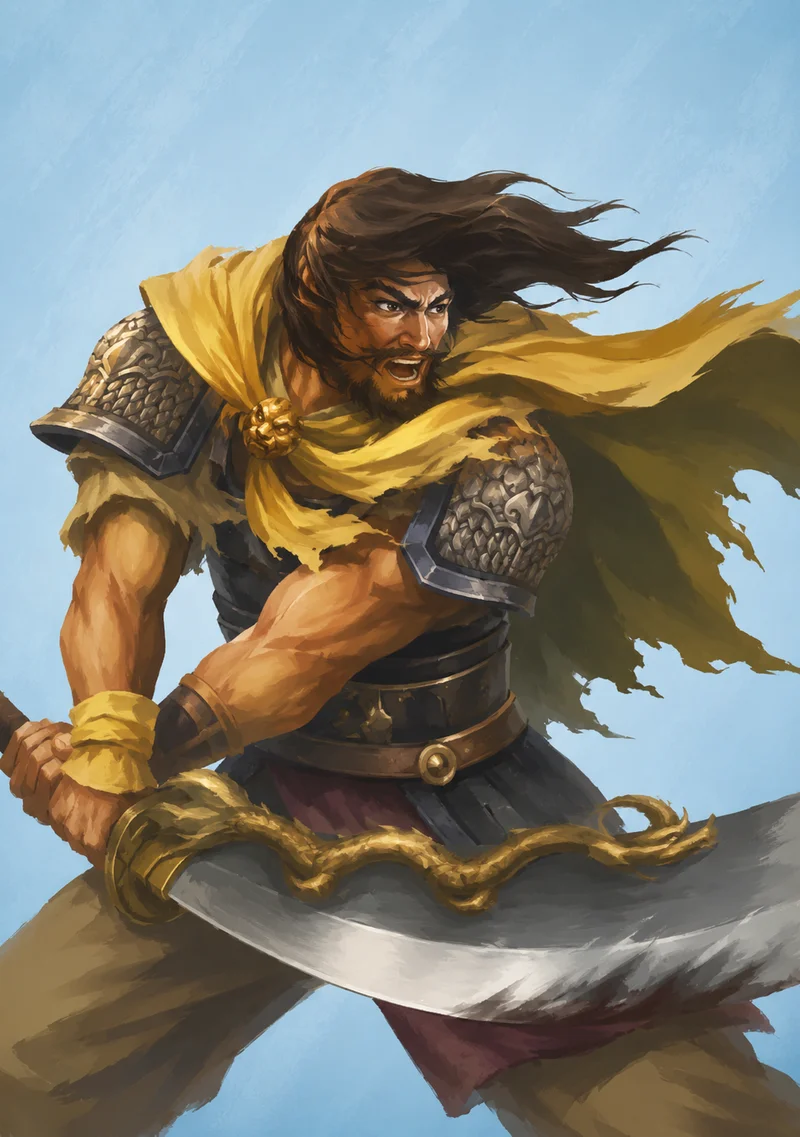
Yan Kuang was a senior military officer and deputy garrison commander of Cao Wei during the late Eastern Han dynasty. Serving under garrison commander Wang Bi in the imperial capital of Xuchang, Yan Kuang was recognized for his battlefield decisiveness, operational composure, and unyielding military discipline. Documented in Chen Shou’s Records of the Three Kingdoms (Sanguozhi – Book of Wei, Biography of Xiahou Dun) and Luo Guanzhong’s Romance of the Three Kingdoms, Yan Kuang is historically celebrated for his swift, professional response during the loyalist Xuchang Uprising in 218 AD, where his immediate counter-offensive saved the capital from falling into rebel hands.
In February 218 AD, during the Lantern Festival celebrations in Xuchang, Han loyalists led by Geng Ji, Wei Huang, Jin Yi, and the Ji brothers launched a sudden armed counter-coup to overthrow Cao Cao’s administration. Setting fire to the city gates, the insurgents attacked Wang Bi’s garrison headquarters and shot Wang Bi in the shoulder with an arrow. Heavily intoxicated and caught unawares, Wang Bi broke through the chaos and fled out of the city under cover of darkness, seeking refuge at the outer military encampment commanded by Yan Kuang and Senior General Xiahou Dun. Unlike the panicked capital guards, Yan Kuang maintained absolute calm upon seeing his wounded superior officer. Immediately sounding the military drums, Yan Kuang mobilized the regular garrison forces, secured the perimeter, and launched a powerful night counter-attack back into the city.
Marching his elite troops into Xuchang with blazing torches and volleying arrows, Yan Kuang systematically dismantled the rebel forces, who were largely composed of undisciplined household retainers. By dawn, Yan Kuang’s forces had cornered and captured the core ringleaders, including Geng Ji, Wei Huang, and the Ji brothers, handing them over to Xiahou Dun for execution. Yan Kuang’s rapid tactical reaction completely neutralized the surprise advantage of the uprising, preserving Cao Cao’s domestic base and restoring absolute order to the imperial capital.
Role in Romance of the Three Kingdoms
In Luo Guanzhong’s classic novel Romance of the Three Kingdoms, Yan Kuang appears in Chapter 69 as a capable and resolute deputy garrison commander in Xuchang. When the capital is thrown into bloody chaos on the night of the Lantern Festival in 218 AD by Geng Ji and Wei Huang’s loyalist uprising, garrison commander Wang Bi is wounded by an arrow and flees for his life out of the city. Wang Bi reaches the outer military encampment where Yan Kuang is stationed. Far from panicking, Yan Kuang immediately assesses the crisis, sounds the drums to assemble his troops, and organizes a fierce counter-offensive. Leading regular garrison soldiers back into the burning city, Yan Kuang overwhelms the disorganized rebel forces with superior combat discipline and firepower, closing off all escape routes. By morning, aided by Xiahou Dun’s arrival, Yan Kuang successfully rounds up all the rebel ringleaders, including Geng Ji and Wei Huang, securing total victory and restoring stability to Xuchang.
Yan Kuang (嚴匡) — Historical & Literary Timeline
Receiving Wounded Garrison Commander Wang Bi
Stationed at the outer military camp of Xuchang; receives the wounded and fleeing garrison commander Wang Bi following the sudden night assault by Geng Ji’s rebel forces.
Mobilizing Garrison Troops and Entering the Capital
Maintains absolute composure, sounds the assembly drums, mobilizes elite regular garrison troops, and leads a powerful counter-offensive back into the burning capital.
Crushing the Uprising and Capturing Geng Ji
Overwhelms the rebel forces with superior discipline and firepower; successfully captures the core rebel ringleaders, including Geng Ji and Wei Huang, restoring total order to Xuchang.
For detailed historical records, archives, and official chronicles, explore Yan Kuang on Wikipedia.
Key Relationships
Family
- No information
Friends
- Wang Bi (王必, Vương Tất): Garrison commander of Xuchang and direct military superior to Yan Kuang; after being wounded by an arrow during the 218 AD Lantern Festival rebellion, Wang Bi fled to Yan Kuang’s camp, prompting Yan Kuang to immediately rally the garrison troops.
- Xiahou Dun (夏侯惇, Hạ Hầu Đôn): Senior Cao Wei general stationed near Xuchang who coordinated with Yan Kuang to reinforce the capital, oversee the final suppression of the 218 AD uprising, and execute the captured rebel leaders.
Enemies
- Geng Ji (耿纪, Cảnh Kỷ): Leading instigator of the 218 AD Xuchang Uprising against Cao Cao’s administration; his insurgent forces were systematically routed, and he was captured by Yan Kuang’s night counter-attack.
- Wei Huang (韦晃, Vi Hoảng): Co-leader of the 218 AD loyalist revolt in Xuchang; his household retainers were overwhelmed by Yan Kuang’s disciplined garrison troops, leading to his capture and execution.
- Ji Miao (吉邈, Cát Mạc): Rebel commander during the 218 AD Xuchang Uprising who led the assault on Wang Bi’s headquarters; his rebel detachment was crushed by Yan Kuang’s swift counter-offensive.
- Ji Mu (吉穆, Cát Mục): Co-conspirator alongside his brother Ji Miao in the 218 AD Xuchang rebellion; defeated and apprehended during the counter-attack led by Yan Kuang.
Other
- Cao Cao (曹操, Tào Tháo): King of Wei and Chancellor of Han; Yan Kuang served as a loyal officer in his military administration, decisively safeguarding Cao Cao’s political center and base of operations during the crisis in 218 AD.
In Novel
Yan Kuang (严匡, Yán Kuāng) does not have a securely verified named appearance in the supplied edition under the exact Chinese name 严匡. No chapter is assigned without an exact textual match.
In History
Summary
- Yan Kuang (严匡, Nghiêm Khuông) is an obscure late Han military figure whose surviving record is limited.
Historical Record
- The exact-name evidence places Yan Kuang in the political and military environment of the late Eastern Han, but the standard Three Kingdoms biographies do not preserve enough information for a long independent narrative.
- Classification: Historical / Briefly Attested. Details should not be supplemented from similarly named Yan-family figures without exact evidence.