


Contents
Biography & Historical Record
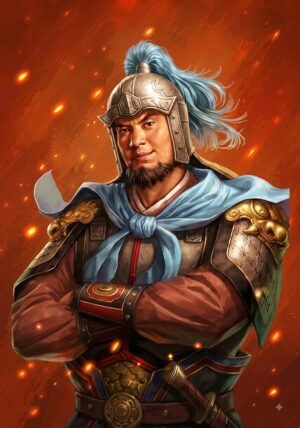
Hu Jun was an eminent Cao Wei general, military commander, and senior imperial official who served the state of Cao Wei through the reigns of four emperors and under the regency of the Sima clan during the Three Kingdoms period. Hailing from Linking County in Wunding Commandery (modern-day Zhenyuan County, Gansu Province), Hu Jun was the patriarch of the influential Wunding Hu clan, which produced prominent military figures for generations, including his sons Hu Fen and Hu Lie and his grandson Hu Yuan. Documented in Chen Shou’s Records of the Three Kingdoms (Sanguozhi – Book of Wei, Biography of Guanqiu Jian and Biography of Sima Shi) and Luo Guanzhong’s classic historical novel Romance of the Three Kingdoms, Hu Jun was celebrated as a battle-hardened, versatile, and staunchly loyal commander who spent the first half of his military career securing the northern and western frontiers against Gongsun Yuan and Shu Han, and the second half as Supreme Commander of the eastern front against Eastern Wu.
Hu Jun entered military service during the reign of Emperor Ming of Wei (Cao Rui). In 238 AD, when Grand Tutor Sima Yi launched a grand expedition to crush Gongsun Yuan’s rebellion in Liaodong, Hu Jun served as a vanguard general, commanding a division of elite infantry and cavalry. Operating under Sima Yi’s direct strategic supervision, Hu Jun led assault forces across the Liao River, routing Gongsun Yuan’s border guards and participating in the total siege of Xiangping. Following the successful pacification of Liaodong, Hu Jun was reassigned to the western frontier, where he served under Inspector of Yong Province Guo Huai to block Shu Han’s Northern Expeditions. During Jiang Wei’s invasions between 249 and 251 AD, Hu Jun executed brilliant defensive tactics in the Xiping theater, cutting off water supplies and intercepting Shu grain convoys, forcing Jiang Wei to suffer a bitter retreat and earning promotion to General Who Conquers the East (Zhengdong Jiangjun).
In 252 AD, following the death of Eastern Wu Emperor Sun Quan, Cao Wei Regent Sima Shi launched a massive three-pronged invasion of Eastern Wu comprising 150,000 troops. Hu Jun was appointed Supreme Commander of the main central army, consisting of 70,000 elite troops, and tasked with capturing the strategic reservoir and dams at Dongxing. Hu Jun marched his army into Wu territory, taking the defector Han Zong as his vanguard. He ordered his troops to construct fortified encampments and build floating bridges across the river to besiege the Wu fortifications. However, overconfident in their overwhelming numerical superiority and lulled by heavy snowfall, Hu Jun’s subordinate commanders lowered their guard, organizing lavish banquets and drinking parties inside their tents. Taking advantage of the blizzard, Eastern Wu veteran general Ding Feng led a daring surprise attack with 3,000 armored warriors who stripped off their heavy gear and charged the Wei camps with short swords. The unprepared Wei forces panicked, Han Zong was slain, and Hu Jun’s army suffered a catastrophic rout, with thousands drowning in the river while retreating across the pontoon bridges.
Despite the humiliation at Dongxing, Regent Sima Shi took full personal responsibility for the tactical failure and retained absolute trust in Hu Jun, retaining him as General Who Conquers the East and commander of the eastern front. Hu Jun subsequently redeemed his military reputation during the suppression of Guanqiu Jian and Wen Qin’s rebellion in 255 AD, leading loyalist Wei forces to secure vital strongholds and cut off rebel escape routes toward Eastern Wu. Honored for his decades of military service, Hu Jun was elevated to General of the Guards (Wei Jiangjun) and subsequently appointed Minister over the Masses (Sidu), reaching the highest dawning heights of imperial statecraft. Hu Jun passed away peacefully of natural causes in 256 AD at over seventy years of age, leaving behind an immortal legacy as one of Cao Wei’s premier military pillars.
Role in Romance of the Three Kingdoms
In Luo Guanzhong’s novel Romance of the Three Kingdoms, Hu Jun appears in Chapter 108 and Chapter 109 as a senior Cao Wei commander operating in both the western and eastern war theaters. In Chapter 108, following Sun Quan’s death, Hu Jun is appointed central commander under Sima Shi’s grand 150,000-man campaign against Eastern Wu. Leading 70,000 troops with the defector Han Zong as vanguard, Hu Jun besieges the Dongxing dams. When a severe snowstorm hits, Hu Jun’s army relaxes its vigil and drinks heavily in camp. Veteran Wu general Ding Feng executes his iconic ‘strip-armor charge’ through the snowstorm with 3,000 men, shattering the Wei camps, slaying Han Zong, and causing Hu Jun’s army to collapse in a disastrous rout across the pontoon bridges. In Chapter 109, Hu Jun operates alongside Guo Huai on the western front against Shu Han, successfully encircling Jiang Wei’s forces at Xiping by severing their water supplies and forcing a Shu retreat. Hu Jun’s portrayal highlights the relentless multi-front warfare and resilience of Cao Wei’s elite commanders during the twilight era of the Three Kingdoms.
Hu Jun (胡遵) — Historical & Literary Timeline
Vanguard Command under Sima Yi
Serves as a vanguard commander under Grand Tutor Sima Yi during the expedition against Gongsun Yuan in Liaodong, participating in the siege and capture of Xiangping.
Repulsing Jiang Wei’s Invasions at Xiping
Cooperates with Inspector Guo Huai on the western frontier, severing water and grain supply lines to defeat Jiang Wei’s Shu Han forces at Xiping; promoted to General Who Conquers the East.
Supreme Command at Dongxing & Defeat by Ding Feng
Commands the 70,000-man central army in Sima Shi’s campaign against Wu; defeated in a surprise snowstorm attack by Ding Feng at Dongxing, but retained in command by Sima Shi.
Suppression of Guanqiu Jian’s Rebellion
Leads loyalist Wei forces in the eastern theater to assist Sima Shi in crushing Guanqiu Jian and Wen Qin’s rebellion, securing the eastern borderlands.
Appointment as Minister over the Masses & Death
Elevated to General of the Guards (Wei Jiangjun) and Minister over the Masses (Sidu); passes away peacefully of natural causes at over seventy years of age.
For detailed historical records, archives, and official chronicles, explore Hu Jun on Wikipedia.
Key Relationships
Family
- Hu Fen (胡奋, Hồ Phấn): Eldest son; served as an accomplished military general under Cao Wei and Western Jin, eventually rising to General Who Attacks the South.
- Hu Lie (胡烈, Hồ Liệt): Son; served as General Who Chastises the West and played a key military role during Cao Wei’s campaigns against Shu Han.
- Hu Yuan (胡渊, Hồ Uyên): Grandson (son of Hu Lie); gained distinction as a young military commander during the conquest of Shu Han and the pacification of Zhong Hui’s rebellion.
Friends
- Sima Yi (司马懿, Tư Mã Ý): Grand Tutor of Cao Wei; served as Hu Jun’s superior commander during the Liaodong campaign in 238 AD, assigning him vanguard duties to besiege Xiangping.
- Sima Shi (司马师, Tư Mã Sư): Regent of Cao Wei; appointed Hu Jun as supreme commander of the central invasion force at Dongxing in 252 AD, shielded him from blame after the defeat, and later led him during the suppression of Guanqiu Jian’s rebellion in 255 AD.
- Guo Huai (郭淮, Quách Hoài): Inspector of Yong Province and fellow frontline commander; collaborated closely with Hu Jun on the western frontier between 249 and 251 AD to sever Shu Han supply routes and repel Jiang Wei.
- Han Zong (韩综, Hàn Tông): Eastern Wu defector and general; served as Hu Jun’s vanguard commander during the Battle of Dongxing in 252 AD, where he was slain in the initial surprise assault.
Enemies
- Ding Feng (丁奉, Đinh Phụng): Senior Eastern Wu general; led a daring surprise attack with 3,000 stripped-down warriors through a blizzard at the Battle of Dongxing in 252 AD, routing Hu Jun’s main army.
- Jiang Wei (姜维, Khương Duy): Grand General of Shu Han; launched northern expeditions into the Xiping theater between 249 and 251 AD, but was forced to retreat due to Hu Jun and Guo Huai’s defensive operations.
- Gongsun Yuan (公孙渊, Công Tôn Uyên): Warlord of Liaodong; rebelled against Cao Wei in 238 AD, leading to an expedition where Hu Jun served in the vanguard force that besieged Xiangping and ended the rebellion.
- Guanqiu Jian (毌丘俭, Quán Khâu Kiệm): Cao Wei general who instigated the Huainan rebellion in 255 AD; Hu Jun commanded loyalist forces to secure strategic routes and isolate the insurgents.
- Wen Qin (文钦, Văn Khâm): Rebel general who joined Guanqiu Jian’s insurrection in 255 AD; Hu Jun deployed troops to cut off his withdrawal lines toward Eastern Wu.
- Zhuge Ke (诸葛恪, Gia Cát Khác): Regent of Eastern Wu; planned the reinforcement of the Dongxing reservoir dams that halted and shattered Hu Jun’s invasion army in 252 AD.
Other
- Cao Rui (曹叡, Tào Duệ): Emperor Ming of Wei; the imperial ruler under whose reign Hu Jun rose to prominence during the pacification of Liaodong.
In Novel
Chapter 102
- Hu Jun (胡遵, Hú Zūn): Hu Jun is a Wei commander who participates in the later campaigns against Shu. He serves under the Wei military command during the period when Jiang Wei repeatedly attacks Wei and helps defend the frontier against the Shu expeditions.
In History
Summary
- Hu Jun (胡遵, Hồ Tuân) was a senior Cao Wei general who served the Sima clan and participated in campaigns against Eastern Wu.
Military Career
- Hu Jun held important commands during the later Wei period and was entrusted with operations on the southern frontier.
- He participated in major campaigns against Wu and worked closely with the Sima leadership.
Family
- His son Hu Lie and other members of his family also became important military figures during the later Wei and Jin periods.
Historical Record
- Classification: Historical.