

Contents
Biography & Historical Record
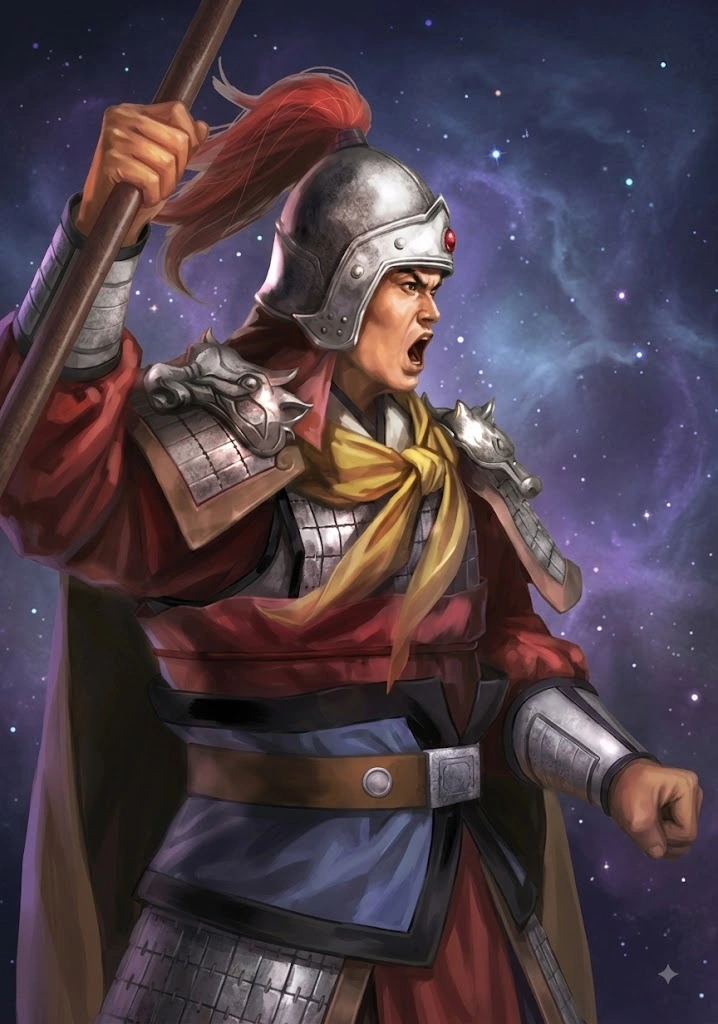
Hu Yuan, courtesy name Shiyuan, was a prominent military general and high-ranking commander who served the Cao Wei regime and later the Western Jin dynasty. Hailing from Linjing County in Anding Commandery (modern-day Zhenyuan County, Gansu Province), Hu Yuan belonged to the distinguished Hu military lineage of Anding, being the son of Grand Volunteer Commander Hu Lie and the grandson of General of Chariots and Cavalry Hu Zun. Documented in Chen Shou’s Records of the Three Kingdoms (Sanguozhi – Book of Wei, Biography of Zhong Hui), Fang Xuanling’s Book of Jin (Jin Shu – Biography of Hu Fen and Biography of Hu Lie), and Luo Guanzhong’s classic historical novel Romance of the Three Kingdoms, Hu Yuan is historically celebrated as a fiercely courageous, decisive, and brilliant young military prodigy who, at the age of seventeen, single-handedly rallied Wei expeditionary troops to storm the imperial palace of Chengdu, crushing the major rebellion of Zhong Hui and Jiang Wei and saving his father alongside dozens of senior Wei commanders.
In the autumn of 263 AD, Regent Sima Zhao launched a massive 180,000-man three-pronged invasion to conquer Shu Han, appointing Hu Yuan’s father, Hu Lie, as the vanguard commander under Supreme Commander Zhong Hui. Despite being only seventeen years old, Hu Yuan accompanied his father as a vice-commander, displaying extraordinary martial valor and tactical acumen as Wei armies breached the mountain passes of Hanzhong and forced Emperor Liu Shan’s surrender in Chengdu. However, following the fall of Shu Han, a dangerous political crisis erupted in early 264 AD. Ambitious Supreme Commander Zhong Hui conspired with surrendered Shu Grand General Jiang Wei to stage an armed rebellion, intending to eliminate rival general Deng Ai and establish an independent kingdom in Yizhou. To prevent resistance, Zhong Hui detained and placed under house arrest all northern Wei officers who refused to pledge allegiance to his coup, including Hu Lie.
While imprisoned inside the Chengdu administrative compound, Hu Lie cleverly tricked a sympathetic guard into smuggling a secret letter out to his seventeen-year-old son, Hu Yuan, who was commanding troops in the outer encampments. In the letter, Hu Lie exaggerated the danger, falsely warning: ‘Zhong Hui has dug a colossal pit inside the palace, intending to lure all northern officers inside and bury them alive to consolidate his rule!’ Upon receiving his father’s message, Hu Yuan was filled with righteous outrage. Unawed by Zhong Hui’s supreme authority, the seventeen-year-old commander immediately addressed the assembled northern troops outside the gates, proclaiming: ‘Zhong Hui harbors treasonous intent! He has imprisoned my father and your senior generals, scheming to bury the innocent soldiers of the North alive to usurp Shu! A true man would rather die with honor than suffer ignominy. Whoever wishes to save our commanders and protect their families, follow me to slay the traitors!’
Ignited by Hu Yuan’s passionate rallying call, thousands of Wei soldiers took up arms and launched a massive, coordinated assault on the imperial palace of Chengdu on March 3, 264 AD. Hu Yuan personally led the charge at the head of his shock troops, battering down the heavy palace gates amidst a rain of arrows and spears. In the chaotic melee that ensued inside the palace courtyards, both Zhong Hui and Jiang Wei were surrounded and cut down by mutinous soldiers. Hu Yuan’s decisive, lightning intervention successfully crushed the insurrection, rescued Hu Lie and the detained northern commanders, and stabilized Yizhou. Following the reunification of China under the Western Jin dynasty, Hu Yuan continued his distinguished military service as a senior general, eventually perishing decades later in 301 AD during the political turmoil of the War of the Eight Princes under Sima Lun.
Role in Romance of the Three Kingdoms
In Luo Guanzhong’s classic novel Romance of the Three Kingdoms, Hu Yuan is featured in Chapter 119 as a hero of unmatched courage and filial devotion who alters the fate of the post-Shu era. Introduced in Chapter 119 during the climax of the campaign in Chengdu, seventeen-year-old Hu Yuan serves as a vice-commander alongside his father Hu Lie. When Zhong Hui joins forces with Jiang Wei to plot a rebellion and detains Hu Lie inside the palace, Hu Lie secretively dispatches a messenger with a blood-written note to Hu Yuan, warning that Zhong Hui intends to bury all northern generals alive in a giant pit. Upon reading his father’s message, Hu Yuan flies into a rage, brandishes his weapon, and addresses the northern army outside the city. His fierce speech ignites a massive military uprising. Hu Yuan personally leads his troops to storm the palace gates, breaking through the defenses and slaying the rebel forces. In the dramatic climax of Chapter 119, as Jiang Wei’s plan crumbles, Jiang Wei cries out to heaven and commits suicide, while Zhong Hui is cut down by mutinous soldiers. Hu Yuan rescues his father and restores order, standing in literary tradition as a paragon of filial piety, youthful valor, and decisive leadership.
Hu Yuan (胡淵) — Historical & Literary Timeline
Serving as Vice-Commander at Age Seventeen
Accompanies his father Hu Lie in the grand 180,000-man expedition against Shu Han; displays remarkable martial bravery as Wei forces conquer Hanzhong and force Liu Shan’s surrender.
Discovering Zhong Hui & Jiang Wei’s Conspiracy
Receives a smuggled secret letter from his imprisoned father Hu Lie in Chengdu, warning that Zhong Hui and Jiang Wei plan to bury all northern Wei officers alive in a giant pit.
Rallying Northern Troops & Rescuing Hu Lie
Rallies northern expeditionary troops with a fierce speech; leads the charge to storm Chengdu palace, crushing the rebellion, causing the deaths of Zhong Hui and Jiang Wei, and rescuing his father.
Military Service in Jin & Death in Eight Princes War
Serves as a senior general in the Western Jin dynasty; perishes in 301 AD during the political purges of the War of the Eight Princes under Sima Lun.
For detailed historical records, archives, and official chronicles, explore Hu Yuan on Wikipedia.
Key Relationships
Family
- Hu Lie (胡烈, Hồ Liệt): Father. Vanguard commander during the Wei invasion of Shu Han (263 AD) who was detained in Chengdu by Zhong Hui; he smuggled out a warning letter to Hu Yuan, prompting his son to launch the rescue mutiny in 264 AD.
- Hu Zun (胡遵, Hồ Tuân): Grandfather. Prominent general who rose to the rank of General of Chariots and Cavalry in Cao Wei.
- Hu Fen (胡奋, Hồ Phấn): Paternal uncle. Distinguished military commander and court official who served Cao Wei and the Western Jin dynasty.
Friends
- Wei Guan (卫瓘, Vệ Quán): Ally and Wei Army Supervisor who coordinated with loyalist commanders to stabilize Chengdu and restore order following Hu Yuan’s palace assault in 264 AD.
- Deng Ai (邓艾, Đặng Ngải): Senior Wei commander whose conquest of Shu and subsequent false imprisonment by Zhong Hui fueled the outrage of the northern soldiers rallied by Hu Yuan.
Enemies
- Zhong Hui (钟会, Chung Hội): Supreme Commander of Wei’s Shu expedition who attempted an armed rebellion in Chengdu (264 AD) and imprisoned Hu Lie; Hu Yuan stormed the palace at the head of mutinous troops, resulting in Zhong Hui being slain.
- Jiang Wei (姜维, Khương Duy): Grand General of Shu Han who allied with Zhong Hui to eliminate northern Wei officers and revive Shu; Hu Yuan’s sudden assault destroyed the conspiracy, leading to Jiang Wei’s death in 264 AD.
- Sima Lun (司马伦, Tư Mã Luân): Imperial prince of Jin whose usurpation during the War of the Eight Princes caused the political turmoil and purges in which Hu Yuan was killed in 301 AD.
Other
- Sima Zhao (司马昭, Tư Mã Chiêu): Regent of Cao Wei and King of Jin who orchestrated the 263 AD conquest of Shu Han and recognized Hu Yuan for crushing the Chengdu uprising.
- Liu Shan (刘禅, Lưu Thiện): Emperor of Shu Han whose capitulation in late 263 AD set the stage for the power struggle and rebellion in Chengdu.
In Novel
Chapter 118
- Hu Yuan (胡渊, Hú Yuān): Hu Yuan serves in Zhong Hui’s forces during the final Wei conquest of Shu. After Zhong Hui imprisons the Wei commanders and begins planning rebellion, Hu Yuan receives a secret message exposing Zhong Hui’s intentions. He shares the information with the other commanders, who become furious at being ordered to support a rebel. Hu Yuan then organizes the officers to act against Zhong Hui.
Chapter 119
- Hu Yuan (胡渊, Hú Yuān): Hu Yuan and the other Wei officers turn against Zhong Hui after learning that he intends to revolt. The conspiracy breaks out inside Chengdu, Zhong Hui is killed, and the rebellion collapses. Hu Yuan survives the fighting and remains with the victorious Wei forces.
In History
Summary
- Hu Yuan (胡渊, Hồ Uyên), courtesy name Shiyuan (世元), was a Cao Wei military commander and the son of the general Hu Zun.
Military Career
- Hu Yuan served during the final decades of Cao Wei and became involved in the military struggles surrounding the Sima family’s rise.
- He commanded troops in campaigns connected with the suppression of internal opposition.
Conflict with the Sima Regime
- Hu Yuan’s family was deeply involved in the military establishment, and his career unfolded during the transition from Wei to Jin.
- He was ultimately killed in the political and military conflicts of the period.
Historical Record
- Classification: Historical.