



Contents
Biography & Historical Record
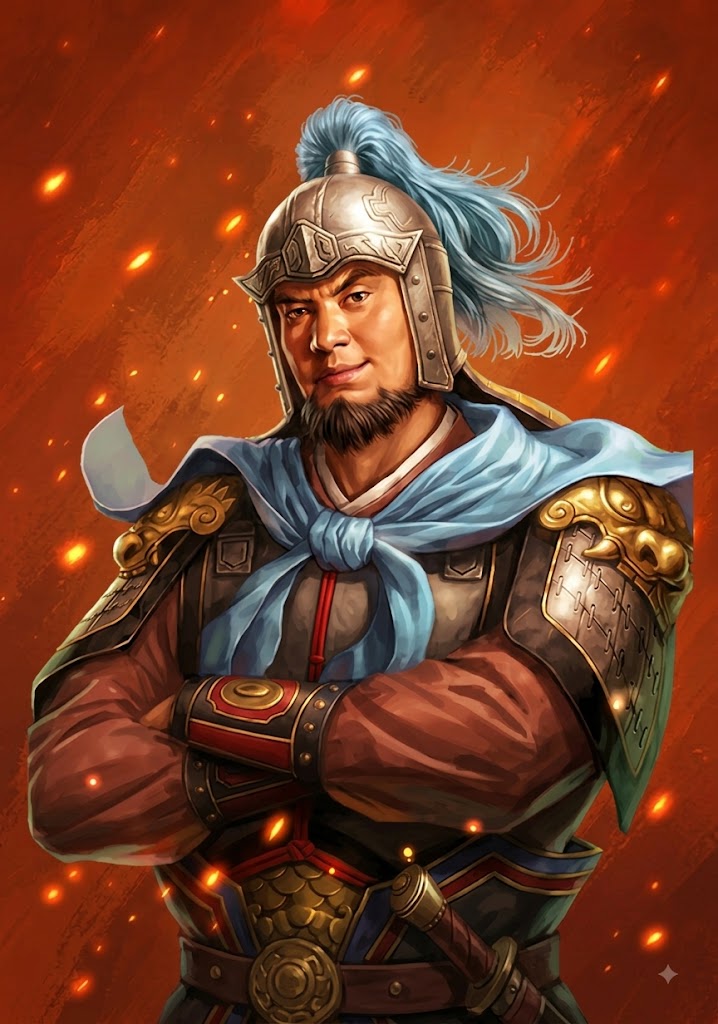
Hu Fen, courtesy name Xuanwei, was a distinguished high-ranking military commander, strategist, and senior imperial relative who served both the Cao Wei state and the Jin Dynasty during the late Three Kingdoms and early Jin periods. Hailing from Linjing in Anding Commandery, Hu Fen belonged to a prominent military lineage; he was the eldest son of Hu Zun, the famous General of Chariots and Cavalry of Cao Wei, and the elder brother of General Hu Lie. Documented in Fang Xuanling’s Book of Jin (Jin Shu – Biography of Hu Fen), Chen Shou’s Records of the Three Kingdoms (Sanguozhi – Book of Wei), and Sima Guang’s Zizhi Tongjian, Hu Fen was celebrated from his youth for his grand ambition, decisive military acumen, and deep devotion to statecraft.
Hu Fen’s military career began in 238 AD during Grand Commander Sima Yi’s northern expedition against the rebellious warlord Gongsun Yuan in Liaodong. Then a commoner without an official rank, Hu Fen volunteered to accompany Sima Yi’s army. Observing Hu Fen’s exceptional martial agility, tactical sharpness, and fearless demeanor, Sima Yi took a deep personal liking to him and appointed him a Colonel (Xiaowei) upon returning victorious to the capital. Hu Fen subsequently advanced rapidly through the military hierarchy, serving as a trusted battlefield commander under the Sima regency.
In 257–258 AD, during the Third Rebellion in Huainan launched by Zhuge Dan at Shouchun, Hu Fen served as a vanguard general under Sima Zhao. When the besieged city of Shouchun finally fell under the overwhelming assault of imperial forces, Zhuge Dan desperately attempted to break through the encirclement at the head of several dozen elite cavalrymen. Hu Fen led a pursuing column, intercepted the fleeing rebels near the city gates, and personally cut down Zhuge Dan on the battlefield, earning monumental military acclaim and securing the complete pacification of the Huainan region. Years later, in 271 AD, when the Southern Xiongnu Chanyu Liu Mang launched a formidable tribal rebellion along the northern frontier, imperial general Lu Pu was dispatched to crush the uprising with Hu Fen serving as Army Inspector (Jiangun). Displaying masterclass tactical coordination, Hu Fen routed the Xiongnu host and bribed a rival Xiongnu commander to assassinate Liu Mang, successfully ending the northern frontier threat.
During the grand campaign to conquer Eastern Wu in 279–280 AD, Hu Fen was appointed Commander of the Jiangbei Forces, leading one of the primary invasion columns along the northern bank of the Yangtze River. His forces systematically reduced major Wu river fortresses and secured crucial supply lines. As Jin forces converged on the Eastern Wu capital of Jianye, Hu Fen exhibited characteristic prudence, advising Grand Commandant Du Yu to consolidate their forces and await full reinforcements to guarantee an absolute victory. Following the total collapse of Eastern Wu and the unification of China under the Jin Dynasty, Hu Fen was promoted to Senior General Guarding the Military (Zhenjun Da Jiangjun) and enfeoffed as Marquis of Huanling. In his later years, his daughter Hu Fang was selected as a Noble Consort (Guiren) for Emperor Wu of Jin (Sima Yan), elevating Hu Fen to the status of an esteemed imperial relative. He passed away peacefully of natural causes in 288 AD, holding highest military honors.
Role in Romance of the Three Kingdoms
In Chapters 112 and 120 of Luo Guanzhong’s classic 14th-century historical novel Romance of the Three Kingdoms, Hu Fen is featured as a formidable veteran general whose martial prowess and strategic prudence play a decisive role in ending the Three Kingdoms era and unifying the realm under the Jin Dynasty.
The novel vividly depicts Hu Fen’s dramatic battle victory in Chapter 112 during the siege of Shouchun. As Sima Zhao’s forces breach the walls, Zhuge Dan flees in panic with his retinue. Hu Fen leads his troops in pursuit, intercepts Zhuge Dan near the city gates, and slays the rebel leader with a single strike of his saber. This decisive action brings an immediate end to the Huainan rebellion and solidifies Sima Zhao’s control over Cao Wei.
In Chapter 120, during the grand multi-pronged invasion of Eastern Wu, Hu Fen re-emerges as a key commander leading imperial forces down the Yangtze River alongside Du Yu, Wang Jun, and Wang Hun. The novel highlights Hu Fen’s battlefield experience and strategic foresight when he counsels caution before the final assault on Jianye, ensuring that the Jin armies maintain flawless discipline. Hu Fen’s literary narrative serves as a testament to the rise of the Jin Dynasty’s elite military commanders whose combined strength brought a peaceful conclusion to nearly a century of division.
Hu Fen (胡奮) — Historical & Literary Timeline
Joining Sima Yi’s Campaign Against Gongsun Yuan
Volunteers as a commoner to accompany Sima Yi’s Liaodong campaign; impresses Sima Yi with his martial talent and receives an appointment as Colonel upon victory.
Intercepting and Executing Rebel Leader Zhuge Dan
Serves as vanguard general under Sima Zhao during the Third Rebellion in Huainan; intercepts the fleeing Zhuge Dan outside Shouchun and personally slays him in battle.
Suppressing Liu Mang’s Xiongnu Rebellion
Serves as Army Inspector in the northern frontier campaign; defeats the Xiongnu forces and orchestrates the assassination of rebel Chanyu Liu Mang.
Commanding Primary Column in the Conquest of Eastern Wu
Commands northern riverfront forces in the Jin invasion of Eastern Wu; advises Du Yu on tactical prudence before the fall of Jianye, achieving total national unification.
Passing Away with Highest Imperial Honors
Promoted to Senior General Guarding the Military; passes away peacefully in old age as an honored imperial father-in-law after his daughter becomes Consort to Emperor Wu of Jin.
For detailed historical records, archives, and official chronicles, explore Hu Fen on Wikipedia.
Key Relationships
Family
- Hu Zun (胡遵, Hồ Tuân) – Father; a celebrated General of Chariots and Cavalry of Cao Wei whose military prestige shaped Hu Fen’s upbringing.
- Hu Lie (胡烈, Hồ Liệt) – Younger brother; also a general who served Wei and later Jin, participating in the conquest of Shu Han.
- Hu Yuan (胡元, Hồ Nguyên) – Nephew (son of Hu Lie); officer who took part in suppressing Zhong Hui’s rebellion.
- Hu Fang (胡芳, Hồ Phương) – Daughter; elevated to Noble Consort (Guiren) of Emperor Wu of Jin, thereby linking Hu Fen to the imperial family.
Friends
- Sima Yi (司马懿, Tư Mã Ý) – Grand Commander who first recognized Hu Fen’s talent during the Liaodong campaign (238 AD) and appointed him Colonel.
- Sima Zhao (司马昭, Tư Mã Chiêu) – Regent of Cao Wei; Hu Fen served as a vanguard general under him in the suppression of Zhuge Dan’s revolt (257‑258 AD).
- Du Yu (杜预, Đỗ Dự) – Grand Commandant and co‑commander in the Jin invasion of Eastern Wu (279‑280 AD); Hu Fen advised him to consolidate forces before the final assault on Jianye.
- Wang Jun (王浚, Vương Tuấn) – Jin admiral whose fleet coordinated with Hu Fen’s land column during the Yangtze River crossing in the Wu campaign.
- Lu Pu (陆普, Lục Phổ) – Imperial general who jointly led the northern frontier campaign against the Xiongnu rebellion (271 AD), with Hu Fen acting as Army Inspector.
Enemies
- Zhuge Dan (诸葛诞, Chu Cát Đản) – Rebel Wei general; Hu Fen intercepted and personally slew him outside Shouchun during the Third Rebellion (257‑258 AD).
- Gongsun Yuan (公孙渊, Công Tôn Nguyên) – Independent warlord of Liaodong; Hu Fen took part in his defeat under Sima Yi’s command (238 AD).
- Liu Mang (刘莽, Lưu Mãng) – Southern Xiongnu Chanyu; Hu Fen defeated his forces and arranged his assassination during the 271 frontier campaign.
- Sun Hao (孙皓, Tôn Hạo) – Last emperor of Eastern Wu; Hu Fen’s forces contributed to Wu’s ultimate collapse and the unification of China under Jin (279‑280 AD).
Other
- Sima Yan (司马炎, Tư Mã Diêm) – Emperor Wu of Jin; promoted Hu Fen to Senior General Guarding the Military and accepted Hu Fen’s daughter as Noble Consort, cementing Hu Fen’s status as an imperial relative.
In Novel
Chapter 112
- Hu Fen (胡奋, Hồ Phấn): Hu Fen serves Wei during the campaign against Zhuge Dan’s rebellion at Shouchun. When Zhuge Dan attempts to break out of the city after the Wei forces enter, Hu Fen encounters him at the bridge. Zhuge Dan leads several hundred men in an attempt to escape, but Hu Fen strikes him down and kills him. The death of Zhuge Dan ends the major resistance at Shouchun. The chapter explicitly records Hu Fen as the officer who kills Zhuge Dan.
History
- Hu Fen (胡奋, Hồ Phấn), courtesy name Xuanwei, was a prominent military commander of Cao Wei and Western Jin.
Wei Service
- Hu Fen served as a general on the northern and western frontiers of Wei.
- He became an experienced commander during the later Three Kingdoms period.
Jin Conquest of Wu
- After the establishment of Jin, Hu Fen retained high military office.
- He participated in the campaign that conquered Eastern Wu in 280, helping bring an end to the Three Kingdoms period.
Later Career
- Hu Fen continued to serve the Jin dynasty and remained an influential military figure.
- Classification: Historical.