

Contents
Biography & Historical Record
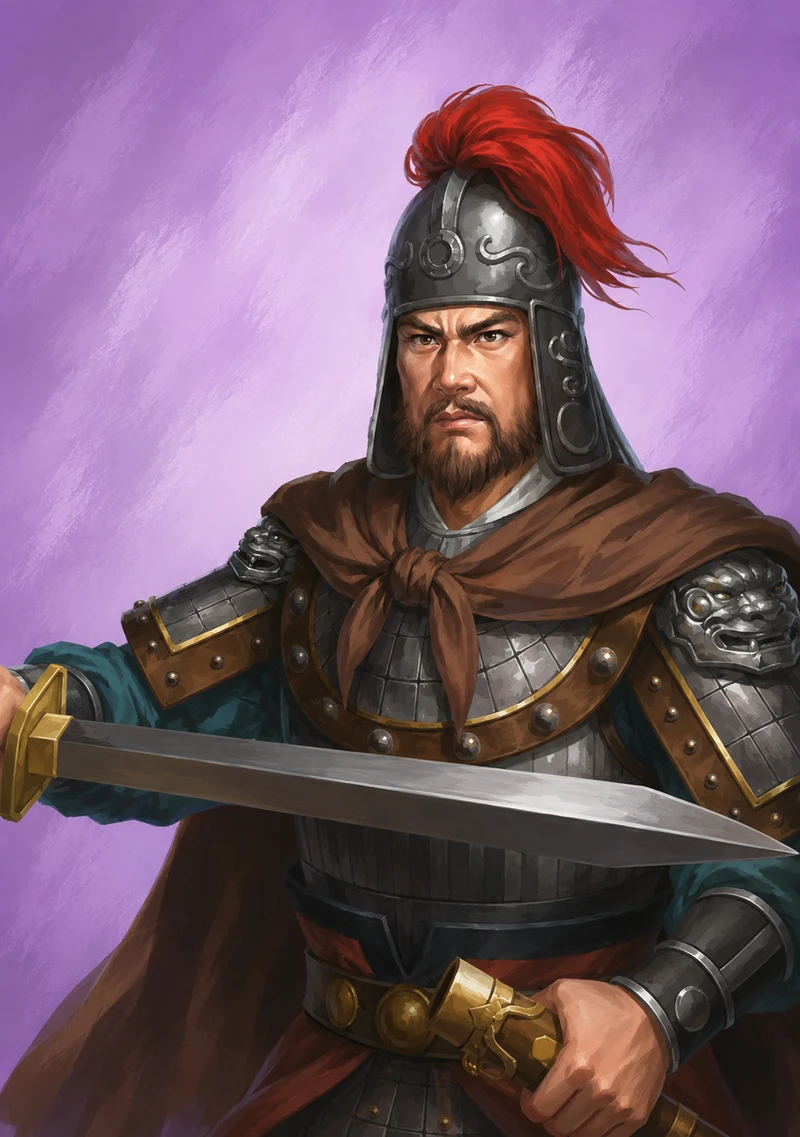
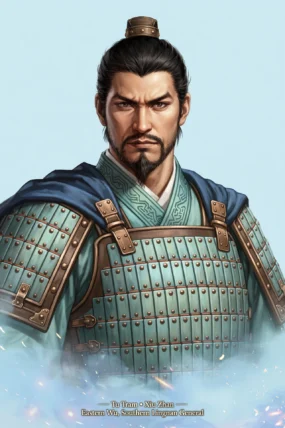
Xiu Ze was a courageous military commander, regional administrator, and frontline vanguard officer of Eastern Wu during the late Three Kingdoms period. Hailing from Linchuan Commandery (modern-day Fuzhou, Jiangxi Province), Xiu Ze belonged to a distinguished military family deeply familiar with the southern borderlands of Jiaozhou and Guangzhou. Documented in Chen Shou’s official dynastic history Records of the Three Kingdoms (Sanguozhi – Book of Wu, Biographies of Lu Kang and Lu Dai) and Fang Xuanling’s Book of Jin (Jin Shu, Biographies of Tao Huang and Yang Ji), Xiu Ze served as an indispensable pillar of Eastern Wu’s southern military expeditions. He played a central role in the brutal, high-stakes military campaign launched by Emperor Sun Hao to suppress the rebellion in Jiaozhi (modern-day northern Vietnam) and reclaim Eastern Wu’s southern territories from the Western Jin Dynasty.
In 263 AD, amidst widespread administrative oppression and heavy taxation imposed by Eastern Wu officials, Lü Xing, a local leader in Jiaozhi, launched a massive anti-Wu rebellion. Lü Xing executed the Wu-appointed governor and formally offered the strategic Jiaozhi territory to the Cao Wei regime, which was subsequently inherited by the Western Jin Dynasty upon its founding in 265 AD. This defection represented a catastrophic geopolitical and economic loss for Eastern Wu, severing its access to the rich southern maritime trade routes and mineral resources of the Red River Delta. Determined to reclaim Jiaozhi and restore imperial authority over the southern marches, Emperor Sun Hao appointed Xiu Ze as Inspector of Jiao Province (Jiaozhou Cishi) and Vanguard Commander (Qianbu Du), joining forces with Inspector Liu Jun and Commander Gu Rong to organize a grand southern expedition.
In 268 AD (the 3rd year of Baoding), Xiu Ze led the elite vanguard units of Eastern Wu from Hepu Commandery, advancing directly into Jiaozhi to confront the Jin garrison. However, the Western Jin defenses were formidable, led by the experienced Grand Administrator of Jiaozhi, Yang Ji, alongside fierce martial commanders Mao Jiong and Dong Yuan. Xiu Ze personally spearheaded three major military assaults against the fortified Jin lines at Jiaozhi, but Yang Ji executed brilliant defensive maneuvers and counter-tactics, repelling every attack and inflicting heavy casualties on the Wu forces.
Following the failed frontal assaults, Jin commanders Mao Jiong and Dong Yuan launched a sudden, devastating night ambush against the main Wu encampment at Gucheng. In the ferocious, bloody hand-to-hand melee that ensued, the Eastern Wu battle lines collapsed under the fierce Jin onslaught. Facing overwhelming odds, Xiu Ze fought valiantly on the front line alongside Inspector Liu Jun, refusing to retreat until both commanders were slain in battle. The deaths of Xiu Ze and Liu Jun temporarily cemented Western Jin’s military dominance over Jiaozhi and threw the Wu southern command into disarray.
The tragedy of Xiu Ze’s death triggered a brutal, infamous chapter of personal vengeance. In 271 AD, the brilliant Wu general Tao Huang launched a successful counter-offensive, recapturing Jiaozhi for Eastern Wu and capturing the Jin general Mao Jiong alive. Xiu Ze’s biological son, Xiu Yun, who was serving as the Grand Administrator of Guilin Commandery under Tao Huang, pleaded to avenge his father’s battlefield death. Granted permission, Xiu Yun subjected Mao Jiong to a harrowing, gruesome execution—cutting open his abdomen and carving out his heart to offer as a sacrificial tribute to the spirit of Xiu Ze. This fierce act of filial vengeance stands as one of the most violent and memorable episodes recorded in the border conflicts between Wu and Jin.
Role in Romance of the Three Kingdoms
In Luo Guanzhong’s classic 14th-century historical novel Romance of the Three Kingdoms, Xiu Ze does not appear in the main literary narrative, as the novel omits many late-era frontier campaigns in the far south to focus on the northern unification conflicts between Wei, Shu, and Jin. However, in authentic historical records including the Book of Wu and Book of Jin, Xiu Ze’s heroic frontline sacrifice at Gucheng and his son Xiu Yun’s violent sacrificial vengeance against Mao Jiong remain immortalized as a dramatic testament to the brutal struggles for control over Jiaozhi during the final decade of the Three Kingdoms period.
Xiu Ze (脩則) — Historical & Literary Timeline
Appointment as Inspector of Jiao Province & Vanguard Commander
Appointed by Emperor Sun Hao of Eastern Wu as Inspector of Jiao Province and Vanguard Commander; leads forward forces alongside Liu Jun and Gu Rong from Hepu to reclaim Jiaozhi from Western Jin forces.
Frontline Assaults Against Jin Positions
Launches three major military offensives against Jin defenses in Jiaozhi; encounters fierce resistance organized by Jin Administrator Yang Ji and commanders Mao Jiong and Dong Yuan, sustaining heavy losses.
Battle of Gucheng & Heroic Death
Ambushed at Gucheng by Jin commanders Mao Jiong and Dong Yuan; fights bravely on the front line alongside Liu Jun until both commanders are slain in battle, leaving Jin in control of Jiaozhi.
Sacrificial Vengeance Executed by Xiu Yun
Following Tao Huang’s recapture of Jiaozhi, Xiu Ze’s son Xiu Yun captures Mao Jiong and cuts open his abdomen to offer his heart as a sacrifice to Xiu Ze’s spirit, fulfilling a brutal act of filial revenge.
For detailed historical records, archives, and official chronicles, explore Xiu Ze on Wikipedia.
Key Relationships
Family
- Xiu Yun (修允, Tu Duẫn): His son, who served as the Grand Administrator of Guilin Commandery under Eastern Wu; in 271 AD, he avenged his father’s battlefield death by executing the captured Western Jin commander Mao Jiong and offering his heart as a sacrifice to Xiu Ze’s spirit.
Friends
- Liu Jun (刘俊, Lưu Tuấn): An Eastern Wu inspector and fellow expedition leader who advanced into Jiaozhi alongside Xiu Ze in 268 AD; the two fought shoulder-to-shoulder on the front line at Gucheng until both were slain in battle.
- Gu Rong (顾容, Cố Dung): An Eastern Wu military commander who joined forces with Xiu Ze and Liu Jun during the 268 AD southern campaign to reclaim Jiaozhou from Western Jin.
- Tao Huang (陶璜, Đào Hoàng): The Eastern Wu general who spearheaded the subsequent southern counter-offensive, successfully recapturing Jiaozhi in 271 AD and facilitating the filial revenge of Xiu Ze’s son.
Enemies
- Mao Jiong (毛炅, Mao Quýnh): A Western Jin frontline commander who launched a devastating ambush against the Eastern Wu camp at Gucheng in 268 AD, killing Xiu Ze in hand-to-hand combat; he was later captured and executed as a sacrificial tribute to Xiu Ze in 271 AD.
- Dong Yuan (董元, Đổng Nguyên): A Western Jin commander who co-led the successful resistance and the counter-ambush at Gucheng in 268 AD that routed Eastern Wu forces and resulted in Xiu Ze’s death.
- Yang Ji (杨稷, Dương Tắc): The Western Jin Grand Administrator of Jiaozhi who orchestrated the formidable defense of the region, successfully repelling three consecutive assaults led by Xiu Ze in 268 AD.
Other
- Sun Hao (孙皓, Tôn Hạo): The fourth and final emperor of Eastern Wu, who appointed Xiu Ze as Inspector of Jiao Province and Vanguard Commander in 268 AD, ordering him to march south and recapture the lost territories in Jiaozhi.
In Novel
Xiu Ze (脩则, Xiū Zé) does not have a securely verified named appearance in the supplied edition under the exact Chinese name 脩则. No chapter is assigned without an exact textual match.
In History
Summary
- Xiu Ze (脩则, Tu Trắc) is a minor figure associated primarily with the narrative tradition of the Three Kingdoms.
Historical Record
- The exact-name historical evidence for an independent biography is limited.
- Where later literary accounts provide additional characterization or episodes, those details should be treated as part of the narrative tradition rather than automatically attributed to the historical record.
- Classification: Novel-associated / Historical name.