

Contents
Biography & Historical Record
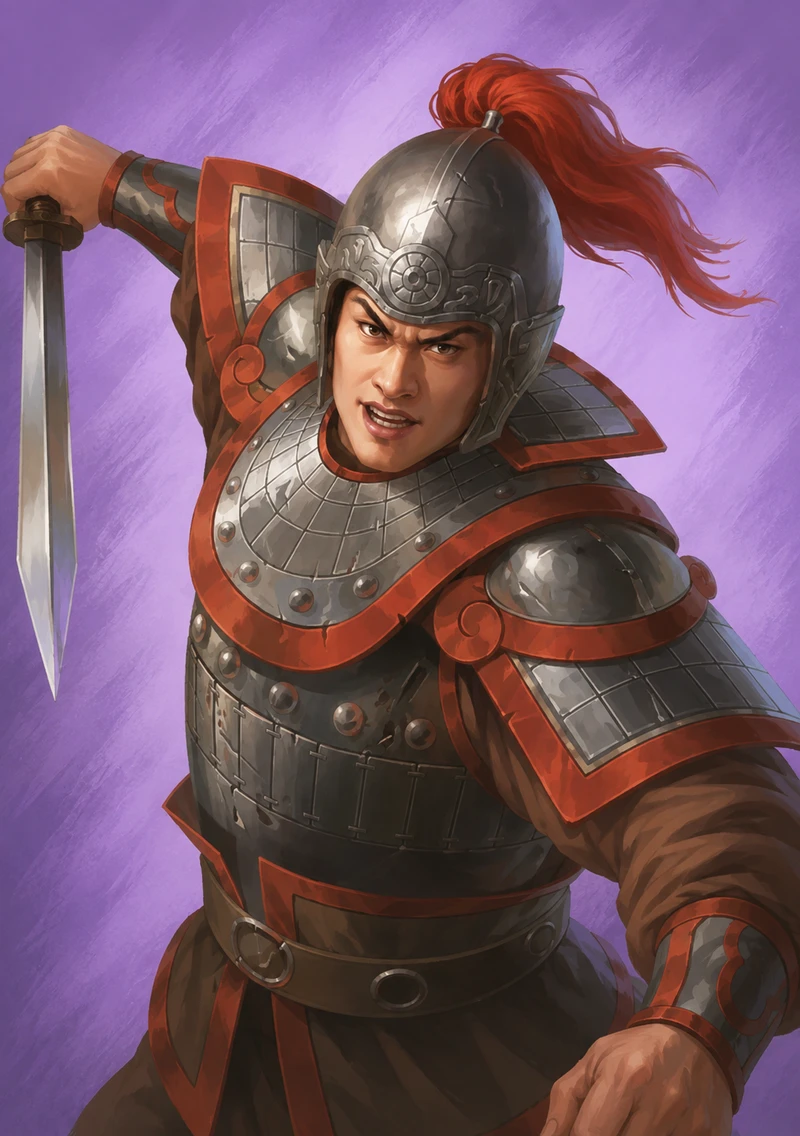
Xiu Yun was a courageous military commander, regional administrator, and frontline vanguard officer of Eastern Wu during the late Three Kingdoms period. Hailing from Linchuan Commandery (modern-day Fuzhou, Jiangxi Province), Xiu Yun belonged to an illustrious martial family deeply entrenched in the governance and defense of Eastern Wu’s southern marches. He was the eldest son of Xiu Ze, the Inspector of Jiao Province who fell heroically at the Battle of Gucheng in 268 AD while attempting to suppress the Western Jin rebellion in Jiaozhi (modern-day northern Vietnam). Documented in Chen Shou’s official dynastic history Records of the Three Kingdoms (Sanguozhi – Book of Wu, Biography of Lu Dai) and Fang Xuanling’s Book of Jin (Jin Shu, Biography of Tao Huang), as well as Vietnam’s Dai Viet Su Ky Toan Thu, Xiu Yun achieved historical immortality through his unwavering filial piety, martial valor, and his horrific, legendary act of sacrificial revenge against the Jin general Mao Jiong.
In 263 AD, a major rebellion erupted in Jiaozhi led by local leader Lü Xing, who executed the Wu-appointed governor and submitted the strategic region to Cao Wei, which was subsequently inherited by the Western Jin Dynasty upon its founding in 265 AD. This loss severed Eastern Wu’s vital maritime trade routes and economic control over the Red River Delta. In 268 AD, Emperor Sun Hao dispatched Xiu Yun’s father, Xiu Ze, alongside Inspector Liu Jun to reclaim Jiaozhi. However, Jin commanders Mao Jiong and Dong Yuan launched a devastating night assault against the Wu encampment at Gucheng, slaying Xiu Ze and Liu Jun on the battlefield and decapitating their corpses. Upon receiving news of his father’s catastrophic defeat and gruesome death, Xiu Yun and his younger brother Xiu Zhan swore a solemn blood oath to avenge their father’s spirit and recover his honor, dedicating their lives to the total destruction of the Jin garrison in Jiaozhi.
In 269 AD (the 4th year of Baoding), Emperor Sun Hao appointed the brilliant strategist Tao Huang as Commander-in-Chief to launch a grand counter-offensive to retake Jiaozhi. Xiu Yun and Xiu Zhan immediately volunteered to serve as vanguard field officers under Tao Huang. Throughout the arduous three-year campaign spanning from Hepu deep into the core of Jiaozhi, Xiu Yun fought with desperate bravery on the front lines, personally spearheading assault units across treacherous river networks and jungle fortifications. Deeply impressed by Xiu Yun’s martial prowess and tactical leadership, Tao Huang promoted him to serve as the Grand Administrator of Guilin Commandery (Guilin Taishou), entrusting him with key logistical and regional military authority.
In 271 AD, Tao Huang achieved a monumental victory, crushing the Jin armies, recapturing Jiaozhi for Eastern Wu, and taking the formidable Jin commander Mao Jiong alive. Mao Jiong, famous across the southern frontier for his fierce martial pride, refused to bow or surrender despite being held in heavy chains. Hearing that his father’s murderer had been captured alive, Xiu Yun rushed before Commander-in-Chief Tao Huang, threw himself onto the ground, and wept hysterically, begging for permission to personally execute Mao Jiong to offer his blood as a sacrificial tribute to the spirit of Xiu Ze. Moved by Xiu Yun’s profound filial sorrow, Tao Huang granted his request.
Xiu Yun ordered his soldiers to bind Mao Jiong securely to a wooden pillar in the center of the military camp. Armed with a sacrificial dagger, Xiu Yun personally cut open Mao Jiong’s abdomen and carved out his beating heart to lay upon an altar erected in honor of his father Xiu Ze. Historical archives record that throughout the horrifying, excruciating execution, Mao Jiong never flinched or cried out in pain. Instead, Mao Jiong glared fiercely at Xiu Yun and bellowed defiance until his final breath: ‘My only regret is that I did not execute you worthless Wu dogs sooner!’ This fierce, bloody act of filial revenge stands as one of the most violent and memorable episodes recorded in ancient Sino-Vietnamese border history, marking the definitive restoration of Eastern Wu’s hegemony over Jiaozhi until the fall of the dynasty in 280 AD.
Role in Romance of the Three Kingdoms
In Luo Guanzhong’s classic 14th-century historical novel Romance of the Three Kingdoms, Xiu Yun does not appear directly in the main literary narrative, as the novel omits late-era southern frontier campaigns in Jiaozhi to focus on the northern unification conflicts between Wei, Shu, and Jin. However, in authentic historical records including Records of the Three Kingdoms (Sanguozhi) and Book of Jin (Jin Shu), Xiu Yun’s relentless three-year campaign under Tao Huang and his gruesome sacrificial execution of Mao Jiong at Jiaozhi remain immortalized as a supreme historical testament to filial devotion and border warfare at the close of the Three Kingdoms era.
Xiu Yun (脩蕓) — Historical & Literary Timeline
Tragic Death of Xiu Ze at Gucheng
Receives news of his father Xiu Ze’s death at the hands of Jin commanders Mao Jiong and Dong Yuan at Gucheng; swears a solemn blood oath alongside his brother Xiu Zhan to avenge his father and reclaim Jiaozhi.
Vanguard Deployment under Tao Huang & Promotion
Volunteers as a vanguard officer in Tao Huang’s southern expedition to retake Jiaozhi; fights courageously across Hepu and Jiaozhi, earning promotion to Grand Administrator of Guilin Commandery.
Recapture of Jiaozhi & Capture of Mao Jiong
Assists Tao Huang in completely defeating Western Jin forces in Jiaozhi, successfully taking Jin general Mao Jiong alive after a decisive siege.
Gruesome Sacrificial Execution of Mao Jiong
Begs Tao Huang for permission to execute his father’s murderer; cuts open Mao Jiong’s abdomen and carves out his heart to offer as a sacrificial tribute to Xiu Ze’s spirit, fulfilling his blood oath of filial revenge.
For detailed historical records, archives, and official chronicles, explore Xiu Yun on Wikipedia.
Key Relationships
Family
- Xiu Ze (修则, Tu Tắc): Father. Eastern Wu’s Inspector of Jiao Province who was slain and decapitated by Western Jin forces at the Battle of Gucheng in 268 AD, inspiring Xiu Yun’s lifelong quest for filial revenge.
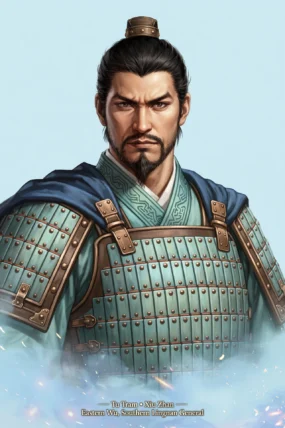
- Xiu Zhan (修湛, Tu Trạm): Younger brother. Bound together by a blood oath to avenge their father’s death, they both volunteered as frontline vanguard officers under Tao Huang in the campaign to retake Jiaozhi.
Friends
- Tao Huang (陶璜, Đào Hoàng): Commander-in-chief and superior officer. Led the successful southern expedition to reclaim Jiaozhi (269–271 AD), promoted Xiu Yun to Grand Administrator of Guilin Commandery, and permitted him to execute Mao Jiong to avenge his father.
Enemies
- Mao Jiong (毛炅, Mao Quýnh): Western Jin commander and mortal enemy. Defeated and killed Xiu Yun’s father at Gucheng in 268 AD; upon being captured alive in 271 AD, he was personally executed by Xiu Yun, who cut open his abdomen and extracted his heart as a sacrificial tribute.
- Dong Yuan (董元, Đổng Nguyên): Western Jin commander who co-led the surprise night assault at Gucheng in 268 AD that resulted in the death of Xiu Yun’s father, Xiu Ze.
Other
- Sun Hao (孙皓, Tôn Hạo): Last Emperor of Eastern Wu. Dispatched the initial expedition under Xiu Yun’s father in 268 AD and subsequently commissioned Tao Huang’s counter-offensive to restore Wu sovereignty over Jiaozhi.
In Novel
Xiu Yun (脩芸, Tu Uẩn) does not have a securely verified named appearance in the supplied edition under the exact Chinese name 脩芸. No chapter is assigned without an exact textual match.
In History
Identification
- Xiu Yun (脩芸, Tu Uẩn) is a very minor name in the Three Kingdoms corpus.
Historical Evidence
- The available standard historical sources do not provide a sufficiently detailed independent biography for this exact name.
- Details belonging to similarly named figures should not be transferred here without exact-name evidence.
Classification
- Needs Audit / Unverified.