




Contents
Biography & Historical Record
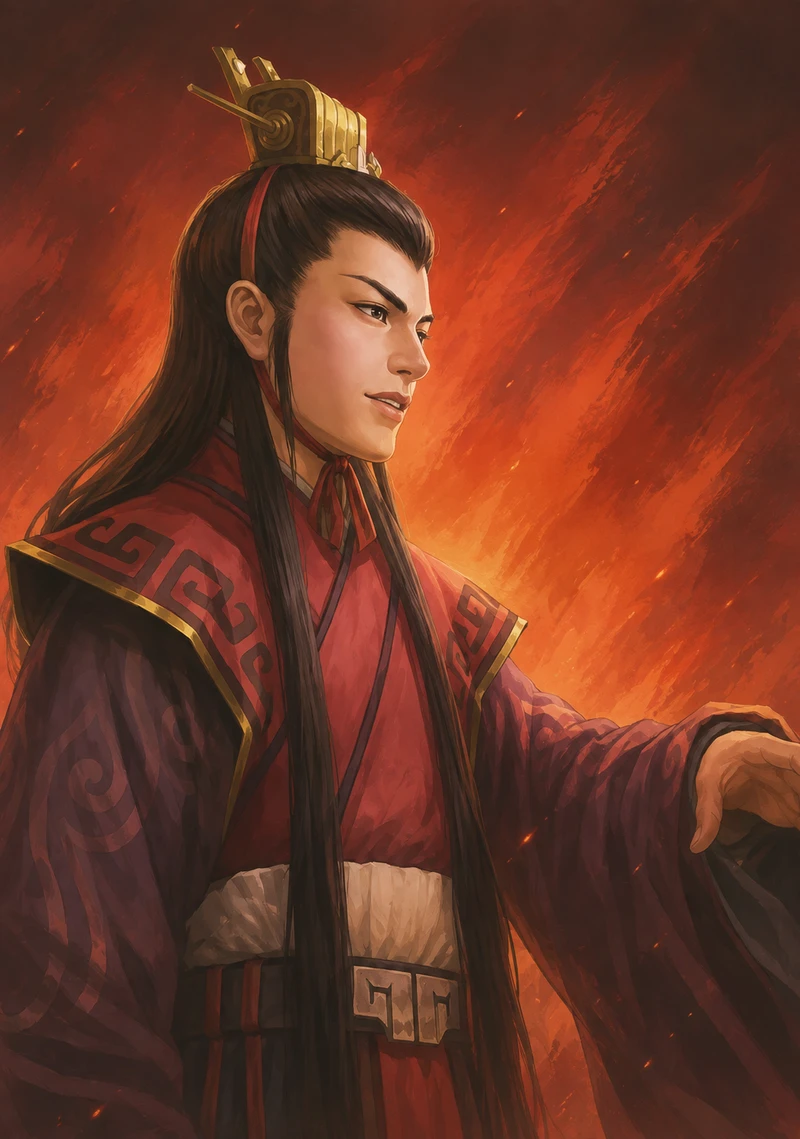
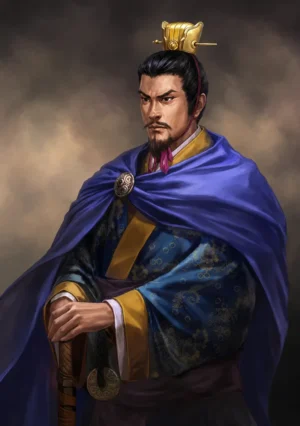
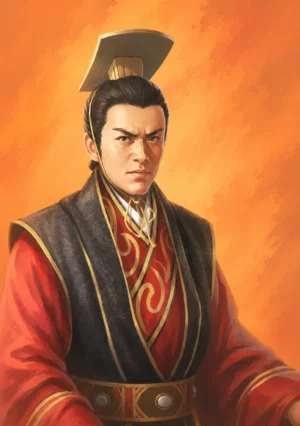
Cao Rui, courtesy name Yuanzhong, was the second emperor of the Cao Wei state during the Three Kingdoms period. A grandson of the legendary warlord Cao Cao and son of the first Wei emperor Cao Pi and Lady Zhen, Cao Rui reigned from 226 until his premature death in 239 AD. Documented in Chen Shou’s official dynastic history Records of the Three Kingdoms (Sanguozhi – Book of Wei, Volume 3, Biography of Emperor Ming), Cao Rui is widely recognized by historians as a brilliant, highly capable, yet deeply complex sovereign. He successfully directed Wei’s strategic defense against Zhuge Liang’s five Northern Expeditions and decisively crushed the separatist rebellion of Gongsun Yuan in Liaodong, though his later years were marred by extravagant palace construction projects.
Cao Rui’s early life was marked by severe emotional trauma. His mother, Lady Zhen, fell out of favor with Cao Pi and was forced to commit suicide under humiliating circumstances, leaving the young prince under a dark cloud of suspicion. However, Cao Rui’s exceptional intelligence, cautious discretion, and composure during hunting excursions—most famously when he calmly refused to shoot a mother deer because he understood the emotional weight of maternal separation—deeply moved Cao Pi, securing his position as crown prince. Ascending the dragon throne at age twenty-two following Cao Pi’s passing in 226 AD, Cao Rui immediately demonstrated elite administrative and military judgment.
As sovereign, Cao Rui proved to be the ultimate nemesis of Zhuge Liang. Tasked with repelling successive massive invasions from Shu Han, Cao Rui displayed supreme talent in personnel management, entrusting veteran strategist Sima Yi with supreme military command over the western frontier while personally overseeing strategic logistics and morale. His steady leadership ensured that Wei’s western borders remained impenetrable despite Zhuge Liang’s relentless campaigns. Furthermore, when Gongsun Yuan declared independence in Liaodong, Cao Rui dispatched Sima Yi on a brilliant blitzkrieg campaign that annihilated the rebel forces and unified China’s northeastern marches.
Tragically, in his final years, Cao Rui abandoned his earlier frugality, initiating massive, grandiose architectural projects that drained the imperial treasury and exhausted the populace. In 239 AD, Cao Rui fell gravely ill and passed away at the young age of thirty-five—the exact same lifespan as his father Cao Pi. Having lost his biological sons to early deaths, Cao Rui committed a fatal political error on his deathbed: he appointed the incompetent imperial kinsman Cao Shuang alongside the ambitious Sima Yi as co-regents for his seven-year-old adopted son, Cao Fang. This fateful arrangement ignited the fatal power struggles that ultimately destroyed the Cao imperial clan and paved the way for the rise of the Sima dynasty.
Role in Romance of the Three Kingdoms
In Luo Guanzhong’s classic 14th-century historical novel Romance of the Three Kingdoms, Cao Rui appears prominently during the mid-to-late chapters covering Zhuge Liang’s Northern Expeditions. Depicted as a wise, perceptive, and authoritative monarch, Cao Rui places complete trust in Sima Yi, repeatedly dispatching imperial edicts, reinforcements, and supplies to counter Shu Han’s invasions. His reign is portrayed as the golden age of Cao Wei’s military resilience, where clever imperial governance successfully neutralizes the legendary genius of Zhuge Liang.
Cao Rui (曹叡) — Historical & Literary Timeline
Ascension to the Throne
Succeeds his father Cao Pi as the second Emperor of Cao Wei at age twenty-two, inheriting the imperial mandate and supreme command over the northern state.
Appointing Sima Yi & Defending the Western Frontier
Empowers Sima Yi with supreme military authority in the west; masterminds Cao Wei’s defensive strategy to successfully repel Zhuge Liang’s successive military invasions.
The Liaodong Campaign
Dispatches Sima Yi to launch a lightning campaign that crushes Gongsun Yuan’s rebellion, successfully pacifying the northeastern borderlands of Liaodong.
Premature Death & Fateful Regency Appointment
Passes away prematurely at age thirty-five; on his deathbed, appoints Cao Shuang and Sima Yi as co-regents for the young crown prince Cao Fang, inadvertently setting the stage for the fall of Wei.
For detailed historical records, archives, and official chronicles, explore Cao Rui on Wikipedia.
Key Relationships
Family
- Cao Pi (曹丕, Tào Phi): Father and founding emperor of Cao Wei, who initially held reservations about Cao Rui following Lady Zhen’s death but eventually named him crown prince.
- Lady Zhen (甄夫人, Chân phu nhân): Biological mother, whose forced suicide during Cao Pi’s reign left a lasting emotional impact on Cao Rui throughout his life.
- Cao Cao (曹操, Tào Tháo): Grandfather and founder of the Cao Wei state’s foundations, who highly valued Cao Rui’s intellect and potential during his early childhood.
- Cao Fang (曹芳, Tào Phương): Adopted son whom Cao Rui designated as crown prince and successor prior to his death in 239 AD.
- Cao Shuang (曹爽, Tào Sảng): Imperial kinsman and cousin whom Cao Rui appointed on his deathbed as co-regent to support the young Cao Fang.
- Cao Zhen (曹真, Tào Chân): Distant uncle and senior imperial commander who served as regent and defended the western frontier against early Shu Han incursions.
Friends
- Sima Yi (司马懿, Tư Mã Ý): Veteran strategist and military commander trusted implicitly by Cao Rui to repel Zhuge Liang’s Northern Expeditions and crush Gongsun Yuan’s rebellion in Liaodong, later appointed co-regent in 239 AD.
- Man Chong (满宠, Mãn Sủng): Trusted senior general who successfully organized and maintained Cao Wei’s southeastern defensive line against repeated Eastern Wu incursions at Hefei.
- Chen Qun (陈群, Trần Quần): Senior statesman and legal scholar who served as a core advisor and regent assisting Cao Rui in civil governance throughout his reign.
Enemies
- Zhuge Liang (诸葛亮, Gia Cát Lượng): Prime Minister of Shu Han and primary adversary who launched five Northern Expeditions (228–234 AD) against Wei’s western borders until his death at the Battle of Wuzhang Plains.
- Gongsun Yuan (公孙渊, Công Tôn Uyên): Warlord of Liaodong who declared independence from Wei; his separatist rebellion was completely suppressed and eliminated by Cao Rui’s forces in 238 AD.
- Sun Quan (孙权, Tôn Quyền): Founding Emperor of Eastern Wu who repeatedly led and dispatched southern military campaigns against Cao Rui’s frontiers at Hefei and Huainan.
Other
- No information
Appearance
In Novel
Chapter 91
- Cao Rui (曹睿, Tào Duệ): Cao Rui succeeds Cao Pi as emperor of Wei. The novel presents him as the ruler who faces Zhuge Liang’s Northern Expeditions and repeatedly receives reports about the Shu attacks. He relies on Sima Yi and other commanders to defend Wei while the campaigns continue.
Chapter 105
- Cao Rui (曹睿, Tào Duệ): Cao Rui becomes seriously ill and summons Sima Yi back to court. He presents the young Cao Fang and entrusts the future government to Sima Yi and Cao Shuang. Cao Rui dies shortly afterward, leaving Cao Fang as emperor and creating the regency struggle that dominates the following chapters. The text explicitly shows Cao Rui entrusting the child emperor to the senior ministers before his death. citeturn2search5
Appearance
In History
Summary
- Cao Rui (曹睿, Tào Duệ), courtesy name Yuanzhong and posthumously Emperor Ming of Wei, was the second emperor of Cao Wei.
Accession
- He succeeded Cao Pi in 226 and inherited a state facing threats from both Shu Han and Eastern Wu.
Defense of Wei
- Cao Rui personally directed responses to major Shu and Wu offensives and relied on commanders such as Sima Yi, Cao Zhen and Man Chong to defend strategic regions.
- His reign saw several major campaigns against Zhuge Liang’s Northern Expeditions.
Government and Building Projects
- Cao Rui was an active ruler with strong interest in court ceremony, palaces and monumental construction.
- Later historians criticized the expense of these projects, particularly as the state faced continuing military pressure.
Succession
- Near his death in 239, Cao Rui designated the young Cao Fang as his successor and appointed Cao Shuang and Sima Yi as regents.
- Classification: Historical.