
Contents
Biography & Historical Record
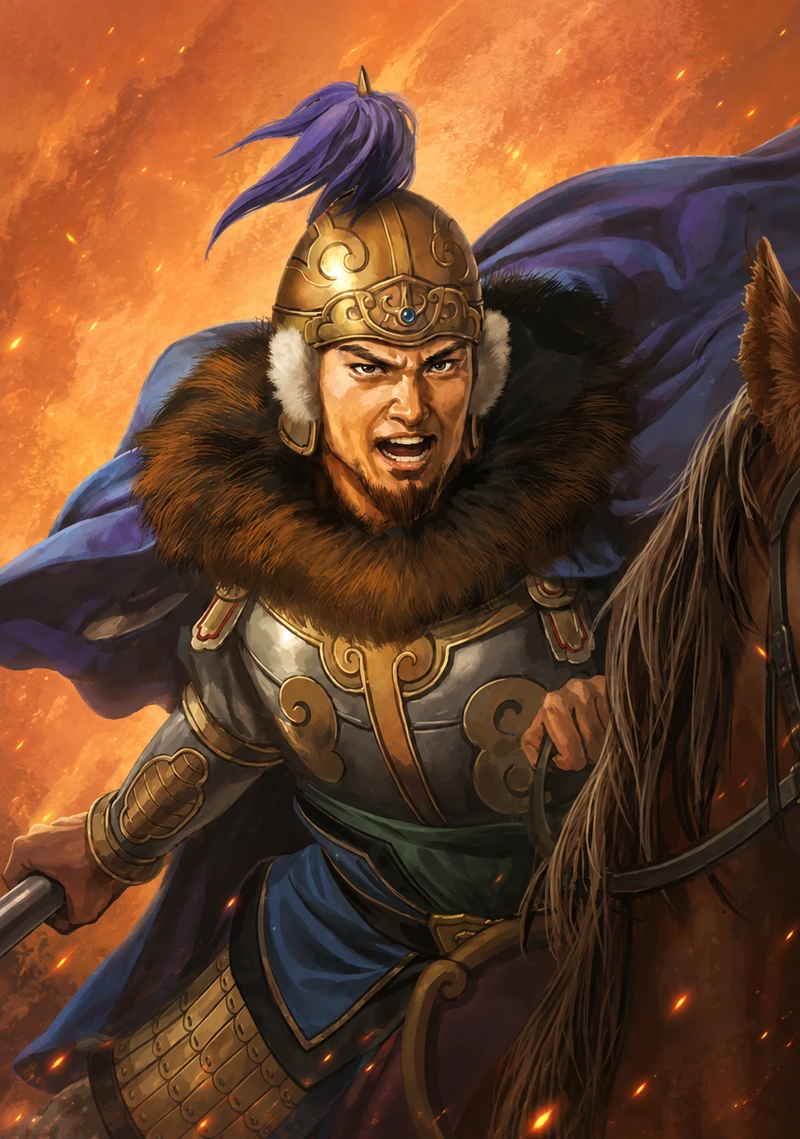
Qian Zhao, courtesy name Zijing, was an illustrious grand frontier commander, peerless frontier strategist, and incorruptible civil administrator of the Eastern Han dynasty and the Cao Wei state during the Three Kingdoms period. Hailing from Guanxian in Anping Commandery (modern Guan County, Hebei), Qian Zhao was celebrated throughout ancient China alongside Tian Yu as the supreme dual pillars guarding the northern borders against the nomadic Xianbei and Wuhuan confederations. Documented extensively in Chen Shou’s official dynastic history Records of the Three Kingdoms (Sanguozhi – Book of Wei, Biography of Qian Zhao) and Sima Guang’s Zizhi Tongjian, Qian Zhao served in vital administrative and military positions including General of the Household Protecting the Wuhuan (Hu Wuhuan Zhonglang Jiang), Grand Administrator of Yanmen (Yanmen Taishou), and Marquis of Guannei, dedicating his life to establishing peace, security, and cultural prosperity across the northern frontiers of the Central Plains.
In his early youth, Qian Zhao studied under the renowned Confucian master Le Yin. During his adolescent years, he formed an intimate, sworn fraternity with Liu Bei in Hebei; the historical records note that the two young men shared clothes, food, and swore eternal loyalty to each other, maintaining a profound lifelong mutual respect. Following the tragic murder of his mentor Le Yin during the Yellow Turban chaos, Qian Zhao escorted his teacher’s coffin through hostile bandit territory amidst grave personal danger, establishing an enduring reputation for filial righteousness. He subsequently entered the service of Yuan Shao, serving as Chief of Wuyi and managing regional cavalry contingents. Following Yuan Shao’s death in 202 and the fratricidal civil war between Yuan Tan and Yuan Shang, Qian Zhao remained steadfastly loyal to Yuan Shang. However, when Yuan Shang was crushed by Cao Cao and fled north to the Wuhuan chieftain Tadun, Qian Zhao recognized that further resistance would only devastate the civilian populace. He formally submitted to Cao Cao in 204, being appointed as a Military Counselor and Assistant to the Chancellor.
Qian Zhao rendered monumental service during Cao Cao’s epic northern expedition to Mount Bailang in 207. Utilizing his intimate knowledge of northern geography and tribal customs, Qian Zhao served as a vanguard advisor, facilitating the surprise march through the Bieshan pass and assisting Zhang Liao in annihilating Tadun’s nomadic host. Following the pacification of Hebei, Qian Zhao was deployed to Bing Province and Yanmen Commandery, where the mighty Xianbei confederation led by chieftains Kebineng and Suli launched perpetual raids into the interior. As Grand Administrator of Yanmen, Qian Zhao implemented a visionary dual policy of iron military vigilance and benevolent economic diplomacy: he repaired crumbling sections of the Great Wall, trained thousands of border horse archers, opened state-regulated border markets, and ensured absolute fairness in livestock trading.
When Kebineng mobilized over ten thousand Xianbei horsemen to attack the border commanderies, Qian Zhao personally led a rapid strike detachment through heavy snow, bypassing enemy scouts to launch a devastating nocturnal rear attack. Terrified by Qian Zhao’s martial ferocity and deep intelligence networks, Kebineng broke his siege, retreated beyond the desert, and formally submitted tribute. Through over two decades of tireless frontier governance, Qian Zhao pacified more than a hundred thousand nomadic households, transforming the once desolate wasteland of Yanmen into a flourishing, fortified defensive shield. He passed away of illness in office in 231; his demise was mourned with profound grief by both Han Chinese citizens and nomadic chieftains alike, who erected ancestral shrines along the Great Wall to honor his virtuous spirit.
Role in Romance of the Three Kingdoms
In Chapters 32, 33, and 100 of Luo Guanzhong’s classic 14th-century historical novel Romance of the Three Kingdoms, Qian Zhao is featured as an upright, strategic, and highly capable commander whose administrative loyalty and mastery over northern frontier defense reinforce Cao Cao’s dominance and thwart Zhuge Liang’s grand geopolitical alliances.
In Chapter 32 and Chapter 33, Qian Zhao makes his dramatic entrance during Cao Cao’s conquest of Hebei. Serving as an administrator under Yuan Shang, Qian Zhao demonstrates unwavering integrity and strategic prudence, advising against unnecessary bloodshed among the Yuan brothers. Following the fall of Jizhou, Qian Zhao enters Cao Cao’s service, earning the chancellor’s immediate admiration for his deep understanding of northern nomadic tribes and frontier geography during the expedition against the Wuhuan at Mount Bailang.
In Chapter 100, the novel highlights Qian Zhao’s vital strategic role during Zhuge Liang’s Northern Expeditions. As Zhuge Liang advances on Qishan and sends diplomatic emissaries to coordinate a joint pincer invasion with the northern Xianbei chieftain Kebineng, Sima Yi grows deeply alarmed by the prospect of a two-front war. However, Cao Wei’s court relies upon the formidable reputation and frontier vigilance of Qian Zhao and Tian Yu in Yanmen and Bingzhou. Stationed firmly along the northern passes, Qian Zhao deploys crack border cavalry and diplomatic maneuvers to neutralize Kebineng’s auxiliary hosts, preventing the Xianbei cavalry from linking up with the Shu Han army. Luo Guanzhong highlights Qian Zhao as an indispensable guardian of the realm whose quiet strategic competence secured the northern foundations of Cao Wei against external barbarian incursions and southern offensives alike.
Qian Zhao (牽招) — Historical & Literary Timeline
Youthful Fellowship with Liu Bei & Escorting Teacher’s Coffin
Forms a close fraternal bond with Liu Bei in Hebei; demonstrates immense filial loyalty by escorting the coffin of his master Le Yin through bandit-infested territories.
Pacification of Wuhuan & Battle of Mount Bailang
Submits to Cao Cao following the fall of Yuan Shang; provides critical geographical guidance during the northern expedition to Mount Bailang that crushes Tadun’s Wuhuan host.
Grand Administrator of Yanmen & Taming the Xianbei
Appointed Grand Administrator of Yanmen and General of the Household Protecting the Wuhuan; repairs the Great Wall, establishes fair border markets, and repels Kebineng’s tribal incursions.
Containing Kebineng During Zhuge Liang’s Expeditions & Death
Thwarts Zhuge Liang’s diplomatic alliance with Kebineng, preserving the northern frontier; passes away of illness in office in 231, mourned across Han and tribal territories.
Key Relationships
Family
- Qian Jia (牵嘉, Khiên Gia): Eldest son. Inherited Qian Zhao’s noble marquisate and served as an officer in the Cao Wei military.
- Qian Hong (牵弘, Khiên Hoằng): Second son. Famous Wei and Jin general who served as Grand Administrator of Longxi, fought in the conquest of Shu Han (263 AD), and died heroically as Inspector of Liang Province at Mount Qingshan (271 AD).
Friends
- Liu Bei (刘备, Lưu Bị): Founding First Sovereign of Shu Han. Shared an exceptionally close sworn brotherhood and youthful friendship with Qian Zhao when studying and campaigning together in You Province during the late Eastern Han dynasty (180s AD).
- Tian Yu (田豫, Điền Dự): Renowned frontier commander and close comrade. Partnered with Qian Zhao as the legendary dual guardians of Cao Wei’s northern borders, coordinating the pacification of northern nomadic tribes across decades.
- Cao Cao (曹操, Tào Tháo): King of Wei and Chancellor of Han. Highly valued Qian Zhao’s unbending integrity and tactical genius, appointing him to oversee northern frontier affairs and tribal relations following the defeat of the Yuan clan.
- Cao Pi (曹丕, Tào Phi): Founding Emperor of Cao Wei (Emperor Wen). Confirmed Qian Zhao’s command over the northern marches, elevating him to General of the Household Protecting the Wuhuan (Hu Wuhuan Zhonglang Jiang).
- Cao Rui (Cao Rui, 曹叡, Tào Duệ): Second Emperor of Cao Wei (Emperor Ming). Elevated Qian Zhao to Grand Administrator of Yanmen, relying on his deterrence to secure the northern frontiers.
- Sima Yi (司马懿, Tư Mã Ý): Grand Commander and regent of Cao Wei. Benefited greatly during his western campaigns against Shu Han from Qian Zhao’s absolute pacification and containment of northern tribal forces.
Enemies
- Kebineng (轲比能, Kha Bỉ Năng): Supreme Chieftain of the Xianbei confederation. Repeatedly launched massive border raids and unified nomadic forces along the northern frontier, but was repeatedly outmaneuvered, defeated, and pacified by Qian Zhao’s military stratagems.
- Tadun (蹋顿, Đạp Đốn): Supreme Chieftain of the Wuhuan tribes. Defeated and slain during Cao Cao’s Mount Bailang campaign (207 AD), which Qian Zhao supported to neutralize northern nomadic threats.
- Yuan Shang (袁尚, Viên Thượng): Third son and successor of Yuan Shao. Qian Zhao served him loyally during the factional wars until Yuan Shang was betrayed and killed in Liaodong (207 AD), prompting Qian Zhao to submit to Cao Cao.
- Zhuge Liang (诸葛亮, Gia Cát Lượng): Chancellor of Shu Han. Attempted a grand diplomatic and military encirclement by coordinating with Kebineng to launch simultaneous attacks on Wei (c. 230 AD), but this northern front was neutralized by Qian Zhao’s vigilance.
Others
- No information
In Novel
Chapter 32
- Qian Zhao (牵招, Khiên Chiêu): Qian Zhao serves under Cao Cao and is sent to assist the defense of the northern frontier. He is known for maintaining order among the frontier peoples and for his ability to negotiate with non-Han groups while remaining loyal to Wei.
Chapter 33
- Qian Zhao (牵招, Khiên Chiêu): Qian Zhao continues to serve on the northern frontier as Cao Cao consolidates control. His appearance emphasizes his administrative and diplomatic role among the border populations rather than a major battlefield episode.
History
Summary
- Qian Zhao (牵招, Khiên Chiêu) was a prominent official and military commander who served the Han and Cao Wei regimes.
Service in the North
- Qian Zhao was particularly active in the northern frontier regions and developed a reputation for dealing effectively with local and frontier peoples.
- He served under several northern commanders before entering Cao Wei service.
Administrative Career
- Qian Zhao held important posts in You Province and other frontier areas.
- His career was marked by a combination of military ability, diplomacy and frontier administration.
Classification
- Historical.