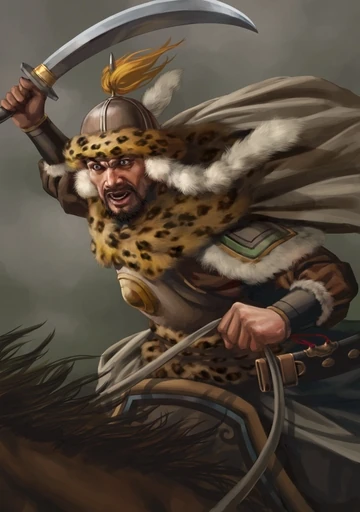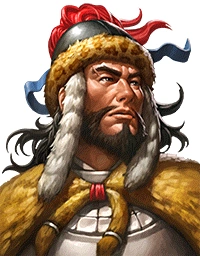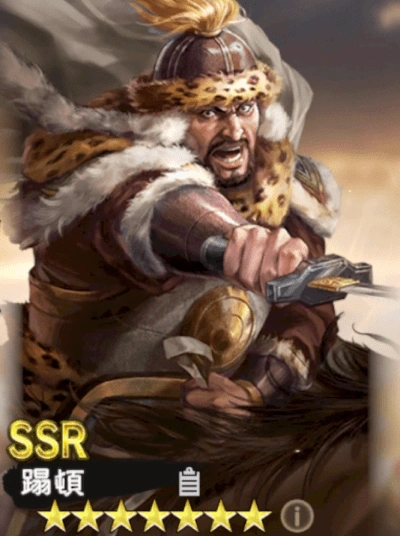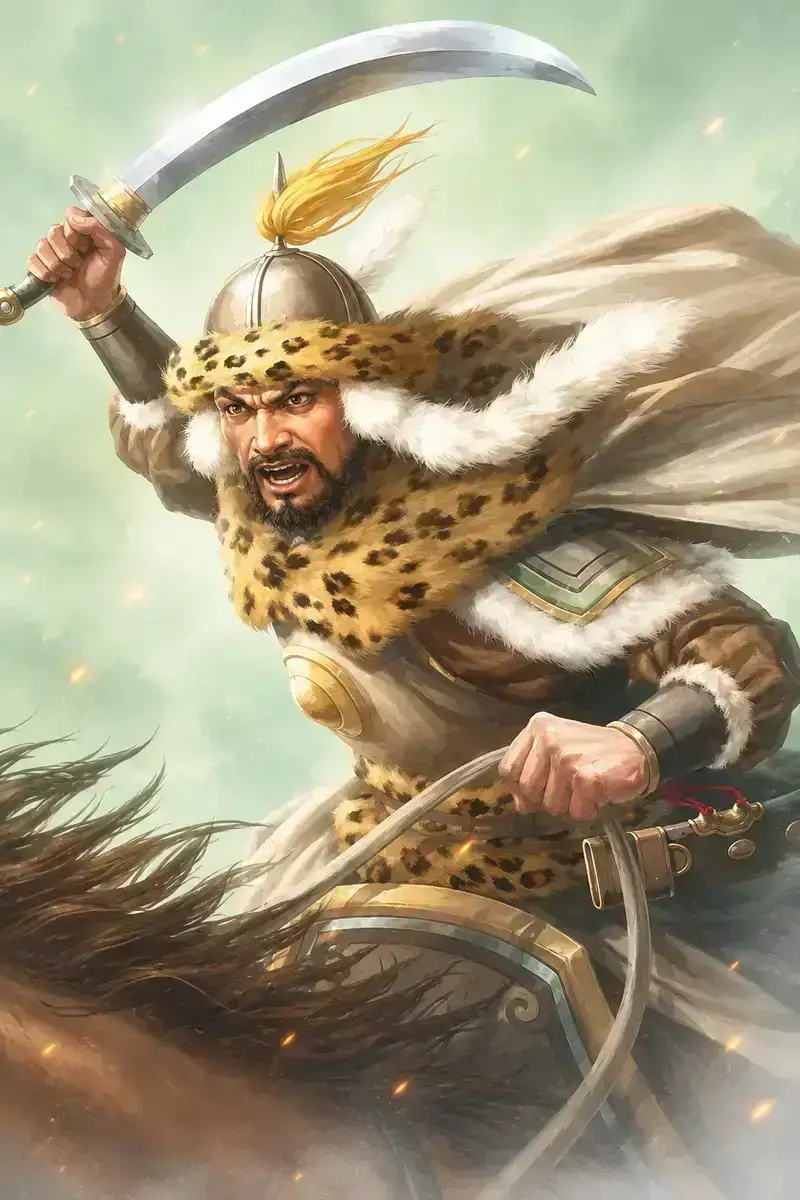

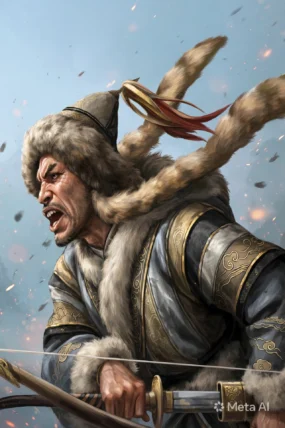
Here is the exhaustive biography, ancestral background, historical records, and Romance of the Three Kingdoms narrative for Tadun (蹋頓), (d. 207 AD), supreme leader of the Wuhuan tribes, incorporating all detailed accounts of his military alliances, cavalry dominance, and defeat at Mount Bailang.
Contents
Ancestry, Tribal Rise & Leadership
Tadun was a prominent chieftain of the Wuhuan (Ô Hoàn) nomadic tribes situated in Liaoxi (Liêu Tây). He was the nephew of Qiuliju (Khâu Lực Cư), the supreme Wuhuan leader in the 190s. Upon Qiuliju’s death, his son Louban (Lâu Ban) was still too young to rule, leading Tadun to assume leadership over the tribal confederation. Renowned for his martial fierce bravery and tactical acumen, Tadun unified the scattered Wuhuan clans and commanded a formidable cavalry force celebrated across northern China as the “Greatest cavalry under heaven”.
Alliance with Yuan Shao & Dominance in You Province
Recognizing the strategic importance of the Wuhuan cavalry, warlord Yuan Shao established a firm alliance with Tadun. Tadun led his nomadic horsemen to campaign alongside Yuan Shao against Gongsun Zan in You Province. Following Gongsun Zan’s defeat, Yuan Shao awarded Tadun and fellow tribal chieftains imperial seals and official ribbons, bestowing daughters of Yuan clan vassals upon the chieftains in marriage. When Louban reached adulthood, he assumed nominal leadership while Tadun retained military command over Liaoxi. Following Yuan Shao’s death in 202 AD, Tadun remained steadfastly loyal to the Yuan family, sheltering Yuan Shao’s fleeing sons, Yuan Shang and Yuan Xi, after Cao Cao conquered Hebei.
The Battle of Mount Bailang & Fateful Death
In 207 AD, advised by his strategist Guo Jia, Cao Cao launched a daring campaign across the northern deserts to eradicate the remaining Yuan brothers and neutralize the Wuhuan threat. Surprised by Cao Cao’s rapid advance via an unexpected mountain path led by guide Tian Chou, Tadun mustered tens of thousands of Wuhuan cavalry alongside Yuan Shang and Yuan Xi at Mount Bailang (White Wolf Mountain). Spotting the disarray in the Wuhuan lines, Cao Cao entrusted his vanguard to Zhang Liao and Cao Chun. In the fierce clash that ensued, the Wuhuan army was shattered; historically, Tadun was captured and killed on the field by Cao Chun’s elite Tiger and Leopard Cavalry, whereas Luo Guanzhong’s novel depicts him slain in single combat by Zhang Liao.
Tadun (蹋頓) — Historical & Literary Timeline
Assuming Wuhuan Leadership & Yuan Alliance
Succeeds his uncle Qiuliju as leader of the Wuhuan tribes during Louban’s minority. Allies with Yuan Shao to crush Gongsun Zan, earning imperial seals and diplomatic marriages for his chieftains.
Resistance Against Cao Cao
Provides refuge to Yuan Shang and Yuan Xi in Liaoxi after Cao Cao conquers Hebei and executes Yuan Tan, mounting raids into northern Han borders.
Battle of Mount Bailang & Passing
Rallies 10,000+ cavalry to engage Cao Cao at White Wolf Mountain. Slain by Zhang Liao / Cao Chun (historically), resulting in the collapse of Wuhuan power in northern China.
Romance of the Three Kingdoms Narrative
In Chapter 33 of Luo Guanzhong’s novel Romance of the Three Kingdoms, Tadun is introduced as the king of the Wuhuan who fielded 10,000 elite cavalry to aid Yuan Shang and Yuan Xi against Cao Cao’s northern invasion. As Cao Cao reached White Wolf Mountain, he observed that Tadun’s army was drawn up without proper tactical formation. Seizing the opportunity, Cao Cao unleashed his vanguard led by Zhang Liao and Xu Chu. Zhang Liao rode directly into the fray, encountered Tadun on horseback, and cut him down on the spot, routing the tribal horde and forcing Yuan Shang and Yuan Xi to flee to Gongsun Kang in Liaodong. Later in Chapter 40, advisor Wang Can cited Tadun’s swift destruction at Mount Bailang when urging Liu Cong to surrender Jing Province to Cao Cao.
For detailed historical records, archives, and official chronicles, explore Tadun on Wikipedia.
Key Relationships
Family
- Qiuliju (丘力居, Khâu Lực Cư): Tadun’s uncle and the supreme leader of the Wuhuan tribes, whom Tadun succeeded as chieftain.
- Louban (楼班, Lâu Ban): Tadun’s cousin and the son of Qiuliju; he held nominal leadership over the Wuhuan confederation once he reached adulthood.
Friends
- Yuan Shao (袁绍, Viên Thiệu): A powerful northern warlord who formed a strategic military alliance with Tadun, providing imperial honors and marriage ties to secure the Wuhuan cavalry’s support.
- Yuan Shang (袁尚, Viên Thượng): Son of Yuan Shao who sought refuge with Tadun in Liaoxi after the fall of Hebei and fought alongside him at the Battle of Mount Bailang in 207 AD.
- Yuan Xi (袁熙, Viên Hy): Son of Yuan Shao who joined his brother in seeking sanctuary with Tadun and participated in the Wuhuan military resistance against Cao Cao.
- Su Puyan (苏仆延, Tô Phộc Diên): A fellow Wuhuan chieftain who served as a key military ally and commander within the tribal confederation.
- Wu Yan (乌延, Ô Diên): A Wuhuan chieftain who fought alongside Tadun during the campaigns against the Han and the final defense at Mount Bailang.
Enemies
- Gongsun Zan (公孙瓒, Công Tôn Toản): A northern warlord whose regional power was dismantled through the combined military efforts of Tadun and Yuan Shao.
- Cao Cao (曹操, Tào Tháo): The Han warlord who orchestrated the 207 AD northern campaign specifically to neutralize the Wuhuan threat and the Yuan remnants.
- Zhang Liao (张辽, Trương Liêu): A prominent general under Cao Cao who, according to the Romance of the Three Kingdoms, slew Tadun in single combat during the Battle of Mount Bailang.
- Cao Chun (曹纯, Tào Thuần): The commander of the elite Tiger and Leopard Cavalry who, according to historical records, captured and executed Tadun during the 207 AD engagement at Mount Bailang.
Other
- Tian Chou (田畴, Điền Trù): A former Han official who acted as a guide for Cao Cao’s army, leading them through an unexpected mountain path that facilitated the surprise attack on Tadun’s forces.
In Novel
Chapter 33
- Tadun (蹋顿, Tà Dùn): Introduced as king of the Wuhuan (乌桓, Ô Hoàn) who fields about ten thousand elite cavalry to back Yuan Shang (袁尚, Viên Thượng) and Yuan Xi (袁熙, Viên Hy) after Cao Cao (曹操, Tào Tháo) has crushed the Yuan hold on Hebei. At White Wolf Mountain (白狼山, Bạch Lang Sơn / Mount Bailang) Cao Cao sees the Wuhuan array disordered; he sends the vanguard under Zhang Liao (张辽, Trương Liêu) (with Xu Chu also named in the charge). Zhang Liao rides straight at Tadun, cuts him down on horseback, and the tribal horde breaks — Yuan Shang and Yuan Xi flee toward Gongsun Kang in Liaodong. This is the novel’s signature death: Zhang Liao as Tadun’s killer.
Chapter 40
In History
Summary
- Tadun (蹋顿, Tà Dùn) was a Wuhuan (乌桓, Ô Hoàn) leader in Liaoxi, nephew of Qiu Liju (丘力居, Khâu Lực Cư). When Qiu Liju died, his son Louban (楼班, Lâu Ban) was too young to rule; Tadun took effective command of the tribal confederation and its famed cavalry. He allied with Yuan Shao (袁绍, Viên Thiệu) against Gongsun Zan (公孙瓒, Công Tôn Toản), received seals and marriage ties from the Yuan, and later sheltered Yuan Shang and Yuan Xi. In 207 Cao Cao’s northern campaign smashed the Wuhuan at White Wolf Mountain; historically Tadun was captured and killed by Cao Chun (曹纯, Tào Thuần)‘s Tiger and Leopard Cavalry — not by Zhang Liao in single combat as the novel prefers.
Year: c. 190–199 AD
- Assumes Wuhuan leadership during Louban’s minority; campaigns with Yuan Shao against Gongsun Zan in You Province; Yuan Shao awards seals/ribbons and marriage alliances to Wuhuan chieftains.
Year: 202–205 AD
- After Yuan Shao’s death (202), shelters Yuan Shang and Yuan Xi in Liaoxi; Wuhuan cavalry raid Han borders while Cao Cao consolidates Hebei.
Year: 207 AD
- Cao Cao, advised by Guo Jia (郭嘉, Quách Gia), takes a desert/mountain route guided by Tian Chou (田畴, Điền Trù); at Mount Bailang the Wuhuan are routed. Cao Chun captures and kills Tadun; surviving Yuan brothers flee to Liaodong.
Novel vs History
- Novel (Ch.33): Zhang Liao kills Tadun in personal combat.
- History (SGZ / ZZTJ): Cao Chun and the Tiger and Leopard Cavalry capture and execute Tadun; Zhang Liao is a vanguard commander in the same campaign but is not the attested killer.
Historical Record
- Sanguozhi (Wei) notices on Wuhuan / Cao Cao’s northern campaign; Pei Songzhi annotations; Zizhi Tongjian year Jian’an 12 (207) on White Wolf Mountain; biographies of Cao Chun and related Wei generals.
Gallery