
Contents
Biography & Historical Record
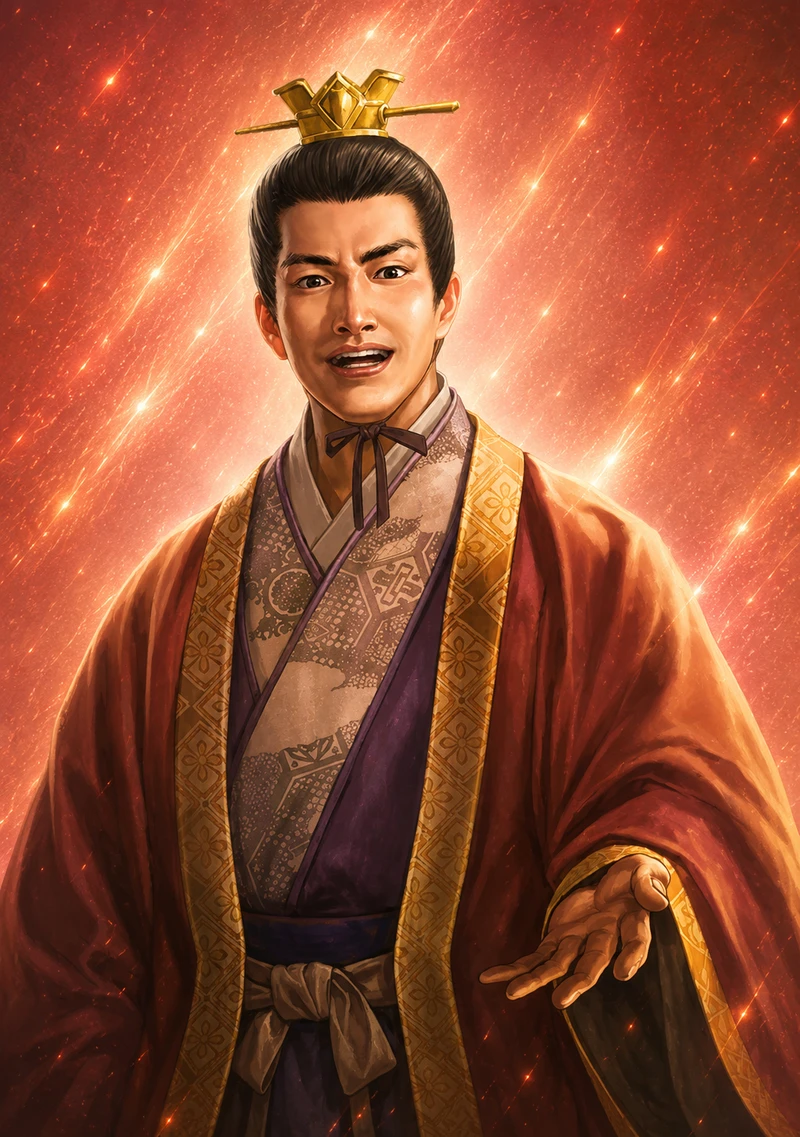
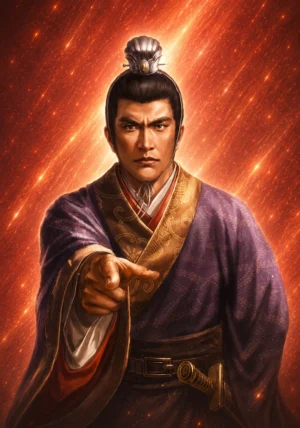
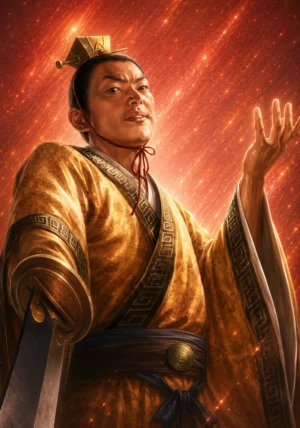
Sun Deng, courtesy name Zigao, was an illustrious crown prince, visionary statesman, and beloved cultural paragon of the Eastern Wu state during the Three Kingdoms period. Born in 209 in Fuchun within Wu Commandery, Sun Deng was the eldest son of Sun Quan, the founding Emperor Da of Eastern Wu. Although born to a concubine of humble status, he was personally raised by Sun Quan’s first primary wife, Lady Xu, whom Sun Deng revered with lifelong filial devotion. Endowed with a benevolent temperament, keen intellectual wisdom, profound humility, and exemplary administrative foresight, Sun Deng was formally consecrated as Crown Prince in 229 upon Sun Quan’s assumption of the imperial title. Documented extensively in Chen Shou’s official dynastic history Records of the Three Kingdoms (Sanguozhi – Book of Wu, Biography of Sun Deng) and Sima Guang’s Zizhi Tongjian, Sun Deng is universally commemorated as one of the most virtuous heir apparents in Chinese history, whose tragic premature death in 241 destabilized the succession of Eastern Wu and led directly to the ruinous factional strife known as the Two Palaces Contention.
From his adolescence, Sun Quan took meticulous care in cultivating Sun Deng’s administrative and military leadership. When Sun Quan assumed the title King of Wu in 221, Sun Deng was created Crown Prince of Wu and assigned a prestigious court of four celebrated young intellectual companions known as the ‘Four Friends of the Crown Prince’ (Taizi Siyou): Zhuge Ke (son of Zhuge Jin), Zhang Xiu (son of Zhang Zhao), Gu Tan (grandson of Gu Yong), and Chen Biao (son of Chen Wu). Under the tutelage of senior statesmen such as Grand Tutor Zhuge Jin, Junior Tutor Zhang Zhao, and scholar-teacher Lu Meng, Sun Deng demonstrated extraordinary modesty, treating his companions and teachers as equals without aristocratic condescension. In 225, Sun Quan arranged for Sun Deng to marry the daughter of the late Grand Commander Zhou Yu, forging an unbreakable bond with Jiangdong’s military nobility.
In 229, following Sun Quan’s formal imperial coronation at Wuchang and subsequent relocation of the imperial capital downriver to Jianye, Sun Deng was entrusted with supreme administrative regency over the old capital of Wuchang and the critical western provinces. Aided by Chancellor of the Right Lu Xun, Minister He Zhi, and General of the Left Lu Meng, Sun Deng handled domestic governance, agricultural rehabilitation, and frontier security with supreme prudence and compassion. He was celebrated for his accessible justice and benevolent corrections: when palace archers accidentally fired a stray arrow near his retinue during an inspection, Sun Deng quietly retrieved the arrow and concealed it to prevent the execution of the panicked guardsman. Furthermore, whenever Sun Quan conducted grand military campaigns against Cao Wei at Hefei and Shouchun, Sun Deng was appointed General of the Household and entrusted with safeguarding the capital, ensuring logistical stability and civic tranquility throughout the realm.
Sun Deng was an outspoken champion of state integrity, repeatedly submitting candid memorials advising his father against hazardous personal battlefield excursions, unchecked military campaigns, and excessive punishments. When Sun Quan contemplated launching costly maritime expeditions to locate legendary overseas lands in 230, Sun Deng courageously drafted earnest memorials dissuading the sovereign from squandering precious military resources. In the fifth month of 241, Sun Deng fell critically ill at the young age of thirty-three. On his deathbed, rather than requesting titles or wealth for his sons, Sun Deng penned a magnificent and heartbreaking final memorial to Sun Quan, recommending the continued employment of upright statesmen such as Lu Xun, Zhuge Jin, Bu Zhi, Zhu Huan, Quan Cong, and Gu Yong, while urging the Emperor to temper his wrath and cherish the common people. Sun Quan wept uncontrollably upon reading the memorial, posthumously honoring him as Crown Prince Xuan. The untimely passing of Sun Deng created an irreparable political void at court, precipitating the devastating civil succession war between Prince Sun He and Prince Sun Ba that fractured the foundation of Eastern Wu.
Role in Romance of the Three Kingdoms
In Chapters 82, 85, 98, and 108 of Luo Guanzhong’s classic 14th-century historical novel Romance of the Three Kingdoms, Sun Deng is portrayed as a virtuous, wise, and highly respected prince whose formal appointment as Crown Prince and sudden passing mark pivotal turning points in the rise and internal tribulations of the Sun dynasty.
In Chapter 82, following the death of Guan Yu and the rising threat of Liu Bei’s massive retaliatory expedition from the west, Sun Quan sends diplomatic envoys to Luoyang to establish an alliance with Cao Pi. Cao Pi confers upon Sun Quan the title King of Wu and demands that Sun Quan send his eldest son Sun Deng to Luoyang as an imperial hostage. Realizing that surrendering his heir would surrender Jiangdong’s sovereignty, Sun Quan tactfully delays the demand, writing diplomatic letters claiming that Sun Deng is too young, fragile, and inexperienced in northern climates to travel, thereby preserving Sun Deng’s position in the south while maneuvering between Shu and Wei.
In Chapter 85 and Chapter 98, as Sun Quan solidifies his independent status and ascends the imperial throne as Emperor of Eastern Wu, Sun Deng is officially invested as Crown Prince. Luo Guanzhong highlights Sun Deng’s esteemed reputation among the Jiangdong gentry, describing him as a prince endowed with classical learning, noble virtue, and profound filial respect. Entrusted with overseeing administrative affairs in Wuchang while Sun Quan directs campaigns against Wei, Sun Deng earns the universal admiration of civil and military officials.
In Chapter 108, the novel recounts the tragic passing of Sun Deng and the catastrophic fallout that strikes Eastern Wu. Luo Guanzhong laments the premature demise of Crown Prince Sun Deng, noting that his death shattered the imperial line of succession. With Sun Deng gone, Sun Quan falls into bitter succession disputes over the selection of a new heir between Sun He and Sun Ba, leading to the wrongful death of Chancellor Lu Xun and the tragic decline of Jiangdong’s golden generation. Luo Guanzhong honors Sun Deng in historical verse as the radiant hope of Eastern Wu whose untimely departure plunged the southern realm into decades of palace discord.
Sun Deng (孫登) — Historical & Literary Timeline
Appointment as Heir Apparent & Resisting Hostage Demands
Created Crown Prince of Wu upon Sun Quan’s elevation to King of Wu; Sun Quan refuses Cao Pi’s diplomatic demands to send Sun Deng to Luoyang as an imperial hostage.
Marriage Alliance with Zhou Yu’s Lineage
Marries the daughter of the late Grand Commander Zhou Yu; gathers the Four Friends of the Crown Prince (Zhuge Ke, Zhang Xiu, Gu Tan, Chen Biao) to foster Confucian statecraft.
Consecration as Imperial Crown Prince & Governing Wuchang
Formally consecrated as Crown Prince of Eastern Wu upon Sun Quan’s imperial coronation; entrusted with the administrative regency of Wuchang supported by Lu Xun.
Submitting the Virtuous Memorial & Untimely Demise
Submits a celebrated deathbed memorial recommending loyal statesmen to Sun Quan; passes away of illness in 241 at age thirty-three and is posthumously honored as Crown Prince Xuan.
Key Relationships
Family
- Sun Quan (孙权, Tôn Quyền): Father. Founding Emperor Da of Eastern Wu who consecrated Sun Deng as Crown Prince in 229 AD, entrusting him with domestic governance and state affairs for over a decade.
- Lady Xu (徐夫人, Từ Phu Nhân): Foster mother. Primary consort of Sun Quan who raised Sun Deng with extraordinary maternal care; Sun Deng maintained profound filial loyalty toward her throughout his life.
- Lady Wu (吴夫人, Ngô Phu Nhân): Paternal grandmother. Revered matriarch of the Sun clan of Jiangdong.
- Sun Jian (孙坚, Tôn Kiên): Grandfather. Posthumously Emperor Wulie and martial founder of the Sun family.
- Sun Ce (孙策, Tôn Sách): Uncle. Posthumously Prince Huan of Changsha and conqueror of Jiangdong.
- Lady Zhou (周氏, Chu Thị): Wife. Noble daughter of Grand Commander Zhou Yu whose marriage solidified the dynastic bond between the Sun and Zhou clans.
- Sun Lü (孙虑, Tôn Lự): Younger brother. Prince of Jianchang who passed away at an early age (232 AD).
- Sun He (孙和, Tôn Hòa): Younger brother. Succeeded Sun Deng as Crown Prince in 242 AD before being deposed during the Two Palaces Contention.
- Sun Ba (孙霸, Tôn Bá): Younger brother. Prince of Lu who contested the succession against Sun He and was forced to commit suicide (250 AD).
- Sun Xiu (孙休, Tôn Hưu): Younger brother. Third Emperor of Eastern Wu (Emperor Jing).
- Sun Liang (孙亮, Tôn Lượng): Younger brother. Second Emperor of Eastern Wu who reigned from 252 to 258 AD.
- Sun Luban (孙鲁班, Tôn Lỗ Ban): Elder sister. Imperial Princess of Eastern Wu (Princess Quan).
- Sun Luyu (孙鲁育, Tôn Lỗ Dục): Younger sister. Imperial Princess of Eastern Wu (Princess Zhu).
- Sun Fan (孙璠, Tôn Phồn): Eldest son. Imperial grandson of Eastern Wu who passed away at an early age.
- Sun Xi (孙希, Tôn Hi): Second son. Scion of the Eastern Palace who died in childhood.
- Sun Jin (孙英, Tôn Anh / Tôn Tấn): Third son. Marquis of Wu’an who later attempted to assassinate the tyrant Sun Jun in 254 AD.
Friends
- Lu Xun (陆逊, Lục Tốn): Grand Chancellor and Grand Commander of Eastern Wu. Co-governed the imperial capital at Wuchang alongside Sun Deng, serving as his senior political mentor and military counselor.
- Zhuge Ke (诸葛恪, Gia Cát Khác): Close companion and intellectual advisor; member of the famed “Four Friends of the Crown Prince” (Taizi Siyou).
- Zhang Xiu (张休, Trương Hưu): Scholar-official and member of the “Four Friends of the Crown Prince”; served as Sun Deng’s personal lecturer on the Confucian classics.
- Gu Tan (顾谭, Cố Đàm): Eminent scholar-official and member of the “Four Friends of the Crown Prince”; advised Sun Deng on legal administration and court protocol.
- Chen Biao (陈表, Trần Biểu): Military commander and member of the “Four Friends of the Crown Prince”; trained the Crown Prince’s elite guard divisions.
- Zhuge Jin (诸葛瑾, Gia Cát Cẩn): Grand Tutor to the Crown Prince (Taizi Taifu). Oversaw Sun Deng’s education in statesmanship and diplomacy.
- Zhang Zhao (张昭, Trương Chiêu): Junior Tutor to the Crown Prince (Taizi Shaofu). Instructed Sun Deng in classical administration, history, and moral philosophy.
- Gu Yong (顾雍, Cố Ung): Grand Chancellor of Eastern Wu. Highly respected minister praised and recommended by Sun Deng in his final deathbed memorial (241 AD).
- Bu Zhi (步骘, Bộ Chất): Senior general and minister whose administrative competence was praised by Sun Deng.
Enemies
- Cao Pi (曹丕, Tào Phi): Founding Emperor of Cao Wei (Emperor Wen). Demanded that Sun Quan send Sun Deng as a royal hostage to Luoyang in 222 AD to subjugate Wu, a demand that Sun Quan and Sun Deng firmly resisted.
- Cao Rui (曹叡, Tào Duệ): Second Emperor of Cao Wei (Emperor Ming). Mobilized northern armies during border conflicts that Sun Deng helped mobilize to repel as regent in Jianye.
Others
- No information
In Novel
Chapter 84
- Sun Deng (孙登, Tôn Đăng): Sun Deng, courtesy name Zicao, is Sun Quan’s eldest son and heir. He is presented as intelligent, capable and well regarded by the Wu court. His role is primarily dynastic and political rather than military.
Chapter 91
- Sun Deng (孙登, Tôn Đăng): Sun Deng remains the designated heir of Sun Quan and is entrusted with responsibilities within the Wu government. His early death becomes a major loss for Sun Quan’s succession plans.
History
Summary
- Sun Deng (孙登, Tôn Đăng), courtesy name Ziga (子高), was the eldest son and designated heir of Sun Quan, founder of Eastern Wu.
Heir to Wu
- Sun Deng was appointed crown prince and was widely regarded as capable, thoughtful and respectful.
- He was educated by prominent scholars and officials and maintained close relationships with leading members of the Wu court.
Death
- Sun Deng died before his father, leaving the succession to pass to his younger brother Sun He and later contributing to the succession struggles of Wu.
Classification
- Historical.
