
Contents
Biography & Historical Record
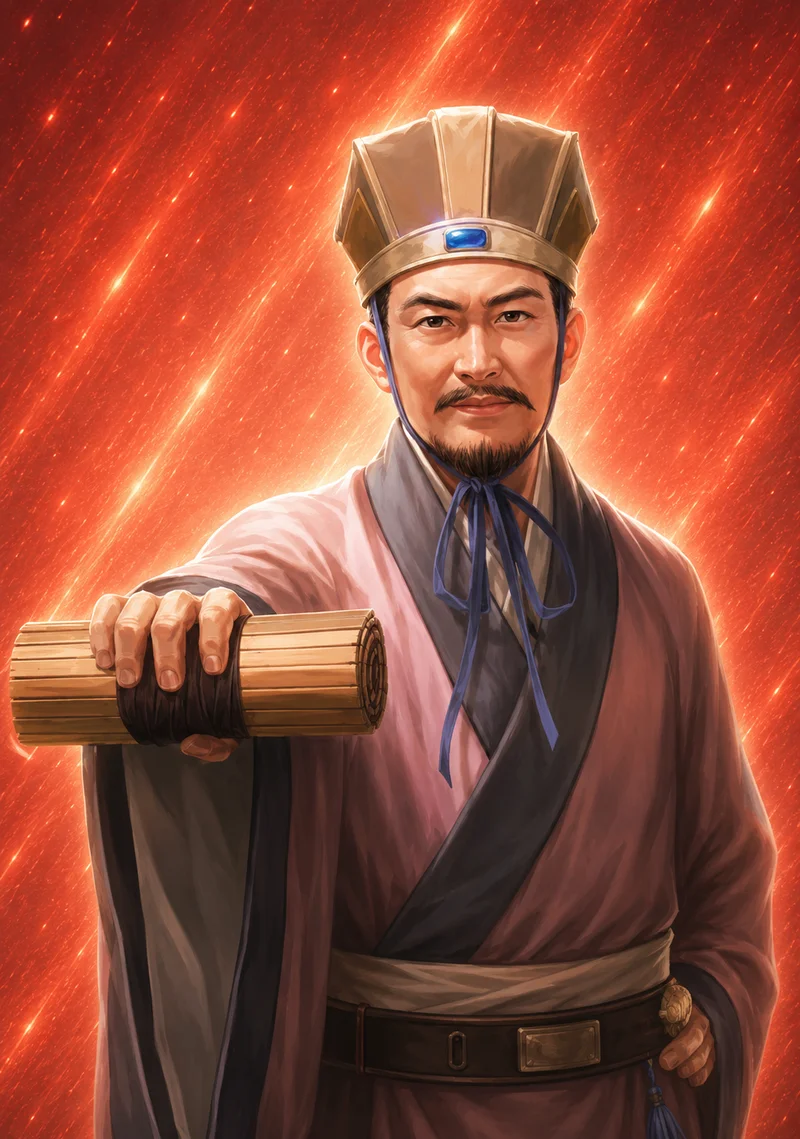
Wang Su (195–256), courtesy name Ziyong, was a preeminent Confucian scholar, ritual classicist, and senior statesman of the Cao Wei state during the Three Kingdoms period. He was the son of Wang Lang, one of the founding elder statesmen and Minister over the Masses of Cao Wei. Wang Su made foundational contributions to Wei court rituals and classicist scholarship, forming the influential ‘Wang School’ of Confucian interpretations that competed directly with the long-dominant school of Zheng Xuan.
In his youth, Wang Su studied the ancient classics under the famous scholar Song Zhong. He thoroughly dissected the commentaries of Zheng Xuan, Jia Kui, and Ma Rong, synthesizing his own extensive editions and commentaries on the Book of Changes, Book of Documents, Classic of Poetry, Rites of Zhou, Book of Rites, Zuo Zhuan, and the Analects. When his father Wang Lang passed away in 228, Wang Su inherited his peerage and entered active court service. Throughout the reigns of Cao Rui (Emperor Ming) and Cao Fang, Wang Su repeatedly served in high imperial advisory posts, including Cavalier Regular Attendant (散騎常侍), Minister of the Household (光祿勳), and Minister of Ceremonies (太常).
Politically, Wang Su forged a deep and decisive alliance with the Sima clan. His daughter, Wang Yuanji, was wed to Sima Yi’s second son, Sima Zhao. In 255, when Guanqiu Jian and Wen Qin launched their rebellion in Shouchun, court opinion was divided and panicked. Wang Su urgently counseled the regent Sima Shi to lead the punitive expedition in person, citing the historical precedent of Guan Gao’s revolt under Emperor Gaozu of Han. Sima Shi followed his advice, securing a decisive victory. In 256, Wang Su was appointed to the supreme post of Minister of Works (Sikong). He died later that year at the age of 62 and was posthumously honored as Marquis Jing (景侯), and later given the honorary rank of Grand Tutor (太保) after his grandson Sima Yan founded the Western Jin dynasty.
Role in Romance of the Three Kingdoms
In Luo Guanzhong’s 14th-century historical novel Romance of the Three Kingdoms, Wang Su appears primarily as a high-ranking minister and political advisor during the mid-to-late Wei period. Following the death of his father Wang Lang at the hands of Zhuge Liang’s rhetorical barrage, Wang Su serves faithfully in the Wei court, often participating in critical military councils and dynastic successions alongside the Sima clan.
“When Guanqiu Jian and Wen Qin raised their banner of revolt in Huainan, the court was thrown into turmoil. Wang Su stepped forward and declared to Regent Sima Shi: ‘The rebels rely on the martial prowess of their vanguard, but their troops harbor divided hearts. If the Generalissimo leads the imperial army in person, the rebels will dissolve without a battle.'”
— Romance of the Three Kingdoms, Chapter 110
Wang Su — Historical & Literary Timeline
Birth in Donghai
Born to Wang Lang in Tan County, Donghai Commandery. From an early age, he was immersed in classical canonical literature.
Inheritance and Court Appointment
Upon the death of his father Wang Lang, Wang Su inherited the title of Marquis of Lanling and was appointed Cavalier Regular Attendant under Emperor Ming (Cao Rui).
Debates on Imperial Rituals & Scholarly Leadership
Engaged in vigorous court debates over ancestral temple rituals, the Suburban Sacrifices, and mourning dress with contemporary scholars, cementing his own ‘Wang School’ of ritual classicism.
Suppression of the Shouchun Rebellion
Strongly advocated that Sima Shi lead the imperial campaign in person against Guanqiu Jian and Wen Qin, leading directly to the pacification of Huainan.
Elevation to Sikong and Death
Appointed Minister of Works (Sikong) in Cao Wei. Passed away later that year at age 62; awarded the posthumous name Marquis Jing.
Key Relationships
Family
- Wang Lang (王朗, Vương Lãng): Father. Foundational elder statesman and Minister over the Masses (Situ) of Cao Wei.
- Wang Yuanji (王元姬, Vương Nguyên Cơ): Daughter. Empress Dowager Wenming of Western Jin, mother of Emperor Wu (Sima Yan).
- Sima Zhao (司马昭, Tư Mã Chiêu): Son-in-law. Regent of Cao Wei and King of Jin who married Wang Yuanji.
- Sima Yan (司马炎, Tư Mã Viêm): Grandson. Founding Emperor of the Western Jin dynasty (Emperor Wu).
- Wang Yun (王恽, Vương Uẩn): Eldest son. Inherited Wang Su’s noble title of Marquis of Lanling in Cao Wei.
- Wang Xun (王恂, Vương Tuân): Son. Senior scholar-official who served as Grand Tutor to the Crown Prince in Western Jin.
- Wang Qian (王谦, Vương Khiêm): Son. Official who served in the Cao Wei administration.
- Wang Kai (王恺, Vương Khải): Youngest son. Celebrated wealthy grandee and General of the Rear in Western Jin.
- Wang Shen (王沈, Vương Thẩm – son of Wang Su): Son. Imperial officer in Western Jin.
Friends
- Cao Rui (曹叡, Tào Duệ): Second Emperor of Cao Wei (Emperor Ming). Highly esteemed Wang Su’s classical erudition, elevating him to Regular Mounted Attendant and commissioning his ritual reforms.
- Cao Fang (曹芳, Tào Phương): Third Emperor of Cao Wei. Appointed Wang Su as Minister of Justice (Tingwei) and Minister of Ceremonies (Taichang).
- Sima Yi (司马懿, Tư Mã Ý): Grand Commander and regent of Cao Wei who respected Wang Su’s scholastic authority during court debates.
- Sima Shi (司马师, Tư Mã Sư): Regent of Cao Wei. Relied on Wang Su’s strategic advice to personally lead the expedition to crush Guanqiu Jian’s rebellion in 255 AD.
Enemies
- Zheng Xuan’s Scholastic Followers (郑学门人, Môn sinh phái Trịnh Huyền): Rival classical faction. Wang Su authored extensive commentaries on Confucian classics to challenge Zheng Xuan’s dominant interpretations, sparking intense academic rivalries.
- Guanqiu Jian (毌丘俭, Quán Khâu Kiệm): Senior Wei general who launched the Huainan rebellion in 255 AD; Wang Su urged Sima Shi to lead the suppression campaign in person.
- Wen Qin (文钦, Văn Khâm): Rebel general in Huainan whose insurrection was countered by the imperial deployment advised by Wang Su (255 AD).
Others
- No information
In Novel
Chapter 99
- Wang Su (王肃, Vương Túc): Wang Su is a Wei court official and scholar. He appears in the later Wei political setting during the period when Sima family influence is becoming dominant. His role is administrative and scholarly rather than that of a battlefield commander.
History
Summary
- Wang Su (王肃, Vương Túc) was a major Confucian scholar and official of Cao Wei.
Scholarly Career
- Wang Su became one of the leading Confucian scholars of his generation and produced influential commentaries on the classics.
- His interpretations became important to the intellectual tradition later associated with the Jin dynasty.
Political Service
- He served the Wei government in senior offices and was connected to the Sima political establishment.
- His scholarship and political service gave him lasting influence in the intellectual history of the period.
Classification
- Historical.