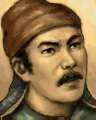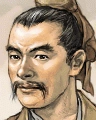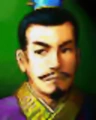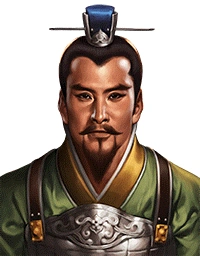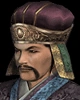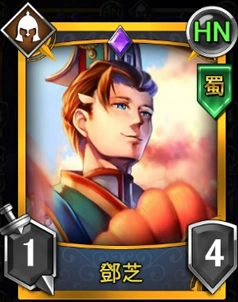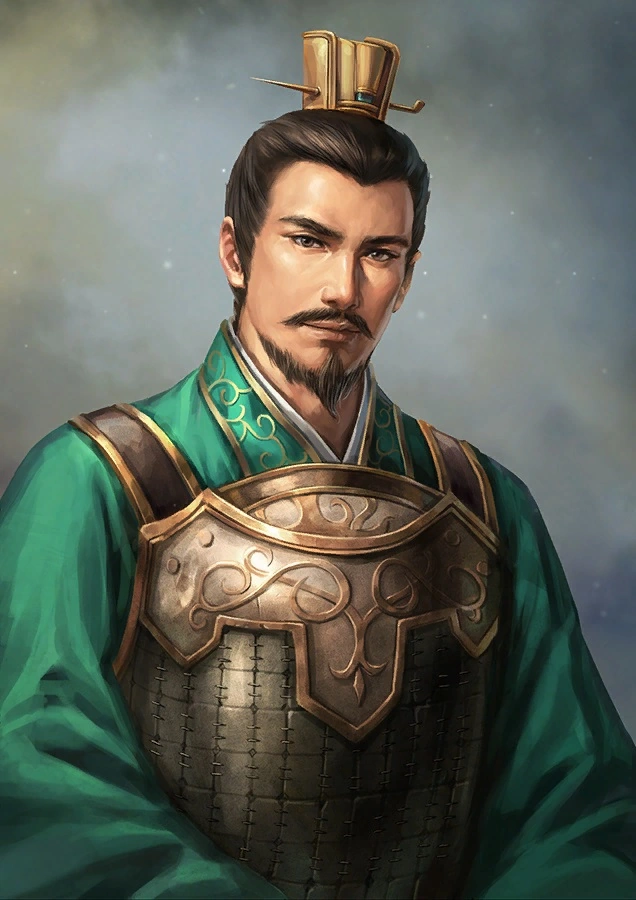


Here is the exhaustive biography, ancestral background, historical records, and Romance of the Three Kingdoms narrative for Deng Zhi (鄧芝), courtesy name Bemia (伯苗) (died 251 AD), incorporating all detailed accounts of his ancestry from Deng Yu, his administrative excellence, his masterclass diplomacy re-establishing the Wu-Shu alliance, his Northern Campaigns alongside Zhao Yun, and his late career.
Contents
Ancestry, Family Background & Early Life
Deng Zhi (鄧芝), courtesy name Bemia (伯苗), was a native of Xinye County (新野縣), Yiyang Commandery (義陽郡) (modern Xinye, Henan Province). He was a direct descendant of Deng Yu (鄧禹), the celebrated Prime Minister, Grand Commandant, and foremost general among the “Twenty-Eight Generals of Yuntai” who assisted Emperor Guangwu in founding the Eastern Han dynasty. Historical records note his son was Deng Liang (鄧良), who later served Shu Han as Administrator of Guanghan and surrendered to Cao Wei in 263 AD alongside Liu Shan.
In the late Eastern Han period, as chaos engulfed the Central Plains, Deng Zhi fled south to Yi Province (Yizhou / Shu). Initially unrecognized and living in obscurity, he visited the renowned physiognomist Zhang Yu (張裕), who examined his features and prophesied: “After passing the age of seventy, you will rise to become General-in-Chief and be enfeoffed as a Marquis.” During his time in Shu, Deng Zhi developed a close friendship with Pang Xi (龐羲), who held high administrative posts under Liu Zhang and provided him with refuge and support.
Service Under Liu Bei & Administrative Distinction
Following Liu Bei‘s conquest of Yi Province in 214 AD, Deng Zhi entered public service as the Chief (Zhang) of Pixian County. When Liu Bei conducted an inspection tour through the region, he noticed Deng Zhi’s exceptional administrative efficiency, orderliness, and integrity. Impressed, Liu Bei immediately promoted him to Administrator of Pi Commandery (Pi Jun Taishou) and subsequently transferred him to serve as Administrator of Guanghan Commandery.
In both posts, Deng Zhi demonstrated outstanding governance, strict adherence to law, incorruptible honesty, and deep concern for the common people’s welfare. His stellar administrative record led to his recall to the imperial capital at Chengdu, where he was appointed Imperial Secretary (Shangshu).
Masterclass Diplomacy: Re-establishing the Wu-Shu Alliance (223 AD)
Following Liu Bei’s death at Yong’an in 223 AD and the disastrous defeat at the Battle of Xiaoting (Yiling), Shu Han faced imminent peril, surrounded by Wei to the north and Wu to the east. Chancellor Zhuge Liang sought to restore diplomatic relations with Sun Quan but struggled to find an envoy of sufficient courage, tact, and eloquence. Deng Zhi stepped forward and offered to undertake the dangerous mission to Wu. Zhuge Liang praised his vision, stating: “The man who can unite the two states has been found!”
Reaching Wu, Sun Quan initially hesitated to grant Deng Zhi an audience out of fear of Cao Wei’s reaction. Deng Zhi sent a bold memorial stating: “I have come not merely for the benefit of Shu, but equally for the survival and prosperity of Wu.” Intrigued, Sun Quan received him. Deng Zhi presented a brilliant geopolitical analysis:
“Shu and Wu possess complementary strategic strengths. If our two nations unite, Chancellor Zhuge Liang can lead forces against Wei from the west while Your Highness commands armies against Wei from the east. Together, we can swallow the Central Plains. But if Wu submits to Wei, Cao Pi will demand your heir as hostage and dictate terms; if you refuse, Wei will attack Wu, and Shu will inevitably strike from the west. Under such a scenario, the territories south of the Yangtze will no longer belong to Your Highness.”
Recognizing the undeniable truth of Deng Zhi’s counsel, Sun Quan severed ties with Cao Wei and formally renewed the grand alliance with Shu Han. Sun Quan treated Deng Zhi with the highest imperial courtesies, famously writing a personal letter to Zhuge Liang saying: “The harmony between our two houses is entirely due to Deng Zhi.”
Military Campaigns, Northern Expeditions & Defense of Shu
Deng Zhi’s military career reached its apex during Zhuge Liang’s Northern Campaigns against Cao Wei:
1. First Northern Expedition (228 AD): Zhuge Liang appointed Deng Zhi and senior general Zhao Yun to command a decoy force stationed at Ji Valley (Jigu). Their mission was to draw Cao Wei’s main defense army under Cao Zhen away from Qishan. Although outnumbered, Deng Zhi and Zhao Yun held their positions firmly, maintained strict discipline, and executed an orderly retreat without losing troops or equipment when the main campaign encountered setbacks at Jieting.
2. Senior Military Command & Promotion: Following Zhao Yun’s passing, Deng Zhi assumed greater military responsibilities. He was promoted to General Who Guards the East (Zhendong Jiangjun), Front Inspector of the Army, and enfeoffed as Marquis of Yangwu District (Yangwu Tinghou). He was stationed at Jiangling / Jiangzhou to oversee the crucial eastern border defense and maintain seamless diplomatic communication with Eastern Wu.
3. Suppressing the Unrest of Feiran (248 AD): In 248 AD, the indigenous chieftain Feiran revolted in Wuling Commandery. Deng Zhi personally led Shu troops into the rugged terrain, crushed the rebellion, decapitated Feiran, and fully pacified the southern border region. For this victory, Emperor Liu Shan advanced him to General-in-Chief (Da Jiangjun).
Character, Integrity & Final Years
Deng Zhi was celebrated throughout China for his austere lifestyle, noble character, and unyielding candor. Despite holding the highest military office in Shu Han for decades, he lived in extreme simplicity, wore modest clothing, and gave away all his salaries and imperial rewards to his soldiers and the poor. He owned no private property or real estate, leaving his family without assets upon his death.
He was notoriously direct in speech, never concealing his opinions or currying favor with courtiers, which earned him immense respect from peers such as Zhuge Liang, Fei Yi, and Jiang Wei. In 251 AD, Deng Zhi passed away peacefully at an advanced age (over 70), fulfilling the ancient prophecy of Zhang Yu. He was posthumously honored for his decades of loyal service to Shu Han.
Deng Zhi (鄧芝) — Historical & Literary Timeline
c. 214–221 AD — Entry into Shu Service
Administrative Excellence in Pixian and Guanghan
Enters Liu Bei’s service after the pacification of Yi Province. Recommended by Pang Xi, he excels as Chief of Pixian and Administrator of Guanghan, earning rapid promotion to Imperial Secretary in Chengdu.
223 AD — Embassy to Eastern Wu
Re-establishing the Grand Wu-Shu Alliance
Dispatched by Zhuge Liang following Liu Bei’s death. Boldly confronts Sun Quan, braves the cauldron of boiling oil prepared by Wu courtiers, and demonstrates why Wu and Shu must unite against Wei, successfully restoring the Wu-Shu alliance.
228 AD — First Northern Expedition
Decoy Command at Ji Valley with Zhao Yun
Commands the decoy force at Ji Valley alongside Zhao Yun to distract Cao Zhen’s Wei army. Successfully holds the line and executes a flawless retreat without losing a single soldier or banner.
248 AD — Suppressing Wuling Rebellion
Defeating Feiran & Promotion to General-in-Chief
Leads Shu forces to crush the tribal rebellion of Feiran in Wuling Commandery. Promoted to General-in-Chief (Da Jiangjun) and Marquis of Yangwu District.
251 AD — Final Years & Passing
Death at Advanced Age & Incorruptible Legacy
Passes away in 251 AD after fulfilling Zhang Yu’s prophecy. Remembered for his lifelong austerity, direct honesty, masterclass diplomacy, and unyielding loyalty to Shu Han.
Romance of the Three Kingdoms Narrative
In Luo Guanzhong’s historical novel Romance of the Three Kingdoms, Deng Zhi is immortalized as a fearless, sharp-witted diplomat and a stalwart general of Shu Han.
In Chapter 85 and 86, following Liu Bei’s death, Wei launches a five-pronged invasion against Shu. After Zhuge Liang neutralizes the threats, he seeks to rebuild the alliance with Sun Quan. Deng Zhi volunteers for the diplomatic mission to Wu. Upon arriving at Wu, Sun Quan, advised by Zhang Zhao, sets up a terrifying display: a giant iron cauldron filled with boiling oil surrounded by armed guards, threatening to fry any arrogant envoy alive. Deng Zhi enters calmly, laughs at Sun Quan’s intimidation, and boldly warns him that Wu will be destroyed if it allies with Wei against Shu. Impressed by Deng Zhi’s courage and geopolitical clarity, Sun Quan steps down from his throne, apologizes, and cements a solemn pact with Shu, sending Zhang Wen to Chengdu to finalize the treaty.
In Chapters 92 to 95, during Zhuge Liang’s First Northern Expedition, Deng Zhi serves as Zhao Yun’s second-in-command at Ji Valley. Facing Cao Zhen’s primary Wei force, Deng Zhi assists Zhao Yun in maintaining composure. When Ma Su loses Jieting and Shu forces retreat, Deng Zhi and Zhao Yun bring up the rear, ensuring that Cao Zhen’s forces dare not pursue, returning to Hanzhong with all troops and supplies intact.
In Chapter 107, Deng Zhi is recorded as one of Shu’s senior pillar generals who pacifies the southern borders and dies peacefully in 251 AD during the reign of Liu Shan, mourned by the entire Shu court for his upright character and unblemished service.
For detailed historical records, archives, and official chronicles, explore Deng Zhi on Wikipedia.
Key Relationships
Family
- Deng Yu (邓禹, Đặng Vũ): Distant ancestor. Prime Minister and one of the 28 Yuntai Generals of the Eastern Han dynasty.
- Deng Liang (邓良, Đặng Lương): Son. Succeeded Deng Zhi’s marquisate and served Shu Han as Minister of the Household.
Friends
- Zhuge Liang (诸葛亮, Gia Cát Lượng): Prime Minister of Shu Han who recognized Deng Zhi’s exceptional diplomatic courage and sent him as chief ambassador to Wu in 223 AD.
- Sun Quan (孙权, Tôn Quyền): Ruler of Eastern Wu who was deeply impressed by Deng Zhi’s dignified and fearless diplomacy, cementing the permanent Shu-Wu alliance.
- Zhao Yun (赵云, Triệu Vân): Veteran general whom Deng Zhi accompanied as vice-commander at the decoy diversion battle of Ji Valley in 228 AD.
- Pang Tong (庞统, Bàng Thống): Early friend who recommended Deng Zhi as an extraordinary civil and military talent.
Enemies
- Cao Pi (Cao Pi, Tào Phi): Ruler of Wei who invaded Eastern Wu following the collapse of Wei-Wu relations, prompting the Shu-Wu alliance.
- Cao Zhen (Cao Zhen, Tào Chân): Wei supreme commander against whom Deng Zhi and Zhao Yun fought at Ji Valley in 228 AD.
Others
- No information
Appearance
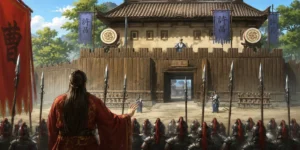
In Novel
Chapter 65
- Deng Zhi (邓芝, Đặng Chi): A scholar from Xinye, courtesy name Baimiao (伯苗), who entered Shu Han service and was recommended to Liu Bei (刘备, Lưu Bị) after the pacification of Yizhou, receiving appointment as a local magistrate and proving an upright administrator.
Chapter 85
- Deng Zhi (邓芝, Đặng Chi): Entrusted by Chancellor Zhuge Liang (诸葛亮, Gia Cát Lượng) with a delicate diplomatic mission to Eastern Wu following Liu Bei’s (刘备, Lưu Bị) death; through his eloquent and fearless rhetoric, he persuaded Sun Quan (孙权, Tôn Quyền) to sever ties with Cao Wei and re-establish the grand Shu-Wu alliance.
Chapter 86
- Deng Zhi (邓芝, Đặng Chi): Returned to Chengdu as Wu’s honored guest alongside Wu envoy Zhang Wen (张温, Trương Ôn), receiving high imperial praise and elevation to Vice Minister of the Secretariat (尚书左丞) for securing lasting peace with Wu.
Chapter 92
- Deng Zhi (邓芝, Đặng Chi): Appointed deputy commander to veteran general Zhao Yun (赵云, Triệu Vân) during Zhuge Liang’s (诸葛亮, Gia Cát Lượng) first Northern Expedition, leading a diversionary force to Ji Valley against Cao Zhen (曹真, Tào Chân) and successfully conducting an orderly retreat without losing equipment.
Chapter 96
- Deng Zhi (邓芝, Đặng Chi): Reported the successful and disciplined withdrawal of the Ji Valley detachment to Zhuge Liang (诸葛亮, Gia Cát Lượng), praising Zhao Yun’s (赵云, Triệu Vân) personal bravery in holding the rear guard.
Chapter 100
- Deng Zhi (邓芝, Đặng Chi): Participated in Zhuge Liang’s (诸葛亮, Gia Cát Lượng) fourth Northern Expedition, commanding Shu divisions alongside Jiang Wei (姜维, Khương Duy) to execute tactical maneuvers against Sima Yi (司马懿, Tư Mã Ý) in the Qishan valley.
Chapter 102
- Deng Zhi (邓芝, Đặng Chi): Stationed on the northern frontier and assisted in deploying the wooden oxen and flowing horses transport detachments during Zhuge Liang’s (诸葛亮, Gia Cát Lượng) logistics campaign across the Xie Gorge.
Chapter 111
- Deng Zhi (邓芝, Đặng Chi): Served as Senior General of the Front (前将军) and Commander of Jiangzhou in his advanced years, vigilantly guarding Shu Han’s eastern borders until his death.
Appearance
In History
Year: 223 AD
- Deng Zhi (邓芝, Đặng Chi) served the Shu Han state and was sent by Zhuge Liang (诸葛亮, Gia Cát Lượng) as an envoy to Sun Quan (孙权, Tôn Quyền) to restore and strengthen the Shu–Wu alliance after Liu Bei’s death. His diplomatic mission succeeded, and Sun Quan respected his ability.
Year: 227 AD
- Deng Zhi (邓芝, Đặng Chi) participated in Shu Han’s first northern expedition against Wei. He served alongside Zhao Yun (赵云, Triệu Vân) and helped command the diversionary force at Ji Valley. After the Shu force was defeated, Deng Zhi and Zhao Yun maintained an orderly withdrawal and limited their losses.
Year: 234 AD
- Deng Zhi (邓芝, Đặng Chi) was promoted after Zhuge Liang’s death. He became a senior Shu general, received the title Marquis of Yangwu Village, and was assigned to defend Jiangzhou, an important position on Shu’s eastern frontier.
Year: 243 AD
- Deng Zhi (邓芝, Đặng Chi) was promoted to General of Chariots and Cavalry and received acting imperial authority. He remained one of Shu Han’s important frontier commanders.
Year: 248 AD
- Deng Zhi (邓芝, Đặng Chi) took part in the suppression of a rebellion in Fuling. His long service on Shu’s eastern frontier continued to make him an important military commander.
Year: 251 AD
- Deng Zhi (邓芝, Đặng Chi) died after a long career serving Shu Han. His historical career is recorded in the Sanguozhi tradition.
Appearance
Gallery