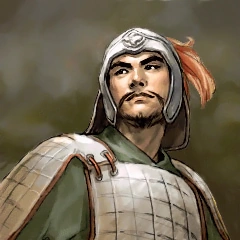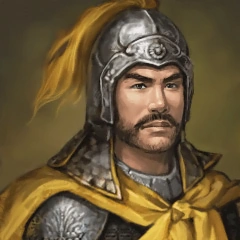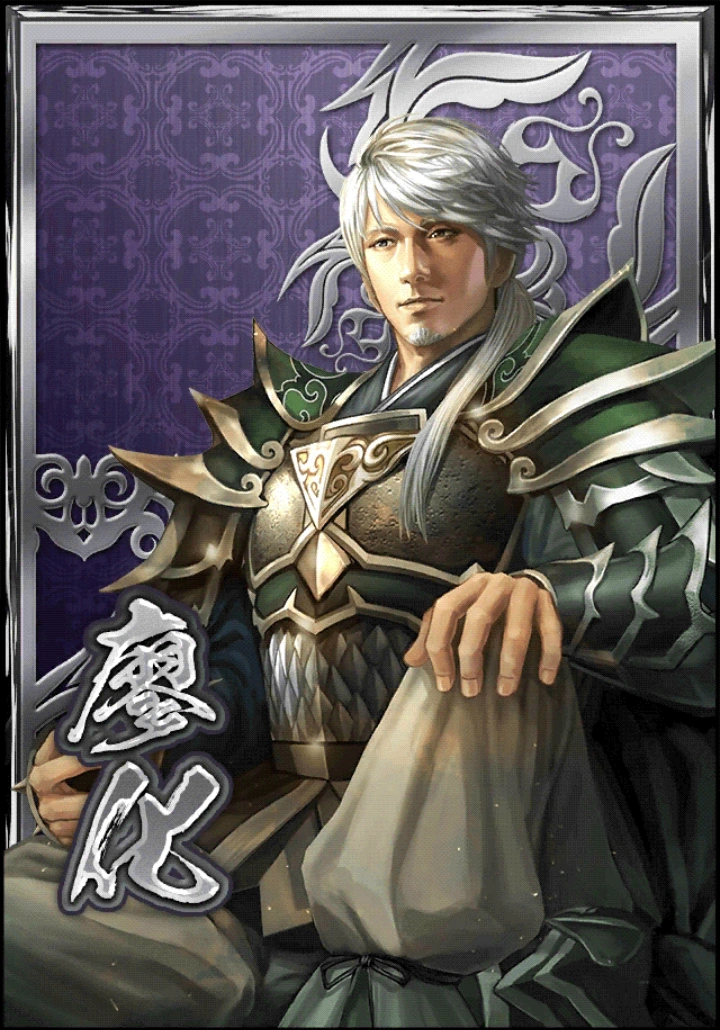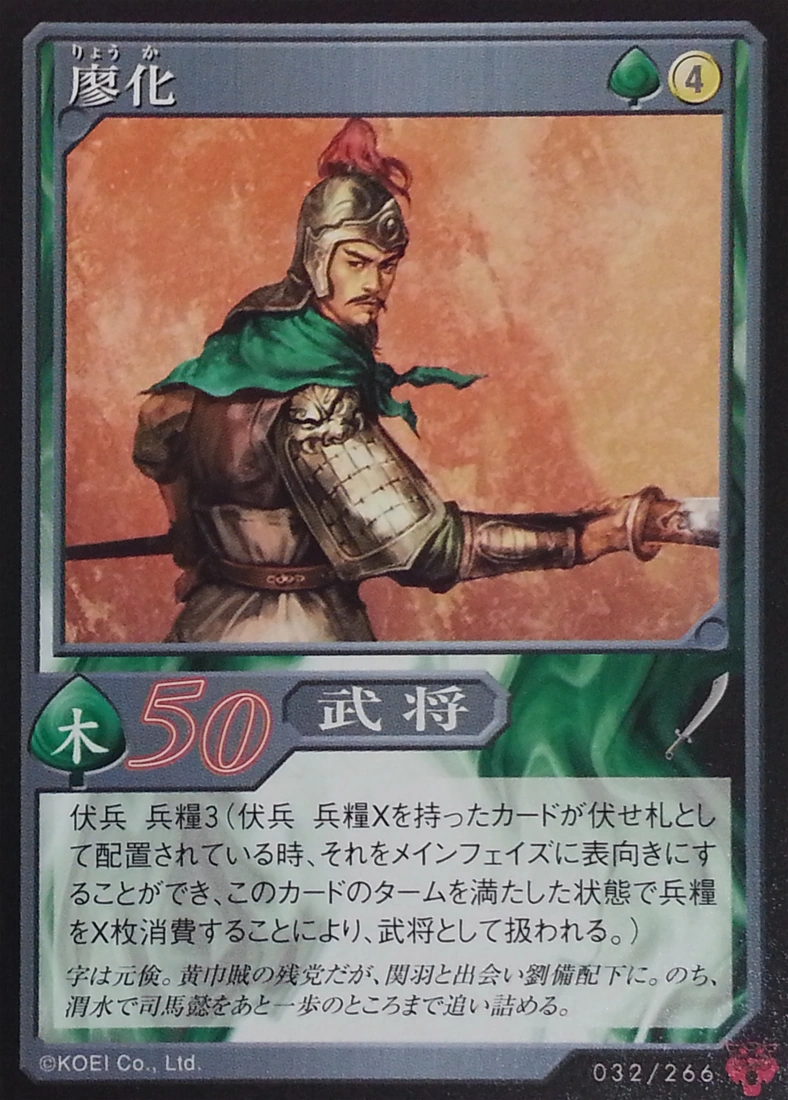
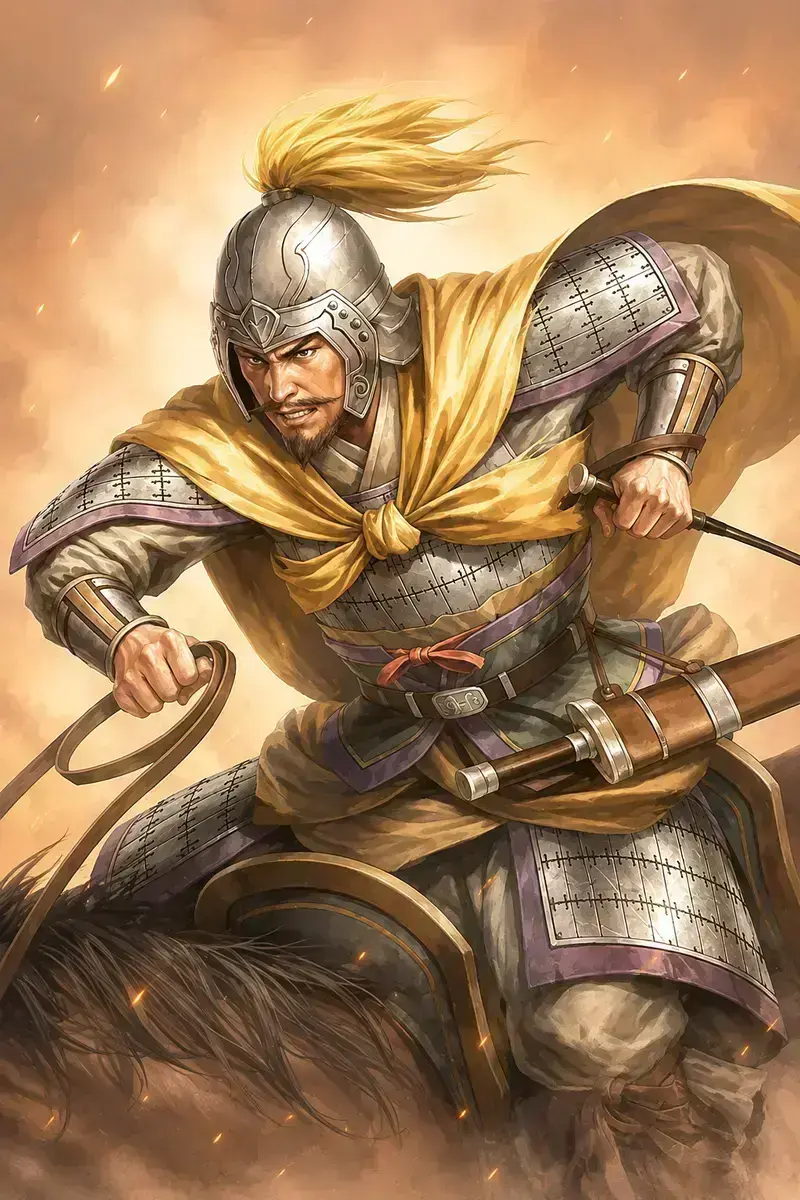
Here is the exhaustive biography of Liao Hua (廖化), courtesy name Yuanjian (元儉) (c. 185 – 264), originally named Liao Chun (廖淳), a long-serving general of Shu Han who witnessed the entire existence of the state, incorporating historical records and the narrative of Romance of the Three Kingdoms.
Contents
Historical Career
Liao Hua was a native of Xiangyang (Jing Province). He served as registrar (zhubu) under Guan Yu while the latter guarded Jing Province. After Guan Yu’s defeat and death in 219, Liao Hua fell under Wu control. Longing to return to Liu Bei, he feigned death, then fled west day and night with his elderly mother. In 221 he met Liu Bei, who was advancing east against Wu, at Zigui; Liu Bei was delighted and appointed him Administrator of Yidu. After Liu Bei’s death he became an adviser to the Chancellor (Zhuge Liang), later Controller of Guangwu and Administrator of Yinping. He rose to General of the Chariots and Cavalry of the Right, with imperial credentials, concurrent Inspector of Bing Province, and Marquis of a Central District (Zhongxiang). He was noted for his firmness and resolve, ranked with Zhang Yi and above Zong Yu. After the fall of Shu in 263 he was moved toward Luoyang and died of illness on the road in 264. He was one of the few officials who served Shu from its founding to its end.
Romance of the Three Kingdoms Portrayal
In the novel Liao Hua first appears in Chapter 27 as a former Yellow Turban who has become a bandit leader with some five hundred followers. When his companion Du Yuan abducts Liu Bei’s wives, Liao Hua kills Du Yuan and restores the ladies to Guan Yu; Guan Yu thanks him but, wary of his past, declines to accept him as a follower. Liao Hua later joins Guan Yu properly and becomes one of his trusted officers. He serves as vanguard in the Fan Castle campaign, breaks out of the Wu encirclement at Maicheng to seek aid from Liu Feng and Meng Da (who refuse), and later participates in Liu Bei’s eastern campaign. Under Zhuge Liang and Jiang Wei he repeatedly serves as a frontline commander in the northern expeditions, nearly capturing Sima Yi on one occasion and seizing his golden helmet. The proverb “In Shu there are no great generals, so Liao Hua serves as vanguard” (蜀中無大將,廖化作先鋒) originates from his late appearances. He dies of grief after Liu Shan’s surrender.
Family, Friends and Enemies
Family:
- Mother: accompanied him on the dangerous flight from Wu back to Shu (historical).
- No recorded spouse or children.
Principal colleagues: Guan Yu (early superior); Liu Bei; Zhuge Liang; Jiang Wei; Zhang Yi and Zong Yu (fellow long-serving officials).
Principal adversaries: Wu forces under Lü Meng / Lu Xun; Wei commanders including Sima Yi and Sima Zhao (in the novel he nearly captures both).
Liao Hua (廖化) — Historical & Literary Timeline
c. 200s–219 AD — Service under Guan Yu
Registrar and Loyal Officer
Served as Guan Yu’s registrar in Jing Province. In the novel he is introduced as a reformed Yellow Turban bandit who rescues Liu Bei’s wives, later becomes a trusted subordinate, leads vanguard actions at Fan Castle, and breaks out of Maicheng to seek reinforcements.
219–221 AD — Flight from Wu & Return to Liu Bei
Feigned Death and Reunion
After Guan Yu’s fall he was under Wu control; feigned death and fled west with his mother. Met Liu Bei at Zigui during the eastern campaign and was appointed Administrator of Yidu.
223–263 AD — Long Service in Shu
Chancellor’s Adviser to Right General of Chariots and Cavalry
Served as adviser to Zhuge Liang, held regional commands, and rose to high military rank. In the novel he is a frequent frontline commander under Zhuge Liang and Jiang Wei, nearly capturing Sima Yi and taking his helmet.
264 AD — Death
After the Fall of Shu
Moved toward Luoyang after Shu’s surrender; died of illness on the road (history). In the novel he dies of grief after Liu Shan’s capitulation.
Historical Note
Historically Liao Hua was a capable and steadfast officer who served Guan Yu, escaped Wu by a dramatic ruse, and remained a senior commander of Shu until the very end of the state—one of the few men who saw its entire existence. The novel expands his early life into a colourful Yellow Turban-to-loyalist arc, multiplies his battlefield exploits (especially under Jiang Wei), and makes him the subject of the famous proverb about Shu’s shortage of talent. Both portrayals emphasise lifelong loyalty; the historical record is quieter but no less impressive in its span and consistency.
For detailed historical records, archives, and official chronicles, explore Liao Hua on Wikipedia.
Key Relationships
Family
- Mother (unnamed in the records): After Guan Yu’s fall in 219, Liao Hua fell under Wu control, feigned death, and fled west day and night escorting his elderly mother; they rejoined Liu Bei at Zigui in 221. No father, spouse, or children are named in novel or history.
Friends
- Guan Yu (关羽, Quan Vũ): Early superior; historically Liao Hua served as registrar (zhubu) in Jing until Guan Yu’s death in 219.
- Liu Bei (刘备, Lưu Bị): Delighted to recover Liao Hua at Zigui during the eastern campaign and appointed him Administrator of Yidu.
- Zhuge Liang (诸葛亮, Gia Cát Lượng): Chancellor whom Liao Hua advised and accompanied through the northern expeditions as a reliable front-line officer.
- Jiang Wei (姜维, Khương Duy): Late Shu commander under whom Liao Hua repeatedly served as vanguard; novel tradition casts him warning against reckless overextension.
- Zhang Yi (张翼, Trương Dực): Fellow veteran general; histories rank Liao Hua with Zhang Yi and above Zong Yu among Shu’s long-serving officers.
- Zong Yu (宗预, Tông Dự): Elderly comrade who shared Liao Hua’s final relocation toward Luoyang after Shu’s fall.
Enemies
- Sun Quan (孙权, Tôn Quyền): Wu ruler whose 219 Jing invasion captured Liao Hua’s theatre; Liao Hua’s escape with his mother rejected Wu service.
- Deng Ai (邓艾, Đặng Ngải): Wei general whose Chengdu campaign ended Shu in 263.
- Zhong Hui (钟会, Chung Hội): Wei commander against whom Shu veterans contested the Hanzhong / Jiange approaches in the final war.
- Sima Zhao (司马昭, Tư Mã Chiêu): Wei regent who ordered Shu ministers moved toward Luoyang; Liao Hua died of illness on that road in 264 (history).
Other
- Proverb 蜀中无大将,廖化作先锋: “In Shu there are no great generals, so Liao Hua serves as vanguard” — later literary shorthand for Shu’s late-era talent shortage, tied to his many novel front-line appearances under Jiang Wei.
- Yellow Turban origin (novel only): Chapter 27 introduces Liao Hua as a former Yellow Turban turned bandit who kills Du Yuan and restores Liu Bei’s wives to Guan Yu; history instead first attests him as Guan Yu’s registrar, with no Yellow Turban career.
- Maicheng breakout (novel): At Mai Castle he breaks Wu’s encirclement to seek aid from Liu Feng and Meng Da, who refuse — a set-piece of loyalty after Jing’s collapse.
- Whole-arc Shu service: One of the few officers who spanned Guan Yu’s Jing command through Zhuge Liang and Jiang Wei to the 263 surrender, then died en route to Luoyang in 264.
Appearance

In Novel
Chapter 27
- Liao Hua (廖化, Liêu Hóa): Former Yellow Turban bandit who kills Du Yuan and restores Liu Bei’s wives to Guan Yu (关羽, Quan Vũ); Guan Yu thanks him but initially declines to accept him.
Chapter 73–77
- Liao Hua (廖化, Liêu Hóa): Trusted officer under Guan Yu in the Fan campaign; breaks out of Maicheng to seek aid from Liu Feng and Meng Da, who refuse.
Northern campaigns
- Liao Hua (廖化, Liêu Hóa): Repeated vanguard under Zhuge Liang (诸葛亮, Gia Cát Lượng) and Jiang Wei (姜维, Khương Duy); proverb 蜀中无大将,廖化作先锋 attaches to these late appearances.
Appearance
In History
Summary
- Liao Hua (廖化, Liêu Hóa), courtesy Yuanjian, originally Liao Chun, was Guan Yu’s registrar, escaped Wu with his mother, and served Shu until 263–264.
Year: 219–221 AD
- After Guan Yu’s fall, feigned death and fled west with his mother; met Liu Bei at Zigui; appointed Administrator of Yidu.
Year: 223–263 AD
- Adviser to Zhuge Liang; later General of Chariots and Cavalry of the Right; ranked with Zhang Yi (张翼, Trương Dực) and above Zong Yu (宗预, Tông Dự).
Year: 264 AD
- Moved toward Luoyang after Shu’s fall; died of illness on the road.
Historical Record
- SGZ Shu notices on Liao Hua; contrast novel Yellow Turban origin with historical registrar career.
Appearance
Gallery