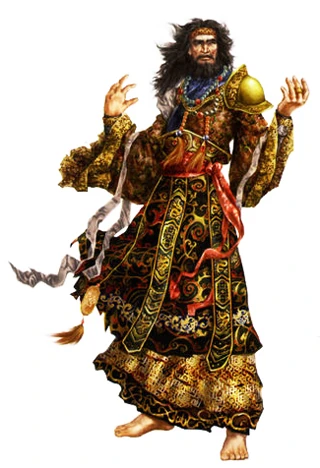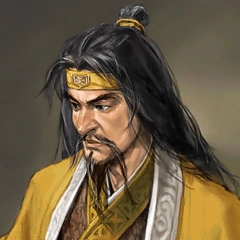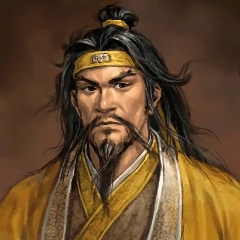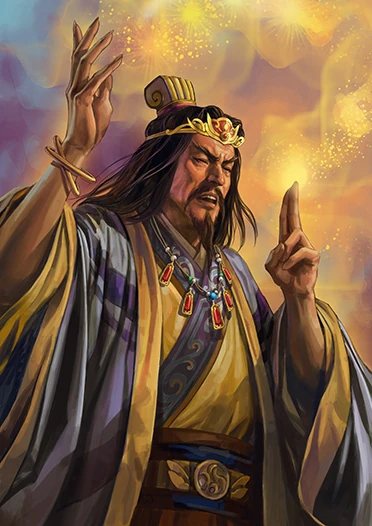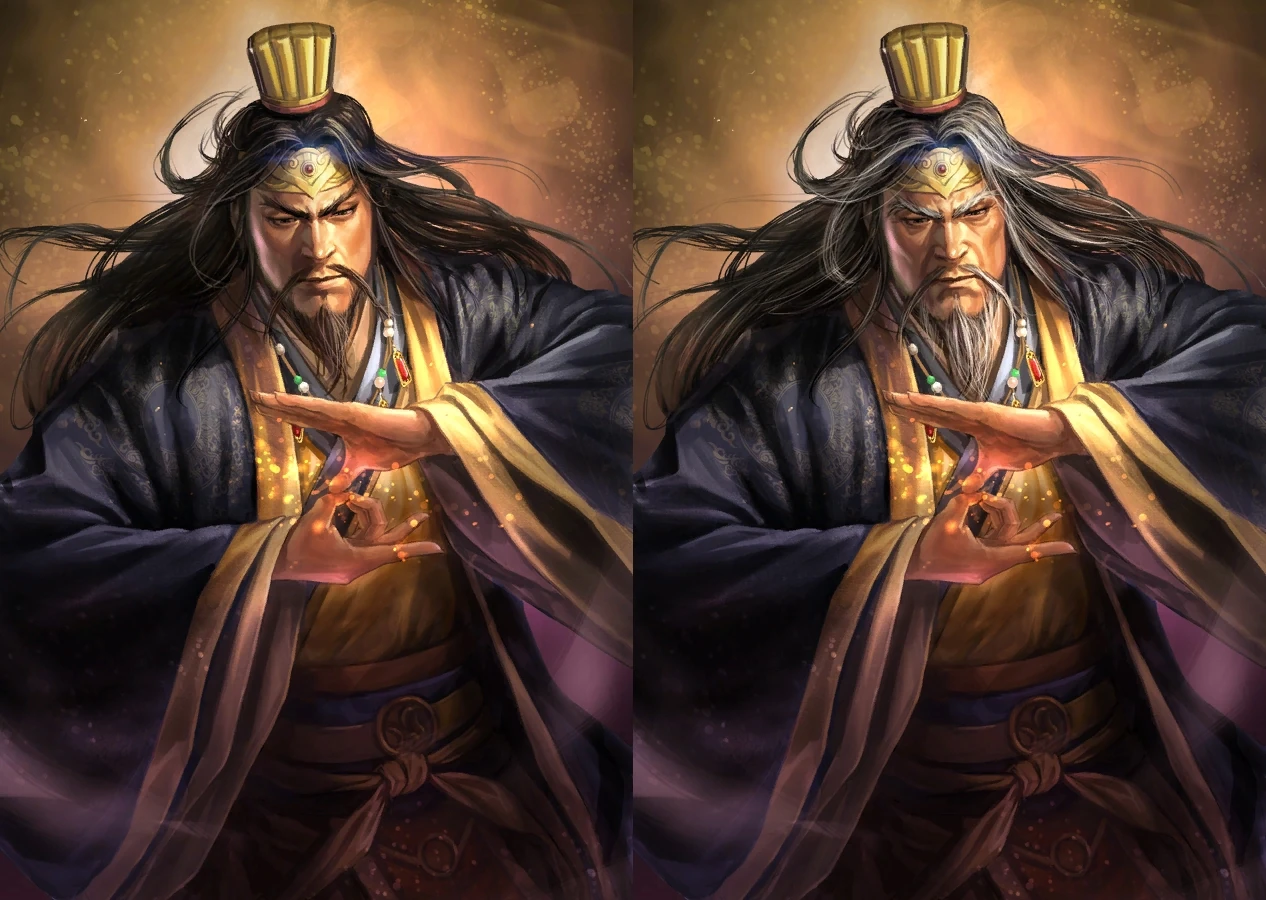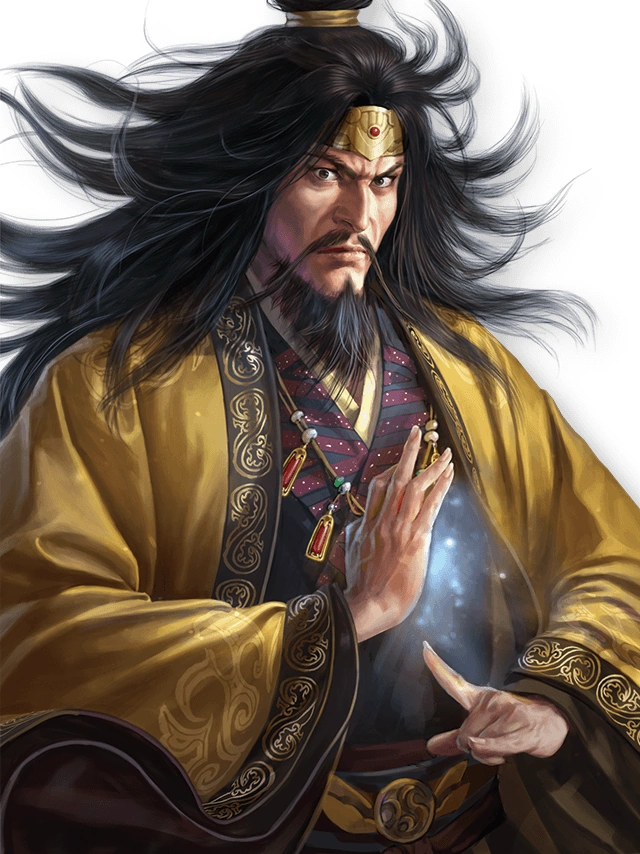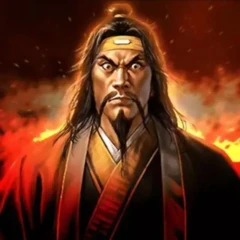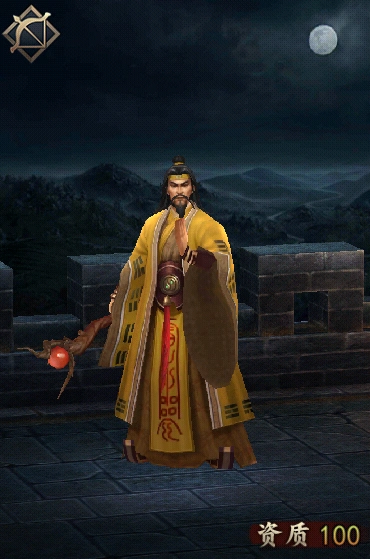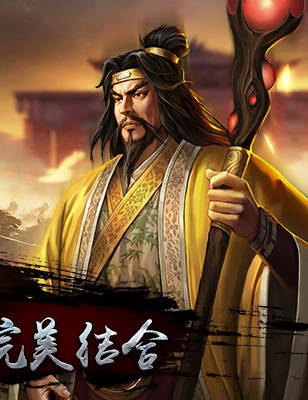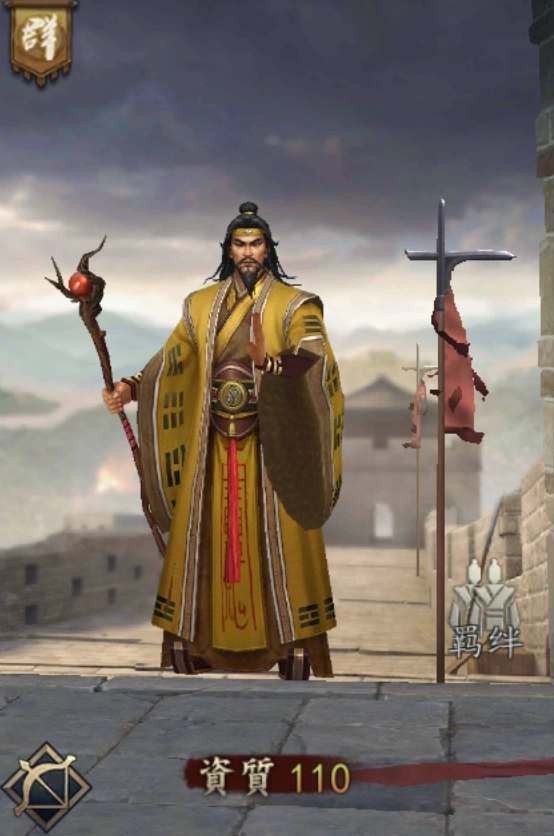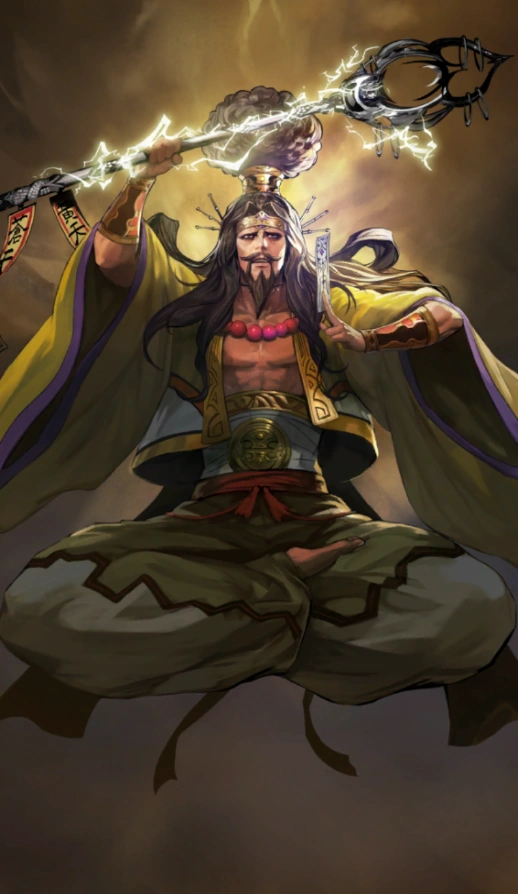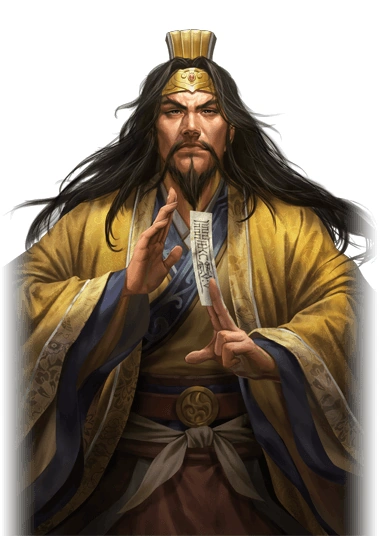
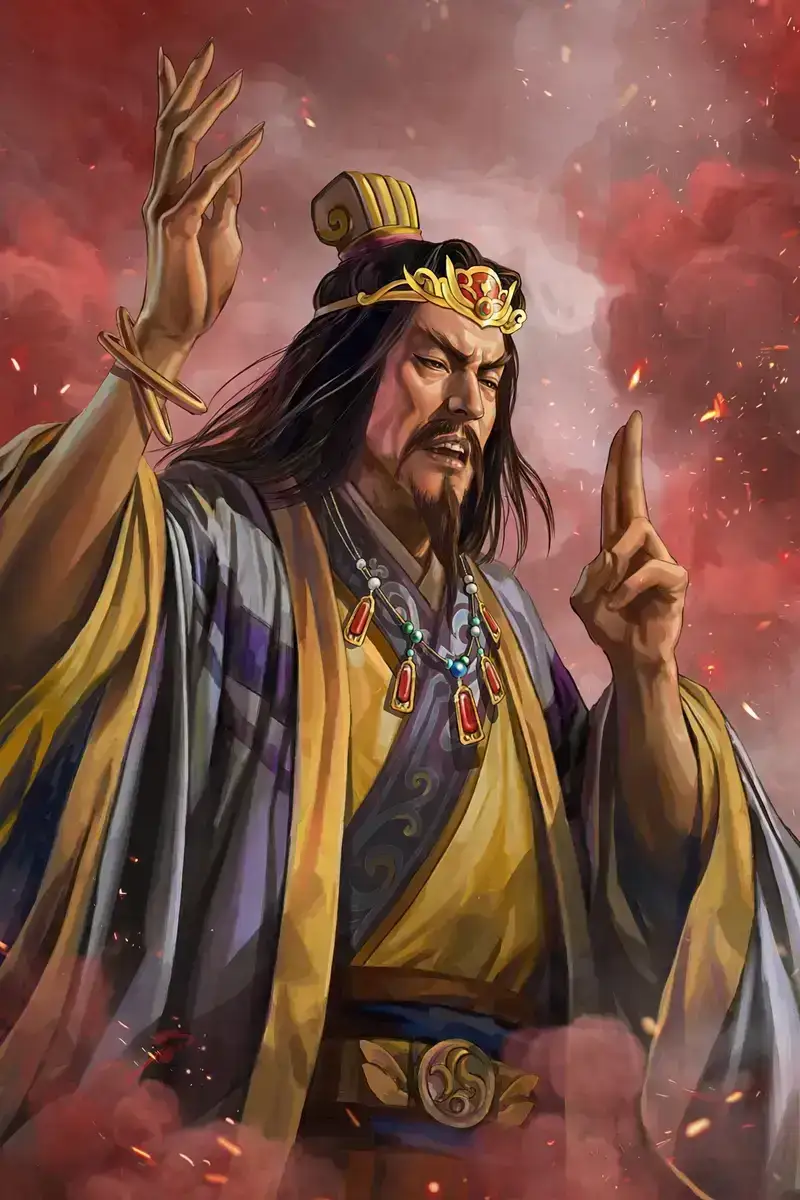
Zhang Jiao (张角, Trương Giác) (also Zhang Jue; d. 184 AD) of Julu Commandery (钶鹿, Cự Lộc) in Ji Province (冀州, Ký Châu) was the founder of the Way of Peace (太平道, Thái Bình Đạo) and supreme leader of the Yellow Turban Rebellion (黄巾之乱, Khởi nghĩa Khăn Vàng). In Luo Guanzhong’s novel he is the Julu healer who receives the Taiping jing from the southern immortal, proclaims “The Azure Heaven is dead; the Yellow Heaven shall rise,” and styles himself General of Heaven (天公将军, Thiên Công Tướng Quân). Historically he was a religious organizer, not a long-serving field marshal: the rising of 184 began after a leaked capital plot, and he died of illness at Guangzong (广宗, Quảng Tông) in the first year of the war. Imperial commander Huangfu Song (皇甫嵩, Hoàng Phủ Tung) later exhumed the coffin and beheaded the corpse.
Contents
Biography & Historical Record
The surviving chronicles treat Zhang Jiao as the teacher of a mass healing sect rather than as a career officer. For more than a decade he preached the Way of Peace across eight provinces — Qing, Xu, You, Ji, Jing, Yang, Yan, and Yu — using talisman-water (符水, phù thủy) rites and a promise that a new “Yellow Heaven” would replace the exhausted Han mandate. Followers were grouped into thirty-six fang (方, phương), large divisions of ten thousand and more, small ones of six or seven thousand. That organization, not a string of named pitched battles, is his historical achievement.
The planned rising was a coordinated inside–outside coup. Senior organizer Ma Yuanyi (马元义, Mã Nguyên Nghĩa) recruited in Jing and Yang, concentrated adherents toward Ye (邺, Nghiệp), and cultivated palace eunuchs, especially Feng Xu (封谞, Phong Tư). When disciple Tang Zhou (唐周, Đường Chu) betrayed the plot, Ma Yuanyi was seized in Luoyang and executed — historically torn apart by chariots (车裂); the novel shortens this to beheading. Emperor Ling (汉灵帝, Hán Linh Đế) ordered He Jin (何进, Hà Tiến) to prepare the capital. Zhang Jiao then launched the open revolt in the second month of Zhongping 1 (184), taking the title General of Heaven, with younger brothers Zhang Bao (张宝, Trương Bảo) as General of Earth (地公将军, Địa Công Tướng Quân) and Zhang Liang (张梁, Trương Lương) as General of the People (人公将军, Nhân Công Tướng Quân). Yellow cloth marked the host.
Han command split the theatres: Lu Zhi (卢植, Lư Thực) invested Zhang Jiao at Guangzong; Huangfu Song (皇甫嵩, Hoàng Phủ Tung) and Zhu Jun (朱儁, Chu Tuấn) fought the other brothers in Yingchuan (颚川, Dĩnh Xuyên) and later in Ji. Zhang Jiao died of illness inside the Guangzong lines before a decisive personal battle. Zhang Liang inherited the remnant host and was broken in a night assault; Huangfu Song opened Zhang Jiao’s coffin, cut off the head, and sent it to Luoyang. The desecration is political theatre, not proof of a long military career. Later literature and games enlarge his sorcery; the Hou Hanshu notices do not.
Role in Romance of the Three Kingdoms
Chapter 1 (Three Heroes Swear Brotherhood in the Peach Garden; One Victory Breaks the Yellow Turbans): Zhang Jiao of Julu, having failed the imperial examinations, gathers herbs in the hills and meets an aged immortal in a cavern. The visitor gives him three volumes of the Essential Art of Great Peace (太平要术 / Taiping jing, Thái Bình Kinh) and warns that the books can heal the world only if he harbors no selfish ambition. Asked for a name, the giver answers that he is the Old Immortal of the Southern Land — Master Lao (南华老仙, Nam Hoa Lão Tiên) — and vanishes. Zhang Jiao masters wind-and-rain arts, styles himself Great Worthy Teacher (大贤良师, Đại Hiền Lương Sư), and heals the sick with charms and holy water. Disciples swell into the hundreds of thousands. He organizes thirty-six fang and spreads the slogan “The Azure Heaven is dead; the Yellow Heaven shall rise. In the year jiazi the realm will know great peace” (苍天已死,黄天当立。岁在甲子,天下大吉). He sends Ma Yuanyi with gold and silk to bribe Feng Xu and time a Luoyang rising with the provincial revolt. Tang Zhou defects; Ma Yuanyi is taken and, in the novel, beheaded; collaborating eunuchs are seized. Forced into the open, Zhang Jiao and his brothers don yellow turbans and assume the Heaven / Earth / People generalships. Liu Yan (刘焉, Lưu Yên), as the novel’s Youzhou inspector, posts a call for volunteers; Liu Bei (刘备, Lưu Bị), Guan Yu (关羽, Quan Vũ), and Zhang Fei (张飞, Trương Phi) swear brotherhood in the Peach Garden and enlist. Zhang Jiao’s officer Cheng Yuanzhi (程远志, Trình Viễn Chí) is sent against Youzhou and is cut down by Guan Yu — the first named military loss of the rising in the novel, not a personal duel by Zhang Jiao himself.
Chapter 2 (Zhang Fei Whips the Inspector; He Jin Schemes against the Eunuchs): The imperial board is Huangfu Song and Zhu Jun against Zhang Bao and Zhang Liang, Lu Zhi against Zhang Jiao at Guangzong. Liu Bei is detached to Lu Zhi. Lu Zhi has the General of Heaven bottled up; the eunuch Zuo Feng (左丰, Tả Phong) demands a bribe, is refused, and slanders Lu Zhi, who is recalled in a cage-cart. Dong Zhuo (董卓, Đổng Trác) takes the command and fails against Zhang Jiao. Liu Bei then joins Zhu Jun. Meanwhile Zhang Jiao has already died of illness at Guangzong. Zhang Liang assumes the remnant army; Huangfu Song wins a string of clashes, then a dawn surprise, kills Zhang Liang, opens Zhang Jiao’s coffin, beheads the corpse, and forwards the head to the capital. Zhang Bao’s later fall (sorcery broken, wounded by Liu Bei, slain by subordinate Yan Zheng (严政, Nghiêm Chính)) closes the brothers’ arc. Zhang Jiao never appears as a late-war wanderer: his novel death is illness, then posthumous disgrace.
Zhang Jiao (张角, Trương Giác) — Historical & Literary Timeline
Way of Peace and the thirty-six fang
Novel: receives the Taiping jing from Master Lao after failing the exams; heals with charms and gathers a mass following. History: preaches Taiping Dao with talisman-water for more than ten years across eight provinces; organizes thirty-six fang. Not yet a field general.
Capital coup leaked
Ma Yuanyi’s Jing–Yang recruitment, Ye concentration, and Feng Xu collusion are betrayed by Tang Zhou. Ma Yuanyi dies in Luoyang (history: 车裂; novel: beheading). Emperor Ling and He Jin purge the capital; Zhang Jiao must rise early.
Azure Heaven dead; Yellow Heaven shall rise
Open rebellion; yellow turbans; Zhang Jiao General of Heaven, Zhang Bao General of Earth, Zhang Liang General of the People. Novel Ch. 1 also frames the Peach Garden oath and Cheng Yuanzhi’s death at Guan Yu’s hands as the Youzhou answer to the call.
Death of illness; corpse desecrated
Lu Zhi (then Dong Zhuo in the novel) presses Guangzong. Zhang Jiao dies of illness — not in single combat. Zhang Liang inherits the host; Huangfu Song routs him, exhumes Zhang Jiao, beheads the corpse, and sends the head to Luoyang (novel Ch. 2; Hou Hanshu Huangfu Song tradition).
Further reading: Zhang Jue on Wikipedia. Homonyms: brother Zhang Bao (Yellow Turbans) (张宝, Trương Bảo) is not Shu’s Zhang Bao (张芞) — do not use /zhang-bao/. Brother Zhang Liang (张梁, Trương Lương) is not Han strategist Zhang Liang (张良) — do not use /zhang-liang-2/.
Key Relationships
Family
- Zhang Bao (张宝, Trương Bảo) — Younger brother (Yellow Turban; not Zhang Bao 张芞 of Shu). General of Earth (地公将军). Novel Ch. 1–2: Yingchuan / Yangcheng theatre, sorcery, later killed by Yan Zheng. Link must be
/zhang-bao-yellow-turban/, never/zhang-bao/. - Zhang Liang (张梁, Trương Lương) — Youngest brother (汉字 张梁, not 张良). General of the People (人公将军). Held Guangzong after Zhang Jiao’s death; killed by Huangfu Song (Ch. 2). Link must be
/zhang-liang/, never/zhang-liang-2/.
Friends
- Zhang Bao (张宝, Trương Bảo) and Zhang Liang (张梁, Trương Lương) — Sworn command brothers of the Heaven–Earth–People trinity; they share the Taiping teaching and the 184 generalship, not a later court career.
- Ma Yuanyi (马元义, Mã Nguyên Nghĩa) — Large Division (大方) lieutenant entrusted with Jing–Yang recruitment, the Ye concentration, and the Luoyang eunuch mission. His arrest forces the premature outbreak.
- Master Lao (南华老仙, Nam Hoa Lão Tiên) — Novel immortal (Old Man of the Southern Land) who gives the three-volume scripture in the Julu cavern (Ch. 1). Master-to-disciple gift, not a historical friendship; no Shiji Laozi kin belong here.
- Taiping followers and the thirty-six fang — The mass of yellow-turban disciples Zhang Jiao healed and organized. Named provincial captains (e.g. Zhang Mancheng (张曼成, Trương Mạn Thành), Bo Cai (波才, Ba Tài)) fight in other theatres after the core brothers rise.
Enemies
- Emperor Ling (汉灵帝, Hán Linh Đế) — Sovereign whose corrupt court is the target of the Azure Heaven / Yellow Heaven slogan; orders the capital purge after Tang Zhou’s letter.
- He Jin (何进, Hà Tiến) — General-in-Chief who seizes Ma Yuanyi and prepares Luoyang, forcing Zhang Jiao into the open.
- Tang Zhou (唐周, Đường Chu) — Former disciple who betrays the capital plot.
- Lu Zhi (卢植, Lư Thực) — Imperial commander who bottles Zhang Jiao at Guangzong before eunuch slander removes him (novel); historical Guangzong siege command.
- Huangfu Song (皇甫嵩, Hoàng Phủ Tung) — Defeats Zhang Liang, exhumes Zhang Jiao, and beheads the corpse (Ch. 2 / Hou Hanshu 71).
- Zhu Jun (朱儁, Chu Tuấn) — Co-commander with Huangfu Song against the brothers in Yingchuan and the southern/central Yellow Turban war.
- Dong Zhuo (董卓, Đổng Trác) — Novel: replaces Lu Zhi at Guangzong and fails against Zhang Jiao before the autumn of the rebellion.
Other
- Master Lao / Old Man of the Southern Land (南华老仙, Nam Hoa Lão Tiên) — Same immortal as in Friends; the cave gift is the novel’s origin of the scripture. Historical Taiping jing tradition has no attested southern immortal meeting.
- Feng Xu (封谞, Phong Tư) — Palace eunuch in the inside plot with Ma Yuanyi; seized when Tang Zhou talks.
- Liu Yan (刘焉, Lưu Yên) — Novel Youzhou inspector whose recruitment bill brings Liu Bei, Guan Yu, and Zhang Fei into the Yellow Turban war (Ch. 1).
- Liu Bei (刘备, Lưu Bị), Guan Yu (关羽, Quan Vũ), Zhang Fei (张飞, Trương Phi) — Peach Garden volunteers who kill Cheng Yuanzhi and later fight Zhang Bao; they never duel Zhang Jiao in person.
- Guangzong (广宗, Quảng Tông) — Siege where Zhang Jiao dies of illness and where Huangfu Song later desecrates the body after Zhang Liang falls.
In Novel
Chapter 1
- Zhang Jiao (张角, Trương Giác): Julu healer who failed the examinations, met Master Lao (南华老仙, Nam Hoa Lão Tiên) in a cavern, and received three volumes of the Essential Art of Great Peace. He heals with charms, organizes thirty-six fang, and proclaims “The Azure Heaven is dead; the Yellow Heaven shall rise.” He sends Ma Yuanyi (马元义, Mã Nguyên Nghĩa) to bribe Feng Xu (封谞, Phong Tư); Tang Zhou (唐周, Đường Chu) betrays the plot and Ma Yuanyi is beheaded (novel). Forced into the open, Zhang Jiao styles himself General of Heaven with brothers Zhang Bao (张宝, Trương Bảo) (Earth) and Zhang Liang (张梁, Trương Lương) (People). Officer Cheng Yuanzhi (程远志, Trình Viễn Chí) is slain in Youzhou by Guan Yu (关羽, Quan Vũ) after Liu Bei (刘备, Lưu Bị)‘s Peach Garden oath.
Chapter 2
- Zhang Jiao (张角, Trương Giác): Besieged at Guangzong by Lu Zhi (卢植, Lư Thực) (then, after a eunuch slander, by Dong Zhuo (董卓, Đổng Trác), who fails). Zhang Jiao dies of illness inside the lines — not in single combat. Zhang Liang (张梁, Trương Lương) inherits the host; Huangfu Song (皇甫嵩, Hoàng Phủ Tung) routs him, opens Zhang Jiao’s coffin, beheads the corpse, and sends the head to Luoyang.
In History
Summary
- Zhang Jiao (张角, Trương Giác) (Zhang Jue) of Julu founded the Way of Peace (太平道) and led the Yellow Turban rising of 184. He was a religious organizer and healer, not a general with a long battle list. Brothers Zhang Bao (张宝, Trương Bảo) and Zhang Liang (张梁, Trương Lương) shared the Heaven–Earth–People titles.
Year: c. 170s–early 184 AD
- Preached Taiping Dao with talisman-water for more than ten years; followers across Qing, Xu, You, Ji, Jing, Yang, Yan, and Yu; thirty-six fang. No immortal cave-gift is attested outside the novel.
Year: 184 AD
- Ma Yuanyi (马元义, Mã Nguyên Nghĩa)‘s capital plot (Ye concentration; eunuchs including Feng Xu) is betrayed by Tang Zhou. Ma Yuanyi is executed by chariot-dismemberment (车裂). Zhang Jiao launches the open revolt in the second month; takes the title General of Heaven.
Year: 184 AD — Guangzong
- Lu Zhi (卢植, Lư Thực) invests Guangzong. Zhang Jiao dies of illness. Zhang Liang assumes command and is defeated by Huangfu Song (皇甫嵩, Hoàng Phủ Tung), who exhumes Zhang Jiao, beheads the corpse, and sends the head to Luoyang.
Historical Record
- Hou Hanshu 71 (Huangfu Song / Zhu Jun) and notices on Emperor Ling’s reign; Yellow Turban passages also reflected in Sanguozhi context and Zizhi Tongjian Zhongping 1. History confirms illness, premature rising after Ma Yuanyi’s death, and corpse desecration — not a Guan Yu-style personal duel and not a multi-year field command.
Gallery