Contents
Biography & Historical Record
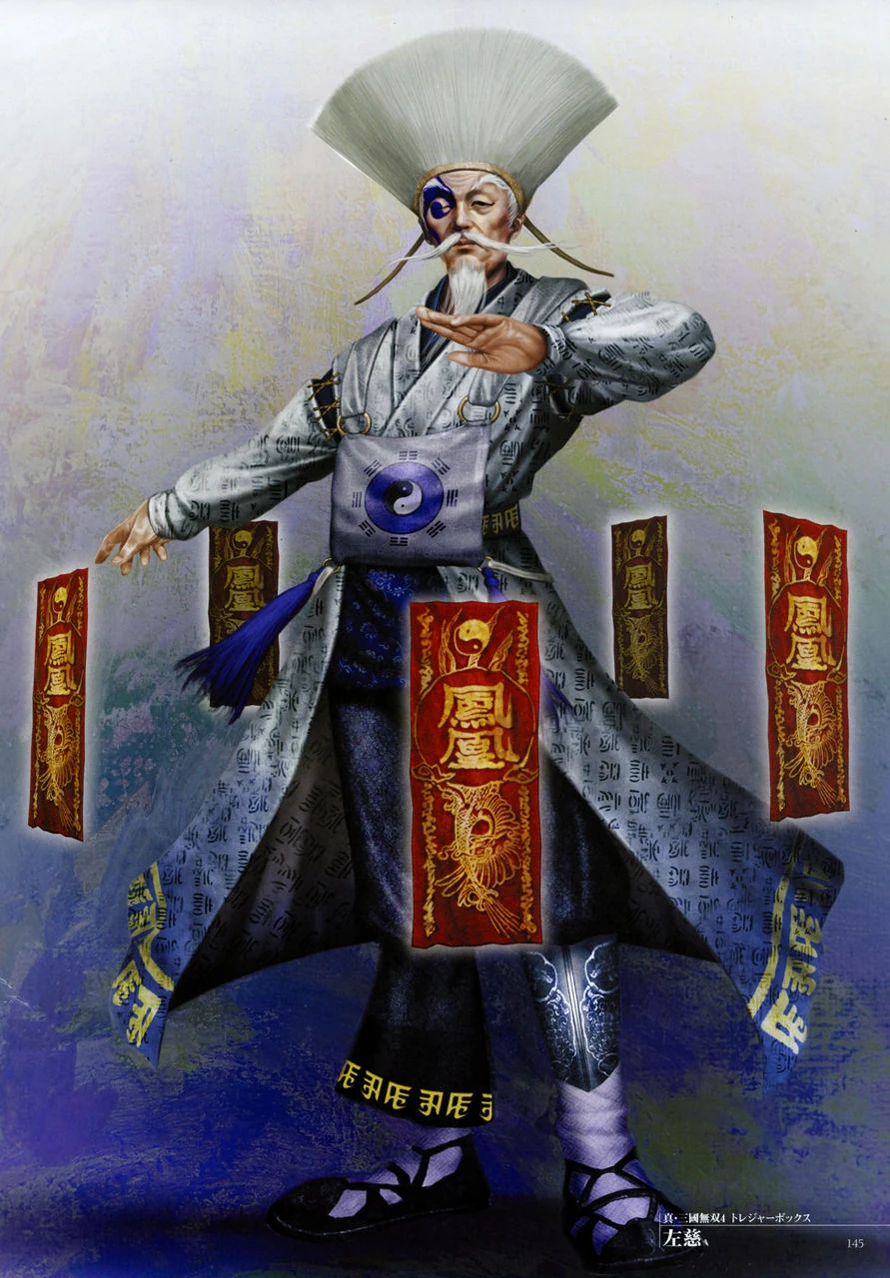
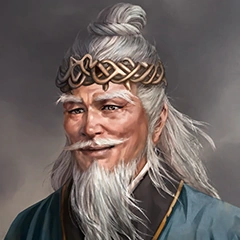
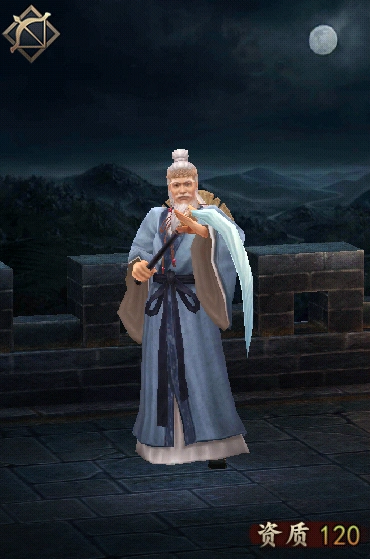
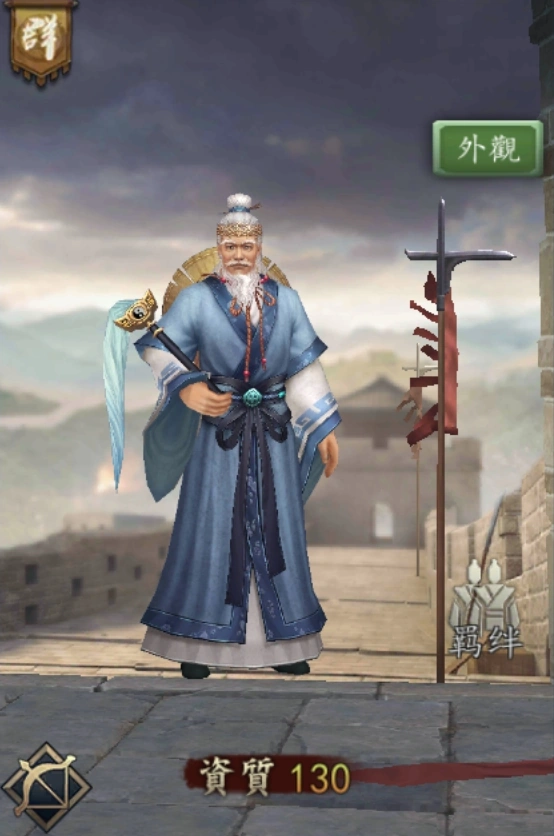
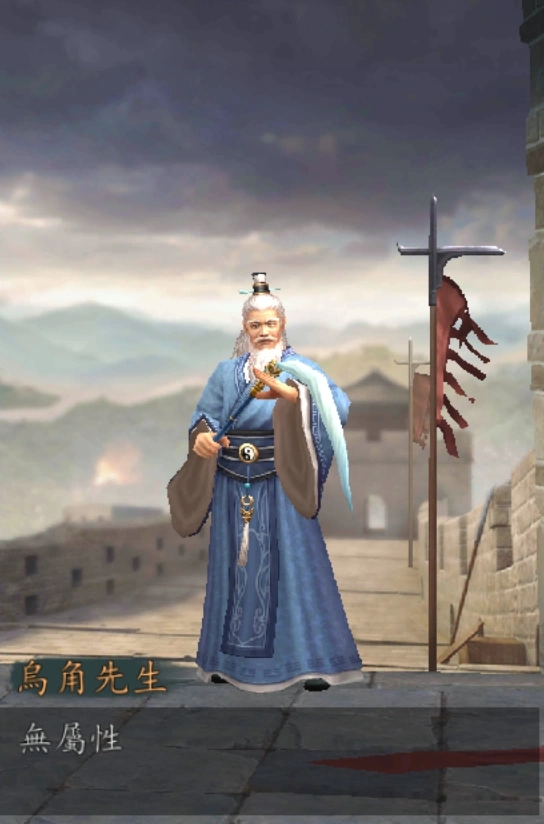
Zuo Ci (左慈, Tả Từ), courtesy name Yuanfang (元放, Nguyên Phóng), was a late-Han Daoist thaumaturge from Lujiang Commandery, remembered in Sanguozhi anecdotes and later immortal lore as a master of alchemy, concealment, and wonder-working. Tradition places him on Mount Emei and among fangshi (方士) circles. He is not a battlefield general; his fame rests on confronting worldly power — especially Cao Cao (曹操, Tào Tháo) — with arts that make political violence look futile.
Historical-literary notices treat him as semi-legendary: the name is attested, but fish-from-a-basin, citrus-from-nothing, and mass doubles are miracle tales. The novel crystallizes these into a single humiliating banquet before Cao Cao at the height of Wei ambition.
Role in Romance of the Three Kingdoms
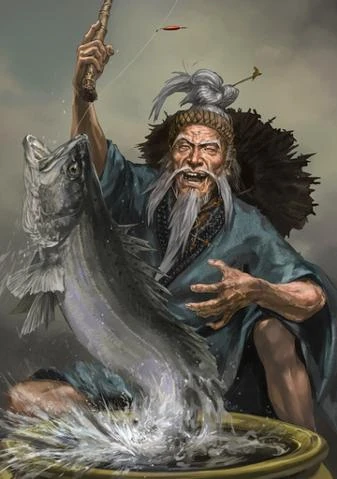
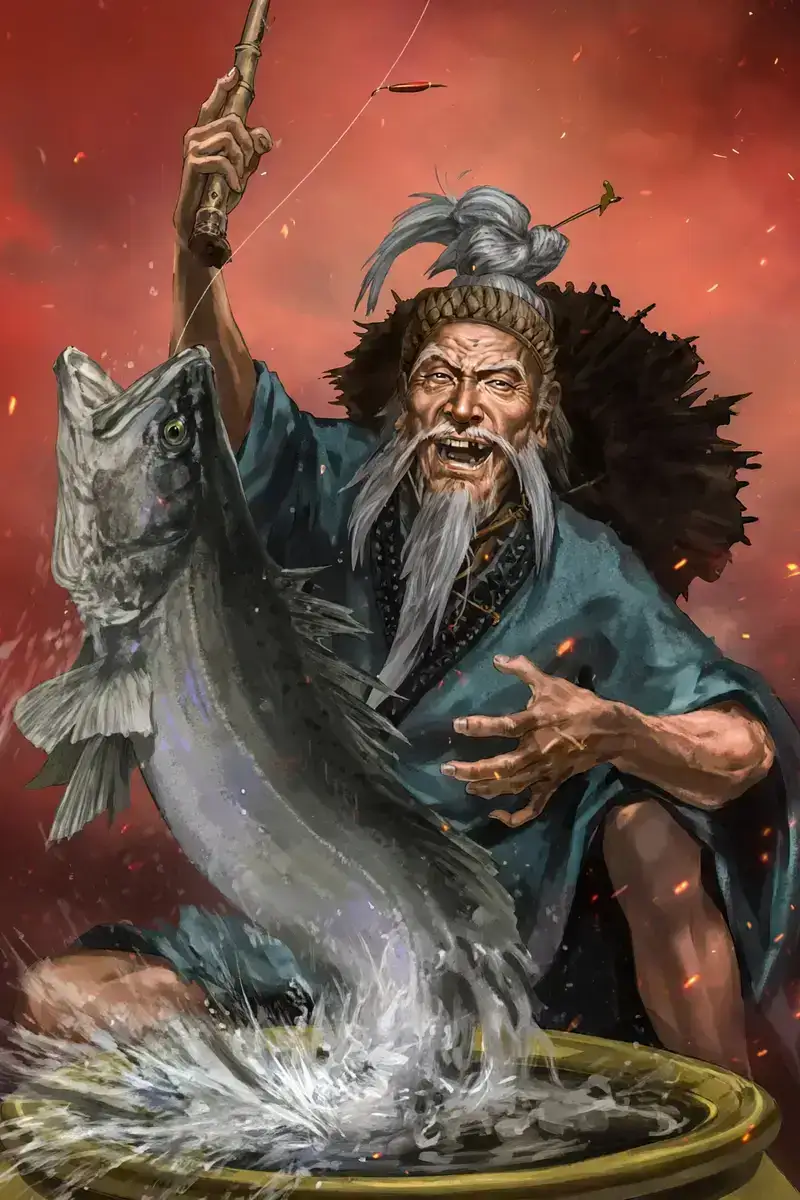
In Chapter 68, Zuo Ci arrives at Cao Cao’s court as an unbidden guest. He conjures delicacies, pulls perch from a painted dish, restores broken cups, and openly mocks Cao Cao’s path toward kingship. When Cao Cao orders his execution, Zuo Ci vanishes, multiplies into identical figures, and escapes into sheep or empty air — leaving Cao Cao shaken. The episode undercuts Cao Cao’s claim to control fate just as he accepts the Nine Bestowments and royal titles.
Notable Quotes & Famous Sayings
- “Possessions and power are fleeting illusions; true longevity lies beyond the mortal grasp.”
- “You command millions of soldiers, yet you cannot command the wind — nor your own fate.” — to Cao Cao.
Zuo Ci (左慈) — Historical & Literary Timeline
Fangshi of Lujiang
Remembered as a Daoist adept associated with Mount Emei arts; notices survive in SGZ-related anecdote traditions.
Banquet miracles before Cao Cao
Mocks Cao Cao with conjured food and fish; escapes repeated execution orders by vanishing and multiplying.
For lore overview, see Zuo Ci on Wikipedia.
Daoist Lore & Classification
Later Daoist hagiography folds Zuo Ci into lineages of elixir arts and invisibility techniques. For Diaochan.xyz character pages he is classified as Semi-Historical / Legendary: the personal name is traditional, but banquet miracles and mass doubles belong to storytelling rather than administrative history. Readers should treat Chapter 68 as literary satire of Cao Cao’s hubris, not as a dated campaign record.
Key Relationships
Family
- No kin recorded in the novel, Sanguozhi anecdotes, or later Daoist hagiography — no named father, mother, spouse, or children (honest none; not a clan figure).
Friends
- Fangshi / Daoist tradition (方士, phương sĩ): Later lore groups Zuo Ci (左慈, Tả Từ) with elixir and concealment adepts of Lujiang and Mount Emei; the novel names no sworn companion at the banquet.
- Court guests at Cao Cao’s feast (Ch. 68): The episode is staged before Wei officers who witness the miracles — they are audience, not allies.
Enemies
- Cao Cao (曹操, Tào Tháo): Attempts to seize and execute Zuo Ci after public humiliation; fails.
Other
- Daoist immortals (道教仙人, Đạo giáo tiên nhân): Folklore class with which Zuo Ci is grouped as a wonder-worker beyond court politics.
In Novel
Chapter 68
- Zuo Ci (左慈, Tả Từ): Daoist master, courtesy name Yuanfang (元放, Nguyên Phóng), from the Mount Emei tradition. At Cao Cao (曹操, Tào Tháo)‘s banquet he conjures citrus and meat, draws perch from a painted basin, restores severed cups, mocks Cao Cao’s usurpation of Han authority, and vanishes when execution is ordered — multiplying into identical forms so that soldiers cannot strike the real man. The scene humiliates Cao Cao at the moment of Wei royal elevation.
In History
Summary
- Zuo Ci (左慈, Tả Từ), courtesy name Yuanfang, is a semi-historical/legendary Daoist figure of the late Eastern Han, associated with Lujiang and fangshi arts.
Period — Late Han tradition
- Anecdotes in historical-literary sources credit him with alchemy and illusion; they are not administrative career records.
Historical Record
- Name and wonder tales appear in SGZ-related and later Daoist lore. Romance of the Three Kingdoms Chapter 68 dramatizes confrontation with Cao Cao. Classification: Semi-Historical / Legendary — not a securely documented general or official.
Gallery