
Contents
The Life and Legacy of A Gui
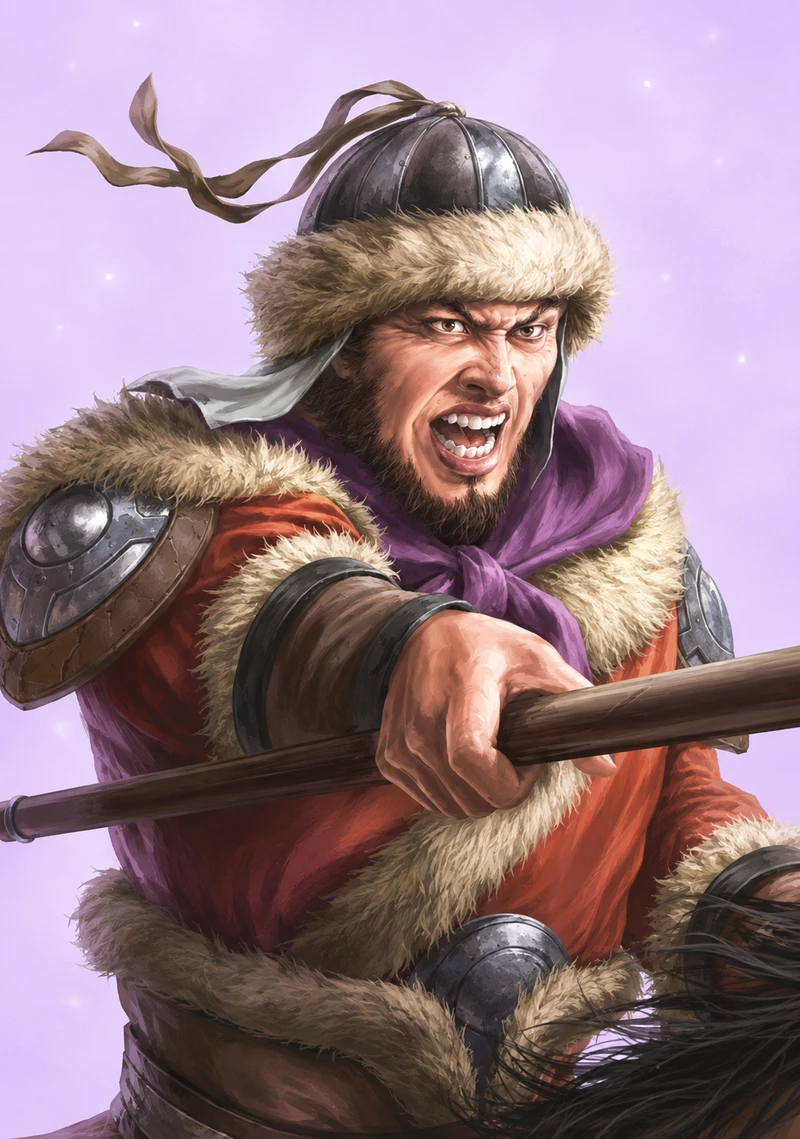
A Gui was a prominent chieftain of the Di ethnic group residing in the Longyou region during the chaotic twilight of the Eastern Han dynasty. As central authority crumbled across northern China, tribal federations played decisive military roles in regional conflicts. When warlord Ma Chao ignited a massive western coalition against Cao Cao following the Battle of Tong Pass, the tribal chieftain mobilized his regional forces to bolster the insurrection against imperial expansion.
Historical records indicate that western frontier alliances were notoriously volatile. When imperial forces led by Xiahou Yuan launched their punitive counter-campaign between 212 and 214 AD, the tribal defenses cracked under relentless assault. Surrounded by internal mistrust and intense military pressure from Cao Cao’s seasoned generals, the coalition splintered, ultimately leading to the destruction of the rebel strongholds and the chieftain’s defeat during the frontier pacification.
Role in the Three Kingdoms Era
Within historical and literary perspectives of the Three Kingdoms era, A Gui exemplifies the complex tribal diplomacy that shaped frontier warfare. His participation demonstrates how regional non-Han leaders sought autonomy by aligning with powerful Liangzhou warlords against the expanding central government.
Historical & Literary Timeline
Formation of Alliance
The Di leader joins the coalition of warlords and regional tribes under Ma Chao to resist Cao Cao’s advances in the Guanzhong region.
Fall of the Tribal Stronghold
Imperial forces led by Xiahou Yuan launch counter-offensives, crushing the tribal resistance and concluding the uprising in Liangzhou.
Key Relationships
During the campaigns, A Gui maintained critical alliances across the Liangzhou and Guanzhong frontiers:
Allies
- Qian Wan (千万): Chieftain of the Xingguo Di tribe who co-led the northwestern tribal confederation during the anti-Cao Cao uprising.
- Ma Chao (马超): Paramount warlord of Liangzhou who gathered Di and Qiang warriors to support the grand western rebellion.
- Han Sui (韩遂): Veteran warlord of Liangzhou who co-directed the western coalition armies.
Enemies
- Xiahou Yuan (夏侯渊): Senior general of Cao Wei who directed the western punitive expedition and subdued the Di rebel strongholds.
- Cao Cao (曹操): Chancellor of Han whose western expansion provoked the Longyou tribal confederations into armed resistance.
- Zhang He (张郃): Imperial general who led vanguard detachments during the pacification of Liangzhou.
In Novel
Chapter 58
- A Gui (阿贵, A Quý): A Gui is one of the Qiang leaders associated with Ma Chao’s forces. When Ma Chao fights Cao Cao in the northwest, A Gui and other Qiang commanders provide military support. He participates in the coalition’s resistance against Cao Cao and is defeated when Cao Cao’s forces break the coalition.
In History
Background
- A Gui (阿贵, A Quý) was the king of the Xingguo Di people in the western borderlands of the late Eastern Han. He commanded a large tribal following and became involved in the wars of Ma Chao (马超, Mã Siêu).
212 AD
- After Ma Chao’s defeat in the Guanzhong campaign, he returned to the Longxi region and attempted to establish a power base. A Gui responded by supporting Ma Chao’s uprising and maintained his own forces at Xingguo.
214 AD
- Xiahou Yuan (夏侯渊, Hạ Hầu Uyên) campaigned against the western rebels and attacked Xingguo. A Gui was defeated as Wei forces consolidated their control over the region.
214 AD
- A Gui’s defeat ended the Xingguo Di kingdom as an independent military force. His career illustrates the important role played by Di and Qiang leaders in the struggles between the Han warlords and Cao Wei.