



Contents
Biography & Historical Record
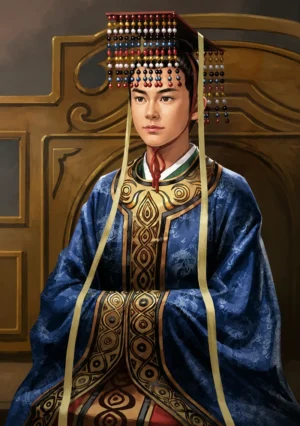
Cao Jie (197–260 AD), posthumously honored as Empress Xianmu, was an imperial empress of the Eastern Han dynasty. Born in Qiao County, Pei Commandery (present-day Bozhou, Anhui Province), she was a daughter of the powerful warlord Cao Cao and Empress Dowager Bian, making her a full sister to Cao Pi, Cao Zhang, and Cao Zhi. In 213 AD, Cao Cao offered three of his daughters—Cao Jie, Cao Xian, and Cao Hua—to Emperor Xian of Han as imperial consorts to consolidate his total political dominance over the Han imperial court.
In 214 AD, after Empress Fu Shou secretly conspired with her father Fu Wan to eliminate Cao Cao, the plot was exposed. Cao Cao had Empress Fu Shou brutally executed and her clan annihilated. In 215 AD, Cao Jie was elevated to the status of Empress of the Eastern Han dynasty. Despite her father’s political motives, Empress Cao Jie demonstrated profound loyalty, virtue, and devotion to her husband, Emperor Xian, fiercely defending the imperial dignity against the ambitions of her own clan. When her elder brother Cao Pi usurped the Han throne in 220 AD and dispatched officials to demand the Imperial Jade Seal, Empress Cao Jie steadfastly refused to hand it over, scolding the envoys repeatedly. Forced eventually to surrender the seal, she furiously threw it down the palace steps, tearfully cursing: ‘Heaven will never bless you or your descendants!’
Following Emperor Xian’s abdication and demotion to Duke of Shanyang, Cao Jie accompanied her husband to his fief in Shanyang (present-day Jiaozuo, Henan Province). Together, they lived modestly, practicing medicine and aiding the local peasantry, earning high public reverence. She survived Emperor Xian by twenty-six years, passing away in 260 AD during the reign of Cao Mao. She was buried alongside Emperor Xian in Zenling with full Han imperial honors.
Role in Romance of the Three Kingdoms
In Luo Guanzhong’s Romance of the Three Kingdoms, Cao Jie’s character arc peaks dramatically in Chapter 80. Following the death of Cao Cao, Cao Pi accelerates his plot to usurp the imperial throne from Emperor Xian. When Cao Pi dispatches Hua Xin and royal guards to demand the Imperial Jade Seal from the inner palace, Empress Cao Jie stands firmly by Emperor Xian’s side, weeping and angrily berating Hua Xin and the conspirators as treacherous traitors who betray her father’s legacy and line. When forced to surrender the Jade Seal, Empress Cao Jie throws the sacred artifact down from the hall onto the courtyard steps, tearfully cursing the usurpers that Heaven shall bring ruin upon Cao Pi and his usurping house. Her courageous defiance highlights her supreme loyalty as an empress, choosing her husband and imperial duty over her own family’s usurpation.
Cao Jie (曹節) — Literary Timeline
Entry into the Imperial Palace and Coronation
Enters Emperor Xian’s harem alongside her sisters Cao Xian and Cao Hua; elevated to Empress following the execution of Empress Fu Shou.
Defiance Against Cao Pi’s Usurpation
Berates Hua Xin and Cao Pi’s envoys demanding the Imperial Jade Seal; hurls the seal down the palace steps and curses the Wei usurpers before accompanying Emperor Xian to Shanyang.
For detailed historical records, archives, and official chronicles, explore Cao Jie on Wikipedia.
Key Relationships
Family
- Cao Cao (曹操, Tào Tháo): Her father, the powerful warlord and Chancellor who installed her as an imperial consort in 213 AD to solidify his control over the Han court.
- Empress Dowager Bian (卞氏, Biện Thị): Her mother and the primary wife of Cao Cao.
- Emperor Xian of Han (汉献帝, Hán Hiến Đế): Her husband; she remained fiercely loyal to him throughout his abdication and their subsequent life in exile as the Duke and Duchess of Shanyang.
- Cao Pi (曹丕, Tào Phi): Her elder brother who usurped the throne in 220 AD; she famously defied his envoys and cursed his house for their betrayal of the Han.
- Cao Zhang (曹彰, Tào Chương) and Cao Zhi (曹植, Tào Thực): Her elder brothers.
- Cao Xian (曹宪, Tào Hiến) and Cao Hua (曹华, Tào Hoa): Her sisters who were sent alongside her to serve as consorts to Emperor Xian.
- Princess Mansui (万年公主, Vạn Niên Công Chúa): Her daughter born to Emperor Xian.
Friends
- No information
Enemies
- Hua Xin (华歆, Hoa Hâm): A Wei official who led the delegation to demand the Imperial Jade Seal from her in 220 AD; she berated him as a traitor for his role in the usurpation.
- Wang Lang (王朗, Vương Lãng): A high-ranking Wei official who supported the pressure campaign against the imperial household during the transition of power.
Other
- Empress Fu Shou (伏寿, Phục Thọ): Her predecessor as Empress; Cao Jie was elevated to the position in 215 AD following Empress Fu’s execution by Cao Cao.
In Novel
Chapter 1
- Cao Jie (曹节, Cáo Jié): The eunuch Cao Jie is named among the powerful eunuchs controlling the Later Han court during Emperor Ling’s reign. He belongs to the faction whose influence contributes to the political corruption and instability of the imperial government.
Chapter 3
- Cao Jie (曹节, Cáo Jié): Cao Jie is again named among the eunuchs surrounding the court during the struggle involving He Jin and the eunuch faction. The conflict eventually leads to He Jin’s assassination and the destruction of the eunuchs.
In History
Summary
- Cao Jie (曹节, Tào Tiết) was a daughter of Cao Cao and Lady Bian who became the wife of Emperor Xian of Han.
Period I — Marriage to Emperor Xian
- Cao Jie married Liu Xie while he was Han emperor and became Empress after her elder sister’s death.
- When Cao Pi forced Emperor Xian to abdicate in 220, Cao Jie refused to cooperate willingly with the transfer of the imperial seal.
Period II — After the Han Abdication
- After Liu Xie became Prince of Shanyang, Cao Jie accompanied him and retained her position as his consort.
Historical Record
- Cao Jie was historical. She is recorded in the biographies of Emperor Xian and the Cao imperial family.