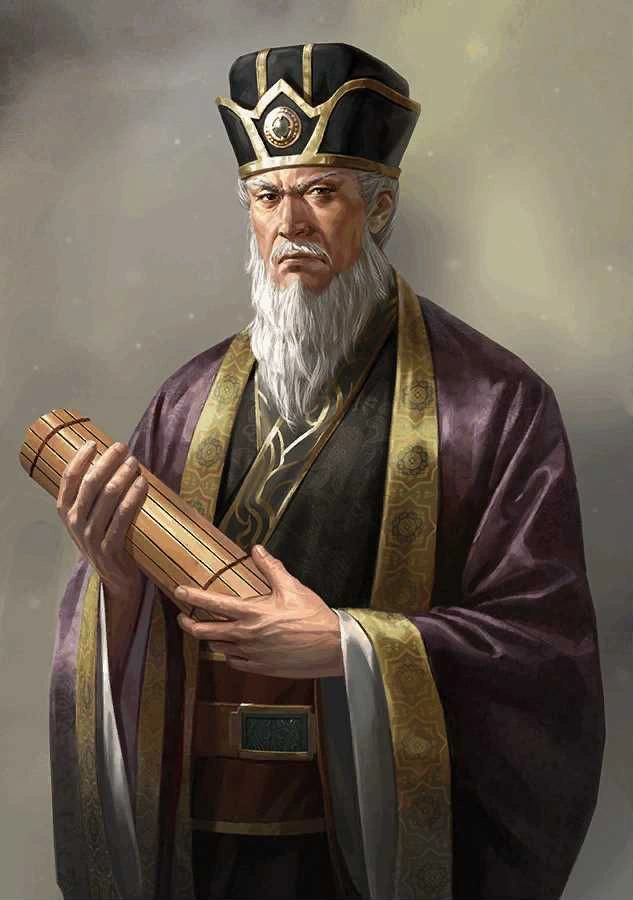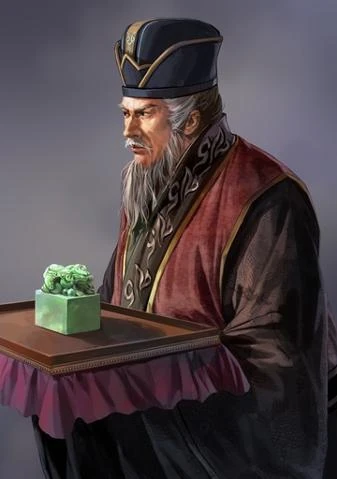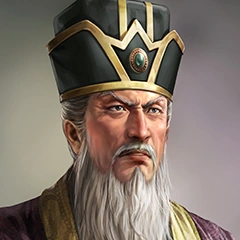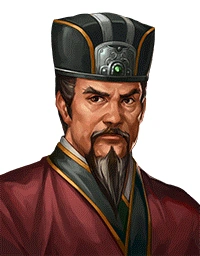
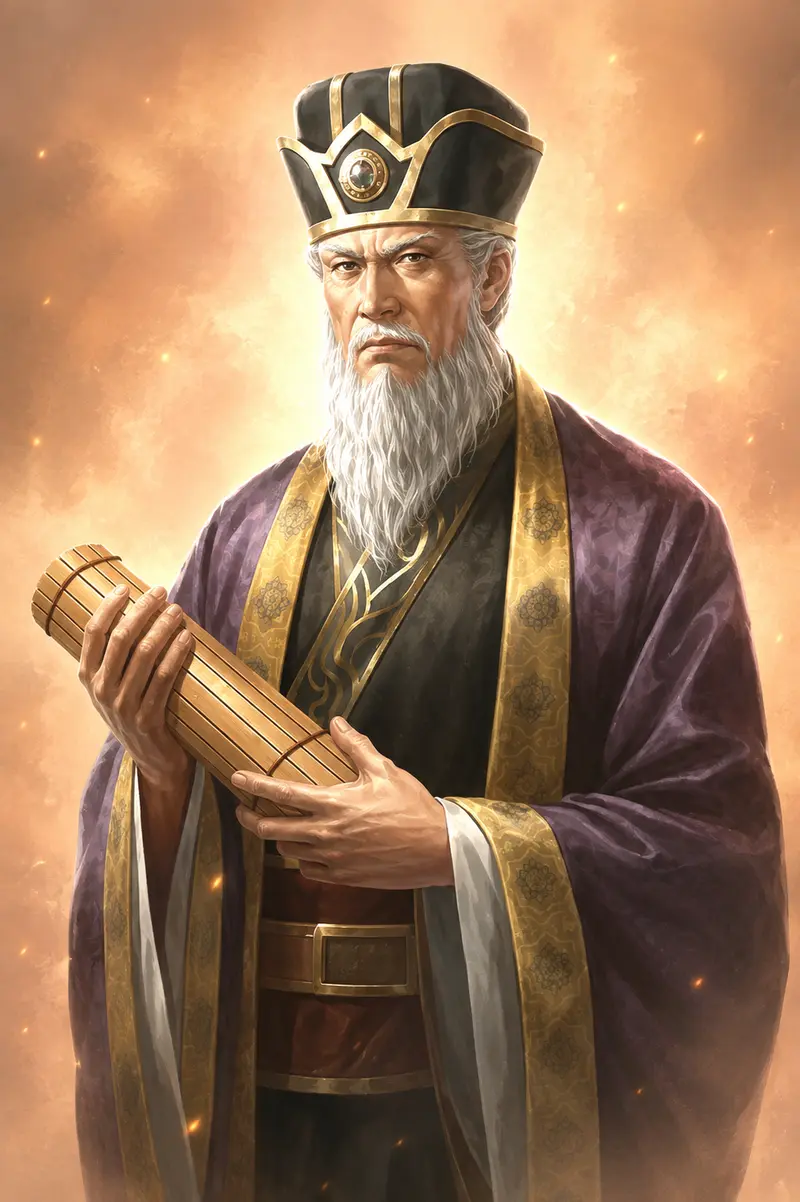
Here is the exhaustive biography of Hua Xin (華歆 / 华歆), courtesy name Ziyu (子魚 / 子鱼) (157 – 231), a Han official who served successively under Yuan Shu, Sun Ce and the Cao regime, rising to the highest civil ranks in Wei, incorporating historical records and the narrative of Romance of the Three Kingdoms.
Contents
Historical Career
Hua Xin began as a clerk in Gaotang County. He briefly joined Yuan Shu but left when his advice against attacking Dong Zhuo was ignored. He later became Administrator of Yuzhang Commandery in Yang Province under the Han court. After Liu Yao’s death he declined to absorb Liu Yao’s remaining troops and instead entered Sun Ce’s service as an adviser. When Sun Ce died, the imperial court summoned Hua Xin to the capital; he persuaded Sun Quan that compliance would be seen as goodwill toward Cao Cao, and thus transferred to the central government.
Under Cao Cao he succeeded Xun Yu as Master of Writing and rose to Grandee Secretary. Under Cao Pi he became Chancellor of Wei and Minister over the Masses; under Cao Rui he served as Grand Commandant. He was among the senior advisers who successfully opposed Cao Zhen’s projected campaign against Shu, forcing a withdrawal from the stalemate. He died in 231 at the age of seventy-five (by East Asian reckoning).
Romance of the Three Kingdoms Portrayal
In the novel Hua Xin is remembered chiefly for two episodes that blacken his reputation.
Chapter 66 – Arrest of Empress Fu: When Empress Fu’s plot against Cao Cao is discovered, Cao Cao sends Hua Xin with soldiers into the palace. The Empress hides behind a wall; Hua Xin breaks it down, seizes her by the hair and drags her out. The novel inserts a condemnatory poem that brands him forever as the man who abetted Cao Cao’s cruelty:
“That was a dastardly thing that Hua Xin did, / When he broke down the wall where the Empress hid / And dragged her forth by the hair. / He lent his aid to a foul, foul crime / And execrations throughout all time, / Have been, and shall be, his share.”
(Historically there is no record that Hua Xin participated in the arrest of Empress Fu.)
Chapters 78–80 – Recommendation of Hua Tuo and the Abdication: In Chapter 78 Hua Xin is the official who recommends Hua Tuo to treat Cao Cao’s final illness. In Chapter 80 he becomes the chief spokesman of the deputation that forces Emperor Xian to abdicate. He drafts the abdication edict, leads the Emperor forward to kneel, and, drawing his sword, orders the former sovereign to depart at once for the fief of Duke of Shanyang. The novel thus casts him as the polished but ruthless instrument of the Cao family’s usurpation.
Hua Xin (華歆) — Historical & Literary Timeline
c. 190s AD — Early Service
From Yuan Shu to Sun Ce
Clerk in Gaotang; briefly under Yuan Shu; Administrator of Yuzhang; joins Sun Ce as adviser after Liu Yao’s death. Persuades Sun Quan to release him to the imperial court after Sun Ce’s death.
c. 200–220 AD — Rise under Cao Cao
Master of Writing & the Empress Fu Episode
Succeeds Xun Yu as Master of Writing; rises to high civil office. In the novel he is the officer who drags Empress Fu from hiding by the hair (Ch. 66) and later recommends Hua Tuo (Ch. 78).
220–231 AD — Wei High Official & Abdication
Chancellor, Minister over the Masses, Grand Commandant
Serves Cao Pi as Chancellor of Wei and Minister over the Masses; under Cao Rui becomes Grand Commandant. In the novel he is the principal agent who forces Emperor Xian’s abdication and escorts him from the capital. Dies in 231.
Historical Note
Historically Hua Xin was a capable civil administrator who moved smoothly from the southern warlords into the Cao regime and ended his career among the highest dignitaries of Wei. The novel transforms him into a symbol of cold, polished collaboration: the man who drags an empress by the hair and who, sword in hand, expels the last Han emperor. No contemporary record confirms his role in the arrest of Empress Fu; that scene, and the scathing poem attached to it, are pure novelistic invention designed to blacken the reputation of a successful Wei official.
Key Relationships
Family
- Hua Biao (华表, Hoa Biểu): Son. Senior statesman who served Cao Wei and Western Jin.
- Hua Zhi (华廙, Hoa Dực): Grandson. High-ranking minister of the Western Jin dynasty.
Friends
- Bing Yuan (邴原, Bính Nguyên): Lifelong scholar friend; together with Guan Ning and Hua Xin, they were celebrated as the “Dragon” (Hua Xin was the tail, Bing Yuan the belly, Guan Ning the head).
- Guan Ning (管宁, Quản Ninh): Childhood scholarly companion who famously severed their mat (割席断交, Cutting the Mat) when Hua Xin was distracted by a nobleman’s golden carriage.
- Cao Cao (Cao Cao, Tào Tháo): Sovereign whom Hua Xin served as chief advisor and Imperial Secretary.
- Cao Pi (Cao Pi, Tào Phi): Emperor Wen of Wei who appointed Hua Xin as Chancellor (Situ) and trusted him to oversee the formal dynastic transition.
Enemies
- Sun Ce (孙策, Tôn Sách): Warlord of Jiangdong who forced Hua Xin to surrender Yuzhang commandery in 200 AD.
- Empress Fu Shou (伏寿, Phục Thọ): Empress consort of Emperor Xian; Hua Xin tore down the palace walls to drag her out by her hair for execution in 214 AD in the novel.
- Emperor Xian of Han (汉献帝, Hán Hiến Đế): Imperial sovereign whom Hua Xin coerced into signing the instrument of abdication to Cao Pi in 220 AD.
Others
- No information
In Novel
Chapter 15
- Hua Xin (华歆, Hoa Hâm): A Han scholar from Gaotang, courtesy name Ziyu (子鱼), who served as Administrator of Yuzhang and surrendered the commandery to Sun Ce (孙策, Tôn Sách) without resistance.
Chapter 29
- Hua Xin (华歆, Hoa Hâm): Sent by Sun Ce (孙策, Tôn Sách) as an envoy to the imperial court in Xuchang, where Cao Cao (曹操, Tào Tháo) detained him and appointed him Consultant and Master of Writing.
Chapter 66
- Hua Xin (华歆, Hoa Hâm): Serving as Royal Secretary under Cao Cao (曹操, Tào Tháo), he personally led armed guards into the palace, tore Empress Fu (伏皇后, Phục hoàng hậu) from behind a wall, dragged her by the hair, and delivered her to be beaten to death.
Chapter 80
- Hua Xin (华歆, Hoa Hâm): Led the Wei civil court officials in drafting abdication memorials and intimidating Emperor Xian (刘协, Hán Hiến Đế) into transferring the Han imperial throne to Cao Pi (曹丕, Tào Phi).
In History
Year: 190 AD
- Hua Xin (华歆, Hoa Hâm), courtesy name Ziyu, served as an official in the late Eastern Han. He later became associated with the southeastern political sphere and served Sun Ce (孙策, Tôn Sách) as Administrator of Yuzhang.
Year: 196 AD
- Hua Xin (华歆, Hoa Hâm) continued governing Yuzhang under Sun Ce and then Sun Quan (孙权, Tôn Quyền). He eventually entered Cao Cao’s service after Cao Cao took control of the imperial government.
Year: 208 AD
- Hua Xin (华歆, Hoa Hâm) served Cao Cao in the Han court and became an important political official. His career continued through the transition from Han to Wei.
Year: 220 AD
- Hua Xin (华歆, Hoa Hâm) was one of the senior officials who supported Cao Pi (曹丕, Tào Phi)‘s replacement of the Han dynasty. He became a leading minister of Cao Wei.
Year: 227 AD
- Hua Xin (华歆, Hoa Hâm) became Grand Commandant and remained one of the most senior officials in the Wei government until his death in 232.
Gallery