
Contents
Biography & Historical Record
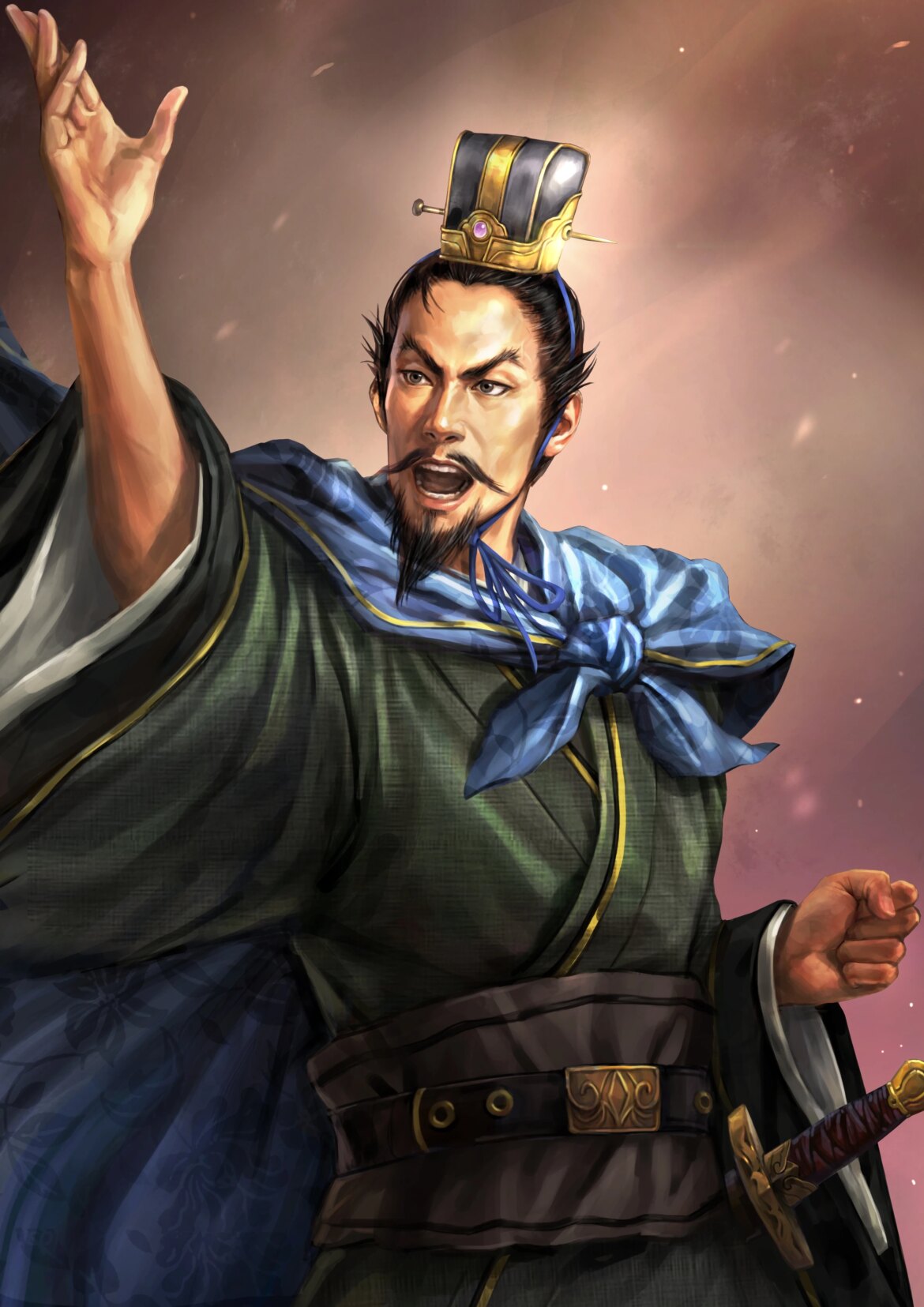
Chen Gong (died 198 AD), courtesy name Gongtai, was a brilliant strategist and official who played a significant role during the chaotic transition period at the end of the Eastern Han dynasty. Originally a magistrate of Zhongmou, he famously released Cao Cao after Cao Cao’s failed assassination attempt on Dong Zhuo, initially aligning with him. However, disillusioned by Cao Cao’s ruthlessness (specifically the murder of Lü Boshe’s family), he broke away and eventually became the primary advisor to the mighty warrior Lu Bu. Chen Gong served Lu Bu with unwavering loyalty, devising strategies to defend his territories, most notably at Yan Province and later Xiapi. Despite his intellect, Lu Bu’s failure to heed his sound strategic advice eventually led to their downfall at the Battle of Xiapi. Upon being captured by Cao Cao, Chen Gong chose execution over betrayal, meeting his death with stoic dignity.
Role in Romance of the Three Kingdoms
In Luo Guanzhong’s epic novel Romance of the Three Kingdoms, Chen Gong is depicted as a deeply principled, albeit tragic, strategist. His narrative arc is central to the portrayal of Lu Bu’s career. The novel highlights his initial encounter with Cao Cao, their fallout, and his complex relationship with Lu Bu—a warrior of immense power but lacking in judgment. His death is one of the most poignant moments in the novel, as he refuses Cao Cao’s offer of clemency, choosing to die for his loyalty to his chosen lord.
Notable Quotes & Famous Sayings
- “A man of virtue does not serve a master without principle.” — Chen Gong on his departure from Cao Cao.
- “If the lord had listened to my plans at the beginning, the outcome would have been different.” — Chen Gong’s final reflection before his execution.
Chen Gong (陳宮) — Historical & Literary Timeline
Release of Cao Cao
As a magistrate, Chen Gong captures Cao Cao but is moved by his ambition; he resigns his post to join Cao Cao in his flight from Dong Zhuo.
Defection to Lu Bu
Bitter over Cao Cao’s moral failings, Chen Gong defects and convinces the warlord Zhang Miao to invite Lu Bu to take control of Yan Province.
Execution at Xiapi
Captured alongside Lu Bu at the fall of Xiapi, Chen Gong stoically accepts execution, refusing to serve Cao Cao again.
For detailed historical records, archives, and official chronicles, explore Chen Gong on Wikipedia.
Key Relationships
Family
- No information
Friends
- Lu Bu (吕布, Lữ Bố) — His primary lord and warlord whom he served with unwavering loyalty as a chief strategist from 194 AD until their shared defeat at the Battle of Xiapi in 198 AD.
- Zhang Miao (张邈, Trương Mạc) — A local official and ally who collaborated with Chen Gong in 194 AD to invite Lu Bu to take control of Yan Province, effectively betraying Cao Cao.
- Gao Shun (高顺, Cao Thuận) — A fellow commander under Lu Bu known for his discipline and the elite “Trap Camp” unit; they served together in the defense of Lu Bu’s territories.
Enemies
- Cao Cao (曹操, Tào Tháo) — Initially a leader Chen Gong supported after releasing him in 189 AD, he became his bitter rival after Chen Gong discovered Cao Cao’s ruthlessness. Cao Cao eventually captured and executed Chen Gong at Xiapi in 198 AD.
- Dong Zhuo (董卓, Đổng Trác) — The tyrannical chancellor whose flight from the capital served as the catalyst for Chen Gong’s initial meeting and brief alliance with Cao Cao.
Other
- Lu Boshe (吕伯奢, Lữ Bá Xa) — A family friend of Cao Cao whose household was murdered by Cao Cao; this event was the moral turning point that caused Chen Gong to abandon Cao Cao.
In Novel
Chapter 4
- Chen Gong (陈宫, Trần Cung): Magistrate of Zhongmou, courtesy name Gongtai (Công Đài); arrested the fleeing Cao Cao (Tào Tháo, Tào Tháo) after the failed assassination of Dong Zhuo, was moved by Cao Cao’s loyalist rhetoric, and abandoned his office to flee together, but deserted Cao Cao in disgust after witnessing Cao Cao’s paranoid slaughter of Lu Basa’s family.
Chapter 10
- Chen Gong (陈宫, Trần Cung): Attempted to dissuade Cao Cao (Tào Tháo, Tào Tháo) from slaughtering the innocent civilians of Xuzhou, but was rebuffed.
Chapter 11
- Chen Gong (陈宫, Trần Cung): Allied with Zhang Miao (Trương Mạc, Trương Mạc) and invited Lu Bu (Lã Bố, Lã Bố) to seize Yanzhou and Bộc Dương while Cao Cao was away.
Chapter 12
- Chen Gong (陈宫, Trần Cung): Devised the ambush and fire trap inside Bộc Dương that nearly killed Cao Cao (Tào Tháo, Tào Tháo).
Chapter 16
- Chen Gong (陈宫, Trần Cung): Advised Lu Bu (Lã Bố, Lã Bố) on territorial strategies in Xuzhou and cautioned against trusting the Chen father-and-son faction.
Chapter 18
- Chen Gong (陈宫, Trần Cung): Advised Lu Bu (Lã Bố, Lã Bố) to execute coordinated mobile ambushes outside Xiapi against Cao Cao’s siege.
Chapter 19
- Chen Gong (陈宫, Trần Cung): Captured at White Gate Tower following the flood of Xiapi and internal betrayal; steadfastly refused Cao Cao’s (Tào Tháo, Tào Tháo) offers of pardon, walking proudly to the execution ground to die an honorable martyr.
In History
Summary
- Chen Gong (陈宫, Trần Cung) was a real historical adviser who eventually served Lü Bu (吕布, Lã Bố).
Year: 194 AD
- Chen Gong (陈宫, Trần Cung) joined Lü Bu during the struggle for Yan Province and helped him seize territory from Cao Cao.
Year: 198 AD
- Chen Gong (陈宫, Trần Cung) remained with Lü Bu at Xiapi during Cao Cao’s final campaign against him.
Historical Record
- Chen Gong (陈宫, Trần Cung) was captured after the fall of Xiapi and executed with Lü Bu. The novel turns him into a more consistently principled and heroic figure than the historical record necessarily supports.


