
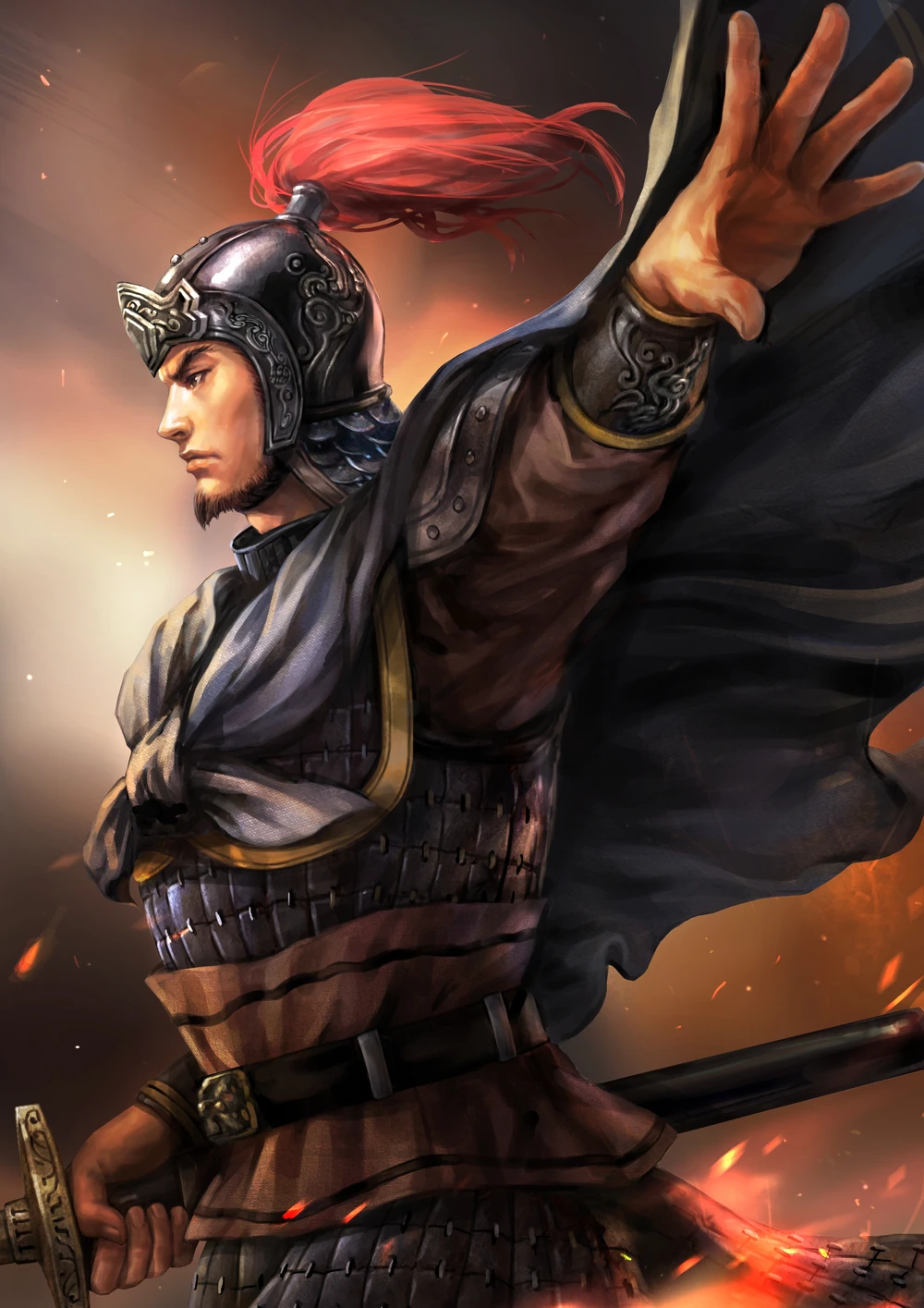
Here is the exhaustive biography of Gao Shun (高順 / 高顺) (? – 7 February 199), Lü Bu’s most capable and loyal commander, known for leading the elite “Camp Crusher” (陷陣營) unit, incorporating historical records and his portrayal in Romance of the Three Kingdoms.
Contents
Historical Background
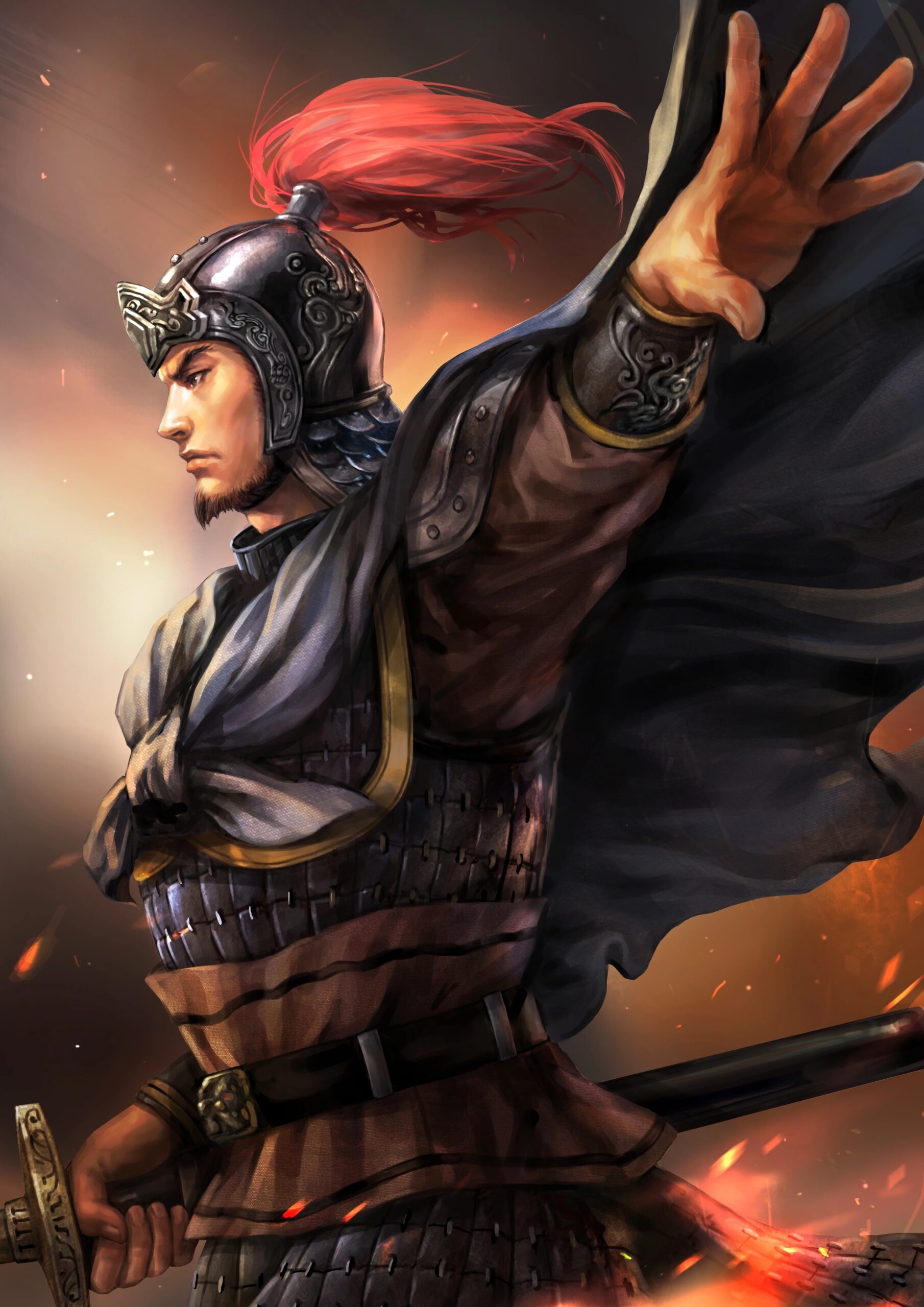
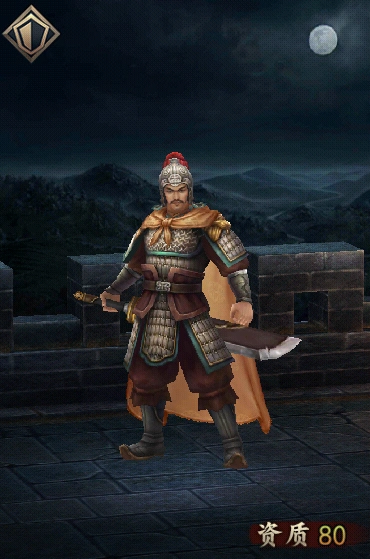
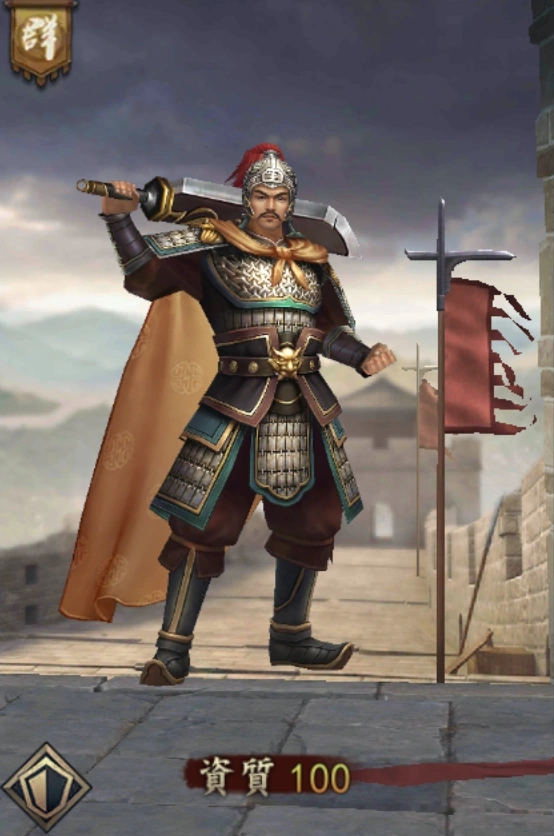
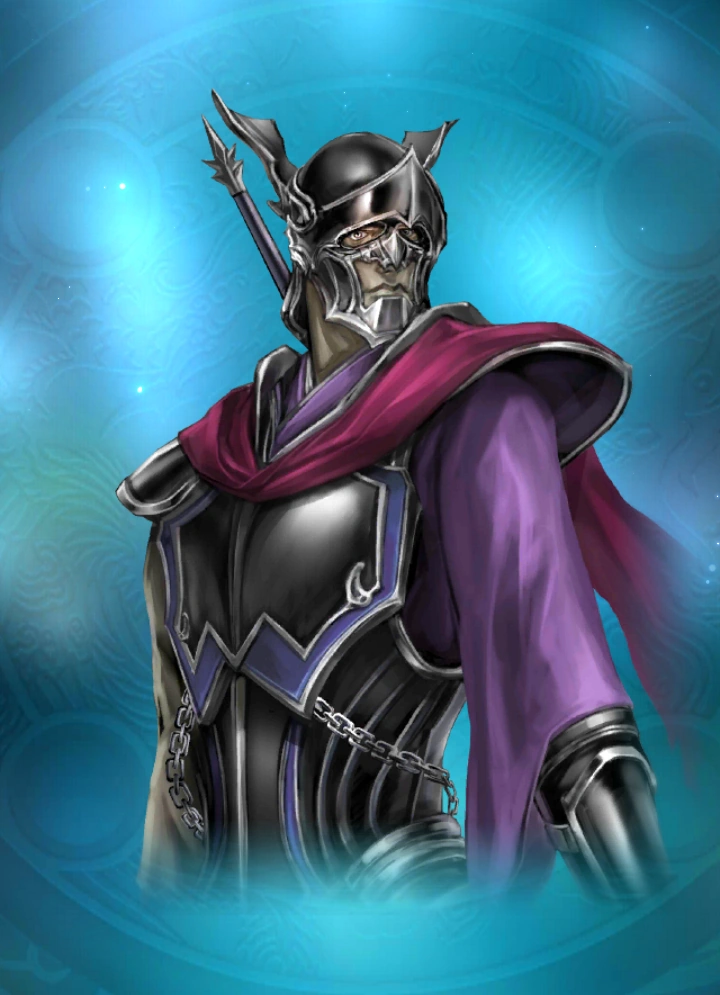
Gao Shun was from Shangdang Commandery. He was a stern, incorruptible man of few words, who refused alcohol and improper gifts. Although he commanded only about 700 men, his troops were so well-trained, disciplined and well-equipped that they were considered equal to a thousand. In every engagement they specialised in breaking enemy formations even when surrounded; hence the unit was nicknamed the “Camp Crusher” or “Formation Breaker” (陷陣營). Gao Shun was widely regarded as Lü Bu’s ablest officer.
He repeatedly remonstrated with Lü Bu for acting impulsively and ignoring sound advice. When Zang Ba of the Mount Tai bandits failed to deliver promised gifts, Gao warned Lü Bu not to go in person to demand them, lest he lose face; Lü ignored him and was rebuffed. Despite such treatment—Lü even temporarily stripped Gao of his command and gave the troops to his relative Wei Xu—Gao never wavered in loyalty and never bore a grudge.
In 196, when Hao Meng rebelled and surrounded Lü Bu’s residence in Xiapi, Lü fled to Gao Shun’s camp. Gao correctly identified the rebel by his Henei accent, led a counter-attack at dawn, and finished Hao Meng after Cao Xing had already wounded him.
In 198 Lü Bu ordered Gao Shun and Zhang Liao to attack Liu Bei at Peicheng (Xiaopei). They defeated the combined forces of Liu Bei and Xiahou Dun, forcing Liu Bei to abandon the city and seek refuge with Cao Cao. Later that winter Cao Cao and Liu Bei besieged Xiapi. On 7 February 199 Lü Bu’s officers Hou Cheng, Song Xian and Wei Xu arrested Gao Shun and Chen Gong and surrendered. Lü Bu himself soon surrendered. Gao Shun was executed together with Lü Bu and Chen Gong; their heads were sent to Xuchang.
Romance of the Three Kingdoms Narrative
In the novel Gao Shun appears as one of Lü Bu’s early and most reliable officers. He takes part in the fighting around Puyang and later escorts Lü Bu’s family to safety. When Lü Bu orders an attack on Liu Bei at Xiaopei, Gao Shun marches with a large force. He duels Xiahou Dun for forty to fifty bouts, is forced to withdraw, and is pursued deep into his own ranks. At that moment Cao Xing shoots Xiahou Dun in the left eye. Xiahou Dun famously pulls out the arrow with the eyeball, swallows the eye, and kills Cao Xing. Gao Shun then rallies his men and drives Xiahou Dun’s army back.
During the final siege of Xiapi, Gao Shun and Zhang Liao are trapped by the flooding of the city. After the fall of Xiapi he is brought before Cao Cao. Asked if he has any last words, Gao Shun remains silent and calmly accepts execution, refusing to serve the conqueror.
Gao Shun (高順) — Historical & Literary Timeline
Commander of the Camp Crusher
Joined Lü Bu and became commander of an elite 700-man unit famed for breaking enemy formations. Known for personal integrity, refusal of alcohol and gifts, and constant loyal remonstrance that Lü Bu rarely heeded.
Rescue of Lü Bu at Xiapi
When Hao Meng surrounded Lü Bu’s residence, Lü fled to Gao Shun’s camp. Gao identified the rebel by accent, led a dawn counter-attack, and finished Hao Meng after Cao Xing had already maimed him.
Victory over Liu Bei and Xiahou Dun
Ordered with Zhang Liao to attack Liu Bei at Peicheng. Defeated the combined force of Liu Bei and Xiahou Dun. In the novel he duels Xiahou Dun; Cao Xing’s arrow costs Xiahou Dun an eye, after which Gao Shun presses the attack and forces the enemy to retreat. Liu Bei abandons Xiaopei.
Flood, Capture and Execution
Cao Cao flooded Xiapi. After the city fell, Hou Cheng, Song Xian and Wei Xu arrested Gao Shun and Chen Gong and surrendered. On 7 February 199 Gao Shun was brought before Cao Cao, refused to speak or change allegiance, and was executed together with Lü Bu and Chen Gong. Their heads were sent to Xuchang.
Historical Note
Gao Shun stands out in the historical record as Lü Bu’s most disciplined, loyal and effective subordinate. His “Camp Crusher” unit of only 700 men earned a reputation far beyond its size. He repeatedly offered sound advice that Lü Bu ignored, yet never abandoned his lord even when temporarily stripped of command. His silent acceptance of death before Cao Cao, refusing to transfer allegiance, cemented his image as a model of unwavering loyalty in both history and the novel.
For detailed historical records, archives, and official chronicles, explore Gao Shun on Wikipedia.
Key Relationships
Family
- No information
Friends
- Lü Bu (吕布, Lữ Bố): Lord and sovereign. Although Lü Bu often distrusted Gao Shun and transferred his troops to Zhang Liao, Gao Shun remained absolutely loyal until death.
- Zhang Liao (张辽, Trương Liêu): Fellow top general under Lü Bu who fought alongside Gao Shun in numerous campaigns across Xuzhou.
- Chen Gong (陈宫, Trần Cung): Chief strategist for Lü Bu who shared Gao Shun’s resolute defiance against Cao Cao at the execution ground.
Enemies
- Cao Cao (Cao Cao, Tào Tháo): Northern warlord who besieged and captured Xiapi in 198 AD; Cao Cao executed Gao Shun when the latter refused to speak a single word or plead for life.
- Liu Bei (刘备, Lưu Bị): Warlord whose base at Xiaopei was repeatedly crushed by Gao Shun’s elite “Trapped Camp” (陷阵营) unit in 198 AD.
- Xiahou Dun (夏侯惇, Hạ Hầu Đôn): Cao Cao’s general who was routed by Gao Shun at Xiaopei in 198 AD, losing his left eye to Cao Xing’s arrow during the pursuit.
- Hao Meng (郝萌, Hác Manh): Subordinate general under Lü Bu whose rebellion in 196 AD was swiftly suppressed and crushed by Gao Shun.
Others
- No information
In Novel
Chapter 11
- Gao Shun (高顺, Cao Thuận): Elite commanding general under Lü Bu (吕布, Lã Bố), renowned for leading the ‘Formation Breakers’; he defended Puyang and launched counter-offensives against Cao Cao’s (曹操, Tào Tháo) night raids.
Chapter 16
- Gao Shun (高顺, Cao Thuận): Dispatched by Lü Bu (吕布, Lã Bố) to suppress the mutiny of Hao Meng (郝萌, Hách Manh), swiftly crushing the revolt and capturing Hao Meng.
Chapter 18
- Gao Shun (高顺, Cao Thuận): Commanded the siege of Xiaopei against Liu Bei (刘备, Lưu Bị) and routed the reinforcing army led by Xiahou Dun (夏侯惇, Hạ Hầu Đôn).
Chapter 19
In History
Period I
- Gao Shun (高顺, Cao Thuận) was one of Lü Bu (吕布, Lữ Bố)‘s most capable commanders. He was known for the elite unit called the Trap Formation Camp (陷阵营) and was regarded as a disciplined and dependable officer.
Year: 198 AD
- Gao Shun (高顺, Cao Thuận) fought against Cao Cao (曹操, Tào Tháo) during the struggle for control of Xu Province. He participated in operations against Cao Cao’s forces and was among Lü Bu’s principal commanders at Xiapi.
Year: 199 AD
- Gao Shun (高顺, Cao Thuận) was captured when Lü Bu’s stronghold at Xiapi fell to Cao Cao. Cao Cao ordered Gao Shun executed together with other senior members of Lü Bu’s regime. His death ended the career of one of Lü Bu’s most effective commanders.




3 comments
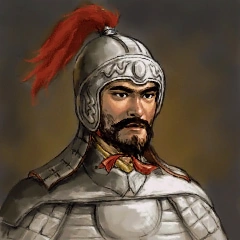
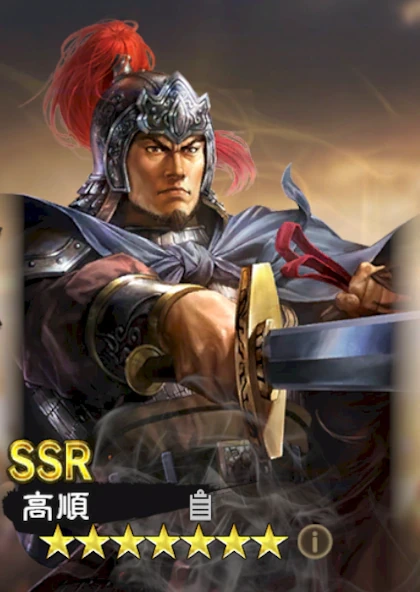
Gao Shun (onyomi: Kō Jun) is one of Lu Bu‘s vassals. He is well known for his conquest of Xiaopei and victory over Xiahou Dun‘s forces. Though his sound advice was ignored by his lord, he nevertheless remained loyal to Lu Bu.
In Famitsu’s second most wanted Dynasty Warriors character poll, he placed seventh with 90 fan votes. He placed sixth with fans in Gamecity’s Shin Sangoku Musou Blast first card promotion poll.
Historical Information
Gao Shun’s origins and family relations are unknown. According to Record of the Three Kingdoms and Yīngxióng Jìyue, Gao Shun was said to have been a stalwart man of honor who never drank wine and rarely spoke. He led a group of seven hundred men, each one worth a thousand soldiers. His troops were renowned for never failing to disrupt enemy formations, thus earning them the nickname “Formation Breaker” (陷陣營).
When he joined Lu Bu is not known, but his first mention in historical records is in 196. He served as Lu Bu’s Military Governor, and he and his troops were ordered to suppress Lu Bu’s rebellious Commanding Officer, Hao Meng. Gao Shun killed Hao Meng and brought Cao Xing back to Lu Bu. When he was questioned about his possible involvement with the revolt during the trial, Gao Shun merely responded with words of undying loyalty. Lu Bu was touched by the proclamation, but the general’s possible relation with Hao Meng unnerved him. He therefore avoided Gao Shun and placed his trust in Wei Xu. Gao Shun’s troops were given to Wei Xu shortly after.
In 197, Zang Ba attacked the independent ruler of Langye, Xiao Jian, and took his castle, Jucheng. The news was delivered to Lu Bu in a single letter, and he was furious by the audacity. As he readied himself to punish Zang Ba, Gao Shun immediately tried to stop him. He said to his lord, “General, your prestige resounds even in foreign lands; your posture causes others to right themselves with a single gaze; everything far and wide naturally fears and obeys you. But their army is small, and while not nimble as you, they would not compromise your name with such a trifle affair.” In spite of Gao Shun’s words, Lu Bu refused to ignore Zang Ba and marched his troops for a civil conflict. As Gao Shun had predicted, however, Zang Ba’s troops were so frightened by Lu Bu’s presence that they stationed themselves deep within Jucheng and refused to budge. Lu Bu tried to penetrate the castle’s defenses, but he was only able to win a few skirmishes along the castle walls. The conflict ended with a peace treaty between the two parties.
Cao Cao‘s forces invaded Xiapi in 198. Gao Shun by this time was named Commander of the Palace Guards and collaborated with Zhang Liao to act as defenders. They first repelled Liu Bei‘s takeover of the nearby town, Xiaopei. After driving Liu Bei’s army from the city, he and his forces subsequently faced Xiahou Dun and forced the enemy general’s retreat. Yīngxióng Jìyue claims that Gao Shun and company had taken Liu Bei’s wife and child hostage during the affair.
As Lu Bu’s actions grew more erratic over time, his men began to lose faith in their leader. Gao Shun’s loyalty towards him did not waver even when his warnings came unheeded. After Cao Cao’s forces captured Xiapi, Gao Shun was taken prisoner alongside his lord and Chen Gong. He was executed by decapitation. Gao Shun’s head was placed on a post in the city market as a warning to others and buried soon after.
Romance of the Three Kingdoms
Romance of the Three Kingdoms depicts Gao Shun as one of Lu Bu’s early officers who was in his ranks during Lu Bu’s occupation of Yanzhou (the year 194). He was one of the generals who pursued Cao Cao’s desperate retreat at Puyang until Dian Wei repelled him. When Cao Cao retook Puyang, Gao Shun and Chen Gong escorted Lu Bu’s family to safety.
After Lu Bu had driven Liu Bei away from Xiapi, Yuan Shu sent Lu Bu a bribe to attack Liu Bei. Gao Shun marched with fifty thousand horsemen to attack Liu Bei, but he was aware of the enemy forces and fled from Xuyi before a battle could commence. Gao Shun demanded that his services be rewarded, but Ji Ling refused for no battle took place. With no other recourse, the general returned to Lu Bu empty-handed. He was later named Governor and fought to protect Xiaopei from Yuan Shu’s generals.
During his siege of Xiaopei, Gao Shun received a report of Xiahou Dun’s incoming forces and dueled the leader himself for several bouts. He tired, however, and withdrew. As a stubborn Xiahou Dun gave chase, Cao Xing struck his eye with an arrow and was killed soon after. Upon learning of the enemy general’s grievous injury, Gao Shun attacked Xiahou Dun’s army relentlessly until his foe retreated.
Turning his attentions back to Liu Bei, Gao Shun and Zhang Liao fought against Guan Yu and Zhang Fei multiple times during the conflict. Eventually, however, they were driven back to Xiapi and he was taken prisoner when the castle defenses fell. Gao Shun was the first to be brought before Cao Cao. He asked him for his last words, yet Gao Shun remained silent and accepted his execution.
Gao Shun (pronunciationⓘ) (died 7 February 199)[a] was a military officer serving the warlord Lü Bu during the late Eastern Han dynasty of China. Although he only had 700 men under his command, his unit was nicknamed as the “camp crusher (or formation breaker)” (陷陣營) for its destructive charges. Gao came to be known as Lü Bu’s most able commander. His noted accomplishments included conquest of Peicheng (沛城) and the subsequent victory over a combined force led by Xiahou Dun and Liu Bei. In the same year, however, Cao personally laid siege to Lü Bu’s base in Xiapi, and defeated and captured Lü Bu. Gao was then executed along with his lord.
Life
According to Pei Songzhi‘s annotation in Chen Shou‘s Records of the Three Kingdoms, Gao Shun, from Shangdang Commandery, was a stern and incorrupt man, with an air of authority and few words. As an unblemished and pure person, Gao refused alcohol and undue gifts. It is also stated in Records of Heroes (英雄記) by Wang Can that he only commanded 700 men, but his men were considered equivalent to a thousand, and they were a well-equipped, well-trained, and disciplined elite force. Whenever his battalion fought, they were always successful of breaking into enemy formation, and could perform well, even if surrounded by enemies, so they were collectively called the “camp crusher”.
Zang Ba, the head of the bandit leaders around Mount Tai, attacked and defeated the Chancellor of Langye, Xiao Jian, at Ju County. He then seized Xiao Jian’s treasure and provisions, and promised to present them to Lü Bu. When he reneged on his words, however, Lü went to ask for the goods himself. Gao objected: “Your authority and reputation are known and respected everywhere. How can you ask for something and fail to obtain it? Yet you are going in person to beg for a present. If for some reason you are not successful, you will surely lose face.” The rapacious Lü could not heed Gao’s advice. Indeed, Zang turned Lü Bu down, and the Bandits of Mount Tai no longer listened to Lü’s orders.
One night in 196, a subject of Lü Bu named Hao Meng rebelled. Hao ordered his troops to surround the government office of Xiapi, where Lü Bu resided. The startled Lü had to climb over the wall of a toilet and escape to the camp of Gao Shun. Lü told Gao that the leader of the rebels has a Henei accent, and Gao Shun says that it must be Hao Meng. Gao then led a force to quell the rebellion. By the next morning, Hao Meng and his troops had all been forced to retreat back to their own camp. Cao Xing, a subordinate of Hao Meng, turned on Hao Meng and the two duelled. Cao Xing was injured in the fight but cleaved an arm off of Hao Meng. Gao Shun had also identified the rebels, and arrived at the scene to finish off Hao Meng (who was a man from Henei or captain of the Henei soldiers).
Although Lü knew Gao was very loyal, his advice was not always welcome. Furthermore, Lü trusted Gao even less after the incident of Hao Meng. Lü stripped Gao of his commission and reassigned his troops to Wei Xu (魏續), who was Lü’s relative. Whenever there was a battle, however, Gao would be reinstated. Despite this treatment, he remained eternally loyal and never bore a grudge against his lord.
Lü, whose actions were seldom consistent, made decisions hastily. For that, Gao often remonstrated him by saying, “When you start something, you never think of the details. Whenever there is a choice between the way to success or the possibility of failure, you always make the wrong decisions!” Gao went on and said, “Those who lost their homes and states did not do so because they lacked loyal ministers and wise advisers. They did so because they wouldn’t listen to those men. General, you are reluctant to think things through carefully before you act, and thus you commit mistakes, which are too many to count.” Lü appreciated his loyalty, yet could not follow his advice.
During the year 198, Lü Bu was threatened by Cao Cao’s vassal Liu Bei, who was forced to surrender earlier and was now constantly building up his forces, moreover Liu Bei also managed to capture gold and money that Lü Bu wanted to use to buy military horses therefore he sent Gao Shun along with Zhang Liao to attack Liu Bei at Peicheng, Liu Bei’s main base. Liu Bei’s new ally, Cao Cao, then sent his trusted general Xiahou Dun to support him, but the allied forces were defeated by Gao Shun. In the end, Liu Bei had to leave Peicheng to take shelter under Cao Cao.[2] In the winter of 198, Cao and Liu came back with a sizable army and attacked Lü’s base. On 7 February 199,[a] Lü’s generals, Hou Cheng (侯成), Song Xian (宋憲) and Wei Xu, arrested Gao and Lü’s key advisor, Chen Gong before surrendering to Cao with their troops. Lü surrendered soon after. Gao Shun, Lü Bu, Chen Gong and others were executed, and their heads were sent to Xuchang.
In Romance of the Three Kingdoms
In the 14th-century historical novel Romance of the Three Kingdoms, Gao Shun was said to have duelled Xiahou Dun during an encounter outside Xiaopei in Chapter 18. After forty to fifty bouts, Gao was outmatched and had to retreat. Xiahou Dun urged his mount forward and chased Gao Shun deep into the enemy ranks. Then Cao Xing, a subject of Gao, secretly took aim and fired an arrow at Xiahou Dun. The arrow hit Xiahou Dun in the left eye. With a cry, Xiahou Dun pulled out the arrow along with his eyeball, which he swallowed, filling soldiers on both sides with fear. His spear firmly held up, Xiahou Dun then came straight for Cao Xing. With no time to react, Cao Xing was impaled through the face and died beneath his nemesis’ horse. Gao Shun then turned and rallied his troops forward to defeat Xiahou Dun.
In Chapter 19, Gao and Zhang Liao were captured after they were trapped by the flood in Xiapi. When Lü Bu was brought before Cao Cao, Cao shifted his attention to Gao, and guards surrounding him hustled him in front of Cao Cao. “Anything to say?” Cao Cao asked him. Not wishing to join Cao Cao, Gao remained silent and accepted his fate. Cao Cao then had him executed along with Chen Gong.
Cao Thuận (chữ Hán: 高顺; bính âm: Gao Shun) (? – 199) là một viên võ tướng phục vụ dưới trướng của lãnh chúa Lã Bố vào cuối thời nhà Đông Hán trong Lịch sử Trung Quốc. Cao Thuận được biết đến là bộ tướng mạnh nhất trong lực lượng quân của Lã Bố. Ông chỉ huy lực lượng gồm 700 người với lối đánh tấn công điên cuồng vào doanh trại của quân địch và được gọi là đội hình “hãm trận doanh”.[1] Ông từng có một trận giao phong và đánh bại được Hạ Hầu Đôn, viên dũng tướng của Tào Tháo. Sau đó ông cùng Lã Bố cố thủ tại thành Hạ Bì và bị quân Tào bao vây bắt. Ông cùng Trần Cung không đầu hàng và bị hành quyết.
Một số chiến công
Tháng 6 năm 196, bộ tướng của Lã Bố là Hách Manh nghe lời xúi giục của Viên Thuật liền phản lại Bố, mang quân xông vào phủ Hạ Bì. Lã Bố phải đưa vợ vào trại của Cao Thuận. Cao Thuận nghe giọng phản quân, nhận biết là giọng người quận Hà Nội, đoán ra Hách Manh, bèn chấn chỉnh quân sĩ chống trả, quân Hách Manh phải lui. Sáng ra, thủ hạ của Hách Manh là Tào Tính phản lại Hách Manh, hai bên đánh nhau cùng bị thương. Lã Bố sai Cao Thuận mang quân ra dẹp, giết chết Manh rồi cho Tào Tính lĩnh quân của Hách Manh.
Năm 198, lực lượng của Lưu Bị ở Tiểu Bái tăng lên đến một vạn người khiến Lã Bố lo ngại. Ông lại giảng hòa với Viên Thuật, nhận lời giúp Viên Thuật đánh Lưu Bị. Ông điều Cao Thuận và Trương Liêu làm tướng đánh Tiểu Bái. Dưới sức tấn công của Cao Thuận, Lưu Bị không chống cự nổi, bỏ thành và gia quyến chạy về phía tây đến Lương Địa và sai người cầu cứu Tào Tháo. Ông này lệnh Hạ Hầu Đôn đến cứu nhưng hai đạo quân không địch nổi Cao Thuận và bị ông đánh bại. Lưu Bị chạy về Hứa Xương nương nhờ Tào Tháo.
Trong trận Hạ Bì, Thủ hạ của Lã Bố là Hầu Thành bị trách phạt nên oán hận, bèn bất ngờ bắt trói Trần Cung và Cao Thuận mang nộp và mở cửa ra hàng Tào Tháo. Tào Tháo cùng Lưu Bị thúc quân xông vào. Các tướng dưới quyền Lã Bố là Cao Thuận, Trần Cung cùng bị chém.