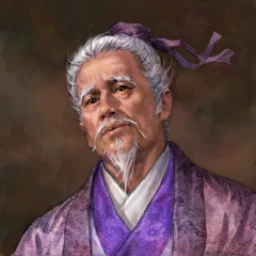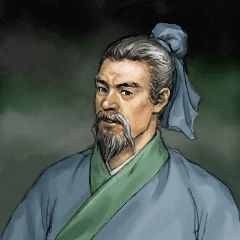

Here is the exhaustive biography, ancestral background, historical records, and Romance of the Three Kingdoms narrative for Chen Gui (陳珪), courtesy name Hanyu (漢瑜) (c. 128–c. 200 AD), incorporating all detailed accounts of his illustrious lineage, administrative career, strategic counter-measures against Yuan Shu, and famous double-agent operations against Lu Bu.
Contents
Ancestry, Family Background & Early Life
Chen Gui (陳珪), courtesy name Hanyu (漢瑜), was born in Huaipu County (淮浦縣), Xiapi Commandery (下邳郡) (modern Huai’an / Pizhou, Jiangsu Province). He belonged to one of the most distinguished and aristocratic gentry families in Xu Province. His uncle, Chen Qiu (陳球), served in the highest imperial capacity as Grand Commandant (Taiwei) during the reign of Emperor Ling of Han. Chen Gui had at least two notable sons: his eldest son Chen Deng (陳登), who became a renowned strategist and Administrator of Guangling, and a younger son Chen Ying (陳應). His grandson was Chen Su (陳肅). His cousin Chen Yu (陳瑀) served as Administrator of Wu Commandery.
Early Public Service & Friendship with Yuan Shu
In his youth, Chen Gui was recommended as “Filial and Incorrupt” (Xiaolian) and appointed Administrator of Pei Commandery (沛相). During this early period, he developed a personal friendship with Yuan Shu (袁術), a scion of the prestigious Yuan clan of Runan. After Tao Qian became Governor of Xu Province, Chen Gui maintained high social and political influence in the region. Following Tao Qian’s death in 194 AD, Chen Gui supported Liu Bei in taking over the governance of Xu Province.
When Yuan Shu declared himself Emperor of the Zhong dynasty at Shouchun in 197 AD, he attempted to ally with Chen Gui to secure Xu Province. Knowing that Chen Gui had a long-standing friendship with him, Yuan Shu sent a diplomatic letter offering high ministerial titles and simultaneously took Chen Gui’s younger son, Chen Ying, hostage in Shouchun to compel Chen Gui’s submission. Chen Gui steadfastly rejected Yuan Shu’s overtures, writing back a stern letter denouncing Yuan Shu’s treason against the Eastern Han dynasty and affirming his unyielding loyalty to the imperial court.
Thwarting Yuan Shu & Alliance with Lu Bu (197 AD)
In 197 AD, Yuan Shu sought to cement an alliance with Lu Bu (who had seized Xu Province from Liu Bei) by proposing a marriage between Lu Bu’s daughter and Yuan Shu’s son. Realizing that a union between Yuan Shu and Lu Bu would pose an insurmountable threat to the Han court and Cao Cao, Chen Gui approached Lu Bu. Chen Gui persuaded Lu Bu that Yuan Shu was a traitor whose alliance would bring destruction, whereas aligning with Cao Cao and the Han Emperor would grant Lu Bu official legitimacy and imperial titles.
Persuaded by Chen Gui’s silver tongue, Lu Bu canceled the marriage arrangement, intercepted Yuan Shu’s envoy Han Xiu, and sent him in chains to Cao Cao in Xuchang. Enraged by the betrayal, Yuan Shu launched a massive seven-pronged invasion of Xu Province with over 20,000 troops led by generals Zhang Xun, Qiao Rui, and Han Xian. Facing this overwhelming force, Lu Bu panicked, but Chen Gui engineered a brilliant counter-strategy: he advised Lu Bu to secretly bribe and alienate Yuan Shu’s allied generals, Han Xian and Yang Feng (former generals of the imperial court). Han Xian and Yang Feng turned their weapons against Yuan Shu’s main army, resulting in a disastrous defeat for Yuan Shu’s forces at Huaiyin.
Double-Agent Espionage & The Downfall of Lu Bu (197–198 AD)
Following Yuan Shu’s defeat, Chen Gui and his son Chen Deng worked covertly as double agents inside Lu Bu’s regime on behalf of Cao Cao. When Chen Deng travelled to Xuchang as an envoy, Cao Cao granted Chen Gui an official salary stipend equivalent to a Minister (Zhong Erqian Dan) and appointed Chen Deng Administrator of Guangling.
Together, Chen Gui and Chen Deng masterminded a sophisticated psychological campaign to isolate Lu Bu from his chief strategist, Chen Gong. They continuously offered Lu Bu flattering counsel while surreptitiously passing military intelligence to Cao Cao. In 198 AD, when Cao Cao launched his campaign against Lu Bu at Xiapi, Chen Gui secured the city of Xiapi from within, preventing Lu Bu’s loyalists from mounting an effective defense, while Chen Deng led vanguard troops alongside Cao Cao.
Following Lu Bu’s defeat and execution at White Gate Tower (Baimalou), Cao Cao personally commended Chen Gui and Chen Deng for their decisive espionage contributions. Chen Gui was honored with rich imperial rewards and retired comfortably due to advanced age, passing away shortly after around 200 AD.
Chen Gui (陳珪) — Historical & Literary Timeline
c. 128–194 AD — Early Service & Prominence in Xu Province
Aristocratic Lineage & Supporting Liu Bei
Born into the elite Chen clan of Xiapi (nephew of Taiwei Chen Qiu). Serves as Administrator of Pei Commandery. Builds friendship with Yuan Shu. Supports Liu Bei in succeeding Tao Qian as Governor of Xu Province.
197 AD — Breaking Yuan Shu’s Marriage Alliance
Persuading Lu Bu & Rejecting Yuan Shu’s Bribes
Refuses Yuan Shu’s imperial bribes despite his son Chen Ying being held hostage. Persuades Lu Bu to break off his daughter’s marriage to Yuan Shu’s son and send Yuan Shu’s envoy Han Xiu to Cao Cao in chains.
197 AD — Crushing Yuan Shu’s Seven-Pronged Invasion
Alienating Han Xian and Yang Feng
When Yuan Shu invades Xu Province with seven armies, Chen Gui advises Lu Bu to turn Yuan Shu’s generals Han Xian and Yang Feng against him. The allied forces route Yuan Shu’s army at Huaiyin.
198 AD — Espionage & Fall of Lu Bu
Double-Agent Strategy & Conquest of Xiapi
Coordinates with Chen Deng to deceive Lu Bu and alienate Chen Gong. Secures Xiapi for Cao Cao’s advancing army during the siege, leading directly to Lu Bu’s capture and execution.
c. 200 AD — Rewards & Peaceful Passing
Honors from Cao Cao & Retirement
Extolled by Cao Cao for his loyalty to the Han dynasty and strategic espionage. Granted ministerial salary and honors before retiring in Xu Province, where he dies of natural causes.
Romance of the Three Kingdoms Narrative
In Luo Guanzhong’s historical novel Romance of the Three Kingdoms, Chen Gui is depicted as a master strategist and steadfast Han loyalist who, together with his son Chen Deng, forms an unbeatable intelligence duo against Lu Bu and Yuan Shu.
In Chapter 16, when Yuan Shu attempts to seal an alliance with Lu Bu through a marriage agreement, Chen Gui rushes to Lu Bu’s palace. He warns Lu Bu that marrying into Yuan Shu’s house will brand him a traitor to the Han court and lead to his eventual destruction. Moved by Chen Gui’s reasoning, Lu Bu cancels the wedding, arrests Yuan Shu’s messenger Han Xiu, and sends him to Cao Cao.
In Chapter 17, when Yuan Shu retaliates with a 200,000-strong army attacking in seven routes, Lu Bu turns to Chen Gui in panic. Chen Gui calmly drafts a plan to write letters to Han Xian and Yang Feng, promising them Yuan Shu’s plunder if they defect. The plan succeeds brilliantly, causing Yuan Shu’s invading forces to crumble in utter defeat.
In Chapters 18 and 19, Chen Gui and Chen Deng secretly pledge allegiance to Cao Cao. They systematically deceive Lu Bu with false praise while undermining Chen Gong’s sound strategic advice. During Cao Cao’s siege of Xiapi, Chen Gui takes charge of guarding Xuzhou/Xiapi while Lu Bu goes out to fight. Chen Gui closes the city gates behind Lu Bu and raises Cao Cao’s banners, locking Lu Bu out and leaving him stranded at White Gate Tower. Following Cao Cao’s victory, Chen Gui is awarded an imperial pension and praised as a hero of the state.
Key Relationships
Family
- Chen Qiu (陈球, Trần Cầu): Uncle. Grand Commandant of the Eastern Han dynasty.
- Chen Deng (陈登, Trần Đăng): Son. Famous strategist and hero of Guangling.
- Chen Ying (陈应, Trần Ứng): Son.
- Chen Su (陈肃, Trần Túc): Grandson.
- Chen Yu (陈瑀, Trần Vũ): Cousin.
Friends
- Tao Qian (陶谦, Đào Khiêm): Longtime Governor of Xu Province who entrusted provincial affairs to Chen Gui.
- Liu Bei (刘备, Lưu Bị): Highly respected governor of Xu Province supported by Chen Gui.
- Cao Cao (曹操, Tào Tháo): Northern warlord who coordinated secretly with Chen Gui to overthrow Lü Bu in 198 AD.
- Kong Rong (孔融, Khổng Dung): Literary and political associate during the late Han period.
Enemies
- Lü Bu (吕布, Lữ Bố): Warlord occupying Xu Province. Chen Gui cleverly manipulated him, dissuading him from an alliance with Yuan Shu and facilitating his ultimate demise at Xiapi.
- Yuan Shu (袁术, Viên Thuật): Warlord who proposed a marriage alliance with Lü Bu; Chen Gui intercepted the wedding escort and had Yuan Shu’s envoy executed in the capital.
- Chen Gong (陈宫, Trần Cung): Chief strategist for Lü Bu who repeatedly warned his master against trusting Chen Gui and Chen Deng.
Others
- No information
In Novel
Chapter 16
- Chen Gui (陈珪, Trần Khuê): An elder statesman and scholar in Xuzhou, courtesy name Handu (汉瑜), who recognized the danger of an alliance between Lü Bu (吕布, Lã Bố) and the self-proclaimed emperor Yuan Shu (袁术, Viên Thuật), successfully convincing Lü Bu to call back his daughter and arrest Yuan Shu’s marriage envoy Han Yin (韩胤, Hàn Dận).
Chapter 17
- Chen Gui (陈珪, Trần Khuê): Plotted with his son Chen Deng (陈登, Trần Đăng) to undermine Lü Bu (吕布, Lã Bố) from within, advising Cao Cao (曹操, Tào Tháo) on how to pacify Lü Bu while preparing his eventual destruction, and persuading Yang Feng (杨奉, Dương Phụng) and Han Xian (韩暹, Hàn Tiêm) to defect from Yuan Shu (袁术, Viên Thuật) to Lü Bu’s side.
Chapter 18
- Chen Gui (陈珪, Trần Khuê): Left by Lü Bu (吕布, Lã Bố) to safeguard the provincial capital of Xuzhou; he secretly coordinated with Chen Deng (陈登, Trần Đăng) to shut the gates against Lü Bu once the latter left the city.
Chapter 19
- Chen Gui (陈珪, Trần Khuê): Executed the secret plan to lock Lü Bu (吕布, Lã Bố) out of Xuzhou and delivered the city directly to Cao Cao (曹操, Tào Tháo), receiving substantial imperial rewards and grain provisions from Cao Cao for his family’s loyalty to the Han dynasty.
In History
Period I
- Chen Gui (陈珪, Trần Khuê, Hán Du), courtesy name Hanyu, was a prominent official from the Chen clan of Xiapi. He was recommended as a xiaolian and later served as Prefect of Ju and as Chancellor of Jibei before becoming Chancellor of Pei. His family belonged to an influential local elite, and his son was Chen Deng (陈登, Trần Đăng, Trần Nguyên Long).
Year: 196 AD
- Chen Gui (陈珪, Trần Khuê, Hán Du) opposed Yuan Shu (袁术, Viên Thuật)‘s attempt to establish a marriage alliance with Lü Bu (吕布, Lữ Bố). He recognized that such an alliance would strengthen Yuan Shu’s position and worked to prevent the two warlords from becoming allies. This policy contributed to the deterioration of relations between Lü Bu and Yuan Shu.
Year: 197 AD
- Chen Gui (陈珪, Trần Khuê, Hán Du) continued to influence Lü Bu’s policy against Yuan Shu. When Yuan Shu sent forces against Lü Bu, Chen Gui advised Lü Bu that the coalition opposing him was unstable and suggested using Chen Deng (陈登, Trần Đăng, Trần Nguyên Long) to encourage Han Xian and Yang Feng to change sides. Lü Bu followed the advice, helping him defeat Yuan Shu’s forces at Xiapi.
Years: 198–199 AD
- Chen Gui (陈珪, Trần Khuê, Hán Du) was already retired by the time Cao Cao (曹操, Tào Tháo) and Liu Bei (刘备, Lưu Bị) attacked Lü Bu at Xiapi. His son Chen Deng had by then entered Cao Cao’s service and helped Cao Cao eliminate Lü Bu. The historical record does not provide a secure death date for Chen Gui.
Historical Status
- Chen Gui (陈珪, Trần Khuê, Hán Du) was a real historical figure recorded in the historical sources. His role in the struggle among Lü Bu, Yuan Shu, and Cao Cao is documented, although the novel adds literary detail to his portrayal.
Gallery