
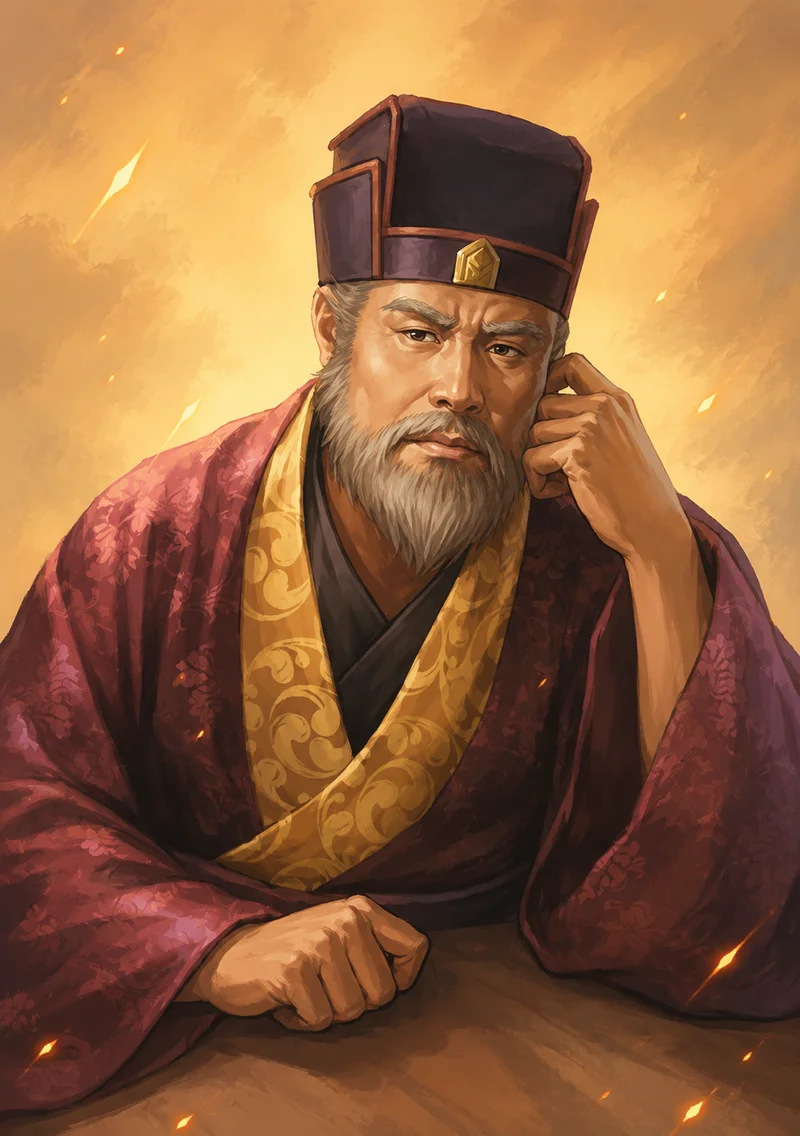


Here is the exhaustive biography, ancestral background, historical records, and Romance of the Three Kingdoms narrative for Tao Qian (陶謙), courtesy name Gongzu (恭祖) (132–194 AD), incorporating all detailed accounts of his governorship in Xu Province, the tragic conflict with Cao Cao, and his historic handover of the province to Liu Bei.
Contents
Ancestry, Family Background & Early Career
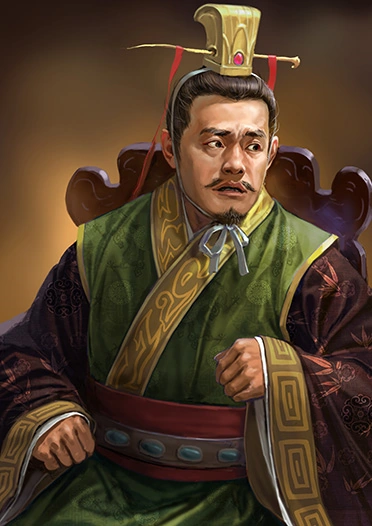
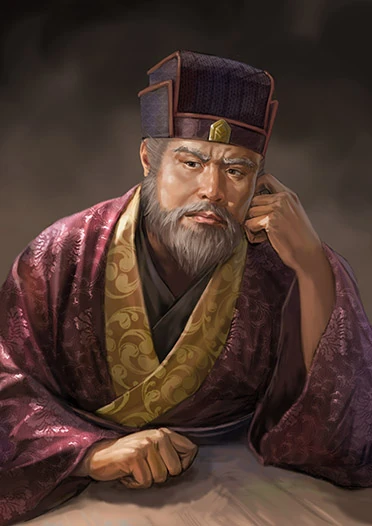
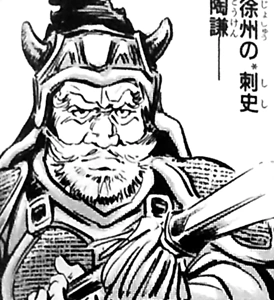
Tao Qian was a native of Danyang Prefecture in Yang Province (modern-day Jiangning, Jiangsu). Born into a scholarly and official background during the Eastern Han dynasty, Tao Qian possessed a tough, unyielding, and fiercely independent personality. In his early career, he served the imperial court with distinction, helping suppress various local rebellions and assisting in putting down the Yellow Turban uprisings. He was dispatched to Liang Province to help quell military insurrections, though he frequently clashed with senior commander Zhang Wen—a friction shared by fellow officers Dong Zhuo and Sun Jian. Tao Qian also served as the Governor of Xu Province, where he cultivated local gentry support and laid the groundwork for talented administrators and officials such as Wang Lang, Zhu Zhi, and Chen Deng.
Political Alignment & Conflict with Cao Cao
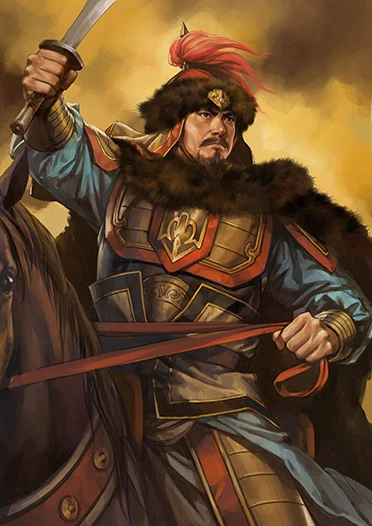
During the turbulent collapse of the Han court, when Yuan Shao formed the anti-Dong Zhuo coalition, Tao Qian initially refused to recognize its legitimacy and continued sending tribute supplies to the capital controlled by Dong Zhuo, earning imperial favor. As the coalition disintegrated, Tao Qian aligned himself with Yuan Shu and Gongsun Zan, positioning himself in direct opposition to Yuan Shao and his key ally Cao Cao. In 193 AD, amid regional jockeying for power, Tao Qian invaded Yan Province, which was governed by Cao Cao. Enraged by the territorial encroachment and previous provocations, Cao Cao launched a devastating punitive expedition into Xu Province.
During Cao Cao’s brutal invasion, Tao Qian suffered severe defeats. Amid the chaos, Cao Cao’s elderly father, Cao Song, was travelling through Xu Province and was murdered by Tao Qian’s subordinate general Zhang Kai (or killed in a mutiny instigated by greed). Seeking merciless vengeance for his father’s death, Cao Cao returned in 194 AD with an overwhelming force, committing widespread massacres across Xu Province. Trapped and desperate, Tao Qian successfully defended his walled cities while dispatching messengers to seek external military assistance.
Handover of Xu Province to Liu Bei & Passing
Recognizing his perilous situation, Tao Qian welcomed reinforcements led by Liu Bei (who was initially operating alongside Tian Kai under Gongsun Zan). Impressed by Liu Bei’s noble character, martial valor, and exceptional political appeal among the local elite (such as the Mi and Chen clans), Tao Qian gifted him several thousand regular troops, cementing Liu Bei’s allegiance. In late 194 AD, while suffering from a severe and debilitating illness, Tao Qian summoned his trusted advisors—including Mi Zhu—and repeatedly implored Liu Bei to take over the administration of Xu Province for the safety of the common people. Tao Qian passed away shortly thereafter at the age of 63, leaving his holdings entirely in Liu Bei’s capable hands.
Tao Qian (陶謙) — Historical & Literary Timeline
Suppression of Rebellions & Appointment to Xu Province
Born in Danyang. Serves the Han court suppressing domestic uprisings and the Yellow Turban Rebellion. Eventually appointed Governor of Xu Province.
Murder of Cao Song & Invasion by Cao Cao
Colludes with Yuan Shu and Gongsun Zan; conflicts with Cao Cao. Zhang Kai murders Cao Song, triggering Cao Cao’s merciless retaliatory invasion of Xu Province.
Arrival of Liu Bei & Deathbed Handover
Assisted by Liu Bei and Gongsun Zan’s forces. Stricken by fatal illness, Tao Qian ceremoniously entrusts the governorship of Xu Province to Liu Bei before passing away at 63.
Romance of the Three Kingdoms Narrative
In Luo Guanzhong’s historical novel Romance of the Three Kingdoms, Tao Qian is portrayed as a kind-hearted, benevolent, and elderly gentleman. Desperate to make amends with Cao Cao, Tao Qian sends his officer Zhang Kai to escort Cao Cao’s father, Cao Song, safely through Xu Province. However, Zhang Kai and his men succumb to greed, murdering Cao Song and stealing his treasures. Enraged, Cao Cao launches a massive retaliatory crusade to slaughter the populace of Xu. Seeking help, Tao Qian writes to Kong Rong, Tian Kai, and Zhao Yun, who summon Liu Bei to relieve the siege. Moved by Liu Bei’s righteousness, Tao Qian thrice offers the governorship of Xu Province to him. On his deathbed in Chapter 12, Tao Qian breaks down in tears, successfully persuading a reluctant Liu Bei to accept the seal and rule Xu Province.
For detailed historical records, archives, and official chronicles, explore Tao Qian on Wikipedia.
Key Relationships
Family
- Tao Shang (陶商, Đào Thương) — Eldest son of Tao Qian who remained in Xu Province following his father’s death.
- Tao Ying (陶应, Đào Ứng) — Younger son of Tao Qian who, like his brother, was present in Xu Province during the transition of power.
Friends
- Liu Bei (刘备, Lưu Bị) — A righteous warlord who led reinforcements to aid Tao Qian against Cao Cao; he was eventually entrusted with the governorship of Xu Province in 194 AD.
- Kong Rong (孔融, Khổng Dung) — A scholar and official who responded to Tao Qian’s plea for help during Cao Cao’s initial invasion of Xu Province.
- Tian Kai (田楷, Điền Giai) — An inspector of Qing Province who, alongside Liu Bei, provided military support to Tao Qian during the conflict with Cao Cao.
- Mi Zhu (糜竺, Mi Trúc) — A wealthy and influential local leader in Xu Province who served as a trusted advisor to Tao Qian and played a pivotal role in facilitating the handover to Liu Bei.
- Chen Deng (陈登, Trần Đăng) — A brilliant administrator and scholar of Xiapi who served under Tao Qian and helped manage the province’s affairs.
- Chen Gui (陈珪, Trần Khuê) — A prominent official and father of Chen Deng who provided administrative support to Tao Qian’s government.
Enemies
- Cao Cao (曹操, Tào Tháo) — A powerful warlord who launched brutal retaliatory campaigns against Xu Province in 193–194 AD following the death of his father.
- Cao Song (曹嵩, Tào Tung) — The father of Cao Cao, whose murder by Tao Qian’s subordinate served as the primary casus belli for Cao Cao’s devastating invasions.
- Zhang Kai (张闿, Trương Khải) — A subordinate officer under Tao Qian who betrayed his master by murdering Cao Song and his entourage out of greed, triggering the war with Cao Cao.
- Yuan Shao (袁绍, Viên Thiệu) — A northern warlord who stood as a political rival to Tao Qian due to Tao Qian’s alignment with the opposing coalition of Yuan Shu and Gongsun Zan.
Other
- Dong Zhuo (董卓, Đổng Trác) — The tyrannical warlord controlling the Han court to whom Tao Qian sent tribute, maintaining a pragmatic and controversial political alignment early in his governorship.
- Yuan Shu (袁术, Viên Thuật) — A warlord with whom Tao Qian formed a strategic political and military alliance during the period of regional instability.
- Gongsun Zan (公孙瓒, Công Tôn Toản) — A northern warlord and ally of Tao Qian who provided military support through his subordinates, such as Tian Kai, to help defend Xu Province.
Comrades







In Novel
Chapter 5
- Tao Qian (陶谦, Đào Khiêm): Joins the eighteen-warlord coalition against Dong Zhuo (董卓, Đổng Trác) as a regional commander contributing troops and supply.
Chapter 10
- Tao Qian (陶谦, Đào Khiêm): Dispatches Zhang Kai (张闿, Trương Khải) to escort Cao Song (曹嵩, Tào Tung); Zhang Kai murders the household for treasure, bringing Cao Cao (曹操, Tào Tháo)‘s vengeance down on Xu.
Chapter 11
- Tao Qian (陶谦, Đào Khiêm): Besieged, he appeals to Kong Rong (孔融, Khổng Dung) and Tian Kai; Liu Bei (刘备, Lưu Bị) relieves Xu and receives the first offers of the governorship.
Chapter 12
- Tao Qian (陶谦, Đào Khiêm): Dying at sixty-three, he weeps and—backed by Mi Zhu (糜竺, Mi Trúc)—persuades Liu Bei to take Xu’s seals for the people’s sake.
In History
Summary
- Tao Qian (陶谦, Đào Khiêm), courtesy Gongzu (恭祖, Cung Tổ), governed Xu Province for the Han and died of illness in 194 after Cao Cao’s invasions.
Year: 193–194 AD
- Cao Song was killed while traveling through Xu; sources dispute Tao Qian’s direct guilt. Cao Cao (曹操, Tào Tháo) invaded twice. Reinforced by officers from Gongsun Zan (公孙瓒, Công Tôn Toản)‘s sphere, Tao Qian held out until illness forced the succession question.
Year: 194 AD
- Tao Qian died; Liu Bei (刘备, Lưu Bị) succeeded to Xu with support from local leaders such as Mi Zhu (糜竺, Mi Trúc) and Chen Deng (陈登, Trần Đăng).
Historical Record
- Sanguozhi Tao Qian / Liu Bei notices; Hou Hanshu related Xu materials; Zizhi Tongjian 193–194. Sons Tao Shang and Tao Ying are attested in the succession context.
Gallery







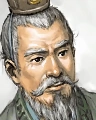
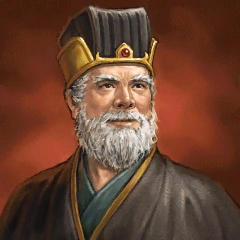
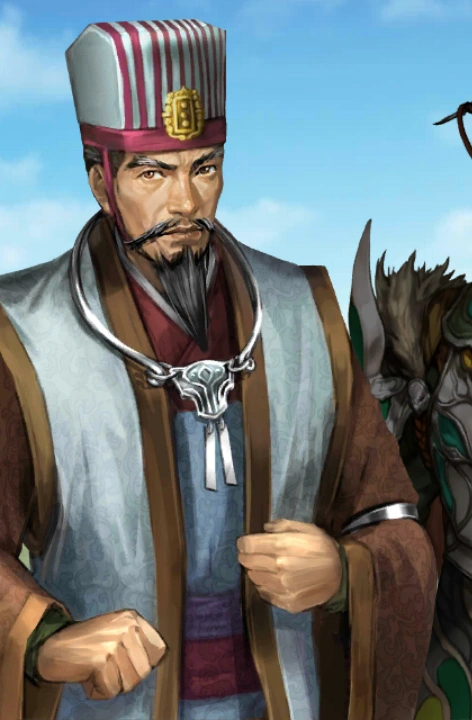

Famous Allusion
温酒斩华雄, Wēn Jiǔ Zhǎn Huá Xióng, Ôn Tửu Trảm Hoa Hùng
Three Heroes Battle Lu Bu at Hulao Pass - Tam Anh Chiến Lữ Bố