
Contents
Biography & Historical Record
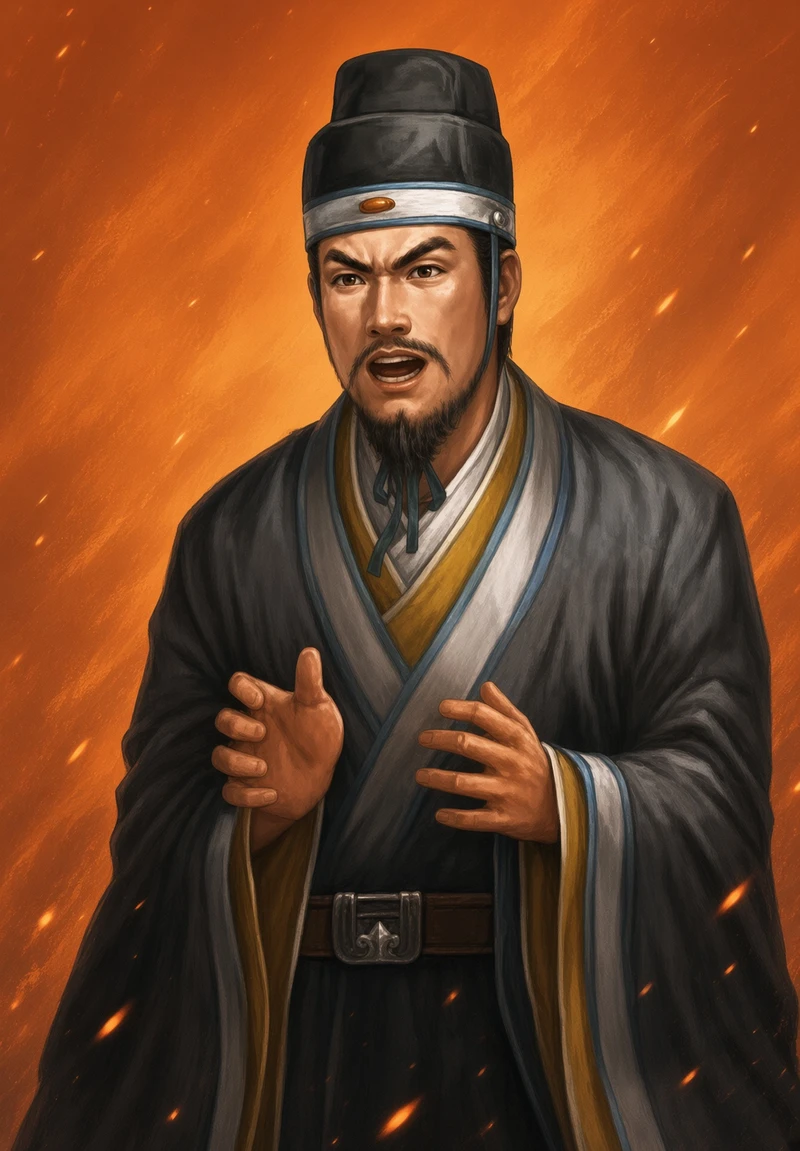
Fu Gu, courtesy name Lanshi, was a brilliant statesman, strategist, and high-ranking minister of the Cao Wei state during the late Three Kingdoms period. Hailing from Beidi Commandery, Fu Gu was a nephew of Fu Xun, the famous official who had advised Liu Biao and later surrendered to Cao Cao. Documented in Chen Shou’s official dynastic history Records of the Three Kingdoms (Sanguozhi – Book of Wei, Biography of Fu Gu) and Sima Guang’s Zizhi Tongjian, Fu Gu was celebrated from his youth for his extraordinary intelligence, sharp psychological insight into human character, and profound political acumen. He possessed a rare ability to discern the underlying motives of politicians, allowing him to navigate the treacherous factional struggles of the Wei court with exceptional foresight.
During his early career, when the brilliant but superficial figures He Yan, Deng Yang, and Xiahou Xuan dominated the social and political scene, Fu Gu keenly perceived their vanity and lack of genuine substance, deliberately maintaining a cautious distance from their clique. When he served under the powerful regent Cao Shuang, Fu Gu candidly warned that He Yan was dangerously treacherous and unfit for high office; He Yan, learning of this critique, used his influence to strip Fu Gu of his post. Following Sima Yi’s execution of Cao Shuang during the Gao Ping Ling Coup in 249 AD, Fu Gu’s wisdom was recognized, and he was promptly recalled to court and appointed as Administrator of Henan.
Fu Gu’s strategic brilliance was vividly demonstrated on multiple critical military occasions. In 252 AD, following the death of Eastern Wu’s founding emperor Sun Quan, the Cao Wei court was swept by a wave of jingoistic fervor demanding an immediate invasion of Wu. As Prefect of the Masters of Writing, Fu Gu stood firmly against the overwhelming consensus, submitting a memorial to Sima Shi arguing that despite Wu’s mourning, their riverine defenses remained impregnable and a hasty campaign would end in disaster. Sima Shi unfortunately dismissed his counsel and launched the invasion, resulting in a crushing Wei defeat at Dongxing against Ding Feng and Zhuge Ke, which deeply validated Fu Gu’s strategic foresight. Three years later, in 255 AD, when Guanqiu Jian and Wen Qin launched a major rebellion at Shouchun against the Sima family’s dominance, Sima Shi was suffering from severe eye illness and hesitated to lead the army in person. Fu Gu, alongside Wang Su, strongly urged Sima Shi to take personal command to ensure victory and maintain morale, a decisive strategy that crushed the insurrection.
Following the pacification of Huainan, Sima Shi passed away at Xuchang. Sensing an opportunity to wrest military control from the Sima clan, Emperor Cao Mao issued an imperial decree attempting to restrict Sima Zhao to the frontier while ordering Fu Gu to bring the main army back to Luoyang. Seeing through this tactical maneuver, Fu Gu conspired with Zhong Hui to disregard the emperor’s decree, instead advising Sima Zhao to march his victorious legions directly into the capital to secure absolute political dominance. Shortly after accomplishing this masterstroke of political engineering, Fu Gu fell seriously ill and passed away in late 255 AD at the age of forty-seven. Deeply mourning the loss of his most trusted adviser, Sima Zhao and the imperial court granted him grand posthumous honors, including the title of Minister over the Masses and the posthumous name Yuan (Marquis Yuan).
Role in Romance of the Three Kingdoms
In Chapter 110 of Luo Guanzhong’s classic 14th-century historical novel Romance of the Three Kingdoms, Fu Gu appears as a senior strategist and trusted adviser to Sima Shi during the suppression of Guanqiu Jian and Wen Qin’s rebellion in Huainan. The novel accurately reflects his historical counsel, depicting how he advises Sima Shi to ignore his physical ailments and personally lead the imperial expedition to crush the rebels, ensuring the stability of the regime.
Fu Gu (傅嘏) — Historical & Literary Timeline
Early Bureaucratic Career & Opposition to He Yan
Enters the Wei civil administration; accurately assesses the superficiality of He Yan and Xiahou Xuan; removed from office due to He Yan’s political machinations before being reinstated following the Gao Ping Ling Coup.
Opposing the Ill-Fated Invasion of Eastern Wu
Advises Sima Shi against invading Eastern Wu following Sun Quan’s death, correctly predicting defeat; his counsel is ignored, leading to the disastrous Wei defeat at the Battle of Dongxing.
Urging Sima Shi to Personally Lead the Campaign Against Guanqiu Jian
Strongly advises the ailing Sima Shi to personally command the punitive expedition against Guanqiu Jian and Wen Qin, ensuring the total defeat of the rebellion.
Securing Sima Zhao’s Power & Passing Away
Conspires with Zhong Hui to ignore Emperor Cao Mao’s restrictive decree, enabling Sima Zhao to march on Luoyang; passes away of illness shortly after at the age of forty-seven.
Key Relationships
Family
- Fu Xun (傅巽, Phó Tốn): Uncle; renowned Han and Cao Wei statesman who served Liu Biao and later surrendered to Cao Cao, paving the way for the Fu clan’s political prominence.
Friends
- Sima Shi (司马师, Tư Mã Sư): Trusted regent and close ally; Fu Gu served as his chief strategist, advising him against the 252 invasion of Eastern Wu and later convincing him to personally command the army to suppress the Huainan rebellion in 255.
- Sima Zhao (司马昭, Tư Mã Chiêu): Political ally and regent; following Sima Shi’s death in 255, Fu Gu engineered Sima Zhao’s march into Luoyang to secure the Sima clan’s paramount authority over the Wei court.
- Zhong Hui (钟会, Chung Hội): Strategist and colleague; partnered with Fu Gu in 255 to subvert Emperor Cao Mao’s decree, ensuring that Sima Zhao retained full military and political control of the realm.
- Wang Su (王肃, Vương Túc): High-ranking Wei statesman and scholar; united with Fu Gu in 255 to counsel the ailing Sima Shi to lead the campaign against Guanqiu Jian in person.
Enemies
- He Yan (何晏, Hà Yến): Political adversary; a leading member of Cao Shuang’s inner circle whose superficiality Fu Gu opposed, leading He Yan to orchestrate Fu Gu’s dismissal from office prior to 249.
- Guanqiu Jian (毌丘俭, Quán Khâu Kiệm): Wei general and rebel leader; instigated the Second Huainan Rebellion in 255 against the Sima regency, which was crushed following Fu Gu’s strategic urging of Sima Shi.
- Wen Qin (文钦, Văn Khâm): Rebel general; allied with Guanqiu Jian in the 255 Huainan uprising and was routed by imperial forces commanded by Sima Shi.
Other
- Cao Shuang (曹爽, Tào Sảng): Wei regent; Fu Gu served under his administration and candidly warned him against the corrupting influence of He Yan before being dismissed.
- Sima Yi (司马懿, Tư Mã Ý): Paramount statesman and regent; recognized Fu Gu’s talent and reinstated him to government office as Administrator of Henan following the Gaoping Tomb Incident in 249.
- Cao Mao (曹髦, Tào Mao): Fourth emperor of Cao Wei; attempted to reclaim imperial power in 255 by ordering Fu Gu to return the army while ordering Sima Zhao to remain on the frontier, a scheme Fu Gu refused to execute.
In Novel
Fu Gu (傅嘏, Phó Cốt) does not have a securely verified named appearance in the supplied edition under the exact Chinese name 傅嘏. He is a historical Wei/Jin statesman, but historical biography is not sufficient to create an In Novel timeline. The character list confirms the name belongs to the historical Wei/Jin generation. citeturn4search29
History
Summary
- Fu Gu (傅嘏, Phó Cốt), courtesy name Lanyi, was a prominent Cao Wei scholar and statesman.
Political Thought
- Fu Gu was respected for his political judgment and learning and became an adviser to senior Wei leaders.
- He supported the Sima family’s political consolidation and served under Sima Shi and Sima Zhao.
Role in the Court
- He participated in important political deliberations concerning the succession and government of Wei.
- His writings and discussions reflected the political thought of the late Wei court.
Death
- Fu Gu died in 255 while serving in a senior position.
- Classification: Historical.