
Contents
Biography & Historical Record
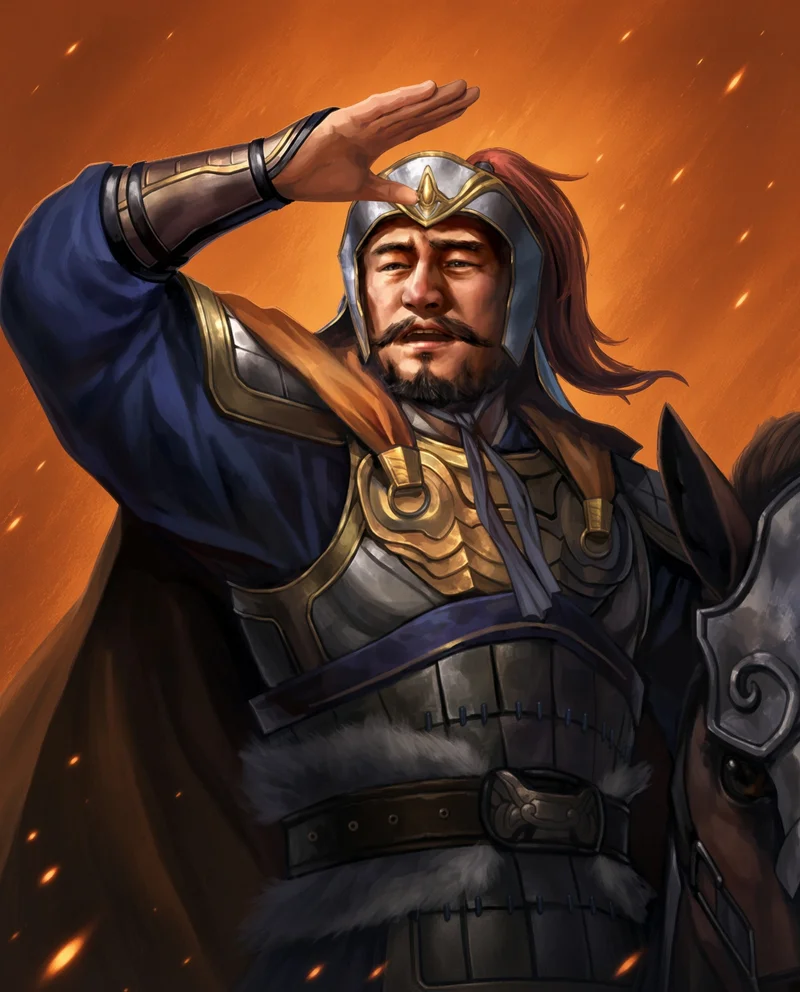
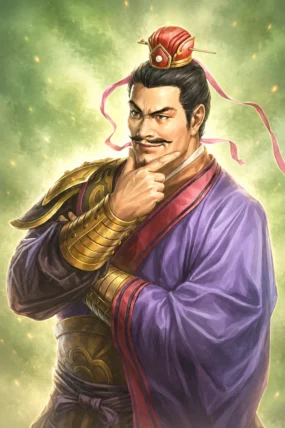
Gongsun Du, courtesy name Shengjì, was a formidable and independent warlord who established a powerful separatist regime in the northeastern frontier region of Liaodong during the late Eastern Han dynasty and the early Three Kingdoms period. Hailing from Xiangping in Liaodong, Gongsun Du experienced a humble and turbulent youth; in his early years, due to family misfortunes and exile, he sought refuge in Xuanqu Commandery. Through the patronage and benevolent intervention of the local administrator—whose deceased son shared the same name—Gongsun Du was provided with an education and embarked upon a career in officialdom.
In 189 AD, as the central government of the Eastern Han dynasty plunged into chaos following the machinations of Dong Zhuo, Gongsun Du secured the pivotal appointment as Administrator of Liaodong through the influential backing of his fellow townsman, the elite Wei-Wu general Xu Rong. Upon arriving in his isolated and turbulent domain, Gongsun Du immediately instituted ruthless and decisive measures to crush local gentry opposition, eliminate rival factions, and consolidate absolute personal authority. Observing the complete collapse of imperial order across the Central Plains, Gongsun Du boldly remarked to his close staff that the Han dynasty had reached its end and that he intended to carve out an independent royal domain. He proceeded to divide his territory into regional commanderies, appointed officials using imperial protocols, and established a grand court complete with ancestral temples and royal carriages that mirrored the ceremonies of the Son of Heaven.
During his decades of robust governance, Gongsun Du aggressively expanded his borders and subdued surrounding foreign states. He launched successful military campaigns eastward against the kingdom of Goguryeo, pushing their borders back and extracting tribute, while fiercely repelling the nomadic Wuhuan tribes to the west and securing complete dominance over the Liaodong peninsula and northern Korean commanderies. When the powerful northern warlord Cao Cao, having unified the Central Plains, attempted to co-opt Gongsun Du by offering him the prestigious title of Marquis of Yongning, Gongsun Du arrogantly cast the official seal aside in disdain, declaring that he was already a king in Liaodong and had no use for minor imperial honors. He ruled his northern kingdom with absolute despotism until his death from illness in 204 AD, passing his prosperous domain to his eldest son, Gongsun Kang, and laying the institutional foundations for half a century of family rule in Liaodong.
Role in Romance of the Three Kingdoms
In Luo Guanzhong’s classic 14th-century historical novel Romance of the Three Kingdoms, Gongsun Du is briefly introduced in Chapter 11 as the powerful independent lord of the far northeastern frontier. While the novel focuses primarily on the struggles within the Central Plains, Gongsun Du’s regime is acknowledged as a significant regional power that operates outside the direct control of the Han court or major warring factions.
Later, the narrative regarding the Liaodong regime shifts to his son and successor, Gongsun Kang, who plays a critical dramatic role following the defeat and death of Yuan Shao. When Yuan Shao’s fleeing sons, Yuan Shang and Yuan Xi, seek refuge in Liaodong after being crushed by Cao Cao, Gongsun Kang—acting in accordance with his father’s established policies of cold calculation—invites the desperate brothers into a banquet, slaughters them both, and presents their severed heads to Cao Cao as a token of submission. Gongsun Du’s foundational militarism and strategic isolationism thus directly enabled his lineage to manipulate the power struggles of the Central Plains from a position of absolute safety.
Gongsun Du (公孫度) — Historical & Literary Timeline
Appointment as Administrator of Liaodong
Backed by his fellow townsman Xu Rong, Gongsun Du is appointed Administrator of Liaodong by the chaotic Han court, establishing his administrative base at Xiangping.
Consolidating Power & Expanding Borders
Purges local rebellious gentry, institutes imperial-level ceremonies, and launches victorious military campaigns to subdue Goguryeo and the Wuhuan tribes, carving out an independent kingdom.
Establishing an Isolated Independent State
Rejects Cao Cao’s enfeoffment offers, maintaining absolute sovereignty over the northeastern frontier and providing a secure haven for northern exiles and political refugees.
Passing Away in Liaodong
Passes away peacefully of illness in office; leaves behind a wealthy and heavily fortified separatist regime to his eldest son and successor, Gongsun Kang.
For detailed historical records, archives, and official chronicles, explore Gongsun Du on Wikipedia.
Key Relationships
Family
- Gongsun Yan (公孙延, Công Tôn Diên): Father of Gongsun Du; his early official postings and family misfortunes led the family to seek refuge in Xuantu Commandery during Gongsun Du’s youth.
- Gongsun Kang (公孙康, Công Tôn Khang): Eldest son and successor; inherited the independent Liaodong domain upon Gongsun Du’s death in 204 AD and continued his father’s policies of strategic isolationism.
- Gongsun Gong (公孙恭, Công Tôn Cung): Younger son; took over rule of the Liaodong regime following the death of Gongsun Kang.
- Gongsun Yuan (公孙渊, Công Tôn Uyên): Grandson (son of Gongsun Kang); eventually usurped control of Liaodong and established the short-lived rebel state of Yan before being destroyed by Cao Wei.
Friends
- Xu Rong (徐荣, Từ Vinh): Fellow townsman from Xiangping and prominent general under Dong Zhuo; utilized his influence at the Han imperial court in 189 AD to secure Gongsun Du’s appointment as Administrator of Liaodong.
Enemies
- Cao Cao (曹操, Tào Tháo): Hegemon of the Central Plains; attempted to subordinate Gongsun Du by conferring the titles of General of Martial Might and Marquis of Yongning, which Gongsun Du scornfully rejected while maintaining fierce territorial independence.
Other
- Dong Zhuo (董卓, Đổng Trác): Tyrannical chancellor who dominated the Eastern Han imperial court in 189 AD when Gongsun Du’s initial administrative appointment in Liaodong was authorized.
In Novel
Chapter 33
- Gongsun Du (公孙度, Công Tôn Độ): Gongsun Du is mentioned as the founder of the Gongsun regime in Liaodong and the father of Gongsun Kang. When Yuan Xi and Yuan Shang flee to Liaodong after Yuan Shao’s defeat, the novel explains that Gongsun Kang inherited the position from his father Gongsun Du. His appearance is therefore genealogical and contextual rather than an active scene. citeturn4search0turn4search1
History
Summary
- Gongsun Du (公孙度, Công Tôn Độ), courtesy name Shengji, was a warlord who established an autonomous regime in Liaodong during the late Eastern Han.
Rise in Liaodong
- He was appointed Administrator of Liaodong in 189 and gradually transformed the region into a largely independent power base.
- He expanded his influence into parts of present-day Manchuria and the Korean peninsula.
Relations with the Han
- Although nominally serving the Han court, Gongsun Du exercised considerable independent authority and adopted grand political titles.
- He also maintained diplomatic relations with neighboring powers and controlled important trade routes.
Death and Succession
- Gongsun Du died in 204 and was succeeded by his son Gongsun Kang.
- His regime laid the foundation for the Gongsun family’s long control of Liaodong.
- Classification: Historical.