
Contents
Biography & Historical Record
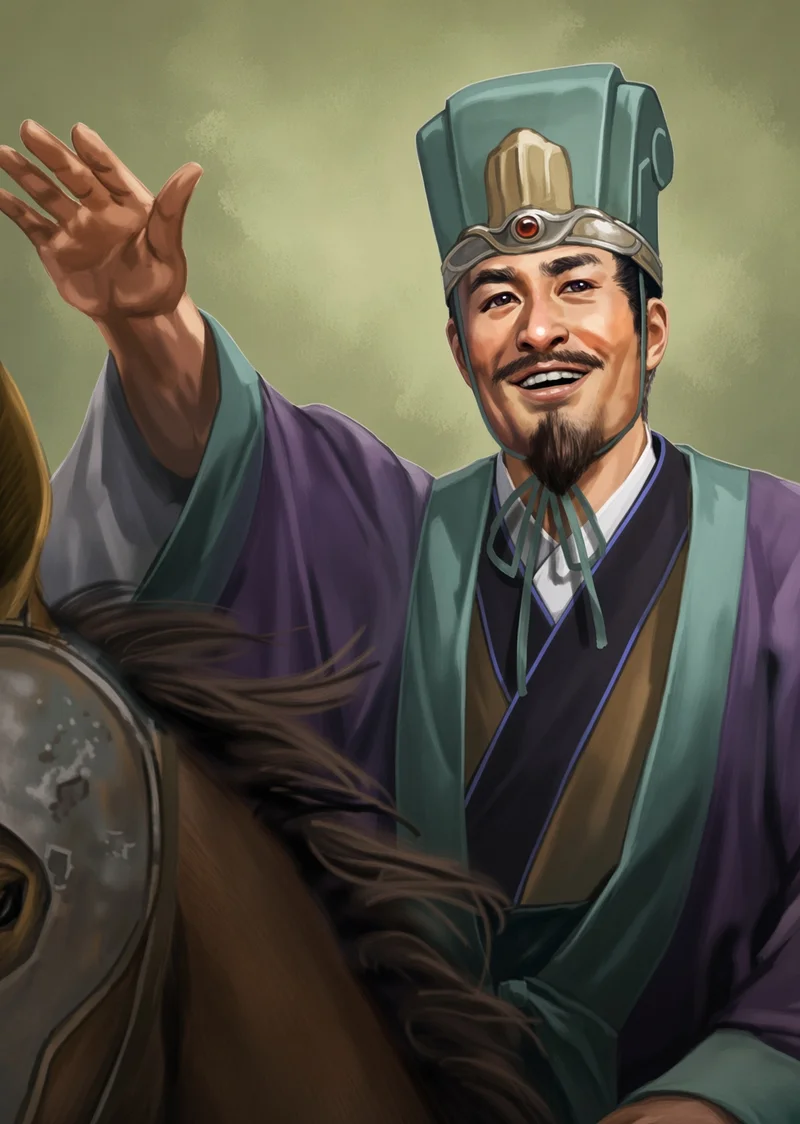
Gongsun Gong was the ruler of the independent Liaodong separatist regime during the late Eastern Han dynasty and the Three Kingdoms period. He was the second son of Gongsun Du, the founder of the Liaodong warlord state, and the younger brother of Gongsun Kang. Historically, Gongsun Gong’s life was defined by physical frailty, political transitions within his family, and his eventual displacement by his ambitious nephew. Documented in Chen Shou’s official dynastic history Records of the Three Kingdoms (Sanguozhi – Book of Wei, Biography of Gongsun Du) and Sima Guang’s Zizhi Tongjian, Gongsun Gong suffered from a severe debilitating illness in his later years that left him physically incapacitated and childless.
In 207 AD, when Yuan Shao’s fleeing sons, Yuan Shang and Yuan Xi, sought refuge in Liaodong after being crushed by Cao Cao, Gongsun Gong played a crucial advisory role in the family’s brutal political calculation. He advised his older brother Gongsun Kang that harboring the defeated Yuan brothers would invite Cao Cao’s wrath, whereas executing them and presenting their severed heads would secure peace and imperial favor. Following his brother’s advice, Gongsun Kang executed the brothers and sent their heads to Cao Cao, earning nominal titles for the family. In 221 AD, following the premature death of Gongsun Kang, his sons Gongsun Huang and Gongsun Yuan were still too young to assume leadership. Consequently, the officials and gentry of Liaodong elevated Gongsun Gong to succeed as Administrator of Liaodong. Recognizing the geopolitical reality of the Central Plains, Cao Pi, upon establishing the Cao Wei dynasty, officially confirmed Gongsun Gong’s status and appointed him as General of Chariots and Cavalry (Cheji Jiangjun) to bind the northern frontier to Luoyang.
However, Gongsun Gong’s physical health continued to deteriorate severely, and due to his chronic illness, he lost his virility and physical capacity to govern effectively. Seizing upon his uncle’s weakness, his ambitious nephew Gongsun Yuan—son of Gongsun Kang—rallied supporters, staged a political coup in 228 AD, and forced Gongsun Gong to abdicate the governorship, throwing him into house arrest. A decade later, in 238 AD, when Gongsun Yuan openly rebelled against Cao Wei and declared himself King of Yan, Sima Yi led a massive punitive expedition that crushed the rebellion, captured Xiangping, and executed Gongsun Yuan along with his entire clan. When Sima Yi’s victorious troops searched the prisons, they discovered the ailing Gongsun Gong still locked in chains. Recalling that Gongsun Gong had always favored loyalty to Cao Wei and had been unjustly deposed, Sima Yi ordered him released, pardoned him of all guilt, and restored his freedom.
Role in Romance of the Three Kingdoms
In Chapter 33 and Chapter 106 of Luo Guanzhong’s classic 14th-century historical novel Romance of the Three Kingdoms, Gongsun Gong appears as a minor yet pivotal figure in the political fate of the northeastern frontier. The novel details his role in Chapter 33 during the aftermath of Cao Cao’s northern campaigns against the Wuhuan, where Gongsun Gong advises his brother Gongsun Kang to slaughter the fleeing Yuan brothers, Yuan Shang and Yuan Xi, upon their arrival in Liaodong. His cold political pragmatism ensures the family’s temporary security under Cao Cao’s nominal oversight.
Later, in Chapter 106, the novel chronicles the dramatic conclusion of the Liaodong regime during Sima Yi’s punitive campaign against the rebellious Gongsun Yuan. When Sima Yi breaches the capital of Xiangping and eradicates Gongsun Yuan’s lineage for treason, the narrative highlights the discovery of the imprisoned Gongsun Gong. Portrayed as a tragic, physically broken elder who was usurped by his treacherous nephew, Gongsun Gong is spared by Sima Yi out of respect for his past submission to Cao Wei, serving as a literary symbol of justice and the survival of the compliant amidst the destruction of the rebellious.
Gongsun Gong (公孫恭) — Historical & Literary Timeline
Proposing the Assassination of Yuan Shang & Yuan Xi
Advises his brother Gongsun Kang to execute the fleeing Yuan brothers and send their heads to Cao Cao to secure political peace and avoid a punitive invasion.
Ascending to Rule Liaodong
Succeeds his late brother Gongsun Kang as Administrator of Liaodong; later appointed General of Chariots and Cavalry by Cao Pi following the establishment of Cao Wei.
Usurped and Imprisoned by Gongsun Yuan
Suffering from severe physical illness and incapacity, Gongsun Gong is overthrown in a coup by his ambitious nephew Gongsun Yuan, who seizes control of Liaodong and forces his abdication.
Discovered in Prison and Pardoned by Sima Yi
Found locked in chains during Sima Yi’s annihilation of Gongsun Yuan’s regime; spared by Sima Yi due to his historical loyalty to Cao Wei and restored to freedom.
Key Relationships
Family
- Gongsun Du (公孙度, Công Tôn Độ): Father; founder of the independent warlord regime in Liaodong during the late Eastern Han dynasty.
- Gongsun Kang (公孙康, Công Tôn Khang): Elder brother and predecessor as ruler of Liaodong; accepted Gongsun Gong’s counsel in 207 AD to execute Yuan Shang and Yuan Xi, and Gongsun Gong succeeded him in 221 AD due to his sons’ youth.
- Gongsun Yuan (公孙渊, Công Tôn Uyên): Nephew; ambitious son of Gongsun Kang who took advantage of Gongsun Gong’s chronic illness in 228 AD to stage a coup, usurp the governorship of Liaodong, and throw Gongsun Gong into imprisonment.
Friends
- No information
Enemies
- Yuan Shang (袁尚, Viên Thượng): Rival political refugee; youngest son of Yuan Shao who fled to Liaodong in 207 AD after being defeated by Cao Cao, but was executed alongside his brother following Gongsun Gong’s advice.
- Yuan Xi (袁熙, Viên Hi): Rival political refugee; second son of Yuan Shao who sought sanctuary in Liaodong in 207 AD and was put to death on Gongsun Gong’s recommendation to appease Cao Cao.
Other
- Cao Pi (曹丕, Tào Phi): Sovereign; founding Emperor of Cao Wei who confirmed Gongsun Gong’s authority over Liaodong in 221 AD and conferred upon him the high rank of General of Chariots and Cavalry.
- Sima Yi (司马懿, Tư Mã Ý): Grand Commander of Cao Wei; led the 238 AD punitive expedition that captured Xiangping and crushed Gongsun Yuan’s rebellion, discovering the imprisoned Gongsun Gong and granting him an immediate pardon and release.
In Novel
Chapter 33
- Gongsun Gong (公孙恭, Công Tôn Cung): Gongsun Gong is Gongsun Kang’s younger brother and is involved in the decision about what to do with Yuan Xi and Yuan Shang when they flee to Liaodong. He warns that the Yuan brothers may eventually seize Liaodong. He proposes killing them and sending their heads to Cao Cao if Cao Cao does not attack Liaodong. Gongsun Kang follows the advice, lures the Yuan brothers into the city and has them executed. citeturn4search0turn4search1
History
Summary
- Gongsun Gong (公孙恭, Công Tôn Cung) was the younger son of Gongsun Du and ruler of the Gongsun family regime in Liaodong.
Rule of Liaodong
- After Gongsun Kang’s death, Gongsun Gong succeeded to control of Liaodong because Kang’s sons were still young.
- He ruled as a nominally independent regional power while maintaining relations with Cao Wei.
Overthrow
- In 228, Gongsun Kang’s son Gongsun Yuan returned and seized power from Gongsun Gong.
- Gongsun Gong was imprisoned but later survived until the Jin conquest of the region.
Classification
- Historical.