
Contents
Biography & Historical Record
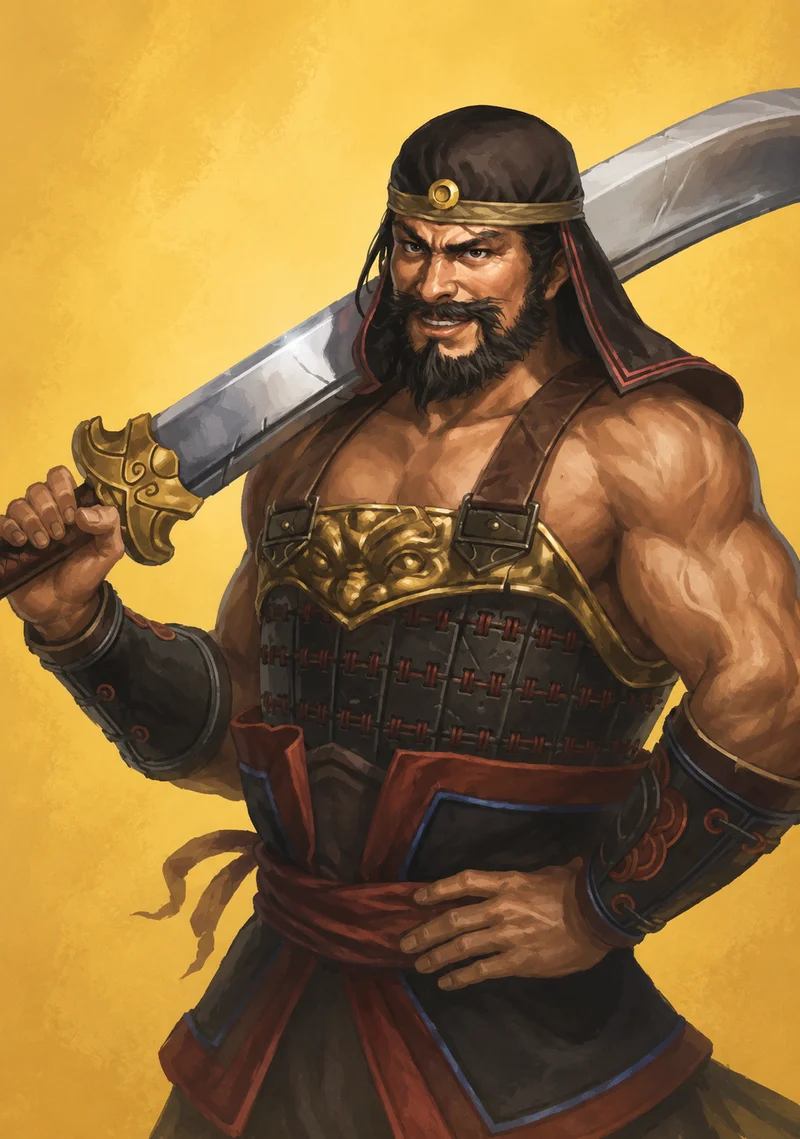
Guan Cheng was a prominent insurgent military commander, pirate admiral, and later a dedicated Eastern Han and Cao Wei civil official. Hailing from Changguang in Qing Province (modern-day Shandong Peninsula), he originally commanded a massive, formidable maritime faction consisting of over three thousand pirate warships and remnant Yellow Turban insurgents stationed across the coastal islands of the East Sea. He is historically renowned for maintaining autonomous naval dominance over the Qingzhou coastline, engaging in fierce combat against Cao Cao’s elite forces led by Li Dian and Yue Jin, eventually surrendering to Cao Cao’s administration through diplomatic persuasion, and fathering the legendary diviner and Yijing master Guan Lu.
Between 184 AD and 200 AD, during the turbulent aftermath of Zhang Jiao’s nationwide Yellow Turban Rebellion, central Han authority crumbled along the eastern seaboard. Capitalizing on the political chaos, Guan Cheng gathered tens of thousands of impoverished agrarian refugees, landless farmers, and surviving Yellow Turban fighters across Changguang and the Shandong coastline. Reorganizing his followers into a disciplined maritime brotherhood, Guan Cheng constructed a vast fleet of over three thousand war vessels based on the remote offshore islands of Haidong. Operating as an autonomous pirate domain, Guan Cheng’s fleet frequently launched coordinated amphibious raids against imperial county seats, intercepted tax transport vessels, plundered grain storehouses, and effectively paralyzed Han maritime governance across Qing Province.
By 206 AD (the eleventh year of the Jian’an era), having vanquished the Yuan family and unified northern China, Cao Cao resolved to permanently eliminate all residual insurgent threats on his eastern flank before embarking on southern expeditions. Cao Cao appointed the swift cavalry officer Li Dian and the aggressive vanguard commander Yue Jin to lead a comprehensive joint amphibious expedition aimed at crushing Guan Cheng’s coastal stronghold. Facing disciplined imperial shock troops, Guan Cheng organized a stubborn, fierce defense across the tidal marshes and coastal waterways. However, in a series of decisive naval and terrestrial engagements, the joint forces of Li Dian and Yue Jin shattered Guan Cheng’s fleet and overran his shore encampments. Forced to abandon his mainland bases, Guan Cheng led his surviving followers in a retreat to remote offshore islands in the Yellow Sea.
Recognizing that a prolonged naval campaign against entrenched island fortifications would prove costly in men and supplies, Cao Cao shifted from military force to diplomatic pacification. He dispatched the respected administrator He Kui, bearing imperial amnesties and generous terms, to negotiate Guan Cheng’s submission. Observing Cao Cao’s undisputed dominance over northern China and recognizing the hopelessness of permanent exile at sea, Guan Cheng accepted the amnesty, leading his entire fleet, officer corps, and family ashore to submit. True to his word, Cao Cao integrated Guan Cheng into the civil administration, appointing him as Administrator of the strategic Li Cao waterway network. Demonstrating strong administrative competence and loyalty, Guan Cheng was subsequently elevated to the position of Chief (Zhang) of Ziqiu in Langya Commandery.
In 224 AD, while serving as Chief of Ziqiu, Guan Cheng brought his fifteen-year-old eldest son, Guan Lu, to reside at his official magistrate headquarters. Recognizing his son’s extraordinary intellect, Guan Cheng fostered Guan Lu’s education, introducing him to prominent local scholars and officials, such as Deng En. This nurturing environment provided the foundational stepping stone for Guan Lu’s rise as China’s most celebrated diviner during the Three Kingdoms period. Guan Cheng served honorably as a local magistrate until passing away peacefully from old age in Langya Commandery around 228 AD.
Role in Romance of the Three Kingdoms
In Luo Guanzhong’s classic novel Romance of the Three Kingdoms, Guan Cheng does not appear as a named character nor is he featured in any chapter. Luo Guanzhong omitted many localized regional insurgencies and coastal pacification campaigns to focus the literary narrative on primary warlord rivalries involving Cao Cao, Liu Bei, Sun Quan, and Yuan Shao. However, Guan Cheng is an authentic historical figure documented in official historical records, including Fan Ye’s Book of Later Han (Hou Han Shu – Annals of Emperor Xian), Chen Shou’s Records of the Three Kingdoms (Sanguozhi – Book of Wei, Biography of Li Dian and Biography of Guan Lu), and Sima Guang’s Zizhi Tongjian, as the coastal Yellow Turban chief and pirate leader who submitted to Cao Cao and fathered Guan Lu.
Guan Cheng (管承) — Historical & Literary Timeline
Maritime Insurgency in Qing Province
Mobilizes thousands of Yellow Turban remnants and naval forces across Changguang, building a fleet of 3,000 warships to dominate the Yellow Sea coastline.
Campaign by Li Dian and Yue Jin
Faces a joint land-and-sea invasion led by Li Dian and Yue Jin; defeated in coastal combat and retreats with surviving remnants to offshore islands.
Submission to Cao Cao and Civil Appointment
Surrenders to Cao Cao following diplomatic negotiations led by He Kui; appointed Administrator of Li Cao Waterway and subsequently Chief of Ziqiu in Langya Commandery.
Educating Guan Lu and Passing
Brings his son Guan Lu to live at his magistrate residence in Ziqiu, fostering his education among local scholars until Guan Cheng’s peaceful death around 228 AD.
For detailed historical records, archives, and official chronicles, explore Guan Cheng on Wikipedia.
Key Relationships
Family
- Guan Lu (管辂, Quản Lộ): Guan Cheng’s eldest son, whom he brought to reside at his official magistrate headquarters in Ziqiu in 224 AD to nurture his education, later becoming one of the most famous diviners and scholars of the Three Kingdoms era.
Friends
- He Kui (何夔, Hà Quỳ): Official under Cao Cao who served as diplomatic envoy in 206 AD, successfully persuading Guan Cheng to accept imperial amnesty, disband his pirate navy, and enter the civil administration.
- Deng En (邓恩, Đặng Ân): Prominent scholar in Langya Commandery with whom Guan Cheng established connections to further the academic upbringing and intellectual development of his son Guan Lu around 224 AD.
Enemies
- Li Dian (李典, Lý Điển): Senior commander under Cao Cao who co-led the joint amphibious campaign in 206 AD that routed Guan Cheng’s coastal fleet and captured his mainland bases in Qing Province.
- Yue Jin (乐进, Nhạc Tiến): Vanguard general under Cao Cao who campaigned alongside Li Dian in 206 AD, forcing Guan Cheng to abandon his coastal fortifications and retreat to offshore islands.
Other
- Cao Cao (曹操, Tào Tháo): Warlord and Chancellor who ordered the pacification of coastal Qing Province, accepted Guan Cheng’s surrender in 206 AD, and integrated him into the regional administration as Administrator of the Li Cao waterway and Chief of Ziqiu.
In Novel
Chapter 22
- Guan Cheng (管承, Quản Thừa): Guan Cheng is a local maritime and bandit leader operating in the coastal region. He gathers men and causes trouble for the authorities. Cao Cao’s officers move against him as part of the effort to pacify the eastern territories and secure the supply routes.
In History
Summary
- Guan Cheng (管承, Quản Thừa) was a historical pirate and rebel leader active along the northern coastal region during the late Eastern Han.
Period I — Coastal Stronghold
- Guan Cheng controlled an armed maritime force around Changguang and the coastal waterways of the northern peninsula.
- His forces operated independently of the Han authorities and were strong enough to challenge local warlords.
Period II — Conflict with Yuan Tan
- Yuan Tan attempted to suppress Guan Cheng’s forces. Guan Cheng was eventually defeated after prolonged resistance.
- His career demonstrates the importance of piracy and semi-independent armed communities along the Bohai and northern coastal region.
Historical Record
- Guan Cheng was historical. He is listed as a bandit and pirate leader in modern compilations based on the Three Kingdoms sources.