
Contents
Biography & Historical Record
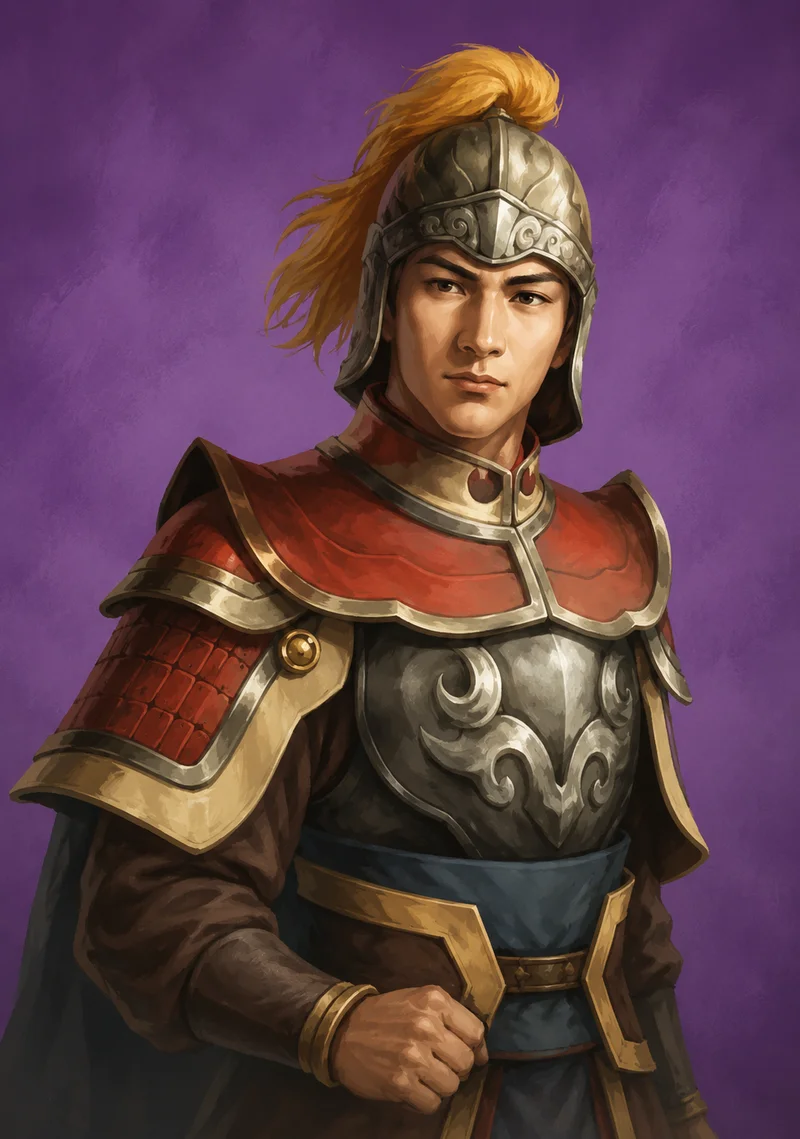
Deng En was an influential scholar, literary authority, and master of the Yijing (Book of Changes) in Langya Commandery, Qing Province (modern-day Shandong Province) during the late Eastern Han dynasty and Cao Wei period. Celebrated in historical records, most notably Chen Shou’s Records of the Three Kingdoms (Sanguozhi – Book of Wei, Biography of Guan Lu, citing Guan Lu Biezhuan), Deng En was widely respected among the gentry of eastern China for his deep erudition in ancient philosophy, astronomy, and Yin-Yang theory. Historically, he is renowned for conducting a momentous Yijing debate in 224 AD with the fifteen-year-old prodigy Guan Lu, acting as the primary scholarly evaluator who verified and broadcast Guan Lu’s genius to the world.
Hailing from a prominent and scholarly gentry family in Langya Commandery, Deng En devoted his early life to rigorous academic study. By the early Cao Wei era, he had established himself as a paramount intellectual authority in the region, frequently consulted by local magistrates and noble families to decipher complex Yijing hexagrams, interpret celestial omens, and conduct philosophical discourses.
In 224 AD (the fifth year of the Huangchu era under Cao Pi), Guan Cheng, a former Yellow Turban naval commander turned imperial officer, served as Chief of Ziqiu in Langya Commandery. Recognizing that his fifteen-year-old son, Guan Lu, possessed a miraculous, child-prodigy intellect in astronomy and Yijing divination, Guan Cheng sought to test and refine his son’s talents. Learning of Deng En’s immense scholarly prestige, Guan Cheng arranged an official academic gathering at his magistrate residence, inviting Deng En alongside another renowned local scholar, Liu Feng, to debate and examine young Guan Lu.
When the debate commenced at the magistrate headquarters in Langya, Deng En initially posed fundamental questions regarding Yijing hexagram structures, expecting to gently test the teenager. However, young Guan Lu responded with astonishing eloquence, articulating profound cosmic principles, Yin-Yang mechanics, and fluid textual citations with razor-sharp speed. Astounded by the teenager’s intellect, Deng En mobilized his entire life’s learning, unleashing the most complex, obscure, and challenging philosophical paradoxes and hexagram problems. The intellectual clash escalated into an intense, uninterrupted debate lasting a day and a night without sleep. Before Guan Lu’s brilliant deductions and unyielding logic, the veteran scholar Deng En found himself utterly unable to refute Guan Lu’s arguments. Deeply humbled, Deng En stroked his beard in admiration, openly conceding defeat and praising Guan Lu as an unprecedented prodigy destined to achieve everlasting fame.
Following this historic debate, Deng En became a close academic friend and patron to both Guan Cheng and Guan Lu. Deng En’s enthusiastic endorsement and glowing praise served as a massive public validation, echoing across Qing and Xu provinces. This scholarly seal of approval established the foundational stepping stone for Guan Lu’s renown, eventually leading to his summons by the Cao Wei court and his immortalization in Chinese history. Deng En lived out his remaining years peacefully in Langya Commandery as a revered local patriarch until his death from natural causes.
Role in Romance of the Three Kingdoms
In Luo Guanzhong’s classic novel Romance of the Three Kingdoms, Deng En does not appear as a named character nor is he featured in any chapter. Luo Guanzhong omitted many localized regional scholars and academic debates to focus the literary narrative from Chapter 69 to Chapter 106 on Guan Lu’s adult divination feats before major historical figures such as Cao Cao, He Yan, Deng Yang, and Sima Yi. However, Deng En is an authentic historical figure documented in official Wei historical records. His famous 224 AD Yijing debate with Guan Lu provided the crucial historical verification that established Guan Lu’s prodigy status, enabling later historians and Luo Guanzhong to portray Guan Lu as an omniscient master of fate.
Deng En (鄧恩) — Historical & Literary Timeline
Rising as Paramount Scholar in Langya
Establishes himself as a leading master of the Yijing and Yin-Yang philosophy in Langya Commandery, earning widespread respect among the local gentry.
Historic Yijing Debate with Guan Lu
Invited by Langya Chief Guan Cheng to examine fifteen-year-old Guan Lu; engages in an intense, day-and-night Yijing debate alongside Liu Feng at the magistrate headquarters.
Conceding Defeat and Endorsing the Prodigy
Concedes defeat before Guan Lu’s flawless philosophical arguments; publicly praises Guan Lu as an unprecedented genius, establishing Guan Lu’s fame across Qing and Xu provinces.
Academic Patronage and Later Life
Maintains a close scholarly alliance with Guan Cheng and Guan Lu, spending his remaining years as a respected academic patriarch in Langya Commandery.
For detailed historical records, archives, and official chronicles, explore Deng En on Wikipedia.
Key Relationships
Family
- No information
Friends
- Guan Cheng (管成, Quản Thành): The Chief of Ziqiu in Langya Commandery who invited Deng En to assess the philosophical talents of his young son in 224 AD, developing a close scholarly friendship with Deng En following the event.
- Liu Feng (刘奉, Lưu Phụng): A fellow erudite scholar from Langya Commandery who joined Deng En in presiding over the official academic gathering and debating young Guan Lu in 224 AD.
- Guan Lu (管辂, Quản Lộ): The legendary divination prodigy whom Deng En tested in an exhaustive day-and-night Yijing debate in 224 AD; deeply humbled by the youth’s intellect, Deng En conceded defeat, publicly endorsed his genius across the region, and served as his academic patron and friend.
Enemies
- No information
Other
- No information
In Novel
Deng En (邓恩, Dèng Ēn) does not have a securely verified named appearance in the supplied edition under the exact Chinese name 邓恩. No chapter is assigned without an exact textual match.
In History
Summary
- Deng En (邓恩, Đặng Ân) requires exact-source verification before a detailed Three Kingdoms biography can be safely assigned.
Historical Record
- The exact-name form 邓恩 is not sufficiently established in the core Three Kingdoms biographies available for confident identification.
- Status: Needs Audit / Unverified. It should not be merged with other Deng-family figures such as Deng Ai, Deng Yang or Deng Zhong.