
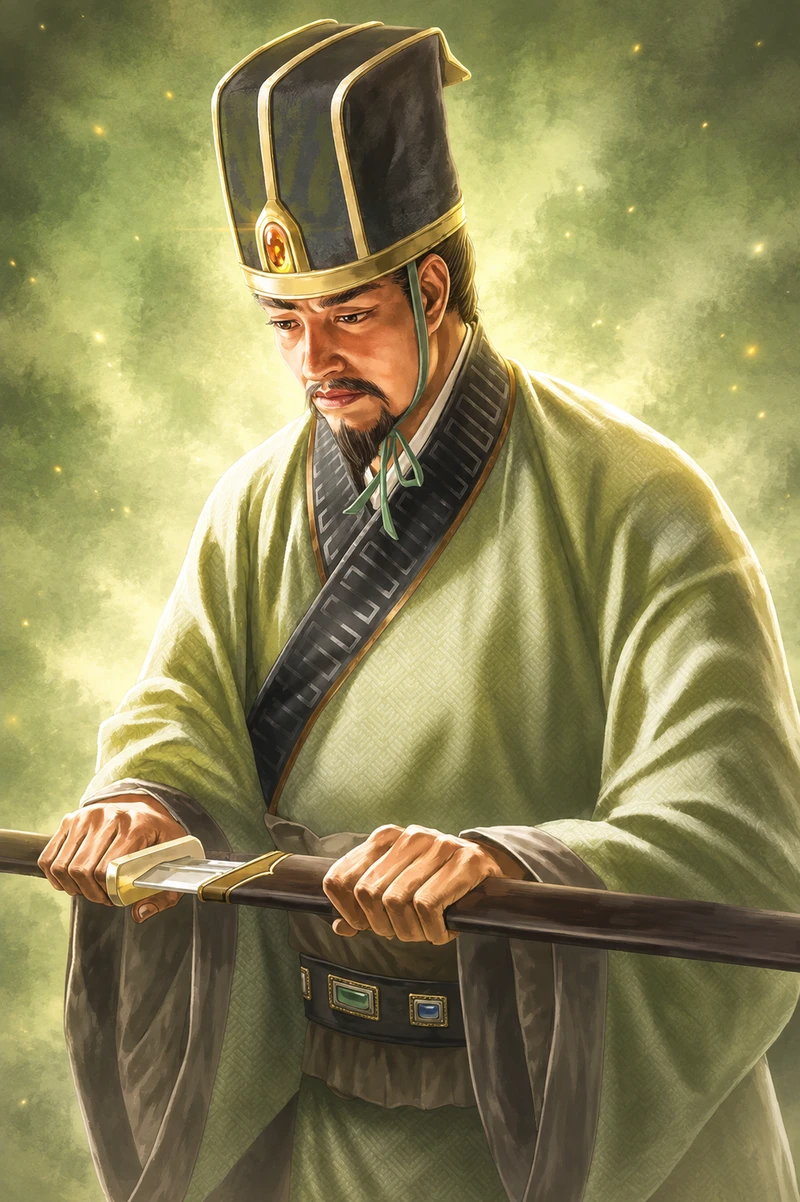
Here is the exhaustive biography of Guan Jing (關靖 / 关靖), courtesy name Shiqi (士起) (? – 199), Chief Clerk and favoured adviser of Gongsun Zan, who died with his lord at the fall of Yijing.
Contents
Historical Background
Guan Jing was from Taiyuan (present-day Shanxi). He served as Gongsun Zan’s Chief Clerk (長史) and was one of his most trusted subordinates, although some contemporary or near-contemporary evaluations (such as the Records of Heroes) described him as cruel, incompetent and given to flattery.
In 198, during Yuan Shao’s siege of Yijing, Gongsun Zan wished to break out, link up with the relief force led by his son Gongsun Xu and Zhang Yan (张燕, Trương Yến), and strike Yuan Shao’s rear. Guan Jing strongly advised against the sortie, arguing that the defenders fought only to protect their families inside the fortress and could not be relied upon if their lord left. Gongsun Zan accepted the counsel and remained inside. The relief column was consequently isolated, ambushed and destroyed; the siege continued into 199.
When Yuan Shao finally overran the outer defences and Gongsun Zan was driven to suicide, Guan Jing, feeling that his earlier advice had contributed to the disaster, charged alone into Yuan Shao’s ranks and was killed, deliberately following his lord in death.
Guan Jing (關靖) — Historical Timeline
Before 198 AD — Chief Clerk under Gongsun Zan
Trusted Adviser
Served as Gongsun Zan’s Chief Clerk and principal civil adviser during the long war against Yuan Shao. Some sources criticise his character; others note the high degree of trust placed in him.
198 AD — Counsel at Yijing
Advice against Sortie
When Gongsun Zan proposed breaking out to meet Gongsun Xu and Zhang Yan, Guan Jing urged him to remain inside the fortress. The advice was followed; the relief force was destroyed and the siege prolonged.
199 AD — Death with His Lord
Charge into Yuan Shao’s Army
After Yijing fell and Gongsun Zan committed suicide, Guan Jing, filled with regret that his counsel had helped doom his master, rode alone into Yuan Shao’s forces and was killed, choosing to die with the lord he had served.
Historical Note
Guan Jing is a minor but memorable historical figure whose career is defined by a single piece of advice and its tragic aftermath. By persuading Gongsun Zan to stay inside Yijing he inadvertently sealed the fate of the relief army and prolonged a siege that ended in total destruction. His subsequent solitary charge and death are recorded as an act of loyalty and remorse. The novel does not develop him as a named character; the chapter references above therefore reflect the broader narrative context of Gongsun Zan’s final defeat.
Discover more historical figures and chronicles in our Three Kingdoms archives.
For detailed historical records, archives, and official chronicles, explore Guan Jing on Wikipedia.
Key Relationships
Family
- No father, mother, spouse, or children are recorded in Hou Hanshu, Sanguozhi notices, or Romance. Guan Jing’s identity is entirely official: Chief Clerk under Gongsun Zan, ending in a loyalist’s death at Yijing.
Friends
- Gongsun Zan (公孙瓒, Công Tôn Toản) — Lord whom Guan Jing served as Changshi (长史). Guan Jing’s last words frame himself as the adviser who trapped his lord in the fortress and must share the disaster.
- Gongsun Xu (公孙续, Công Tôn Tục) — Gongsun Zan’s son, sent out to raise Heishan relief; Guan Jing’s stay-inside counsel assumed that relief would eventually force Yuan Shao to lift the siege.
- Tian Kai (田楷, Điền Khải) — Gongsun Zan general who also fell when Yijing was stormed (same death-arc comradeship).
Enemies
- Yuan Shao (袁绍, Viên Thiệu) — Besieger of Yijing (198–199). After Gongsun Zan immolated himself, Guan Jing spurred into Yuan Shao’s ranks and was killed.
Other
- Zhang Yan (张燕, Trương Yến) — Heishan (Black Mountain) bandit leader whose promised relief column with Gongsun Xu arrived too late (no correct site post — do not link to 张琰).
- Yijing fortress politics — Guan Jing argued that only the presence of Gongsun Zan kept demoralized troops defending their families inside the walls; that counsel defines both his historical record and the novel’s Ch. 21 compression of the fall.
In Novel
Chapter 21
- Guan Jing (关靖, Quan Tĩnh): Chief Clerk under Gongsun Zan (公孙瓒, Công Tôn Toản) during the long siege of Yijing (易京). When Gongsun Zan wants to break out, cut Yuan Shao (袁绍, Viên Thiệu)‘s rear, and link with relief under his son Gongsun Xu (公孙续, Công Tôn Tục) and the Heishan leader Zhang Yan (张燕, Trương Yến), Guan Jing argues that the garrison only holds because families and the lord remain inside — if the general rides out, Yijing will collapse at once.
- Guan Jing (关靖, Quan Tĩnh): Gongsun Zan accepts the stay-and-wait counsel, trusting grain stores and walls to outlast Yuan Shao. The novel then follows the forged-letter trap: Yuan Shao intercepts the messenger, delays the sortie coordination, and draws Gongsun Zan into a fatal ride toward the expected relief fires.
- Guan Jing (关靖, Quan Tĩnh): After Gongsun Zan is defeated, burns his household, and dies by self-immolation, Guan Jing blames his own earlier advice for keeping the lord pent up until ruin was certain. Quoting the gentleman’s duty not to survive a disaster he helped create, he charges alone into Yuan Shao’s army and is killed — sharing his lord’s end as the White Horse power of Youzhou is extinguished.
In History
Year: 198 AD
- Guan Jing (关靖, Quan Tĩnh), courtesy name Shiqi, served as a senior adviser to Gongsun Zan (公孙瓒, Công Tôn Toản) during the siege of Yijing. When Gongsun Zan considered riding out to attack Yuan Shao (袁绍, Viên Thiệu)‘s rear, Guan Jing advised him to remain inside the fortress because the troops depended on the protection of the city.
Year: 199 AD
- Guan Jing (关靖, Quan Tĩnh) witnessed Gongsun Zan’s defeat after the latter left Yijing. Guan Jing regretted that he had not been able to prevent Gongsun Zan from making the fatal sortie. He then rode into Yuan Shao’s forces and died, choosing to share the fate of the lord he had served.
Gallery