
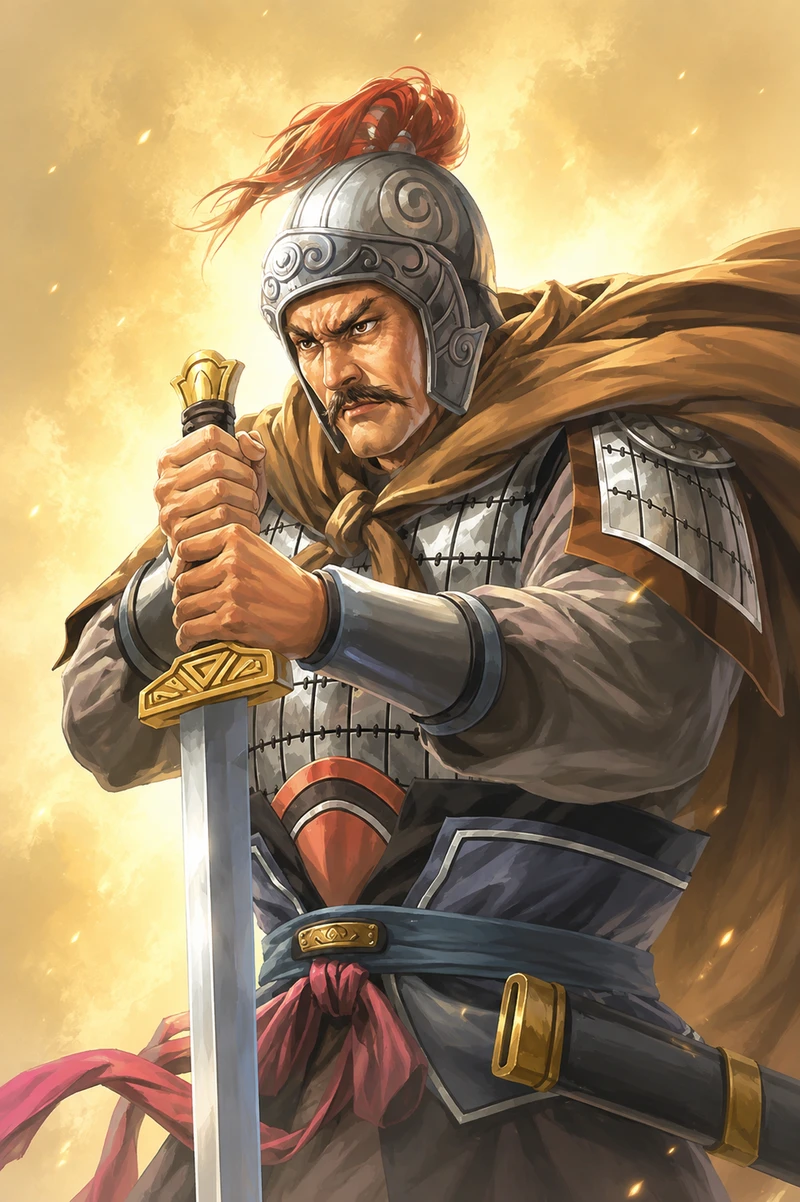
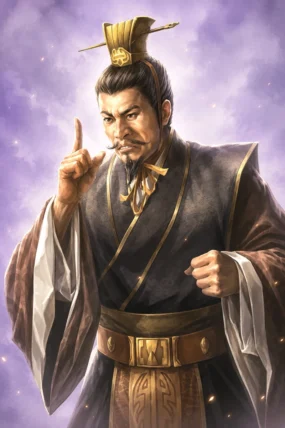
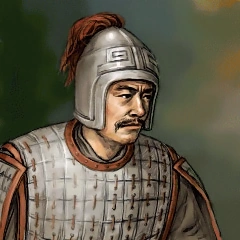
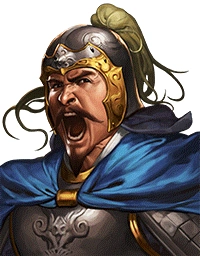
Here is the exhaustive biography of Han Hao (韓浩 / 韩浩), courtesy name Yuansi (元嗣) (c. 164 – c. 216), an official and general under Cao Cao, one of the principal architects of the tuntian agricultural-military colonies, incorporating historical records and the narrative of Romance of the Three Kingdoms.
Contents
Early Life and Rise
Han Hao was a native of Henei Commandery (modern Wuzhi, Henan). In the chaos of the late Han he gathered local fighters to protect his home county. The Administrator of Henei, Wang Kuang, appointed him as an attendant officer; together they held Mengjin against Dong Zhuo’s forces. When Dong Zhuo seized Han Hao’s maternal uncle Du Yang and tried to force Han Hao’s submission, Han Hao refused, gaining a reputation for integrity. Yuan Shu later made him a Cavalry Commandant. Xiahou Dun, impressed by his ability, took him onto his staff; thereafter Han Hao became one of Cao Cao’s trusted inner circle, sharing with Shi Huan the reputation for loyalty and courage and the responsibility of commanding the palace guards.
The Xiahou Dun Hostage Incident (194)
In the first year of Xingping (194), while Xiahou Dun was contesting Yan Province with Lü Bu, men pretending to surrender entered Xiahou Dun’s camp and seized him as a hostage. Panic spread through the ranks. Han Hao, then guarding the camp gate, immediately summoned the officers, ordered every unit to hold its ground under arms, and restored order. He then went to Xiahou Dun’s quarters and roared at the kidnappers:
“You vicious traitors, how dare you take a general hostage and still hope to walk out of here alive? I am under orders to suppress rebels; how can I let you go lightly merely because of one general?”
Turning to Xiahou Dun he added, weeping, “The law forbids it; there is nothing I can do.” He ordered an immediate assault. The terrified captors begged only for travel money and safe passage; Han Hao had them all executed. Xiahou Dun was freed unharmed. When Cao Cao heard of the affair he declared that Han Hao’s conduct should become “the law for ten thousand generations,” and thereafter issued a standing order that hostages were never to be bargained for—hostage-taking virtually ceased in Cao Cao’s domains.
The Tuntian System (196 onward)
In Jian’an 1 (196), with the armies chronically short of grain, Han Hao joined the agricultural officer Zao Zhi in urging the establishment of military agricultural colonies (tuntian). Cao Cao adopted the proposal. Using abandoned land and labour drawn from captured Yellow Turban remnants, the colonies around Xu produced a million hu of grain in the first year. The system was extended to the provinces, removing the logistical burden of long supply trains and enabling Cao Cao’s subsequent campaigns of expansion. For this service Han Hao was promoted Protector of the Army (護軍).
Later Campaigns and Death
Han Hao accompanied Cao Cao on the 207 northern expedition against the Wuhuan, including the strike on Liucheng; when the Director of the Army Shi Huan opposed the long march on logistical grounds and sought Han Hao’s support, Han Hao refused, arguing that the army’s strength was sufficient and delay would only breed regret. After the successful campaign he was advanced to Central Protector of the Army (中護軍), granted a chief clerk and major, and enfeoffed as Marquis of Wansui Pavilion.
In 215 he took part in the conquest of Hanzhong. When Zhang Lu surrendered, several officers recommended that Han Hao remain as frontier commander against Liu Bei. Cao Cao refused: “Can I be at peace without my Protector of the Army?” and brought him back to the capital. Han Hao died around 216; Cao Cao mourned him deeply. His adopted son Han Rong inherited the marquisate.
Romance of the Three Kingdoms Portrayal
The novel largely omits Han Hao’s administrative achievements and the famous hostage episode. Instead it presents him as the younger brother of Han Xuan, Governor of Changsha. After Wei Yan kills Han Xuan, Han Hao flees to Cao Cao seeking revenge. He appears as a subordinate of Xiahou Dun at the Battle of Bowang Slope, where he is drawn into an ambush and defeated. Later, during the Hanzhong / Mount Dingjun campaign, he is stationed at Mount Tiandang; Huang Zhong attacks and kills him. The novel thus gives him a martial death in 218 while erasing most of his historical role as disciplinarian and agricultural reformer.
Han Hao (韓浩) — Historical & Literary Timeline
c. 190–192 AD — Early Service against Dong Zhuo
Mengjin and Refusal of Dong Zhuo’s Coercion
Gathered local forces in Henei; served Administrator Wang Kuang at Mengjin. When Dong Zhuo seized his uncle Du Yang to force his submission, Han Hao refused, establishing his reputation for integrity. Later appointed Cavalry Commandant by Yuan Shu, then taken onto Xiahou Dun’s staff.
194 AD — Xiahou Dun Hostage Incident
“The Law for Ten Thousand Generations”
During Lü Bu’s invasion of Yan Province, mutineers seized Xiahou Dun. Han Hao restored order in the camp, refused all negotiation, attacked at once, and executed the kidnappers. Cao Cao proclaimed the act a model for all future hostage situations.
196 AD — Establishment of the Tuntian System
Military Agricultural Colonies
Together with Zao Zhi, persuaded Cao Cao to institute tuntian colonies around Xu. The first harvest yielded a million hu of grain; the system became the logistical foundation of Cao Cao’s wars. Han Hao was promoted Protector of the Army.
200 AD — Battle of Bowang Slope (Novel)
Defeat under Xiahou Dun
In the novel, serving as Xiahou Dun’s subordinate, Han Hao is drawn into Guan Ping’s (and Liu Bei’s) ambush at Bowang and suffers defeat. This is his first major battlefield appearance in the literary narrative.
207 AD — Northern Campaign against the Wuhuan
Liucheng Expedition
Supported Cao Cao’s long-range strike despite Shi Huan’s logistical objections. Accompanied the army to Liucheng; after victory advanced to Central Protector of the Army and Marquis of Wansui Pavilion.
215 AD — Hanzhong Campaign against Zhang Lu
Conquest of Hanzhong
Took part in the campaign. When Zhang Lu surrendered, officers urged that Han Hao be left to hold the frontier against Liu Bei; Cao Cao refused, declaring he could not be at ease without his Protector of the Army, and brought Han Hao back east.
c. 216 AD / Novel 218 AD — Death
Historical Death & Novel Fate at Mount Tiandang
Historically died of natural causes around 216; Cao Cao mourned him; adopted son Han Rong succeeded. In the novel he is killed by Huang Zhong at Mount Tiandang during the Mount Dingjun / Hanzhong campaign.
Historical Note
Historically Han Hao was a capable administrator and stern disciplinarian whose most lasting contribution was the development of the tuntian system and whose most dramatic recorded act was the refusal to ransom Xiahou Dun—an episode Cao Cao elevated into standing military law. The novel largely erases these achievements, recasts him as the brother of Han Xuan seeking vengeance, and gives him a battlefield death at the hands of Huang Zhong in Chapter 71. Both the historical and literary portrayals, however, underline the high personal regard in which Cao Cao held him.
For detailed historical records, archives, and official chronicles, explore Han Hao on Wikipedia.
Key Relationships
Family
- Han Xuan (韩玄, Hàn Huyền) — Novel: presented as Han Hao’s younger brother, Administrator of Changsha whose death drives Han Hao’s later vengeance arc. History: no secure sibling bond between the tuntian officer Han Hao and Changsha’s Han Xuan is attested in Chen Shou; treat the brotherhood as literary.
- Han Rong (韩荣, Hàn Vinh) — Adopted son recorded on the wiki box (custom avatar). No separate Romance battlefield role; keep as family tradition on this post only (do not conflate with Han Rong 韩融).
Friends
- Cao Cao (曹操, Tào Tháo) — Lord who adopted Han Hao’s counsel on military farming; Han Hao rose as a trusted Cao officer after leaving Wang Kuang.
- Zao Zhi (枣祗, Tảo Chi) — Historical colleague who jointly championed the tuntian colonies with Han Hao and Ren Jun under Cao Cao (no dedicated site post yet).
- Renjun (任峻, Nhậm Tuấn) — Administrator who executed the colony system once Cao Cao approved the Han Hao–Zao Zhi proposal.
- Xiahou Dun (夏侯惇, Hạ Hầu Đôn) — Senior commander under whom Han Hao served; famously counselled Xiahou Dun not to trade himself when taken hostage by Lu Bu’s men.
- Xiahou Shang (夏侯尚, Hạ Hầu Thượng) — Novel co-defender of Mount Tiandang’s supply depots in the Hanzhong arc (Ch. 70).
Enemies
- Lu Bu (吕布, Lã Bố) — Opponent during the Xuzhou fighting when Xiahou Dun was seized; Han Hao refused ransom and pressed the fight.
- Liu Bei (刘备, Lưu Bị) — Shu lord opposed in the northern/Hanzhong campaigns of the novel.
- Huang Zhong (黄忠, Hoàng Trung) — Novel: slays Han Hao at Mount Tiandang (天荡山) in Ch. 70. History: Han Hao dies of illness/natural causes c. 216 — no Tiandang death.
Other
- Wang Kuang (王匡, Vương Khuông) — Early patron as Administrator of Henei who first appointed Han Hao before Han Hao transferred to Cao Cao.
- Tuntian policy circle — Han Hao’s lasting historical identity is the colony system that fed Cao Cao’s armies after 196, not the novel’s Mount Tiandang death.
In Novel
Chapter 53
- Han Hao (韩浩, Hàn Hạo): Named as elder brother of Han Xuan (韩玄, Hàn Huyền) after Changsha falls; he swears vengeance and continues as a Cao officer on the northern frontier. (History does not secure this sibling link.)
Chapter 70
- Han Hao (韩浩, Hàn Hạo): Posted with Xiahou Shang (夏侯尚, Hạ Hầu Thượng) to hold Mount Tiandang (天荡山) and guard Cao Cao (曹操, Tào Tháo)‘s Hanzhong supply line; Huang Zhong (黄忠, Hoàng Trung) storms the depot and slays him in the novel. Historical Han Hao had already died of natural causes c. 216 — the Tiandang death is literary only.
In History
Period I
- Han Hao (韩浩, Hàn Hạo), courtesy name Yuansi, was a military officer who entered the service of Cao Cao (曹操, Tào Tháo). He became known for his discipline and support of the agricultural and military settlement system.
Year: 196 AD
- Han Hao (韩浩, Hàn Hạo) served in Cao Cao’s forces during the campaigns in Xu Province and was involved in maintaining military order. He later became one of Cao Cao’s trusted officers.
Year: 200 AD
- Han Hao (韩浩, Hàn Hạo) served during the conflict with Yuan Shao (袁绍, Viên Thiệu). His military responsibilities included supporting Cao Cao’s field operations and protecting key installations.
Year: 211 AD
- Han Hao (韩浩, Hàn Hạo) served with Xiahou Dun (夏侯惇, Hạ Hầu Đôn) and was involved in the campaigns of Cao Cao’s western theater. His career continued as a senior military officer until his death.
Historical Status
- Han Hao (韩浩, Hàn Hạo) was a real historical officer. Some later literary accounts give him more dramatic battlefield episodes than the surviving historical record securely supports.
Gallery







1 comment
[…] Huang Zhong takes Mount Tiandang (天荡山), killing Xiahou De (夏侯德, Hạ Hầu Đức) and Han Hao (韩浩, Hàn Hạo). At Mount Dingjun he protests that age has not dulled his bow — then, on Fa […]