
Contents
The Legend of Han Tao in Water Margin
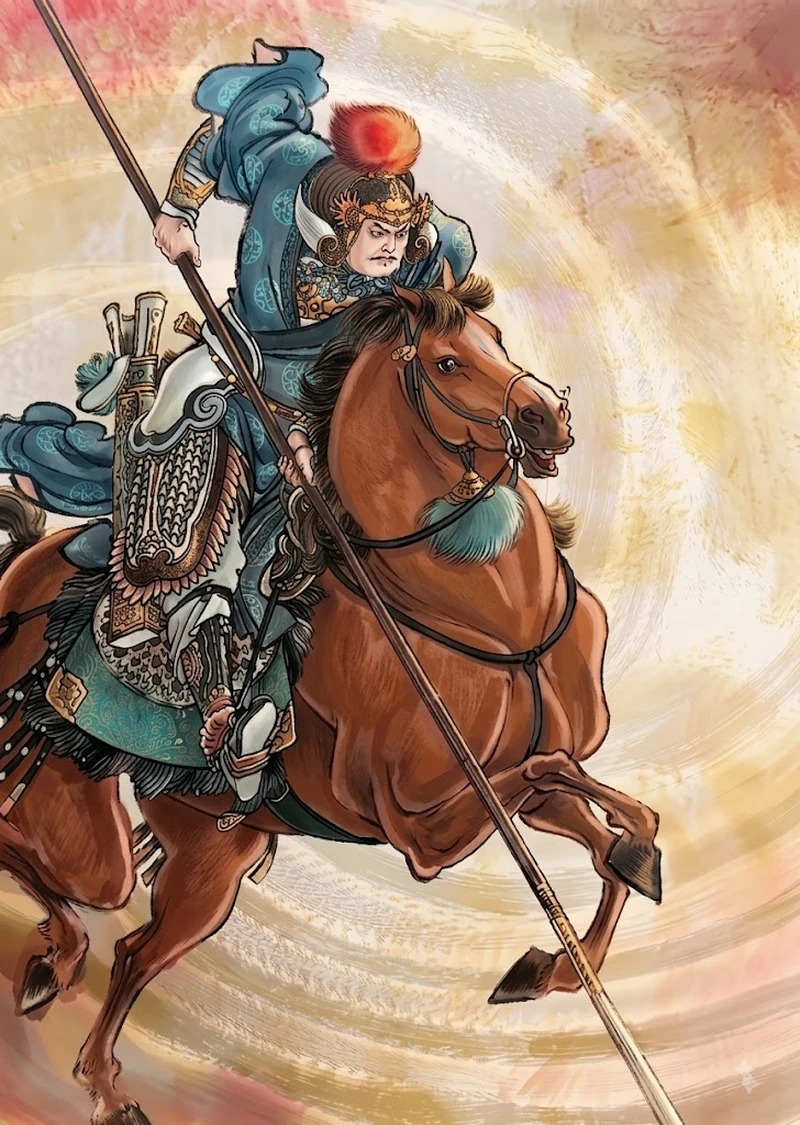
Han Tao is a distinguished military warrior featured prominently in the classic Chinese literary masterpiece Water Margin. Originally a disciplined garrison commander stationed in Chenzhou during the Northern Song Dynasty, he earned the moniker “The General of Hundred Victories” due to his mastery of traditional weapons and stalwart battlefield command.
When the Song imperial court dispatched Commander-in-Chief Hu Yanzhuo to suppress the mounting rebellion at Mount Liang, the general was selected as the vanguard officer. Wielding a long lance, he spearheaded the imperial forces with tactical precision. Despite demonstrating notable valor during the deployment of the devastating Chain-Linked Horses formation, he was ultimately outmaneuvered by the outlaw heroes and captured in combat by Qin Ming.
Disillusioned by the corruption of the Song imperial court, he accepted an offer of clemency from Song Jiang and joined the stronghold. Within the 108 Stars of Destiny, Han Tao represents the Earth Valiant Star, ranking 42nd overall. As a reliable cavalry commander, he fought valiantly throughout subsequent campaigns against imperial oppressors and foreign invaders.
Han Tao: Key Literary Milestones
Imperial Expedition and Defection
Appointed as the forward vanguard to suppress Mount Liang, he fights bravely until his capture, ultimately choosing to defect and join the ranks of the heroes.
Last Stand at Changzhou
During the southern campaign against the rebel leader Fang La, he sustains a fatal wound from a poisoned arrow while engaging hostile forces in battle.
Key Relationships
- Hu Yanzhuo: His commanding officer during the imperial expedition who later served alongside him as an esteemed brother-in-arms.
- Song Jiang: The supreme chieftain of Liangshan Marsh who recognized his abilities and extended him an honorable place among the leaders.
- Qin Ming: The fierce vanguard general responsible for his capture during the decisive battle against the Song army.


