
Contents
Biography & Historical Record
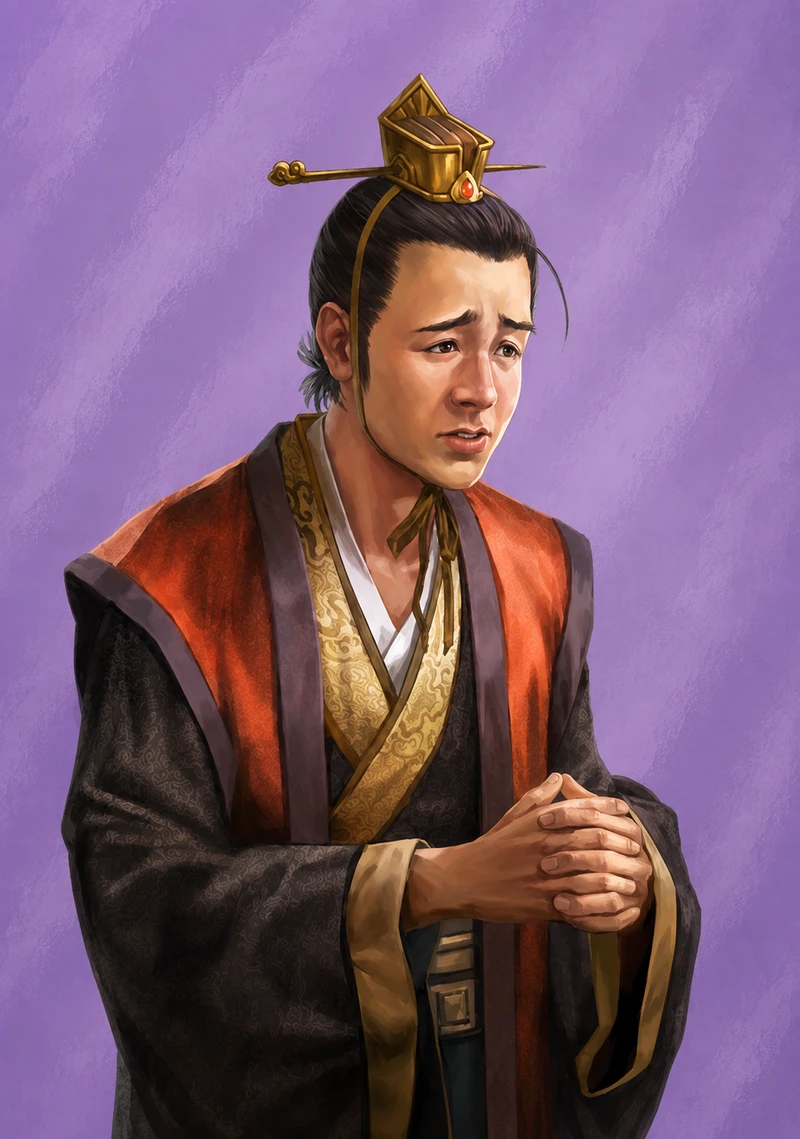
Liu Xuan, courtesy name Wenheng, was the Crown Prince and designated heir apparent of the Shu Han state during the late Three Kingdoms period. Born in 224 AD in Chengdu, he was the eldest son of the Second Emperor Liu Shan (Houzhu) and Noble Consort Wang (originally an attendant of Lady Jing’ai, daughter of Zhang Fei). Renowned for his refined scholarly demeanor, deep devotion to classic literature, and mastery of equestrian archery, Liu Xuan was formally invested as Crown Prince in the first month of 238 AD at the age of fifteen. Documented in Chen Shou’s official dynastic history Records of the Three Kingdoms (Sanguozhi – Book of Shu, Biographies of the Two Sovereigns and Royal Sons) and Sima Guang’s Zizhi Tongjian, Liu Xuan was guided by eminent scholars including Grand Tutor Fei Yi (whose daughter he married), Grand Tutor Xu Ci, and Scholar-in-Attendance Qiao Zhou.
Throughout his twenty-five-year tenure as Crown Prince, Liu Xuan maintained a dignified, scholarly presence in the Eastern Palace. While respected for his benevolence and gentleness, he held no direct command over Shu Han’s military apparatus or policy execution, which remained centered around the regencies of Jiang Wan, Fei Yi, Dong Yun, and later the frontline military campaigns of Jiang Wei. As political corruption worsened under the influence of the eunuch Huang Hao in the late 250s, the imperial court grew increasingly divided and fragile.
In the winter of 263 AD, Cao Wei launched a full-scale invasion of Shu Han. Following Deng Ai’s crossing of Yinping and the decisive defeat of Zhuge Zhan at Mianzhu, Chengdu was thrown into total panic. While his younger brother Liu Chen, the Prince of Beidi, fiercely advocated for a fight to the death and committed suicide in the Ancestral Temple, Liu Shan chose unconditional surrender. Following the capitulation of Chengdu, Liu Xuan was stripped of his royal status and placed under house arrest alongside the imperial household. In the first lunar month of 264 AD, the Wei commander Zhong Hui allied with the surrendered Shu grand general Jiang Wei to stage a massive armed mutiny in Chengdu against the Sima clan. When the mutiny collapsed into total anarchy and street-by-street slaughter, mutinous Wei soldiers rampaged through the palaces. In the chaotic crossfire, Liu Xuan was brutally slain alongside Jiang Wei, Guan Yi, and Zhang Jun at the age of forty-one, bringing a tragic, violent end to the direct imperial heir of Shu Han.
Role in Romance of the Three Kingdoms
In Chapters 102, 118, and 119 of Luo Guanzhong’s classic 14th-century historical novel Romance of the Three Kingdoms, Liu Xuan is portrayed as the refined but powerless Crown Prince of Shu Han whose life is inextricably tied to the tragic decline and fall of his father’s empire.
The novel introduces Liu Xuan in Chapter 102 as Liu Shan’s eldest son, chronicling his formal investiture as Crown Prince in 238 AD to secure the imperial succession following Zhuge Liang’s death. Liu Xuan is depicted as an educated prince surrounded by court tutors, exemplifying the gentility of the second-generation imperial aristocracy.
In Chapter 118, as Deng Ai’s forces advance to the outskirts of Chengdu, the novel contrasts the desperate, courageous martyrdom of Liu Chen with the silent, helpless despair of Liu Shan and the imperial princes. Liu Xuan follows his father in submitting to Deng Ai’s terms of surrender, yielding the dynastic seals and imperial regalia to spare the civilian population from massacre. In Chapter 119, the narrative reaches its bloody conclusion in Chengdu during the rebellion of Zhong Hui and Jiang Wei. When Wei troops revolt and storm the administrative quarters, furious soldiers indiscriminately massacre Shu officials and royal family members. Liu Xuan is caught in the palace unrest and cut down by rebel soldiers, symbolizing the ultimate extinguishing of Liu Bei’s direct ruling line in the riverlands.
Liu Xuan (劉璿) — Historical & Literary Timeline
Birth in Chengdu as Eldest Imperial Son
Born to Emperor Liu Shan and Noble Consort Wang in the capital city of Chengdu, becoming the firstborn imperial scion of the Second Emperor.
Formally Invested as Heir Apparent
Formally established as Crown Prince of Shu Han in the first month of 238 AD; studies classic Confucian texts and statecraft under Grand Tutor Fei Yi and Scholar Qiao Zhou.
Fall of Shu Han & Unconditional Surrender
Witnesses the collapse of Chengdu following the Battle of Mianzhu and his brother Liu Chen’s suicide; complies with Liu Shan’s surrender to Deng Ai and is placed under house arrest.
Slain During Zhong Hui’s Mutiny
Killed by mutinous Wei soldiers during the violent riots and military backlash triggered by Zhong Hui and Jiang Wei’s failed rebellion in Chengdu at age forty-one.
Key Relationships
Family
- Liu Bei (刘备, Lưu Bối) – grandfather; founder of Shu Han.
- Liu Shan (刘禅, Lưu Triêm) – father; second emperor of Shu Han who surrendered to Wei in 263 AD.
- Noble Consort Wang (王贵妃, Vương Quý Phi) – biological mother; originally a court attendant before being elevated to imperial consort.
- Lady Fei (费氏, Phí Thị) – wife; daughter of Grand General Fei Yi.
- Fei Yi (费祎, Phí Ngải) – father‑in‑law; Grand General and regent of Shu Han.
- Liu Chen (刘谌, Lưu Sầm) – younger brother; Prince of Beidi who committed suicide during Shu’s fall.
- Liu Yao (刘曜, Lưu Diệu) – younger brother; imperial prince.
- Liu Cong (刘琮, Lưu Tông) – younger brother; imperial prince.
- Liu Zan (刘赞, Lưu Tán) – younger brother; imperial prince.
- Liu Xun (刘逊, Lưu Tụn) – younger brother; imperial prince.
- Liu Qian (刘谦, Lưu Khiêm) – younger brother; imperial prince.
Friends
- Qiao Zhou (桥周, Kiều Chu) – court scholar and tutor who instructed Liu Xuan in the classics and later counseled him on surrender.
- Xu Ci (徐祠, Từ Tự) – imperial tutor and master of protocol in the Eastern Palace, a close confidant of the Crown Prince.
- Jiang Wei (姜维, Tương Vi) – senior Shu general; collaborated with Liu Xuan in court affairs and later led the final uprising in Chengdu.
Enemies
- Deng Ai (邓艾, Đặng Ngải) – Wei general whose 263 AD campaign captured Chengdu, forcing Liu Xuan’s surrender.
- Zhong Hui (钟会, Chung Hội) – Wei general whose 264 AD mutiny in Chengdu precipitated the palace massacre that killed Liu Xuan.
- Mutinous Wei Soldiers (魏叛军, Việt Phản Quân) – rebel troops that stormed the palace during Zhong Hui’s revolt and slew Liu Xuan.
- Huang Hao (黄皓, Hoàng Hạo) – powerful eunuch whose corruption weakened Shu’s court and contributed to its downfall.
Other
- Jiang Wan (姜琬, Tương Oán) – regent of Shu Han who managed state affairs throughout Liu Xuan’s tenure as Crown Prince.
- Dong Yun (董允, Đổng Dũng) – senior official and co‑regent who oversaw Shu’s administration alongside Jiang Wan.
- Zhang Fei (张飞, Trương Phi) – famed Shu general; Liu Xuan’s maternal lineage connects to him through Lady Jing’ai, Zhang Fei’s daughter.
In Novel
Liu Xuan (刘旋, Lưu Tuyển) does not have a securely verified named appearance in the supplied edition under the exact Chinese name 刘旋. No chapter is assigned without an exact textual match.
History
Identification
- Liu Xuan (刘旋, Lưu Tuyển) is a minor figure in the Three Kingdoms tradition.
Historical Evidence
- The exact-name evidence available here is insufficient to support a detailed independent biography.
- Other historical figures with similar Liu-family names should not be merged into this entry without exact-name verification.
Classification
- Needs Audit / Briefly Attested.