
Contents
Biography & Historical Record
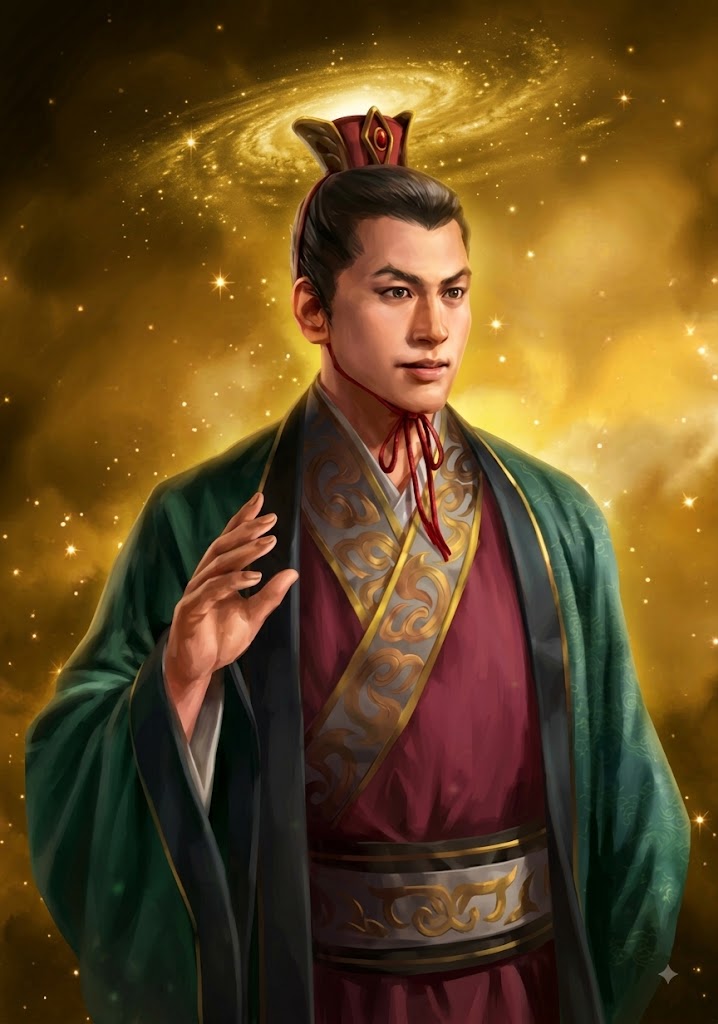
Liu Yong, courtesy name Gongshou, was an imperial prince of Shu Han during the Three Kingdoms period who served as the Prince of Lu and later as the Prince of Ganling, subsequently receiving the titles Commandant of Vehicles and Marquis of a Village under the Cao Wei and Western Jin dynasties. Hailing from Zhuo County in Zhuo Commandery (modern-day Zhuozhou, Hebei Province), Liu Yong was the second son of the founding Emperor Liu Bei (Emperor Zhaolie) and a younger half-brother to the second emperor Liu Shan and Prince Liu Li. Documented in Chen Shou’s Records of the Three Kingdoms (Sanguozhi – Book of Shu, Biography of the Two Princes) and Luo Guanzhong’s classic historical novel Romance of the Three Kingdoms, Liu Yong is historically celebrated as an upright, high-minded, and uncompromising prince whose unyielding hatred for corrupt eunuchs rendered him a tragic moral pillar during the decline and fall of the Shu Han kingdom.
In April 221 AD, following Liu Bei’s enthronement in Chengdu, Liu Yong was officially enfeoffed as the Prince of Lu. In the summer of 223 AD, as Emperor Liu Bei lay dying at Baidicheng following the disastrous Battle of Yiling, he summoned Prime Minister Zhuge Liang to entrust his young sons and the fate of the state to his care. Summoned to his father’s deathbed alongside his younger brother Liu Li, Liu Yong listened to Liu Bei’s emotional final decree: ‘After my passing, you brothers must treat the Prime Minister as your own father; you must never be disrespectful or negligent toward him!’ Obeying his sovereign father’s solemn command, Liu Yong knelt and bowed deeply before Zhuge Liang, honoring him as a foster father. Returning to Chengdu, Liu Yong maintained a quiet, pious existence, and in 230 AD, his royal title was reassigned as Prince of Ganling.
Following the deaths of Zhuge Liang and Jiang Wan, the Shu Han court fell under the corrupt influence of the eunuch Huang Hao, who manipulated the weak-willed Emperor Liu Shan and slandered loyal ministers. Unlike his passive brother Liu Shan, Liu Yong was a man of stern moral integrity who openly detested Huang Hao’s deceitful schemes. Recognizing Huang Hao’s corrupt influence over the throne, Liu Yong repeatedly expressed fierce contempt for the eunuch in front of court officials, refusing to yield to his growing authority. Vengeful and malicious, Huang Hao constantly slandered Prince Liu Yong before Emperor Liu Shan, fabricating malicious rumors to alienate the royal brothers. Overwhelmed by Huang Hao’s whispers, Emperor Liu Shan grew cold and hostile toward Liu Yong, banning the Prince of Ganling from entering the imperial palace to pay respects to the throne for more than ten consecutive years. This enforced isolation silenced the royal house’s most righteous voice, allowing Huang Hao to monopolize power and accelerate Shu Han’s political decay.
In late 263 AD, following the fall of Chengdu to Deng Ai’s army and Emperor Liu Shan’s surrender, Liu Yong was forced to leave his ancestral homeland and was relocated to the northern capital of Luoyang alongside the royal family. Under the Cao Wei and subsequent Western Jin court, Liu Yong was granted the nominal title Commandant of Vehicles and enfeoffed as a Marquis of a Village to pacify the Ba-Shu populace. He passed away peacefully in the North. Decades later, during the catastrophic Disaster of Yongjia in 311 AD when Luoyang fell to Han-Zhao forces, Liu Yong’s grandson, Liu Xuan, miraculously survived the massacre of the imperial gentry, escaping back to Sichuan to preserve the direct bloodline of Emperor Liu Bei for future generations.
Famous Quotes & Historical Sayings
In the historical records of Records of the Three Kingdoms (Sanguozhi – Book of Shu), historian Chen Shou documented the tragic alienating feud engineered by Huang Hao against Prince Liu Yong: ‘Liu Yong was by nature stern and righteous, harboring deep hatred for the treacherous eunuch Huang Hao. Because of his unyielding righteousness, Huang Hao slandered him incessantly, causing Emperor Liu Shan to distance himself from his own brother, barring Liu Yong from court audience for over ten years. That the state collapsed and the dynasty perished was the tragic fault of a confused sovereign trusting malicious sycophants, while the pure loyalty of the Prince of Ganling remains a bitter lesson for posterity!’
Liu Yong (劉永) — Historical & Literary Timeline
Enfeoffment as Prince of Lu in Chengdu
Enfeoffed as Prince of Lu by his father Liu Bei following the founding of Shu Han in Chengdu, joining the imperial royal house.
Knelt Before Zhuge Liang as Foster Father
Summoned to Liu Bei’s deathbed at Baidicheng alongside Liu Li; receives his father’s final decree and kneels before Zhuge Liang, honoring him as foster father.
Reassigned as Prince of Ganling
Reassigned by Emperor Liu Shan as Prince of Ganling, residing in Chengdu as a senior imperial prince of the bloodline.
Denouncing Huang Hao & Barred from Imperial Audience
Fiercely denounces the corrupt eunuch Huang Hao; slandered by Huang Hao before Emperor Liu Shan and barred from entering the imperial palace for over ten years.
Relocation to Luoyang & Enfeoffment in Western Jin
Relocated to Luoyang following Shu Han’s fall; appointed Commandant of Vehicles and Marquis of a Village under Western Jin, passing away in the North while his grandson Liu Xuan later preserved the family lineage.
Key Relationships
Family
- Liu Bei (刘备, Lưu Bị) — Father and founding Emperor of Shu Han, who enfeoffed Liu Yong as Prince of Lu in 221 AD and commanded him at Baidicheng in 223 AD to revere Zhuge Liang as a father.
- Liu Shan (刘禅, Lưu Thiện) — Elder half-brother and second Emperor of Shu Han, who enfeoffed him as Prince of Ganling in 230 AD but later fell under the influence of Huang Hao, exiling Liu Yong from imperial audience for over ten years.
- Liu Li (刘理, Lưu Lý) — Younger half-brother and Prince of Anping, who stood alongside Liu Yong at their father’s deathbed at Baidicheng in 223 AD to receive the final imperial edict.
- Liu Feng (刘封, Lưu Phong) — Adopted elder brother and Shu Han general, who was forced to commit suicide in 220 AD following the loss of Shangyong.
- Liu Xuan (刘玄, Lưu Huyền) — Grandson, who miraculously survived the Disaster of Yongjia in 311 AD in Luoyang and fled back to Sichuan, preserving Liu Bei’s direct imperial lineage.
Friends
- Jiang Wei (姜维, Khương Duy) — Grand General of Shu Han, who shared Liu Yong’s deep hostility toward Huang Hao’s political meddling and court corruption during the final decades of Shu Han.
Enemies
- Huang Hao (黄皓, Hoàng Hạo) — Corrupt court eunuch whom Liu Yong openly despised and confronted; in retaliation, Huang Hao maliciously slandered Liu Yong before Liu Shan, alienating the royal brothers and having Liu Yong barred from court for more than a decade.
Other
- Zhuge Liang (诸葛亮, Gia Cát Lượng) — Prime Minister and regent of Shu Han, whom Liu Yong formally bowed to and honored as a foster father following Liu Bei’s dying mandate at Baidicheng in 223 AD.
In Novel
Chapter 81
- Liu Yong (刘永, Liú Yǒng): Liu Yong is one of Liu Bei’s sons. After Liu Bei’s death, he remains a member of the Shu imperial family. His importance is primarily dynastic, particularly in the succession and family relationships surrounding Liu Shan.
In History
Summary
- Liu Yong (刘永, Lưu Vĩnh) was a son of Liu Bei and an imperial prince of Shu Han.
Family
- Liu Yong was one of Liu Bei’s sons and a brother of Liu Shan and Liu Li.
- He belonged to the Shu Han ruling family and was granted a princely title.
Political Life
- His relationship with Liu Shan became strained because of court factional politics, particularly the influence of Huang Hao.
- He was kept away from the central court for a considerable period.
Later Life
- After the fall of Shu, Liu Yong continued his life under the new political order.
- Classification: Historical.