
Contents
Biography & Historical Record
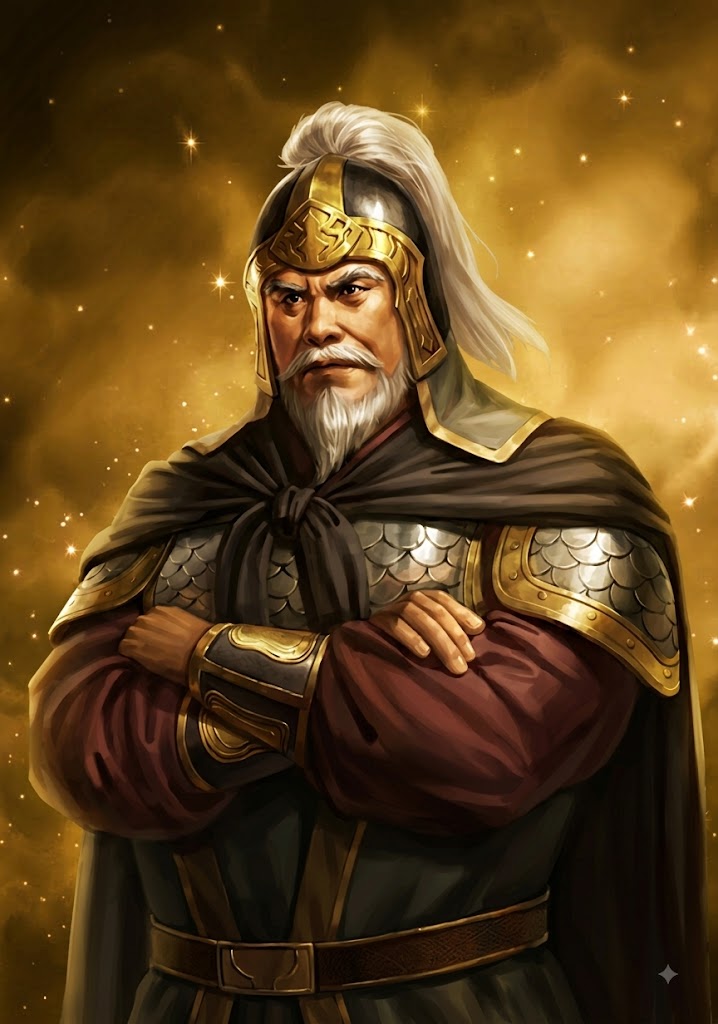
Liu Yin (historically recorded as Liǔ Yǐn 柳隱 in Chinese texts, but widely transliterated as Liu Yin in Vietnamese scholarship due to historical translation conventions), courtesy name Xiuran, was a distinguished Shu Han senior general, high-ranking military commander, and Western Jin dynasty administrator who served as Army Garrison Commander (Yamen Jiang), Administrator of Baxi, Inspector of West Dang, and later Grand Administrator of Xihe Commandery under the Jin Dynasty. Hailing from Chengdu County in Shu Commandery (modern-day Chengdu, Sichuan Province), Liu Yin was celebrated across Shu Han for his magnanimous character, unyielding moral integrity, upright virtue, and fierce martial bravery. Documented in Chang Qu’s Chronicles of Huayang (Huayang Guo Zhi – Book of Shu) and Chen Shou’s Records of the Three Kingdoms (Sanguozhi), Liu Yin was historically revered as one of the last great military pillars of the Shu Han kingdom, renowned for his heroic, uncompromising defense of the Huangjin Garrison during the final invasion of 263 AD.
In his youth, Liu Yin gained a grand reputation throughout Yizhou alongside fellow regional scholars Du Zhen and Liu Shen for his erudition and moral fortitude. Upon entering military service, he quickly demonstrated exceptional strategic acumen and battlefield bravery. Serving as a trusted lieutenant under Grand General Jiang Wei during the 250s and early 260s AD, Liu Yin accompanied the army on numerous Northern Expeditions against Cao Wei. Renowned for his fearless frontline leadership, he repeatedly led vanguard charges, broke enemy formations, and captured opposing banners, earning successive promotions from garrison commander to Administrator of Baxi and Inspector of West Dang.
During the autumn of 263 AD, Regent Sima Zhao launched a massive 180,000-strong multi-pronged invasion to extinguish Shu Han, led by Cao Wei commanders Zhong Hui and Deng Ai. As Zhong Hui’s primary strike force surged into the Hanzhong valley, Zhong Hui dispatched heavy siege divisions to isolate and reduce Shu’s key border fortresses. Liu Yin was entrusted with the supreme responsibility of commanding the garrison at Huangjin Garrison (Huangjin Wei)—a vital strategic mountain bastion guarding the core approach to the interior passes. Crying out in confidence, Zhong Hui personally led tens of thousands of elite Wei troops to surround Huangjin, launching incessant day-and-night catapult and archery bombardments against the ramparts. Undaunted by the overwhelming numerical superiority of the besiegers, the veteran commander Liu Yin personally stood at the parapets, inspiring his garrison to fight to the death. Utilizing precipitous terrain and disciplined volley fire, Liu Yin repelled every wave of Wei assault, completely paralyzing Zhong Hui’s advance and holding the fortress impregnable.
While Liu Yin successfully held Huangjin Garrison and Jiang Wei blocked Zhong Hui at Jiange Pass, Deng Ai executed his audacious, high-risk mountain expedition across the treacherous wilderness of Yinping, descending upon Mianzhu and directly threatening Chengdu. Overwhelmed by panic, Emperor Liu Shan surrendered peacefully, officially issuing imperial edicts instructing all border garrisons to lay down their arms. When the imperial decree arrived at Huangjin Garrison commanding Liu Yin to cease resistance, the veteran general wept in bitter anguish. Refusing to yield to enemy force, Liu Yin declared that he surrendered solely out of filial obedience to his sovereign’s final command rather than fear of the invaders. Opening the gates of Huangjin Garrison, Liu Yin formally demobilized his troops before Zhong Hui. Moved by his unblemished loyalty and heroic defense, the Western Jin court later appointed Liu Yin as Grand Administrator of Xihe Commandery, where he governed with wisdom and benevolence. In his final years, Liu Yin requested retirement due to advanced age and returned to his hometown of Chengdu, where he passed away peacefully in 269 AD at the venerable age of eighty.
Famous Quotes & Historical Sayings
In the historical records of Chronicles of Huayang (Huayang Guo Zhi), when Wei envoys presented Emperor Liu Shan’s imperial surrender decree to the impregnable Huangjin Garrison, Liu Yin wept tears of blood before his troops, declaring: ‘The stronghold of Huangjin is well-fortified, and our provisions remain abundant; we are capable of holding off the northern armies indefinitely! Yet as a loyal minister of the Han royal house, I cannot disobey the sovereign’s final decree. I lay down my arms today not out of fear for my life or submission to enemy power, but to fulfill my absolute duty of obedience to my Emperor!’
Liu Yin (柳隱) — Historical & Literary Timeline
Distinguishing Himself as Vanguard Commander
Serves as Army Garrison Commander and Administrator of Baxi under Grand General Jiang Wei, repeatedly spearheading vanguard assaults against Cao Wei forces during the Northern Expeditions.
Holding Huangjin Garrison Against Zhong Hui’s Main Army
Stationed at Huangjin Garrison during the grand Cao Wei invasion; withstands a relentless siege led by Zhong Hui, repelling all assaults and keeping the fortress impregnable.
Obeying Liu Shan’s Surrender Decree & Demobilizing Garrison
Receives Emperor Liu Shan’s surrender decree following Deng Ai’s Yinping campaign; weeps bitterly and surrenders the garrison to Zhong Hui solely to fulfill his sovereign’s imperial command.
Western Jin Service, Retirement & Death at Age Eighty
Appointed Grand Administrator of Xihe Commandery by the Jin court; retires to Chengdu due to advanced age and passes away peacefully at age eighty in 269 AD.
For detailed historical records, archives, and official chronicles, explore Liu Yin on Wikipedia.
Key Relationships
Family
- No information
Friends
- Jiang Wei (姜维, Khương Duy): Grand General of Shu Han whom Liu Yin loyally served as a trusted lieutenant and vanguard officer during numerous Northern Expeditions throughout the 250s and early 260s AD.
- Du Zhen (杜轸, Đỗ Chẩn): Prominent Shu Han scholar and regional compatriot who gained early fame alongside Liu Yin across Yizhou for erudition and moral character.
- Liu Shen (柳申, Liễu Thân): Fellow scholar and close contemporary from Shu Commandery celebrated alongside Liu Yin and Du Zhen for virtue and intellectual accomplishments.
Enemies
- Zhong Hui (钟会, Chung Hội): Cao Wei supreme commander who besieged Liu Yin’s mountain stronghold at Huangjin Garrison during the 263 AD invasion, only to be repeatedly repelled by Liu Yin’s resolute defense.
- Deng Ai (邓艾, Đặng Ngải): Cao Wei general whose daring traversal of the Yinping mountain route in 263 AD bypassed Shu defenses, forcing the fall of Chengdu and rendering Liu Yin’s defense moot.
- Sima Zhao (司马昭, Tư Mã Chiêu): Regent of Cao Wei who orchestrated and launched the 180,000-strong multi-pronged invasion of Shu Han in 263 AD.
Other
- Liu Shan (刘禅, Lưu Thiện): Second Emperor of Shu Han; Liu Yin maintained unwavering loyalty toward him, weeping in bitter anguish and laying down arms at the impregnable Huangjin Garrison in 263 AD strictly to obey Liu Shan’s final surrender edict.
In Novel
Chapter 108
- Liu Yin (柳隐, Liǔ Yǐn): Liu Yin is a Shu commander who serves in the later northern campaigns. He is associated with the defense of Shu territory against Wei and later participates in the military struggles of Jiang Wei’s period.
Chapter 114
- Liu Yin (柳隐, Liǔ Yǐn): During the later Wei invasion of Shu, Liu Yin is involved in the defense of the Shu frontier. He continues serving the Shu state as its military position deteriorates and Wei prepares its final invasion.
In History
Summary
- Liu Yin (柳隐, Lưu Ẩn) was a Shu Han military commander active in the final stage of the kingdom’s history.
Military Career
- Liu Yin was associated with the defense of Shu’s northern frontier and became one of the commanders responsible for resisting Wei pressure.
- He was particularly connected with the defense of Shu during the campaigns that culminated in the Wei conquest of 263.
Fall of Shu
- After Shu Han was defeated, Liu Yin’s military career came to an end with the collapse of the state he had served.
Historical Record
- Classification: Historical.