
Contents
Biography & Historical Record
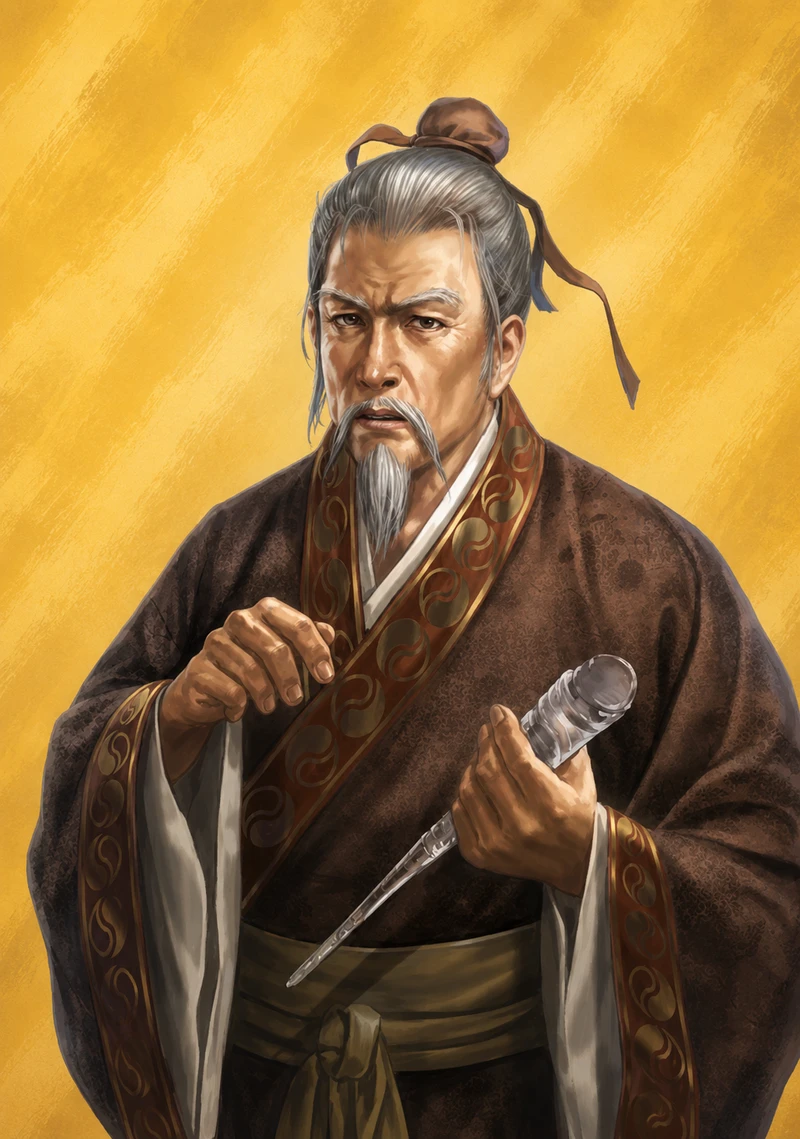
Lou Gui, courtesy name Zibo, was an extraordinarily astute military strategist, tactician, and early confidant of Cao Cao during the late Eastern Han dynasty. Hailing from Nanyang Commandery, Lou Gui formed a close personal friendship with Cao Cao in their youth. He was renowned throughout the Central Plains for his unconventional intellect, profound grasp of military doctrine, and sharp tactical intuition. Documented in Chen Shou’s official dynastic history Records of the Three Kingdoms (Sanguozhi – Book of Wei, Biography of Cui Yan, with Pei Songzhi’s annotations citing the Dianlüe) and Sima Guang’s Zizhi Tongjian, Lou Gui’s tactical brilliance was so formidable that Cao Cao once famously remarked: ‘In strategic ingenuity and tactical insight, I cannot match Lou Zibo.’
During his early years, amidst the chaos of the Yellow Turban Rebellion and Dong Zhuo’s usurpation, Lou Gui briefly assembled independent regional militias in the Han River basin before cooperating with Liu Biao in Jing Province. Recognizing Cao Cao’s rising authority and imperial mandate, Lou Gui abandoned Liu Biao and formally entered Cao Cao’s inner staff as a senior military counselor. He served with distinction during the northern campaigns against Yuan Shao and the southern expeditions to pacify Jing Province, frequently providing critical insights into frontline logistics and terrain exploitation.
Lou Gui’s most celebrated historical achievement occurred during the Guanzhong Campaign in 211 AD at the Battle of Tong Pass and the subsequent crossing of the Wei River. As Cao Cao attempted to establish a fortified encampment along the sandy, shifting banks of the northern riverbank, Ma Chao’s ferocious Liang Province cavalry launched continuous hit-and-run assaults, preventing the Wei troops from building stable ramparts or wooden stockades. Facing freezing winter winds and relentless cavalry charges, Cao Cao was on the verge of tactical paralysis. Lou Gui stepped forward with an ingenious meteorological stratagem: ‘The sand here cannot hold together into ramparts, but winter cold is severe. If we mix water with sand and pack it tightly overnight under the freezing frost, the entire rampart will freeze into solid ice-stone.’ Cao Cao immediately executed the plan, mobilizing thousands of troops to haul river water and freeze the sandworks overnight. By dawn, an impenetrable ice fortress stood towering along the Wei River, completely neutralizing Ma Chao’s cavalry and allowing Cao Cao to secure his bridgehead, cut off the coalition’s supply lines, and achieve a decisive strategic victory.
Despite his invaluable tactical contributions, Lou Gui’s tragic downfall arose from his long-standing familiarity with Cao Cao and his outspoken, irreverent wit. Lou Gui frequently addressed Cao Cao without the rigid deference expected of an imperial chancellor, often boasting of their youthful camaraderie. On one occasion, while observing Cao Cao traveling with his grand imperial retinue and sons, Lou Gui casually remarked to a bystander: ‘Look at how this family enjoys themselves today; it is entirely due to our past toil.’ When this remark was reported to Cao Cao, the chancellor’s deep-seated suspicion and paranoia were ignited. Fearing Lou Gui’s influence and resenting his insolence, Cao Cao had Lou Gui arrested and executed, marking a tragic end to one of the most brilliant tactical minds of the era.
Role in Romance of the Three Kingdoms
In Chapter 59 of Luo Guanzhong’s classic 14th-century historical novel Romance of the Three Kingdoms, Lou Gui is dramatically introduced under the Daoist recluse moniker of ‘Master Mengmei’ (Mengmei Jushi). His sudden arrival and supernatural-like tactical advice to freeze the sand fortress at the Wei River rescues Cao Cao from utter annihilation at the hands of Ma Chao.
In Chapter 59, Cao Cao finds himself in catastrophic peril along the Wei River. The Liang Province forces led by the ferocious young warrior Ma Chao repeatedly attack the Wei construction crews, shooting volleys of arrows that slaughter Cao Cao’s builders and leave the sandy fortifications in ruins. Distressed and unable to sleep, Cao Cao laments his inability to cross the frozen waters. Suddenly, an elderly hermit wearing simple crane-feather Daoist robes and a bamboo hat arrives at the command tent, identifying himself as Lou Gui, Daoist name Master Mengmei, hailing from Jingzhao.
Cao Cao welcomes his old friend with utmost reverence, seating him in the center of the tent and inquiring about the military deadlock. Lou Gui smiles and offers his legendary solution: ‘The Prime Minister commands vast armies, yet why do you not understand the timing of Heaven and the geography of Earth? In recent days, the clouds have grown thick and the wind has shifted to the north; severe freezing frost is imminent. You should command your soldiers to haul sand, pour water over it continuously through the dark of night, and let the biting cold work. By sunrise tomorrow, the fortress will be as hard as iron and steel.’ Overjoyed, Cao Cao mobilizes thirty thousand soldiers equipped with water buckets. Working tirelessly in the bitter north wind, the troops douse the sandy ramparts. By daybreak, a colossal ice citadel gleams in the morning sun, impervious to arrows and impenetrable to Ma Chao’s charges.
When Ma Chao rides up to inspect the Wei lines, he is stunned into silence by the miraculous fortress, suspecting divine intervention. However, following the victory and Jia Xu’s subsequent psychological triumph over the Guanzhong alliance, Lou Gui’s relationship with Cao Cao deteriorates. Luo Guanzhong highlights Cao Cao’s inability to tolerate subordinates who boast of superior intellect or remind him of his humble beginnings. When Lou Gui utters careless words reflecting on Cao Cao’s immense wealth and fortune, Cao Cao’s jealousy and suspicion flare up, resulting in Lou Gui’s swift arrest and execution—echoing the tragic fates of other brilliant scholars such as Yang Xiu and Xu You.
Lou Gui (婁圭) — Historical & Literary Timeline
Youthful Alliance & Joining Cao Cao’s Inner Staff
Forms a close bond with Cao Cao in their youth; serves in regional defense before joining Cao Cao as a trusted strategic advisor during the pacification of northern and central warlords.
Devising the Freezing Sand Stratagem Against Ma Chao
Arrives at Cao Cao’s camp during the crisis at the Wei River; devises the legendary stratagem to freeze sand and river water overnight, erecting an impregnable ice fortress that halts Ma Chao’s cavalry charges.
Arrest & Execution under Cao Cao
Utters candid remarks regarding Cao Cao’s power and prosperity; targeted by Cao Cao’s growing suspicion and paranoia, leading to his arrest and execution.
For detailed historical records, archives, and official chronicles, explore Lou Gui on Wikipedia.
Key Relationships
Family
- No information
Friends
- Cao Cao (曹操, Tào Tháo): Paramount warlord and Chancellor of Eastern Han. Close childhood friend and sovereign who relied heavily on Lou Gui’s tactical genius during northern and central campaigns, praising him with the words “In strategic ingenuity and tactical insight, I cannot match Lou Zibo,” though he later executed Lou Gui out of suspicion and paranoia (c. 211–216 AD).
- Jia Xu (贾诩, Giả Hủ): Senior strategist of Cao Cao. Collaborated closely in crafting tactical and psychological stratagems alongside Lou Gui’s military engineering during the Guanzhong Campaign (211 AD) at Tong Pass.
- Cao Ren (曹仁, Tào Nhân): Senior general of Cao Wei. Defended the fortified riverheads and encampments established on the frozen ramparts devised by Lou Gui along the Wei River (211 AD).
- Xiahou Yuan (夏侯渊, Hạ Hầu Uyên): Senior Wei general. Operated alongside Cao Cao and Lou Gui during the Guanzhong Campaign (211 AD), launching counteroffensives from the bridgeheads secured by Lou Gui’s ice fortress.
- Liu Biao (刘表, Lưu Biểu): Governor of Jing Province. Lou Gui temporarily allied with and served under Liu Biao in the Han River basin during the late 190s AD before pledging formal allegiance to Cao Cao.
Enemies
- Ma Chao (马超, Mã Siêu): Paramount warlord of Liang Province. Spearheaded ferocious cavalry charges along the Wei River (211 AD) that halted Cao Cao’s initial fortifications until Lou Gui engineered the overnight frozen sand fortress to neutralize his cavalry.
- Han Sui (韩遂, Hàn Toại): Veteran warlord of Guanzhong. Allied with Ma Chao in the joint coalition against Cao Cao at Tong Pass and the Wei River (211 AD).
- Pang De (庞德, Bàng Đức): Vanguard general under Ma Chao. Led devastating cavalry assaults against Cao Cao’s construction forces along the Wei River (211 AD) before being thwarted by Lou Gui’s ice defenses.
Others
- No information
In Novel
Chapter 25
- Lou Gui (娄圭, Lâu Khuê): Lou Gui serves as an adviser associated with Cao Cao. He is credited with practical military suggestions, particularly concerning the use of terrain and fire. During the campaign against Ma Chao and Han Sui, his advice contributes to Cao Cao’s ability to exploit the enemy’s position.
History
Summary
- Lou Gui (娄圭, Lâu Khuê), courtesy name Zibo, was a strategist and adviser who served Cao Cao.
Military Advice
- Lou Gui was known for practical strategic advice and for understanding terrain and military logistics.
- He contributed advice during Cao Cao’s campaigns in northern China.
Death
- Although he had served Cao Cao for many years, Lou Gui eventually fell out of favor.
- He was executed after Cao Cao became suspicious of his words and conduct.
- Classification: Historical.