
Contents
Biography & Historical Record
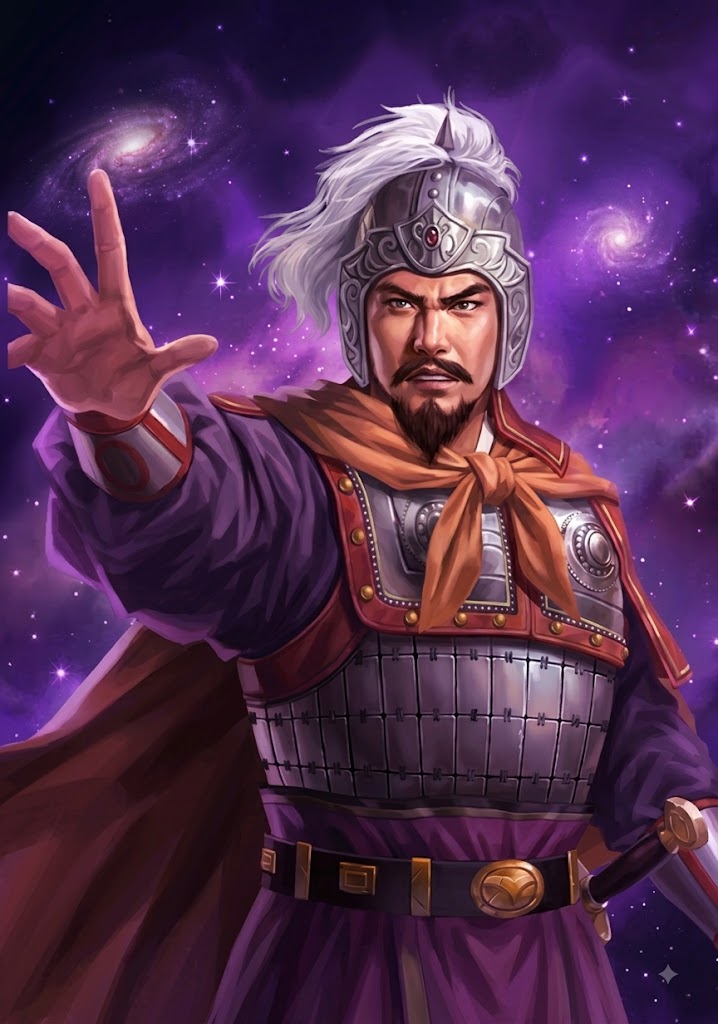
Ma Long, courtesy name Xiaoxing, was a legendary Western Jin dynasty military general, brilliant strategist, high-ranking frontier administrator, and ingenious military engineer who served as Grand Administrator of Xiping, General Who Displays Renown (Xuanwei Jiangjun), and Inspector of Liang Province. Hailing from Pinglu County in Dongping Commandery (modern-day Wunsang, Shandong Province), Ma Long was celebrated throughout ancient China as a tactical genius whose innovative military thinking transcended his era. Documented in Fang Xuanling’s official dynastic history Book of Jin (Jin Shu – Biography of Ma Long, Volume 57) and Sima Guang’s Zizhi Tongjian, Ma Long historically achieved immortal renown by reviving, adapting, and modernizing Zhuge Liang’s ancient Eight Formations (Bazhentu), inventing eccentric wooden war wagons (Pianxiangche), and deploying natural magnetic ore (lodestone) to decisively crush Tufa Shujineng’s 100,000-strong Xianbei tribal rebellion across the northwestern frontier in 279–280 AD.
During the late Cao Wei and early Western Jin periods, Ma Long began his public service as a low-ranking officer known for his fierce personal integrity, immense physical stature, and deep erudition in classical military treatises. In 270–279 AD, a catastrophic tribal revolt erupted across Tan and Liang Provinces, spearheaded by the formidable Xianbei chieftain Tufa Shujineng. The rebellion devastated the northwestern frontier, resulting in the deaths of multiple senior Jin commanders, including Inspector Hu Lie, Inspector Su Yu, Inspector Qian Hong, and General Yang Xin. As Liang Province fell entirely under the control of the insurgents, Emperor Wu of Jin (Sima Yan) lamented in despair before his assembled court, asking who possessed the capability to quell the northern crisis and restore imperial rule. Stepping forward from the lower ranks, Ma Long boldly petitioned the throne, declaring: ‘If Your Majesty trusts me with 3,500 brave volunteers, I pledge my life and honor to pacify Liang Province for the state.’
Granted independent imperial authority, Ma Long executed a rigorous, highly unconventional recruitment method. Setting up an extremely heavy longbow, he proclaimed that only recruits who could draw the bow fully and hit the bullseye would be enlisted. By noon, he selected precisely 3,500 elite marksmen and fearless warriors, equipping them with specialized weaponry and ample provisions. In late 279 AD, Ma Long marched his small expeditionary force across the Yellow River. Facing Ma Long’s advance, Tufa Shujineng deployed over 100,000 horsemen to surround the imperial column, establishing ambushes along narrow mountain ravines. Unfazed by the overwhelming numerical odds, Ma Long adapted Zhuge Liang’s Eight Formations into a dynamic, mobile defense system centered around his self-designed ‘Pianxiangche’ (eccentric wooden war wagons). In narrow valleys, these wooden wagons formed mobile palisades that repelled cavalry charges; on open plains, the wagons linked together into impenetrable rolling fortresses while archers poured disciplined volleys from behind wooden shields.
Furthermore, historical records detail Ma Long’s ingenious use of magnetism in mountain warfare. Knowing that the Xianbei cavalry wore heavy iron plate armor while his own troops wore light leather armor, Ma Long secretly scattered vast quantities of natural lodestone (magnetic ore) along narrow, precipitous mountain passes. As the iron-armored Xianbei cavalry charged into the pass, the magnetic rocks exerted a heavy drag on their armor, paralyzing their movements and throwing the enemy into utter panic. Seizing the opportunity, Ma Long’s leather-armored troops charged forward and annihilated the enemy. Traveling over a thousand miles while continuously fighting, Ma Long’s 3,500 warriors inflicted tens of thousands of casualties, ultimately slaying Tufa Shujineng in early 280 AD. Ma Long’s brilliant pacification of the Northwest extinguished a decade-long rebellion, securing the northern flank of the Jin Dynasty and enabling Sima Yan to launch his grand southern campaign to conquer Eastern Wu and unify all China. Following his victory, Ma Long served as Grand Administrator of Xiping for over a decade, maintaining peace along the frontier until his death in office around 301 AD.
Famous Quotes & Historical Sayings
In the historical records of the Book of Jin (Jin Shu), when Emperor Wu of Jin asked how a mere 3,500 men could defeat a hundred thousand insurgents, Ma Long replied with unwavering conviction: ‘Victory in war depends upon elite training, absolute discipline, and tactical innovation rather than vast, undisciplined hordes! Give me warriors who can pull the heaviest bow, and I shall build war machines that render the enemy’s cavalry powerless.’ Furthermore, Emperor Taizong of Tang (Li Shimin) praised Ma Long’s immortal military campaign: ‘Ma Long campaigned in the west while Wang Jun marched in the south; both advanced without a moment’s hesitation, independently achieving miraculous deeds to extinguish treacherous rebellions. Ma Long demonstrated for all time that military success depends on elite quality and innovative strategy rather than overwhelming numbers, using revolutionary tactics to shatter ten thousand tyrannical blades!’
Ma Long (馬隆) — Historical & Literary Timeline
Volunteering to Pacify the Northwest
Petitions Emperor Sima Yan at the imperial court in Luoyang to lead a 3,500-man volunteer force to reclaim Liang Province from Tufa Shujineng following the defeat and deaths of multiple senior imperial generals.
Selective Recruitment & Construction of Eccentric War Wagons
Recruits 3,500 elite marksmen using a heavy longbow test; constructs ‘Pianxiangche’ (eccentric war wagons) and implements Zhuge Liang’s Eight Formations for mobile battlefield defense.
Deploying Magnetic Ore Tactics & Slaying Tufa Shujineng
Scatters lodestone along mountain tracks to immobilize iron-armored Xianbei cavalry; decisively routes 100,000 insurgents and slays Tufa Shujineng, pacifying the Northwest and enabling Jin’s unification of China.
Governance of Xiping & Peaceful Passing in Office
Appointed Grand Administrator of Xiping and General Who Displays Renown; governs the frontier with benevolence, strict justice, and military vigilance for over two decades before passing away in office around 301 AD.
Discover more historical figures and chronicles in our Three Kingdoms archives.
For detailed historical records, archives, and official chronicles, explore Ma Long on Wikipedia.
Key Relationships
Family
- No information
Friends
- Wang Jun (王濬, Vương Tuấn): Fellow senior Western Jin commander whose decisive southern naval conquest of Eastern Wu in 280 AD coincided with Ma Long’s northwestern pacification to achieve the complete unification of China.
Enemies
- Tufa Shujineng (秃发树机能, Thốc Phát Thụ Cơ Năng): Chieftain of the Tufa Xianbei who spearheaded a devastating decade-long rebellion across Qin and Liang Provinces; decisively defeated and slain by Ma Long’s expeditionary force in 280 AD.
Other
- Sima Yan (司马炎, Tư Mã Viêm): Emperor Wu of Jin, the imperial sovereign who accepted Ma Long’s bold petition in 279 AD and granted him independent command to recruit 3,500 elite troops to pacify the Northwest.
- Zhuge Liang (诸葛亮, Gia Cát Lượng): Legendary Shu Han chancellor and military strategist whose ancient Eight Formations (Bazhentu) Ma Long studied, modernized, and successfully deployed using eccentric wooden war wagons against nomad cavalry.
In Novel
Chapter 116
- Ma Long (马隆, Mǎ Lóng): Ma Long is a Wei officer associated with the later campaigns against Shu. He serves during the period in which Wei prepares and executes its final conquest, contributing to the military operations that lead to the collapse of Shu.
In History
Summary
- Ma Long (马隆, Mã Long) was a famous Western Jin military commander, best known for his campaign against the Xianbei leader Tufa Shujineng.
Military Innovation
- Ma Long became renowned for his use of specialized defensive formations and mobile military techniques suited to fighting cavalry in the northwest.
- His methods helped compensate for the difficult terrain and the tactical advantages of the opposing forces.
Campaign in the Northwest
- He successfully led Jin forces against the rebellion in Liangzhou and restored imperial control over the region.
- His victory was one of the notable military successes of the early Western Jin.
Legacy
- Ma Long is remembered as an inventive commander whose success depended on adapting tactics to local conditions.
- Classification: Historical.