
Contents
Biography & Historical Record
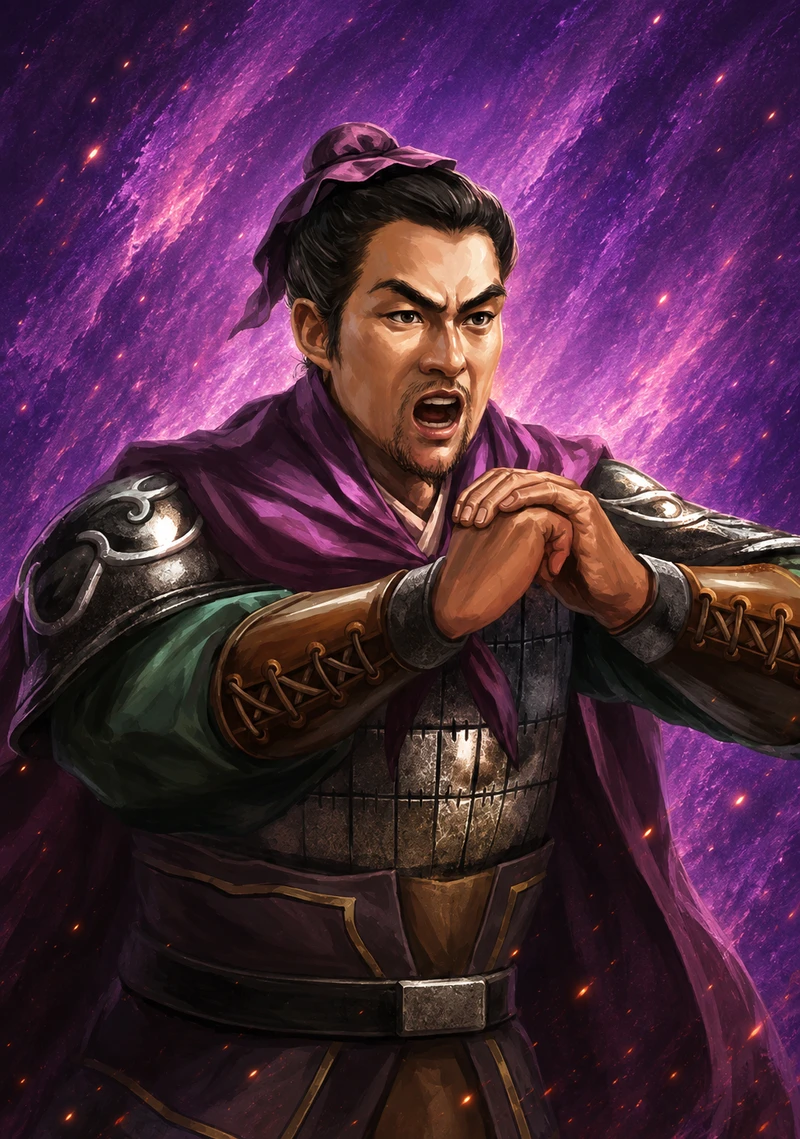
Qiu Jian, also recorded in dynastic annals as Qiu Jian (丘建), was a military officer and frontline commander of the Cao Wei state and the subsequent Western Jin dynasty during the late Three Kingdoms period. Originally serving as a trusted subordinate under General Hu Lie, Qiu Jian was later recommended to Grand General Zhong Hui, who recognized his diligence, sharp military acumen, and reliability, appointing him as a trusted personal staff officer and guard commander. Documented in Chen Shou’s official dynastic history Records of the Three Kingdoms (Sanguozhi – Book of Wei, Biography of Zhong Hui) and Sima Guang’s Zizhi Tongjian, Qiu Jian played an extraordinary and decisive historical role in the chaotic aftermath of the conquest of Shu Han in early 264, acting as the key messenger whose secret communications ignited the counter-mutiny that brought down Zhong Hui and Jiang Wei.
In the autumn of 263, Cao Wei launched a massive invasion against Shu Han, deploying over one hundred and eighty thousand troops. Qiu Jian accompanied Zhong Hui’s primary strike force through Hanzhong to the formidable mountain defenses of Jiange (Sword Gate Pass). Following Deng Ai’s surprise march across the Yinping mountains and Emperor Liu Shan’s surrender at Chengdu, Zhong Hui marched his armies into the capital. Consumed by unchecked personal ambition and encouraged by the surrendered Shu Grand General Jiang Wei, Zhong Hui framed Deng Ai for treason, arrested him, and plotted an armed rebellion to carve out an independent northern empire in Sichuan.
On the sixteenth day of the first month in 264, Zhong Hui gathered all high-ranking Wei officers and administrators inside the imperial palace in Chengdu under the pretense of holding a grand memorial for the recently deceased Empress Dowager Guo. Producing a forged imperial decree ordering the removal of Regent Sima Zhao, Zhong Hui demanded that the assembled commanders pledge their allegiance to his rebellion. When the loyal Wei officers refused, Zhong Hui placed them under strict military arrest, confining them within separate rooms of the palace compound and stationing armed guards to prevent communication. Among the imprisoned generals was Qiu Jian’s former commander and patron, Hu Lie, who was denied food and water in solitary confinement.
Moved by deep personal gratitude toward his former benefactor, Qiu Jian approached Zhong Hui and requested permission to assign an attendant from Hu Lie’s personal household to bring hot food, medicine, and clean water into the palace. Trusting Qiu Jian implicitly, Zhong Hui granted the request, extending the privilege to all other confined commanders. Exploiting this access, Hu Lie fabricated a desperate warning and gave it to his attendant, falsely claiming that Zhong Hui had already dug massive pits in the palace courtyard and planned to massacre all northern soldiers and commanders with wooden staves. Qiu Jian ensured the message was safely smuggled out of the citadel to Hu Lie’s eighteen-year-old son, Hu Yuan, who was commanding troops outside the walls. Outraged and panicked by the impending massacre of their beloved officers, tens of thousands of Wei veterans led by Hu Yuan, Wei Guan, and Tian Xu stormed the imperial palace on the eighteenth day of the first month. The bloody assault culminated in the deaths of Zhong Hui, Jiang Wei, and hundreds of mutineers, ending the rebellion and securing the riverlands for Western Jin.
Role in Romance of the Three Kingdoms
In Chapters 118 and 119 of Luo Guanzhong’s classic 14th-century historical novel Romance of the Three Kingdoms, Qiu Jian is portrayed as a loyal and righteous officer whose deep moral gratitude toward his former master Hu Lie thwarts Zhong Hui and Jiang Wei’s grand rebellion in Chengdu.
In Chapter 118, following Deng Ai’s arrest and the occupation of Chengdu, Zhong Hui leagues secretly with Jiang Wei, plotting to seize the riverlands and eliminate Sima Zhao. In Chapter 119, Zhong Hui summons all division commanders and civil inspectors into the imperial palace, demanding that they sign a blood covenant of insurrection. When the commanders hesitate, Zhong Hui flies into a fury, locking them inside the palace chambers under heavy guard with the intent to execute them.
Qiu Jian, serving as Zhong Hui’s trusted confidant and palace guard officer, remembers that he owes his entire military career to Hu Lie’s past patronage. Unable to watch his former master perish of thirst and starvation in confinement, Qiu Jian steps forward before Zhong Hui, stating: ‘General, these commanders are under your strict guard and cannot escape. However, denying them food and drink will cause unnecessary panic. Allow their private servants to bring meals into the palace so that order may be preserved.’ Believing Qiu Jian to be entirely loyal to his cause, Zhong Hui permits each confined general a single servant to deliver provisions.
Seizing this crucial opportunity, Hu Lie writes a secret letter to his son Hu Yuan, urging him to mobilize the outside encampments and assault the palace to save the trapped officers. Qiu Jian secretly guides the messenger past the palace gates, ensuring the letter reaches Hu Yuan’s camp. Upon reading his father’s letter, Hu Yuan sounds the war drums, rallying thousands of armored horsemen and foot soldiers who converge on the imperial palace with ladders and torches. As the gates are breached in a thunderous nocturnal battle, Zhong Hui and Jiang Wei are slain amidst a storm of arrows. Luo Guanzhong highlights Qiu Jian’s courageous loyalty as the pivotal spark that dismantled Zhong Hui’s imperial ambitions, proving that personal virtue and fidelity to one’s master could alter the fate of an entire empire.
Qiu Jian (邱建) — Historical & Literary Timeline
Service Under Zhong Hui at Jiange
Serves as a trusted military officer on Zhong Hui’s headquarters staff; participates in the northern mountain campaign through Hanzhong and the siege of Jiange.
Securing Palace Relief for Hu Lie
Pleads with Zhong Hui to permit food attendants for the imprisoned Wei generals in the Chengdu imperial palace, motivated by deep personal gratitude toward his former benefactor Hu Lie.
Smuggling Messages to Hu Yuan & Palace Mutiny
Assists in smuggling Hu Lie’s secret letter out of the palace to Hu Yuan, triggering the massive army mutiny that breaches the palace and slays Zhong Hui and Jiang Wei.
Key Relationships
Family
- No information
Friends
- Hu Lie (胡烈, Hồ Liệt): Senior general of Cao Wei and former superior benefactor. When Zhong Hui imprisoned Hu Lie in Chengdu to force his participation in the rebellion (264 AD), Qiu Jian smuggled food, wine, and critical tactical intelligence to him, enabling Hu Lie to alert his son.
- Hu Yuan (胡渊, Hồ Uyên): Young officer of Cao Wei and son of Hu Lie. Received Qiu Jian’s smuggled warning and spear-headed the ferocious military counter-assault on the palace in Chengdu that crushed Zhong Hui’s rebellion (264 AD).
- Wei Guan (卫瓘, Vệ Quán): Senior minister and Military Supervisor (Jianjun). Coordinated the suppression of the Chengdu mutiny and restored central imperial control over the Wei army (264 AD).
- Tian Xu (田续, Điền Tục): Senior Wei division officer who joined the storming of Chengdu and participated in pacifying the mutinous forces (264 AD).
- Sima Zhao (司马昭, Tư Mã Chiêu): Regent of Cao Wei. Qiu Jian’s decisive loyalty preserved Sima Zhao’s imperial authority over Sichuan and prevented the secession of the riverlands (264 AD).
Enemies
- Zhong Hui (钟会, Chung Hội): Grand General of Cao Wei. Placed immense personal trust in Qiu Jian as his staff officer; however, when Zhong Hui launched his treasonous rebellion in Chengdu (264 AD), Qiu Jian secretly betrayed the plot to save Hu Lie, leading directly to Zhong Hui’s death.
- Jiang Wei (姜维, Khương Duy): Grand General of Shu Han. Conspired with Zhong Hui to massacre the northern Wei generals and resurrect the Shu Han dynasty, but was cornered and killed during the army mutiny sparked by Qiu Jian’s leak (264 AD).
- Liu Shan (刘禅, Lưu Thiện): Second Emperor of Shu Han whose surrender in 263 AD placed Chengdu under the volatile military occupation that culminated in the mutiny.
Others
- No information
In Novel
Qiu Jian (邱建, Khâu Kiến) does not have a securely verified named appearance in the supplied edition under the exact Chinese name 邱建. No chapter is assigned without an exact textual occurrence.
History
Summary
- Qiu Jian (邱建, Khâu Kiến) was a minor official associated with the late Wei period and the fall of Shu.
Late Three Kingdoms Context
- He appears in accounts connected with the military and political events surrounding the final campaigns of the Three Kingdoms period.
- The surviving record gives little independent biographical detail.
Classification
- Historical / Briefly Attested.
